How Often Should I Replace Hydrocyclone Liners?
Oct 20, 2026
 admin
What is a rubber flotation rotor, and when should it be used instead of a metal rotor?
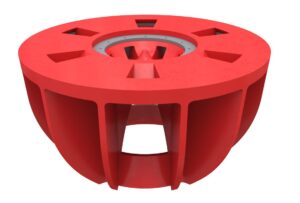
A rubber flotation rotor is a rotor component with an elastomer-based wear surface used in mechanical flotation cells. Rubber is preferred when repeated particle impact, vibration damping and chemical compatibility are the dominant requirements. Metal rotors are preferred when structural rigidity and dimensional stability matter most. The correct choice depends on the actual wear mechanism, not the material type alone.
Rubber absorbs impact energy through elastic deformation, which can reduce chipping and cracking in repeated-impact duties.
Metal rotors offer greater rigidity and dimensional stability, which matter when precise geometry or high structural strength is required.
Rubber’s chemical resistance depends on the specific compound; compatibility with flotation reagents must be verified.
Composite rotors with a metal core and elastomer covering combine structural support with wear resistance.
Material selection should be based on actual service hours, replacement frequency, maintenance labor and downtime cost — not unit price alone.
| Item | Description |
|---|---|
| Function | Circulates slurry and disperses air in a mechanical flotation cell |
| Material Options | Rubber, polyurethane, metal, or composite (metal core + elastomer) |
| Application | Copper, lead-zinc, gold, nickel, phosphate, coal and tailings flotation circuits |
| Key Selection Factor | Dominant wear mechanism: impact, abrasion, corrosion, or a combination |
| Inspection Points | Uneven wear, missing material, exposed reinforcement, blocked passages, clearance change |
| Replacement Trigger | Service life limit, wear depth, dimensional change, recovery decline by size fraction |
A rubber flotation rotor is a rotor component in a mechanical flotation cell where the wear surface is made from an elastomer compound. The rotor works with the stator to circulate slurry, disperse air and create the hydrodynamic conditions that support bubble-particle attachment.
The rotor operates within the FLOTATION process stage, which sits after upstream GRINDING and CLASSIFICATION, and before downstream DEWATERING. Rotor material selection therefore has implications that extend beyond the flotation cell itself.
The rotor rotates at controlled speed inside the flotation cell. Its blades generate a pressure differential that draws slurry and air into the mechanism. The stator stabilizes the flow and directs the aerated slurry into the separation zone.
Material choice affects how the rotor responds to the operating environment:
Rubber deforms elastically under particle impact, absorbing part of the impact energy. This reduces the peak stress that would otherwise cause chipping or cracking.
Metal resists deformation and maintains its geometry under load, which supports consistent hydrodynamic performance.
Polyurethane offers a middle path, with strong abrasion resistance and better dimensional stability than many rubber compounds.
Composite designs use a metal core for structure and an elastomer covering for wear resistance.
The actual performance of any material depends on the specific formulation, operating conditions, and the dominant wear mechanism in the plant.
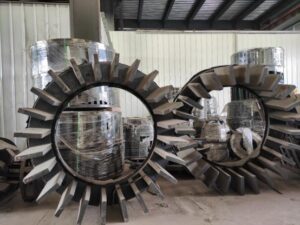
Benefits of rubber flotation rotors:
Absorbs impact energy through elastic deformation
Reduces vibration and noise from particle interaction
Can reduce impact-related chipping and cracking
May reduce maintenance interruptions in impact-dominated duties
Potentially lower total cost of ownership when matched to the duty
Benefits of metal flotation rotors:
High structural rigidity and dimensional stability
Maintains geometry under high mechanical load
Suitable for equipment designs that require metallic components
Predictable performance in duties where abrasion is moderate
Benefits of composite rotors:
Combines structural support from a metal core with wear resistance from an elastomer covering
Can balance rigidity and impact absorption in mixed duties
May extend service life compared to single-material designs
Rubber and metal flotation rotors are used across a wide range of mineral processing duties:
Copper sulfide flotation — where coarse particles and abrasive gangue create combined impact and abrasion
Lead-zinc differential flotation — where chemical compatibility with reagents is important
Gold flotation — where fine gold and gold-bearing sulfides require stable mechanism performance
Nickel and PGM flotation — where fine disseminated values need consistent mixing
Phosphate and potash flotation — where reagent-froth interactions are sensitive to turbulence
Coal flotation — where fine coal recovery depends on stable attachment
Tailings retreatment — where variable feed and abrasive solids increase wear risk
Flotation equipment used in these duties is covered under the broader FLOTATION CELLS category, and material selection should always match the specific ore and duty.
| Material | Impact Absorption | Abrasion Resistance | Dimensional Stability | Chemical Resistance | Best Application |
|---|---|---|---|---|---|
| Natural Rubber | Good | Moderate | Moderate | Depends on compound | Impact-dominated duties |
| Polyurethane | Moderate | High | Good | Good | Fine-particle, high-abrasion duties |
| Wear-Resistant Elastomer | Good | Good | Good | Depends on compound | Mixed impact and abrasion |
| High-Chrome Alloy | Low | High | Very High | Depends on alloy | High-load, coarse-particle duties |
| Composite (Metal + Elastomer) | Good | High | High | Depends on elastomer | Mixed duty requiring structure and wear resistance |
Material selection should match the actual wear mechanism, not rely on hardness or brand alone.
| Duty Condition | Recommended Material | Reason |
|---|---|---|
| Repeated particle impact | Rubber or composite | Elastic deformation absorbs impact energy |
| High abrasion, fine particles | Polyurethane | Strong abrasion resistance with good dimensional stability |
| High mechanical load | Metal | Maintains geometry under load |
| Mixed impact and abrasion | Composite | Combines structural support with wear-resistant surface |
| Chemically aggressive slurry | Verify compatibility | Rubber compound must be verified against reagents |
| Variable feed conditions | Composite or polyurethane | Balances multiple wear mechanisms |
| Industry | Ore Type | Wear Mechanism | Recommended Rotor Material |
|---|---|---|---|
| Copper | Copper sulfide | Combined impact and abrasion | Composite or polyurethane |
| Lead-Zinc | Sulfide ore | Abrasion with chemical exposure | Rubber (verified compound) or polyurethane |
| Gold | Free gold and sulfide | Abrasion with moderate impact | Polyurethane or composite |
| Nickel | Nickel sulfide | Fine-particle abrasion | Polyurethane |
| Phosphate | Sedimentary phosphate | Abrasion with reagent exposure | Rubber (verified) or polyurethane |
| Coal | Fine coal | Moderate abrasion | Rubber or polyurethane |
| Tailings | Retreatment feed | Variable, abrasive | Composite or polyurethane |
Selecting the right rotor material involves several engineering steps:
Identify the dominant wear mechanism. Is the rotor failing primarily from impact, abrasion, corrosion, or a combination?
Confirm the equipment requirements. Some flotation cell designs require specific rotor geometry, weight, or mounting that limits material options.
Verify chemical compatibility. Rubber compounds vary widely in resistance to flotation reagents, oils and temperature.
Review the operating conditions. Ore type, particle size distribution, slurry density, pH and temperature all influence material performance.
Compare lifecycle cost. Include service life, replacement frequency, maintenance labor and downtime cost, not just unit price.
Plan inspection access. Rotor inspection and clearance measurement require safe access during maintenance windows.
For plants operating XCF/KYF or similar cells, reviewing the XCF/KYF FLOTATION CELL specification helps confirm the correct rotor configuration before selecting material.
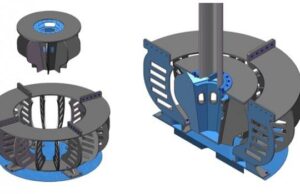
A structured procurement process reduces the risk of incorrect material selection and premature failure.
Required Information
Flotation machine manufacturer and model
Rotor part number or technical drawing
Rotor diameter and mounting dimensions
Existing rotor material and construction
Ore type, particle size and slurry characteristics
Chemical environment and operating temperature
Current service life and main wear or failure problems
Drawings Needed
Assembly drawing of the rotor
Dimensional drawing with tolerances
Material specification sheet
Installation interface drawing
OEM Part Numbers
Where OEM part numbers are available, they should be provided to the supplier for cross-reference. Where they are not available, dimensional drawings and photographs are essential.
Material Selection
Material selection should match the actual wear mechanism. Rubber is suitable for impact-dominated duties. Polyurethane is suitable for fine-particle high-abrasion duties. Metal is suitable where rigidity and dimensional stability are priorities. Composite designs are suitable for mixed duties.
MOQ, Lead Time, Packaging, Shipping
Typical MOQ for custom flotation rotors depends on the mechanism size and material. Lead time varies with material availability and manufacturing complexity. Components should be packaged to prevent distortion during transport, and shipping method should match the required delivery schedule.
Inspection Standards
Incoming inspection should verify:
Dimensional accuracy against drawings
Material certification and hardness
Surface finish and absence of defects
Bonding quality for composite rotors
Fitment against the mounting interface
Supplier Evaluation Checklist
Can the supplier manufacture according to drawings?
Can the supplier provide material reports?
Can the supplier support OEM replacement?
Does the supplier have export experience?
Can the supplier provide wear-life recommendations?
Buyers comparing suppliers can review how manufacturers document their FLOTATION ROTOR & STATOR PARTS specifications. The level of documentation is a practical indicator of engineering support capability.
| Problem | Possible Cause | Recommended Solution |
|---|---|---|
| Premature rubber wear | Incorrect compound, incompatible reagents, wrong hardness | Review compound selection against slurry chemistry |
| Rubber swelling or softening | Chemical incompatibility, high temperature | Verify compound compatibility, consider alternative elastomer |
| Rubber tearing at mounting points | Incorrect installation, excessive torque, poor fitment | Review installation procedure and mounting design |
| Metal rotor cracking | Impact loading, casting defects, thermal stress | Review material toughness and inspect for foreign objects |
| Metal rotor corrosion | Insufficient protective coating, aggressive chemistry | Review alloy selection or protective system |
| Uneven wear pattern | Misalignment, incorrect clearance, feed imbalance | Check alignment, verify clearance, review feed distribution |
| Exposed metal reinforcement | Rubber covering worn through at high-wear zone | Replace rotor, review material thickness and duty |
| Blocked air or slurry passages | Scale buildup, oversized particles | Clean passages, review feed size distribution |
| Poor fitment | Incorrect dimensions, wrong part number, drawing mismatch | Verify drawings and part numbers before ordering |
Daily Inspection
Check operating power draw and aeration uniformity
Listen for abnormal noise or vibration from the mechanism
Monitor froth appearance and recovery trends
Weekly Inspection
Review recovery by particle-size fraction
Check for changes in air dispersion
Inspect for visible wear or damage where accessible
Monthly Inspection
Measure rotor wear at fixed inspection points
Inspect rotor blade profiles and surface condition
Check for exposed reinforcement, cracks, or missing material
Verify rotor-stator clearance
Wear Pattern Monitoring
Record wear profile at fixed inspection points
Compare against previous inspections to track wear rate
Identify uneven wear that may indicate misalignment or incorrect material selection
Replacement Timing
Follow the equipment manufacturer’s wear limits
Replace when wear depth or dimensional change exceeds specification
Replace when recovery by size fraction declines without other explanation
Replace when exposed reinforcement or structural damage is found
Spare Parts Inventory
Maintain at least one rotor for critical cells
Store components to prevent distortion and material degradation
Verify incoming parts against drawings before installation
Downtime Reduction
Plan replacement during scheduled shutdowns
Pre-assemble and verify fitment before the shutdown window
Coordinate with upstream and downstream process teams
Preventive Maintenance
Follow a documented inspection schedule
Track wear rate to predict replacement intervals
Review material performance after any feed or reagent change
Customer Type: Copper concentrator, mid-sized operation
Ore Type: Copper sulfide with abrasive quartz gangue
Operating Conditions: Mechanical flotation cells in rougher and scavenger duty, slurry density approximately 30–35% solids, pH 10–11, coarse particles with repeated impact loading
Problem: The original metal rotors showed cracking at the blade roots after a relatively short service interval. Operators initially considered increasing blade thickness, but this would have changed the rotor geometry and affected flotation performance.
Solution: A composite rotor with a metal core and elastomer covering was evaluated. The metal core maintained structural rigidity and dimensional stability, while the elastomer covering absorbed impact energy at the blade surfaces. Material compatibility with the flotation reagents was verified before installation.
Result: The composite rotors showed reduced impact-related cracking compared to the original metal rotors. Rotor geometry remained within specification over the service interval, and flotation recovery by particle-size fraction remained stable. The plant now uses composite rotors in the rougher and scavenger cells, while retaining metal rotors in cleaner cells where abrasion is the dominant wear mechanism.
Question: Are rubber flotation rotors always better than metal rotors?
Answer: No. Rubber is advantageous when impact absorption and vibration damping are important. Metal is preferable when structural rigidity and dimensional stability are the main requirements. The correct choice depends on the actual wear mechanism, equipment design and operating conditions — not on the material type alone.
Question: How much does a rubber flotation rotor cost compared to a metal rotor?
Answer: Cost depends on rotor size, mechanism type, material formulation and quantity. Rubber and polyurethane rotors are typically less expensive than high-chrome or composite alternatives, but the comparison should include service life, replacement frequency and downtime cost. A rotor with a higher unit price but longer service life may have a lower total cost of ownership.
Question: Can rubber flotation rotors resist chemical corrosion?
Answer: Rubber can resist many aqueous chemical environments, but compatibility depends on the specific rubber compound, reagents, temperature and operating conditions. Some chemicals, oils and elevated temperatures can cause certain rubber compounds to swell, soften or deteriorate. Material compatibility should always be verified before selection.
Question: What is the typical service life of a rubber flotation rotor?
Answer: Service life varies widely with ore abrasiveness, particle size, slurry density, rotor speed, reagent regime and material formulation. In impact-dominated duties, rubber may outlast metal significantly. In high-abrasion duties with fine particles, polyurethane or composite materials may perform better. Tracking wear rate at fixed inspection points provides a more reliable basis for planning than a generic service-life figure.
Question: Can I replace a metal rotor with a rubber rotor on the same equipment?
Answer: It depends on the equipment design. Some flotation cells allow material substitution, while others require specific rotor geometry, weight or mounting that limits material options. The rotor design must meet the equipment’s mechanical requirements. Consult the equipment manufacturer or a qualified supplier before substituting materials.
Question: What is a composite flotation rotor?
Answer: A composite flotation rotor uses a metal core for structural support and an elastomer covering for wear resistance. This design combines the rigidity of metal with the impact absorption of rubber or polyurethane. Composite rotors are often used in mixed duties where neither single material fully addresses the wear mechanism.
Question: How do I know which rotor material is right for my operation?
Answer: Start by identifying the dominant wear mechanism from inspection records and wear patterns. Consider the equipment requirements, chemical environment, operating conditions and lifecycle cost. Providing drawings, photographs and wear records to a qualified supplier supports accurate material selection. For related elastomer comparisons, the POLYURETHANE SCREEN VS RUBBER SCREEN VS WIRE MESH: A COMPLETE COMPARISON GUIDE provides useful context on material trade-offs.
Question: How does rotor material affect flotation recovery?
Answer: Rotor material affects how the rotor geometry changes over time. Rubber and composite rotors may maintain their geometry longer in impact-dominated duties, supporting stable circulation and air dispersion. Metal rotors maintain geometry well in rigid-load duties but may crack or deform under repeated impact. Stable rotor condition supports consistent bubble-particle attachment and recovery.
Question: What information do I need to provide for a rotor quotation?
Answer: Provide the flotation machine manufacturer and model, rotor part number or drawing, rotor diameter and mounting dimensions, existing material and construction, ore type and particle size, slurry characteristics, chemical environment, operating temperature, current service life, and photographs of the existing component. These details help the supplier recommend the correct material and configuration.
Question: Can rotor material selection reduce maintenance costs?
Answer: Yes, when the material matches the actual wear mechanism. Rubber can reduce impact-related repairs in impact-dominated duties. Polyurethane can extend service life in high-abrasion duties. Composite rotors can balance both. Selecting material by wear mechanism rather than purchase price alone is the most effective way to reduce total maintenance cost.
Rubber and metal flotation rotors each have valid applications in mineral processing. Rubber performs well where impact absorption, vibration damping and chemical compatibility matter. Metal performs well where rigidity, dimensional stability and structural strength are the priorities. Composite rotors with a metal core and elastomer covering offer a middle path for mixed duties.
The most reliable selection comes from matching the material to the actual wear mechanism, not the material type or purchase price alone. Combined with regular inspection, correct rotor-stator clearance, and application-appropriate spare parts inventory, this supports stable flotation performance and controlled maintenance cost over the service interval.
Related Products
Related Technical Guides
FLOTATION CELL ROTOR AND STATOR WEAR PARTS: HOW THEY CONTROL RECOVERY, FLOW AND MAINTENANCE COST
ROTOR & STATOR IN MECHANICAL FLOTATION CELLS: THE HEART OF EFFICIENT MINERAL FLOTATION
HYDROCYCLONE WEAR: ROOT CAUSES, HIGH-WEAR ZONES & MATERIAL SOLUTIONS
IMPROVE FINE SCREENING EFFICIENCY WITH POLYURETHANE SCREEN PANELS
Related Buyer Guides
WHICH MANUFACTURER OFFERS HIGH-QUALITY POLYURETHANE TUFFLEX WIRE SCREENS FOR MINING?
HOW DO I CHOOSE THE RIGHT RUBBER BELT FOR A VACUUM BELT FILTER?
Related Comparison Articles
POLYURETHANE SCREEN VS RUBBER SCREEN VS WIRE MESH: A COMPLETE COMPARISON GUIDE
SELF-CLEANING SCREEN VS TRADITIONAL WOVEN WIRE MESH: WHICH ONE SHOULD YOU CHOOSE?
Annie Lu
Email: annie.lu@huataogroup.com
Mobile: +86 18032422676
WhatsApp / WeChat
admin