Rotor & Stator in Mechanical Flotation Cells: The Heart of Efficient Mineral Flotation
-
 admin
admin - 08 Sep, 2026
In a mechanical flotation cell, the rotor and stator are not just simple mixing blades; they are the core mechanism that drives the entire separation process. Their job is to manage the delicate balance of slurry suspension, air dispersion, and bubble generation, which directly dictates the efficiency of mineral recovery.
What Are the Functions of the Rotor and Stator?
Rotor (Impeller)
The rotor is the rotating component connected to the drive shaft. It converts mechanical energy into fluid motion to:
-
Keep mineral particles suspended in the pulp.
-
Pump and circulate slurry.
-
Disperse incoming air into the slurry.
-
Generate turbulence for particle-bubble collision.
-
Help transport bubble-particle aggregates to the froth layer.
Stator
The stator is the stationary component that surrounds the rotor. It conditions the flow to:
-
Control the high-velocity discharge from the rotor.
-
Reduce excessive swirling.
-
Create stable hydrodynamic conditions for bubble-particle attachment.
In short, the rotor creates energy and movement, while the stator controls and conditions that movement.
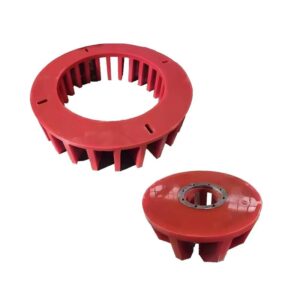
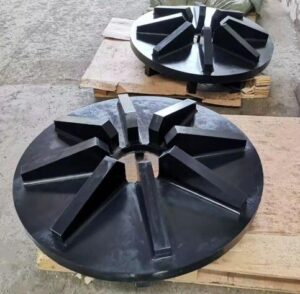
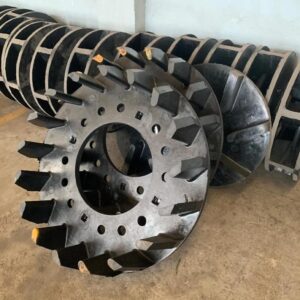
How the Rotor-Stator Assembly Creates an Ideal Flotation Environment
The rotor provides the kinetic energy to keep particles suspended and disperse air. The stator then directs this energy to create the right hydrodynamic environment.
A simplified sequence is:
Slurry + air → Rotor mixing → Rotor-stator turbulence → Bubble dispersion → Particle-bubble collision → Bubble-particle attachment → Bubble rise → Froth recovery.
As Metso describes it, this mechanism is the heart of the flotation cell because it mixes slurry and generates the turbulent kinetic energy required for attachment. However, more turbulence is not always better. The goal is optimized hydrodynamics, not maximum agitation.
The Consequences of Rotor and Stator Wear
Flotation cells operate in an abrasive environment. As mineral particles wear down the rotor and stator, the original hydraulic geometry changes, leading to:
-
Rotor wear: Reduced pumping capability, poorer air dispersion, less uniform aeration.
-
Stator wear: Reduced flow control, weaker turbulence, fewer effective particle-bubble collisions.
Metso’s CFD-based studies confirm that worn rotors and stators significantly reduce the mechanism’s ability to perform its intended functions. Visual inspection alone is not sufficient, as performance can deteriorate long before physical failure is apparent.
Why Choose Polyurethane or Rubber Flotation Wear Parts?
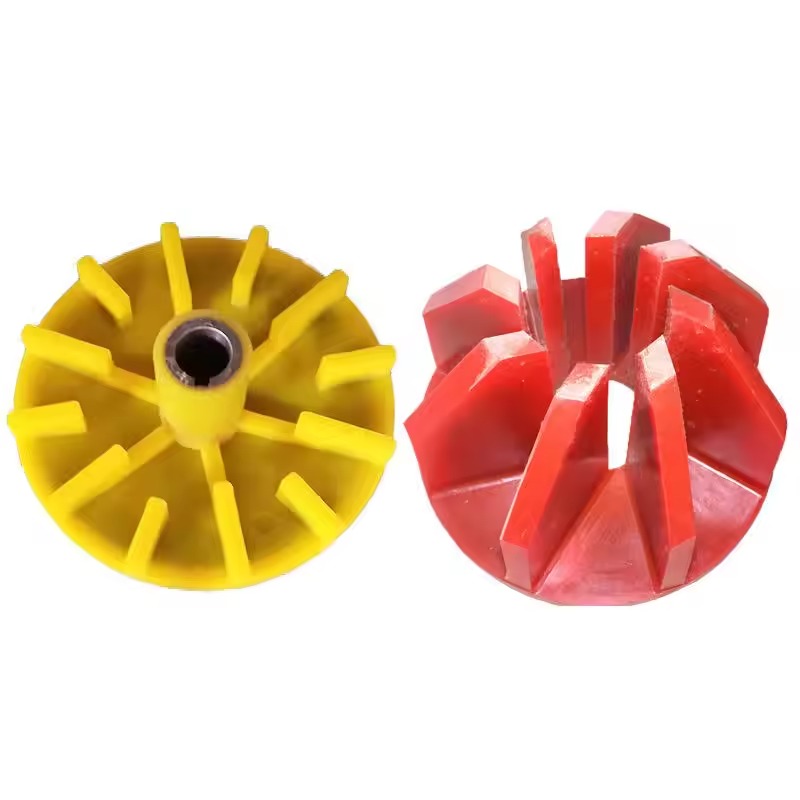
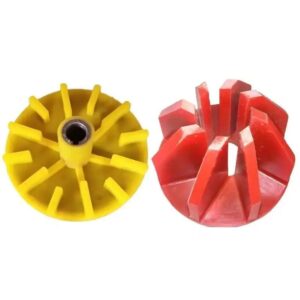
Traditional metal parts are heavy and susceptible to chemical attack. Huatao Group supplies flotation rotor and stator wear parts manufactured from wear-resistant polyurethane and rubber materials, offering distinct advantages:
-
Polyurethane Rotor & Stator: Excellent abrasion resistance, good chemical resistance, lightweight, good resilience, and vibration absorption.
-
Rubber Rotor & Stator: Good wear resistance, good impact absorption, flexible material characteristics.
Huatao’s solutions are designed to support consistent slurry flow and air distribution, providing a practical replacement solution for worn flotation mechanisms.
Wear is Directly Connected to Process Performance
Replacing a worn rotor or stator is about more than extending spare-part life; it’s about maintaining:
Stable mixing → Stable air dispersion → Stable bubble population → Better particle-bubble contact → More consistent flotation performance.
Conversely, rotor and stator wear leads to changed hydrodynamics, poorer suspension and aeration, and potential recovery loss. The actual wear life of any rotor or stator depends on ore abrasiveness, slurry density, particle size, chemicals, rotation speed, and operating conditions.
Huatao Group — Your Partner for Flotation Wear Parts
For concentrators seeking replacement flotation components, Huatao Group provides customized, OEM-style parts to match your specific:
-
Flotation machine model and cell size
-
Rotor/stator configuration and operating speed
-
Slurry characteristics and ore abrasiveness
-
Existing installation dimensions
For mines processing copper, gold, lead-zinc, nickel, iron ore, and other minerals, maintaining the condition of the flotation mechanism is crucial for stable performance.
Key Principle:
The rotor creates the energy; the stator controls the flow; together they create the hydrodynamic environment required for effective flotation.
FAQ
Question 1: What is the main function of the rotor in a flotation cell?
The rotor, also called the impeller, is the rotating component that converts mechanical energy from the motor into fluid motion. Its primary functions include keeping mineral particles suspended, pumping and circulating slurry, dispersing incoming air, generating turbulence, and promoting bubble-particle collision. Essentially, it creates the energy and movement necessary for flotation.
Question 2: What role does the stator play in the flotation process?
The stator is the stationary component surrounding the rotor. It controls the high-velocity flow leaving the rotor, reduces excessive swirling, and improves circulation throughout the cell. By supporting effective air dispersion and creating stable hydrodynamic conditions, the stator ensures the flotation environment is optimized for particle-bubble attachment.
Question 3: How does rotor and stator wear affect flotation performance?
As mineral particles wear down the rotor and stator, the original hydraulic geometry changes. Rotor wear reduces pumping capability and air dispersion, while stator wear reduces flow control and turbulence. This combination leads to changed hydrodynamics, poorer suspension and aeration, and ultimately, lower mineral recovery.
Question 4: Why is polyurethane a good material for flotation rotor and stator wear parts?
Polyurethane offers excellent abrasion resistance, good resistance to many chemical environments, and is lightweight compared to conventional metal components. Its resilience and vibration absorption properties make it highly suitable for demanding slurry applications, ensuring longer wear life and more consistent flotation performance.
Question 5: What are the benefits of using rubber for flotation wear parts?
Rubber provides good wear resistance and excellent impact absorption. Its flexible material characteristics make it suitable for abrasive slurry environments and various flotation equipment requirements. Rubber parts are an effective alternative for applications requiring high resilience and impact resistance.
Question 6: How can I tell if my rotor and stator need replacement?
Visual inspection alone is often insufficient, as performance can deteriorate long before physical failure is visible. Key indicators include changes in power draw, decreased air dispersion, poor slurry suspension, and lower flotation recovery rates. Regular performance monitoring and wear tracking are recommended.
Question 7: Can Huatao Group provide custom flotation wear parts?
Yes, Huatao Group offers OEM-style and customized solutions according to equipment drawings, dimensions, or existing component samples. We can match specific flotation machine models, cell sizes, rotor/stator configurations, operating speeds, and slurry characteristics to ensure an exact fit and optimal performance.
Question 8: What factors influence the wear life of flotation rotors and stators?
Wear life depends on several factors, including ore abrasiveness, slurry density, particle size, chemical reagents, rotation speed, cell design, and operating conditions. There is no one-size-fits-all answer; the specific conditions of each concentrator will determine the practical service life of these components.
Related Articles
Related Products
Related Technical Guides
-
Why More Mining Plants Are Switching To Polyurethane Flotation Rotor And Stator Wear Parts
-
Hydrocyclone Selection For Mineral Processing Full Engineering Guide
-
OEM Compatible Crusher Wear Parts Technical Selection Failure Prevention And Sourcing Strategy
Related Buyer Guides
-
OEM Flotation Wear Parts Guide Rotors Stators Supplier Selection 2026
-
Best Flotation Equipment Spare Parts Suppliers How To Choose For Longer Wear Life Higher Recovery
-
Who Are The Leading Flotation Rotor And Stator Manufacturers In China
Related Comparison Articles
Contact Huatao Group
Contact: Annie Lu
Email: annie.lu@huataogroup.com
Phone / WhatsApp: +86 180 3242 2676
Website: www.tufflexscreen.com
admin
personal profile