Filter Cloth for Chemical Sludge Dewatering: The Complete Engineering Selection Guide
-
 admin
- 30 Oct, 2026
Polypropylene filter cloth is the right starting point for most chemical sludge dewatering. It holds stable across pH 2–12, serves to roughly 90 °C, and costs a fraction of specialty fabrics. Move to polyester for hot acidic liquors, PPS or PTFE for oxidizers and high temperature. Choose calendered monofilament weaves, match air permeability to your incumbent cloth, and validate against the real liquor analysis — never the sales catalog.
What Is Filter Cloth for Chemical Sludge Dewatering?
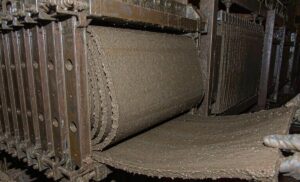
Filter cloth for chemical sludge dewatering is a woven polymer membrane that separates solid cake from liquor on a Filter Presses plate pack or vacuum machine. Made from polypropylene, polyester, polyamide or specialty fibers, it is a consumable engineering component defined by measurable specs — permeability, aperture, finish — and consumed by the chemistry it filters.
Key Takeaways
✔ Liquor chemistry, not solids appearance, decides which fabric survives
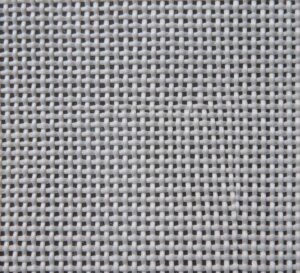
✔ Calendered monofilament weaves resist blinding and release cake cleanly
✔ Air permeability rating is the spec that protects cake moisture at every cloth change
✔ Cost per dry tonne of cake beats price per square meter as the buying metric
✔ A fifty-cycle trial on real slurry beats any catalog recommendation
Summary Table
| Item | Description |
| Function | Solid-liquid separation media for chemical sludge on presses and vacuum filters |
| Material | PP (default), PET (hot acidic), PA (alkaline abrasive), PPS / PTFE (aggressive chemistry) |
| Application | Chemical plant sludge, pigment intermediates, metal hydroxides, hydrometallurgical residues |
| Service Life | Weeks to several months, set by liquor aggression and cleaning discipline |
| Benefits | Stable cycle time, lower cake moisture, predictable replacement cost, clear filtrate |
Definition
Sludge leaving a chemical process carries three loads: suspended solids, dissolved chemistry, and history — everything upstream did to it. Thickening fixes the first load. A Thickeners installation brings the stream to a pumpable 25–35% solids, and classification ahead of that, often with Dewatering Hydrocyclones, removes the coarse fraction. Flocculation then builds flocs the cloth can actually capture; modern Flocculant Dosing Systems control that precisely.
The cloth receives whatever remains. That’s why cloth selection starts with the liquor: pH range, temperature envelope, oxidizer content, solvent traces. The solids tell you about abrasion and aperture. The liquor decides whether the fabric survives three months or three weeks.
Working Principle
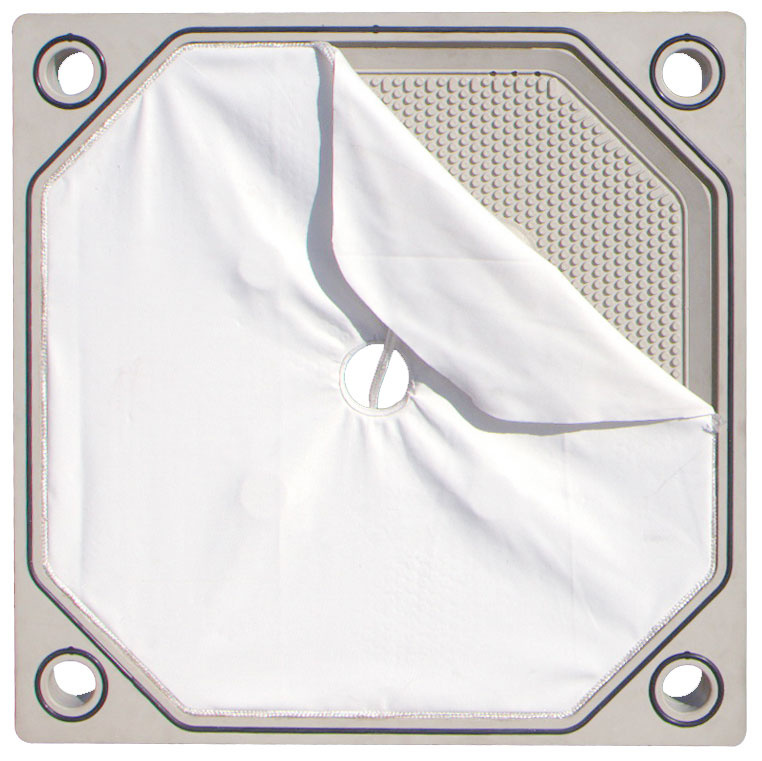
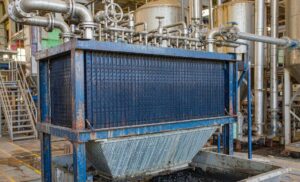
Chamber plates clamp the cloth; pressure builds the cake against it.
Filtration runs on pressure differential. Conditioned sludge enters closed chambers; liquor escapes through cloth apertures while solids bridge across the weave surface. The first seconds matter most — particles either bridge cleanly across pores or plug them from inside, which is why particle size distribution and floc quality dominate early-cycle behavior. Once the cake forms, the cake becomes the filter, and the cloth shifts to drainage and support duty.
On membrane presses a squeeze stage follows, compressing the cake for extra moisture reduction. Cloth properties tune every step: aperture controls capture, calendering controls release, permeability controls drainage speed. Change one and the others move — which is why a cloth is a system, not a fabric sample.
Benefits
Matched cloth returns value four ways. Cycle time holds steady because permeability doesn’t decay cycle by cycle. Cake moisture stays inside target, which directly cuts drying fuel or disposal weight. Replacement becomes planned work instead of emergency purchasing — cloth spending flattens out. And filtrate clarity protects the water circuit downstream from fines carryover.
Notice what’s missing from that list: exotic materials. Most plants get all four benefits from correctly specified polypropylene. Premium fabrics buy chemistry tolerance, not performance. Paying for chemistry you don’t have is the most common overspend in this category; paying for weave you do need is the most common underspend.
Applications
Chemical sludge dewatering covers more ground than one industry, and every stream lands somewhere on the Dewatering Process Solutions map. Pigment and dye intermediates run fine organic solids through solvent-bearing liquors. Metal hydroxide precipitates from effluent treatment form gelatinous cakes that blind coarse weaves fast. Agrochemical intermediates bring sticky, wash-hungry cakes. Hydrometallurgical residues — copper, zinc, lithium circuits — add abrasion to the mix, and mine tailings facilities push enormous fines tonnage through presses on the way to dry stacking, where Tailings Dry Discharge Systems integrate the whole chain.
Each stream stress-tests a different cloth property. Solvent traces test polymer choice. Gelatinous precipitates test weave and finish. Abrasive residues test yarn construction. One catalog row cannot serve all of them, which is why specification discipline matters more here than in almost any other consumable category.
Material Comparison
| Material | Acid | Alkali | Max Temp | Weakness | Best Fit |
| Polypropylene (PP) | Excellent | Excellent | ~90 °C | Oxidizers, chlorinated solvents | Most sludges, pH 2–12 |
| Polyester (PET) | Good | Poor | ~130 °C | Hydrolysis in hot alkali | Hot acidic liquor, hot wash |
| Polyamide (PA) | Poor | Good | ~110 °C | Swells in wet acid | Alkaline abrasive cakes |
| PPS | Excellent | Excellent | ~190 °C | Oxidizing agents | Hot aggressive liquors |
| PTFE | Universal | Universal | ~250 °C | Cost, support design | Extreme chemistry |
Polypropylene’s dominance isn’t interesting, but it’s true. Across the pH band where chemical sludges actually live, PP doesn’t degrade, doesn’t swell and doesn’t cost much. Polyester adds temperature headroom and dimensional stability for hot acidic streams — just keep it out of caustic, where hydrolysis attacks fiber from the inside and the first symptom is tearing along fold lines, not surface wear.
PPS and PTFE exist for chemistry that justifies them: hot oxidizing liquors, solvent attack, temperatures past 130 °C. If hypochlorite, peroxide or chromic acid is in your liquor, even PP has limits — send the analysis to the supplier and demand a written commitment. Filter Plates & Cloths selections should always trace back to an analysis, never to a price list.
Where fines are fine enough and value high enough, the woven cloth debate disappears entirely. Ceramic Filter Plates separate through microporous ceramic with capillary action holding liquor in place — no fabric, no blinding cycle. Replacement sectors for disc machines are supplied as Ceramic Filter Plates & Sectors. It’s a different machine class, and it earns its cost on specific streams rather than universally.
Application Comparison
Press cloth versus vacuum belt media is a throughput decision. Presses win on cake dryness and filtrate clarity; vacuum belts win on continuous discharge and cloth access. The belt side has its own media logic — belt and cloth must agree on permeability or drainage breaks, a point covered properly in How Do I Choose the Right Rubber Belt for a Vacuum Belt Filter?. Vacuum installations are compared in detail on the Vacuum Filter Systems page.
Ceramic disc filtration sits apart from both. It trades machine capital for the elimination of cloth consumables and delivers very low residual moisture on fine slurries. Run the comparison over three years of cloth spending plus downtime, not against purchase price alone — that arithmetic usually surprises buyers who assumed ceramic was only for mega-tonnage.
Industry Application Matrix
| Industry | Typical Sludge | Recommended Cloth | Machine |
| Pigment & dye | Fine organics, solvent traces | Calendered PP monofilament twill | Membrane press |
| Metal hydroxides | Gelatinous precipitates | PP satin, higher permeability | Recessed plate press |
| Agrochemical | Sticky wash-hungry cake | PP satin, double calendered | Membrane press with wash |
| Hydrometallurgy | Abrasive crystalline residues | PET or PP twill, heat-set | Press or vacuum belt |
| Mine tailings water | Broad PSD fines | PP twill with floc control | Press; ceramic disc for fines |
| Pharmaceutical intermediate | Fine, high-value solids | PP fine plain weave | Plate press with polishing |
Selection Guide
Work in order, and don’t skip. Liquor analysis first — pH range, temperature, oxidizers, solvents, in writing. Solids second: PSD with attention below 20 microns, because that fraction governs blinding. Machine third: plate dimensions, feed configuration, squeeze pressure, fastening method. Fabric last: material from chemistry, weave from particle size, calendering for stickiness, air permeability matched to what previously worked.
Two rules protect you at the ordering stage. First, no cloth order without a written chemical compatibility statement against your analysis. Second, no fleet change without a trial — one set, fifty cycles, compared against your incumbent on filtrate clarity, cycle time and cake moisture. A supplier who resists a trial is telling you how their recommendation was made.
Procurement Guide
A complete cloth RFQ carries: material and grade, weave and yarn construction, air permeability rating with test standard, calendering and finish, edge treatment, dimensions with tolerance, and fastening hardware. Missing any of these turns quotation into guesswork — yours, not theirs.
Ask five questions before awarding. Can you manufacture to our plate drawing? Will you certify the material? Do you support OEM replacement for our press model? What is your export packing and lead time? Will you commit a service-life expectation against our liquor analysis, in writing? The fifth question sorts suppliers faster than the first four. Enquiries with full data reach us via Contact Us and get engineering answers, not catalog page numbers.
Failure Analysis
Most cloth “failures” trace back to selection gaps or upstream conditioning, not the fabric.
| Problem | Possible Cause | Recommended Solution |
| Premature blinding | Unflocculated fines; multifilament yarn | Fix dosing; move to calendered monofilament |
| Edge tearing | Poor plate fit; wrong edge treatment | Re-cut to drawing; welded selvedge |
| Wet cake after change | Permeability mismatch | Match air rating to incumbent |
| Softening, discoloration | Chemistry beyond material limit | Re-verify liquor; upgrade to PPS/PTFE |
| Cloudy filtrate early cycle | Aperture too open for fines | One grade finer, accept cycle penalty |
| Wear at feed eye | Abrasive jetting at inlet | Check feed distribution; fit wear patch |
| Seam failure | Wrong thread for liquor | Chemically compatible thread or welded seam |
Maintenance Guide
Daily, log filtrate clarity and cycle time at shift start and end — trend beats snapshot. Weekly, wash cloths per the liquor’s scale behavior and inspect edge seals on a rotating plate sample. Monthly, trend permeability against baseline, check seam tension, and walk the full plate set once per quarter.
Keep one spare cloth set per press on site. Emergency cloth buying costs more and ships wrong more often than planned purchasing does. Replace on trend data: a cloth that has lost 30% of its permeability is already taxing every cycle, and waiting for visible failure only adds the unplanned downtime on top. For plants running mixed campaigns, label cloth sets by sludge type — cross-campaign contamination blinds fresh cloth in days.
Case Study
Customer Type: Specialty chemicals producer, effluent treatment plant
Ore Type: Metal hydroxide sludge, pH 9–11, 30–35% solids after thickening
Operating Conditions: 1500 mm membrane plate press, 60 chambers, 8 bar squeeze, 40 °C feed
Problem: Cloths blinding inside five weeks; cycle time up 40%; cake moisture at 38% against a 28% target
Solution: Cloth switched from multifilament to calendered PP monofilament twill; flocculant dosing point relocated closer to the press feed tank to cut floc shear
Result: Cloth life extended beyond four months, cycle time returned to baseline, cake moisture stabilized near target — cloth replacement spending more than halved over the following two quarters
FAQ
Q1: What is the best default filter cloth for chemical sludge?
A: Polypropylene, without hesitation. It handles pH 2–12, serves to about 90 °C, and resists most acids, alkalis and salts. Specialty fabrics earn their cost only when your liquor analysis shows chemistry PP cannot tolerate — hot alkali, oxidizers, solvents or temperatures beyond its range.
Q2: How often should filter cloth be replaced?
A: On trend, not on failure. Track cycle time weekly; a 20–30% increase that washing doesn’t reverse means the cloth is due. In benign service that can be several months; aggressive chemistry shortens it to weeks. Replacing on trend costs a planned change-out; replacing on failure adds unplanned downtime to the same invoice.
Q3: Why did cake moisture rise after a cloth change?
A: Air permeability mismatch is the first suspect. The new cloth drains differently, and the cake holds the difference as moisture. Match the rating before anything else. If ratings match, check flocculation quality — under-flocculated feed wets the cake regardless of fabric, and no cloth change will fix it.
Q4: Is calendering worth paying for?
A: On chemical sludge, almost always. The heat-finished surface sheds fines rather than trapping them, releases sticky cake cleanly, and lets you filter one aperture grade finer without a full permeability penalty. The per-square-meter premium is trivial against one week of extended cycles.
Q5: Can one cloth serve multiple sludge types?
A: Sometimes, as a compromise. Standardize on polypropylene for chemistry and accept a mid-range twill that is optimal for neither stream. When streams differ sharply in particle size or stickiness, dedicated sets per campaign beat one cloth serving both badly — cloth inventory is cheaper than cycle time.
Q6: What separates a good cloth supplier from a bad one?
A: Written commitments. A good supplier certifies material, commits chemical resistance against your analysis, supports OEM replacement, and states a service-life expectation in writing. A bad one sells fabric from a catalog. Five questions before award, and the fifth — the written service-life commitment — sorts the field fastest.
Q7: Monofilament or multifilament for chemical sludge?
A: Monofilament in nearly every case. Multifilament yarns trap fines inside the bundle where no wash reaches, so permeability decays until cycles double. Calendered monofilament costs slightly more and returns it in cycle time. Multifilament survives only on coarse crystalline solids where its higher throughput matters.
Q8: When does ceramic media beat cloth?
A: When fines are fine, liquor aggressive, and blinding — not chemistry — is the recurring cost. Ceramic disc media filters without fabric and holds very low residual moisture on suitable slurries. It requires a different machine class, so run the three-year cloth-plus-downtime arithmetic before deciding; it wins more often than buyers expect.
Conclusion
Chemical sludge dewatering doesn’t forgive loose cloth specifications. Polypropylene carries most duties; polyester takes hot acidic service; PPS and PTFE wait for chemistry that justifies them. Calendered monofilament weaves release cake and shrug off blinding, and the air permeability rating is the number to hold onto at every change-out. Write the spec from your own liquor analysis, buy from suppliers who put commitments in writing, and judge every cloth by cost per dry tonne. The full Filtration Equipment range and its media options are documented for exactly that exercise.
Related Articles
Related Products
- Filter Presses
- Filter Plates & Cloths
- Vacuum Filter Systems
- Ceramic Filter Plates
- Thickeners
- Ceramic Filter Plates & Sectors
Related Technical Guides
- Improve Fine Screening Efficiency with Polyurethane Screen Panels
- Flotation Cell Rotor and Stator Wear Parts Guide
- Hydrocyclone Underflow Too Wet? 6 Causes & Fixes
- Hydrocyclone Wear: Root Causes & Material Solutions
- Rotor & Stator in Mechanical Flotation Cells
Related Buyer Guides
- How Do I Choose the Right Rubber Belt for a Vacuum Belt Filter?
- Which Manufacturer Offers High-Quality Polyurethane Tufflex Wire Screens?
Related Comparison Articles
- Polyurethane Screen vs Rubber Screen vs Wire Mesh
- Self-Cleaning Screen vs Traditional Woven Wire Mesh
Contact
Annie Lu | Email: annie.lu@huataogroup.com | WhatsApp/WeChat: +86 18032422676 | Website: www.tufflexscreen.com
 admin
personal profile