Hydrocyclone Underflow Too Wet? 6 Causes & Fixes
-
 admin
admin - 10 Sep, 2026
Why Is My Hydrocyclone Underflow Too Wet?
Quick Answer
A wet hydrocyclone underflow is usually caused by one of three factors: worn apex (enlarged opening), feed density too low (insufficient solids loading), or feed pressure too high (excessive water forced to underflow). Less common causes include an oversized apex, excessive fines in feed, or air core instability. Start by measuring the apex—if it’s enlarged by more than 7%, replace it. Then check feed density and pressure.
Key Takeaways
✔ Apex wear is the #1 cause—measure it, replace if >7% enlarged
✔ Low feed density produces a weak, scattered spray instead of a coherent cone
✔ High feed pressure forces more water to the underflow, diluting it
✔ Apex too large (even when new) causes wet underflow from installation
✔ Check apex → feed density → pressure first—this solves most cases
✔ Regular apex inspection is the best preventive measure
Summary Table
| Indicator | Most Likely Cause | Immediate Action |
|---|---|---|
| Wetter gradually over weeks | Worn apex | Measure; replace if >7% wear |
| Wet from installation | Apex too large | Reduce size by one step |
| Weak, scattered spray | Feed density low | Increase solids concentration |
| Wide, diffuse spray | Feed pressure high | Reduce pump speed |
| Overflow carries values | Feed PSD too fine | Consider desliming |
| Surging, rope-like discharge | Air core instability | Stabilize feed |
Definition
What Is Hydrocyclone Underflow?
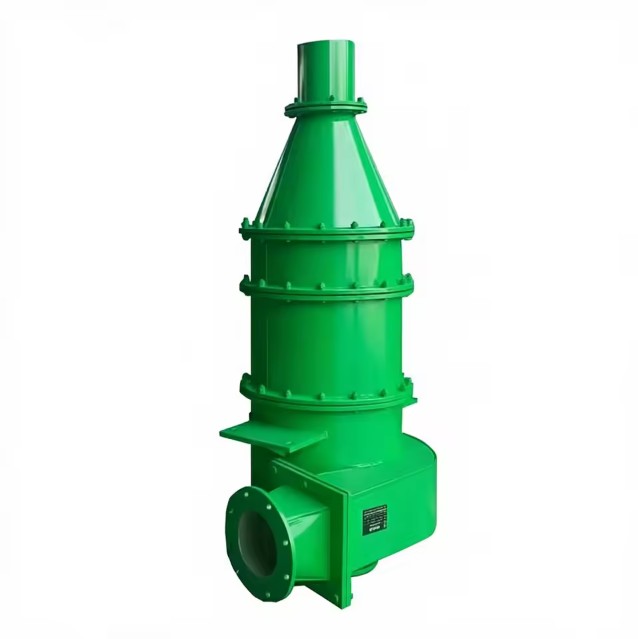
Underflow is the coarse, dense fraction discharged from the apex (spigot) at the bottom of a hydrocyclone. In optimal operation, it discharges as a coherent, umbrella-shaped spray with a hollow cone. A “wet” or “dilute” underflow contains excessive water relative to solids.
What Is Underflow Density?
Underflow density is the solids concentration of the underflow stream, typically expressed as a percentage by weight. Higher density means more solids and less water. Optimal underflow density is critical for downstream dewatering, tailings management, and water recovery.
Working Principle
How Underflow Density Is Determined
Underflow density results from the balance between:
-
Solids loading — how much solid material enters the cyclone
-
Apex diameter — the size of the discharge opening
-
Feed pressure — the velocity and centrifugal force inside the cyclone
-
Air core stability — the internal vortex that controls separation
When these factors are in balance, a dense, coherent underflow is produced. When any factor is out of balance, the underflow becomes wetter.
Benefits
Benefits of Proper Underflow Density
-
Improved downstream dewatering — less water to remove in thickeners or filters
-
Better tailings management — higher density means less water in tailings
-
Increased water recovery — more water is recovered for reuse
-
Reduced reagent consumption — in flotation and leaching circuits
-
Lower pumping costs — less water to transport
-
Stable circuit operation — consistent feed to downstream processes
Applications
Hydrocyclone Applications Where Underflow Density Matters
-
Grinding circuit classification — underflow returns to mill
-
Desliming — removing fines before flotation
-
Tailings dewatering — reducing water content
-
Water recovery — maximizing water reuse
-
Flotation feed preparation — consistent density for reagents
-
Leaching circuits — optimal slurry density for cyanidation
Material Comparison
Apex Material Options for Extended Life
| Material | Wear Resistance | Cost | Best For |
|---|---|---|---|
| High-Chrome Iron | Good | Moderate | Standard abrasion |
| Ceramic (SiC/Alumina) | Excellent | High | Extreme abrasion |
| Polyurethane | Moderate | Moderate | Chemical resistance |
| Rubber | Moderate | Low | Impact absorption |
Application Comparison
Wet Underflow vs Normal Underflow: Diagnosis
| Symptom | Normal Underflow | Wet Underflow |
|---|---|---|
| Spray Pattern | Umbrella, hollow cone | Weak, scattered, diffuse |
| Sound | Sharp, consistent | Soft, irregular |
| Density | Design range (e.g., 50-60%) | Below design range |
| Apex Condition | Within 7% of nominal | Enlarged or oversized |
| Feed Pressure | At design set point | Above or below design |
Industry Application Matrix
| Industry | Typical Underflow Density Issue | Primary Cause |
|---|---|---|
| Gold Ore | Dilute underflow to leaching | Apex wear, low feed density |
| Copper Ore | Wet underflow to flotation | Pressure too high |
| Iron Ore | Dilute underflow to tailings | Apex wear |
| Coal | Weak underflow to dewatering | Feed PSD too fine |
| Silica Sand | Wet underflow to product | Apex too large |
| Tailings | Dilute underflow to thickener | Low feed density |
Selection Guide
Step-by-Step Diagnosis of Wet Underflow
Step 1: Measure the Apex
-
Compare current diameter to original specification
-
If >7% enlarged → Replace apex
-
If within spec → Proceed to Step 2
Step 2: Check Feed Density
-
Measure feed solids concentration
-
Compare to design range (typically 30-50%)
-
If below design → Increase density
-
If within design → Proceed to Step 3
Step 3: Check Feed Pressure
-
Read pressure gauge
-
Compare to recommended operating range
-
If above range → Reduce pressure
-
If within range → Proceed to Step 4
Step 4: Inspect Apex Size
-
Confirm apex is correctly sized for application
-
If oversized → Reduce by one step (2-4 mm)
-
If correct → Proceed to Step 5
Step 5: Review Feed PSD
-
Check particle size distribution
-
If excessive fines → Consider desliming
-
If normal → Proceed to Step 6
Step 6: Observe Discharge Pattern
-
Check for surging, roping, or instability
-
If present → Stabilize feed conditions
-
If normal → Consult specialist
Procurement Guide
Key Considerations When Procuring Hydrocyclone Apexes
Required Information:
-
Hydrocyclone model and size
-
OEM apex part number
-
Current apex diameter and wear rate
-
Feed conditions (density, PSD, pressure)
-
Ore type and abrasiveness
Supplier Evaluation Checklist:
-
□ Does the supplier offer multiple apex materials?
-
□ Can they provide wear-life guarantees?
-
□ Do they offer ceramic or high-chrome options?
-
□ What is the typical lead time?
-
□ Can they provide dimension verification?
Buyer Questions to Ask:
-
“What apex material do you recommend for my ore type?”
-
“Can you provide a wear-life comparison for ceramic vs high-chrome?”
-
“Do you offer a trial program for apex materials?”
-
“What is the recommended replacement schedule?”
Failure Analysis
| Problem | Possible Cause | Recommended Solution |
|---|---|---|
| Wet underflow | Worn apex | Replace apex |
| Wet underflow | Feed density too low | Increase solids concentration |
| Wet underflow | Feed pressure too high | Reduce pump speed |
| Wet underflow | Apex too large | Reduce one size step |
| Wet underflow | Feed PSD too fine | Deslime or larger cyclone |
| Wet underflow | Air core instability | Stabilize feed |
| Roping | Apex too small or feed too dense | Increase apex size; reduce density |
Maintenance Guide
Recommended Maintenance Schedule
| Frequency | Task |
|---|---|
| Daily | Observe underflow spray pattern; check pressure gauge |
| Weekly | Inspect apex visually for wear; check for blockages |
| Monthly | Measure apex diameter; document wear rate |
| Quarterly | Full internal inspection; replace worn apex if needed |
| Annually | Complete cyclone overhaul; replace all wear parts |
Preventive Maintenance Tips
-
Measure apex monthly — don’t wait for visible wear
-
Record baseline dimensions — establish wear rate
-
Monitor feed density — keep within design range
-
Control feed pressure — avoid over-pressurizing
-
Stock spare apexes — avoid downtime waiting for parts
Case Study
Case Study: Resolving Wet Underflow in a Gold Processing Plant
Customer Type: Medium-scale gold mine
Ore Type: Quartz vein gold, moderate abrasion
Operating Conditions: 50 tph feed, 35% solids, d80=200 microns
Problem:
The hydrocyclone underflow had become progressively wetter over three months. Underflow density dropped from 55% to 38%, causing:
-
Overloading of the thickener
-
Poor water recovery
-
Increased reagent consumption in leaching
Solution:
Investigation revealed the apex had worn from 25 mm to 29 mm (16% enlargement). The apex was replaced with a ceramic apex (silicon carbide) of the correct 25 mm diameter. Feed density was also adjusted slightly to 38% to optimize classification.
Result:
-
Underflow density restored to 54% within one shift
-
Thickener loading reduced by 30%
-
Water recovery improved by 15%
-
Reagent consumption reduced by 8%
-
Apex life extended from 3 months to 12 months (4× longer)
-
Investment payback period: 2 months
FAQ
Question 1: Why is my hydrocyclone underflow suddenly wet?
Answer: A sudden change to wet underflow usually indicates a mechanical issue—most commonly a worn or oversized apex. Other causes include a sudden drop in feed density or a change in feed pressure. Start by measuring the apex diameter. If it has enlarged by more than 7% from nominal, replace it. If the apex is within specification, check feed density and pressure.
Question 2: How do I know if my apex is worn?
Answer: Measure the apex diameter with a caliper or internal gauge. Compare it to the original specification. If it has enlarged by more than 7%, it should be replaced. Visually, a worn apex may show an uneven or enlarged opening. Underflow density dropping gradually over weeks is the classic indicator of apex wear.
Question 3: What feed density is required for proper underflow?
Answer: For most mineral processing duties, feed solids concentration should be maintained within the design range—typically 30–50% by weight. When feed density is too low, there is insufficient solids loading to form a dense underflow. The cyclone discharges a dilute, watery stream instead. Adjust dilution water or upstream thickening to maintain proper feed density.
Question 4: Can high feed pressure cause wet underflow?
Answer: Yes, elevated feed pressure increases tangential velocity inside the cyclone, forcing more water through both overflow and underflow. The result is a wetter underflow with lower solids concentration. Check your pressure gauge—if it reads above the recommended operating range, reduce pump speed or adjust the valve to bring pressure back to the design set point.
Question 5: What if my apex is new but underflow is still wet?
Answer: If the underflow is wet from the moment of installation with a new apex, the apex is likely too large for your application. Even a correctly manufactured apex can be oversized if it was incorrectly selected. Reduce the apex diameter by one size step (typically 2–4 mm) and observe the underflow pattern. Adjust further if needed.
Question 6: How does feed particle size affect underflow density?
Answer: When feed contains excessive fines (especially below 75 microns), the cyclone struggles to classify them efficiently. Fine particles tend to report to overflow, but they also carry water into the underflow under some conditions, diluting the stream. If your feed PSD shows excessive fines, consider upstream desliming or a larger cyclone with different geometry.
Question 7: What is air core collapse and how does it affect underflow?
Answer: The air core is the internal vortex that forms along the cyclone’s axis. When it collapses—often due to high feed density or an undersized apex—the discharge becomes unstable. This can cause roping (dense, rope-like discharge) or intermittent surging. Paradoxically, an unstable air core can also produce a wet underflow if the condition is intermittent.
Question 8: How can I prevent wet underflow problems?
Answer: Prevention is straightforward: measure your apex monthly, monitor feed density, and control feed pressure. Establish a wear baseline within the first month of operation. Keep spare apexes in stock to avoid downtime. Consider upgrading to ceramic or high-chrome apexes in high-wear applications to extend service life and maintain consistent underflow density.
Conclusion
A wet hydrocyclone underflow is rarely caused by a single factor. The most common culprits are apex wear, low feed density, and excessive feed pressure. By systematically checking these three areas first, most underflow density problems can be resolved quickly.
Key Takeaways:
-
Apex wear is the #1 cause—measure it monthly
-
Feed density should be maintained at 30–50% solids
-
Feed pressure should be at the design set point
-
Upgrade to ceramic apexes for extended life and consistent performance
-
Regular inspection prevents small issues from becoming big problems
With proper attention to these factors, you can maintain optimal underflow density, improve downstream performance, and reduce operating costs.
Related Articles
Related Products:
Related Technical Guides:
-
Your Hydrocyclone Is Likely Wearing Out Too Quickly — Here’s Why
-
Hydrocyclone vs. Thickener: Key Design Differences for Mineral Processing
Related Buyer Guides:
Contact Us
We warmly welcome customers from around the world to contact us and establish mutually beneficial partnerships.
Contact: Annie Lu
Email: annie.lu@huataogroup.com
Phone / WhatsApp: +86 180 3242 2676
Website: http://www.tufflexscreen.com
Tags: Hydrocyclone, Underflow Density, Apex Wear, Feed Density, Feed Pressure, Mineral Processing, Mining Operations, Troubleshooting, Wear Parts, Process Optimization
 admin
admin
personal profile