Flotation Stator Function: What It Does and How to Manage It
-
 admin
- 18 Nov, 2026
Quick Answer
The stator in a flotation cell is the stationary vane ring surrounding the rotor. It converts the rotor’s swirling discharge into vertical pulp circulation, forms the second shear zone that disperses air into fine bubbles, and evens out upwelling so the froth stays stable. Bubble fineness, suspension quality, and froth behavior all trace directly to its geometry and wear state.
What Is a Flotation Stator?
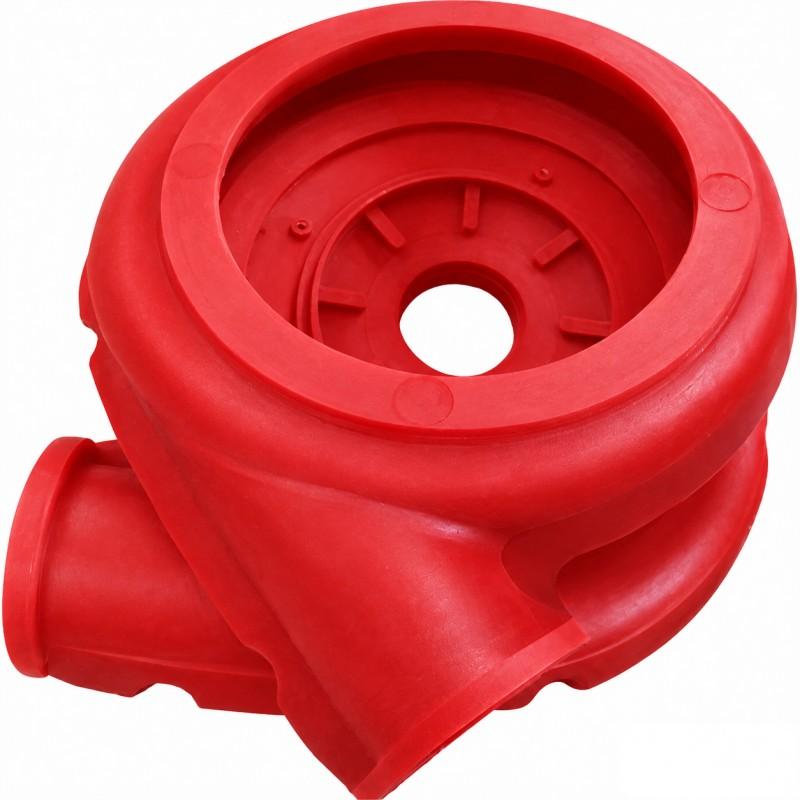
The stator is the ring of fixed vanes bolted to the tank bottom around the rotor, running submerged in abrasive slurry with a designed clearance of a few millimeters from the rotor’s swept tips. Some OEMs call it a diffuser or disperser. Whatever the name, the job is the same: receive the rotor’s raw output and turn it into metallurgy. OEM drawings differ by family — an XJK flotation machine shapes its stator differently from an XCF/KYF flotation cell or an SF flotation machine — but the physics underneath never changes.
Key Takeaways
✔ Converts swirl into vertical circulation, keeping solids suspended and bubbles distributed.
✔ Finishes air shearing in the rotor-to-stator gap, setting the bubble size the cell runs on.
✔ Evens upwelling across the cell cross-section, which is what makes a froth stable enough to scrape.
✔ Protects the tank shell and converts motor power into useful velocity gradients instead of spin.
✔ Managed with two measurements — clearance and weight — and replaced as a matched pair with the rotor.
Summary Table
| Item | Description |
| Function | Swirl-to-circulation conversion, secondary air shear, froth stabilization, tank protection |
| Material | Rubber-faced steel, polyurethane, ceramic-composite or hardened vane edges |
| Application | Rougher, cleaner, and scavenger duty across all mechanical flotation machine families |
| Service Life | Months per campaign, judged by weight loss and clearance growth |
| Benefits | Stable recovery, even froth, planned shutdowns, lower power waste, protected shell |
Definition
Mechanical flotation is a two-part machine pretending to be one. The rotor supplies energy; the stator gives that energy direction. Without the stationary half, the cell would be a stirred tank with air in it — plenty of motion, very little selective separation. Every flotation machine on the market, from self-aspirated small cells to forced-air tank machines, is built around the same fixed ring, and every one of them judges its stators by the same eventual question: has the clearance opened past the point where the designed bubble size survives?
The Flotation stage sits mid-circuit — fed by grinding and classification, drained by dewatering — and stator condition ripples both directions through that neighborhood.
Working Principle: The Three Functions
Flow conversion. The rotor throws slurry outward at speed, and the discharge arrives as swirl. Swirl is wasted motion: the pulp rotates as a body with the impeller, relative velocity between particles and bubbles collapses, and the tank stirs without circulating. The stator’s vanes catch each tangential jet, kill its spin, and redirect the stream upward along a defined path. What leaves the rotor as a horizontal vortex enters the pulp as vertical circulation — rising across the cell cross-section, sweeping the froth interface, returning down the draft tube, and repeating. That loop suspends coarse particles and carries bubbles to every region of the pulp rather than a cone above the shaft.
Secondary air shear. Air introduced beneath the rotor leaves the blade passages as a rough, partly coalesced mixture. The narrow annular gap between rotor tips and stator vanes subjects that mixture to a second, more violent shear field, tearing the remaining large bubbles down to design fineness. Fine bubbles present more surface per unit of air, rise more slowly, and give particles more attachment time — the entire economics of recovery sit inside that gap. The flow physics is worked through in detail in this guide to Rotor & Stator in Mechanical Flotation Cells, and the maintenance consequences in the companion article on Rotor and Stator Wear Parts.
Froth stability and power discipline. Even upwelling gives an even froth depth; uneven upwelling gives a froth that’s dry on one side and collapsing on the other, with no reagent explanation. The ring also stands between the rotor’s high-velocity discharge and the tank shell, letting liners and steel last decades instead of campaigns. And because swirl is wasted energy, the stator is the part that converts motor power into useful velocity gradients — which is why a cell with a badly worn stator can draw normal or rising power while doing progressively less work per kilowatt.
None of these functions fails suddenly. They fade together as the clearance opens, on the same curve, which is why measurement beats inspection every time.
Benefits
- Recovery held at design, because bubble fineness and circulation stay where the metallurgist set them.
- A froth worth scraping, even across the cell, carrying concentrate to the lip instead of collapsing in patches.
- Power spent on separation, not on spinning a tank in place.
- Planned shutdowns, because weighed stators announce their own replacement dates.
- A protected shellthat never sees high-velocity slurry directly.
- Honest troubleshooting, because chemistry and feed get blamed only when they deserve it.
- Negotiating strength, since a plant with its own wear curve buys on schedule instead of in emergencies.
Applications
Stators work wherever mechanical flotation works: copper, lead-zinc, nickel, gold sulphide, phosphate, lithium, and industrial mineral circuits. Rougher machines hand them tonnage and coarse feed. Cleaners demand bubble precision in delicate chemistry. Scavengers ask them to circulate pulp everyone else has already processed once.
Demand keeps widening, and the flowsheet context is changing with it. On November 17, 2026, Koryx Copper published the pre-feasibility study for its Haib copper project in Namibia — a 48 Mtpa milling-and-flotation plant rejecting roughly a quarter of run-of-mine mass as barren coarse tailings ahead of a hybrid Jameson and tank-cell circuit, targeting about 135 ktpa of copper in concentrate over the first ten years. Hybrid flowsheets of that kind ask tank cells to run at higher loadings than the previous generation did, and stator geometry carries more of that burden than any other wear part in the machine.
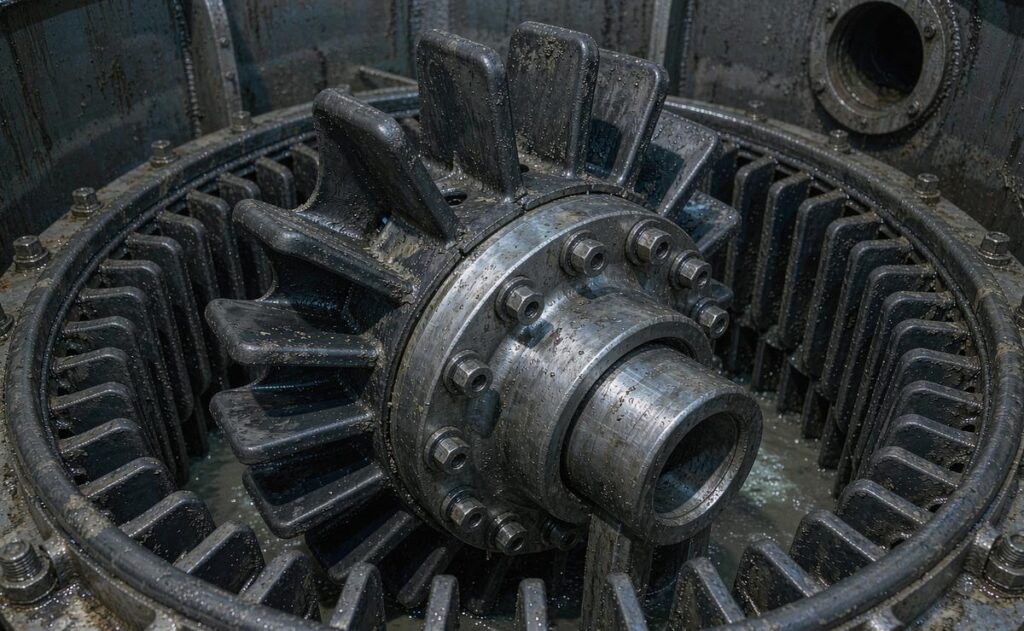
A matched pair in a drained cell — the clearance between rotor tips and stator vanes sets bubble fineness.
Material Comparison
| Property | Rubber-Faced Steel | Polyurethane | Ceramic Composite |
| Abrasion resistance | Good | Very good | Excellent at leading edges |
| Impact tolerance | Excellent — deflects | Moderate — may crack | Brittle under direct impact |
| Chemical resistance | Moderate | Very good | Very good |
| Profile retention | Fair | Good | Excellent |
| Relative cost | Lowest | Mid | Highest |
| Natural home | Coarse rougher feed | Cleaners, corrosive pulps | High-velocity vane edges |
Rubber deflects under tramp and coarse lumps but surrenders edge sharpness sooner. Polyurethane holds geometry through fine abrasion and aggressive chemistry, provided the feed is well screened. Composite and hardened inserts concentrate hardness where slurry velocity peaks — leading edges and the passages nearest the rotor — stretching campaigns on large machines as long as nothing hard arrives uninvited.
Application Comparison
| Duty | Recommended Material | Deciding Factor |
| Large rougher machines | Rubber, composite edges | Impact tolerance plus tip velocity |
| Cleaner circuits | Polyurethane | Geometry and chemical stability |
| Scavenger cells | Rubber or PU per data | Measured wear rate, not tradition |
| Regrind-fed fine duty | PU or composite | Profile loss costs recovery most |
| High-tip-speed tank cells | Composite on leading edges | Extreme local velocity |
Industry Application Matrix
| Industry | Duty Character | Typical Material |
| Copper concentrators | High-tonnage roughing | Rubber with composite edges |
| Lead-zinc circuits | Multi-stage cleaning | Polyurethane |
| Gold sulphide plants | Mixed rougher and cleaner | Rubber roughers, PU cleaners |
| Phosphate beneficiation | Sandy coarse feed | Rubber |
| Nickel sulphide | Fine corrosive pulps | Polyurethane |
| Lithium circuits | Reagent-aggressive duty | Polyurethane |
Selection Guide
Choose the machine before the material. Confirm cell model, family, and generation; then vane count, diameter, bolt pattern, and air pathway. Suppliers of flotation rotor and stator parts manufacture from OEM drawings, an original set, or the worn sample, and photographs plus a handful of key dimensions usually complete a quotation within days.
Match material to duty with the tables above. Then ask the supplier two questions with numbers in the answers: what does the stator weigh as new, and what weight loss do they recommend before replacement? Numeric answers mean someone has watched these parts wear; adjectives mean someone hasn’t.
Feed context belongs in the same review. Drifting hydrocyclones upstream change the size distribution the stator must circulate, and the resulting sanding gets blamed on the wrong component. One step further back, ball mill liners and grinding media set the grind flotation inherits. Diagnose the circuit, not just the cell.
The aftermarket itself is consolidating around service, which favors buyers who document their fleets. On November 12, 2026, FLSmidth launched its Accelerate ’31 strategy — expanding commercial coverage from roughly 500 to the world’s top 1,000 mines and standardizing its supply chain to improve delivery speed. Large OEMs competing on lifecycle coverage means the practical question for a plant shifts from “who can supply a stator” to “who supplies one with paperwork that survives an audit.”
Procurement Guide
- Machine identification:cell model and family, generation or serial number.
- Geometry:drawings or worn sample, vane count, diameter, bolt pattern, air pathway.
- Material and hardness specificationwith any plant preference.
- Quantity:running sets plus shelf-stock ratio, ordered as matched rotor-stator pairs.
- Inspection requirements:dimensional report, as-new weight, hardness certificate.
- Packaging:export-ready crating with humidity protection for polymer parts.
- Lead timealigned to the shutdown calendar.
- Commercial terms:MOQ, payment, and warranty expectations stated plainly.
Supplier evaluation is documentation quality in disguise. Ask whether they manufacture to drawings or from samples, whether material reports travel with delivery, and whether they’ve shipped crated polymer spares internationally. The aftermarket for flotation impeller and stator sets is competitive and mature, so the differentiator is rarely price alone — it is what arrives in the crate and the paperwork behind it. Plants that stock matched rotor-stator spare sets per large machine turn every stator failure from an outage into a change-out. Timing matters as much as part quality: on November 13, 2026, Capstone Copper reported that recommissioning of the primary crusher at Pinto Valley in Arizona slipped to mid-December because several major components had to be manufactured off-site by the original equipment maker — costing roughly 5,000 t of 2026 copper output despite a partial concentrator restart at up to 40,000 t/d. When long-lead hardware idles a concentrator, an aftermarket stator supplier who ships within weeks stops being a convenience and becomes the schedule.
Reagent discipline belongs here too: recovery swings blamed on worn stators sometimes trace to poorly maintained flotation reagent feeders, and no quantity of new hardware fixes a dosing fault.
Failure Analysis
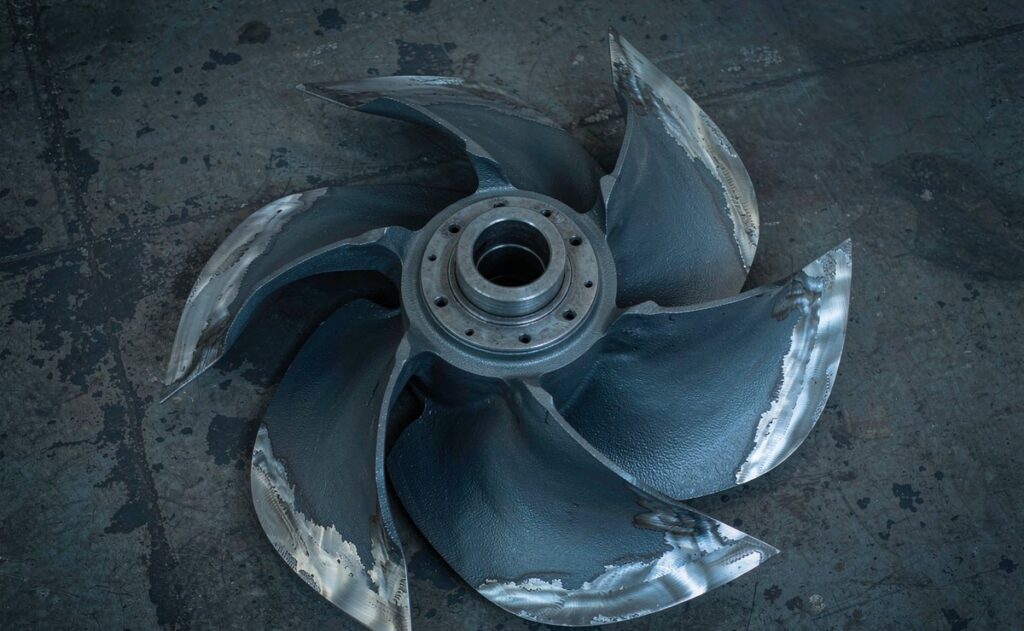
Rounded profiles shear less and circulate less — the physical link between wear and lost recovery.
| Problem | Possible Cause | Recommended Solution |
| Broken vane sections | Tramp metal through the cell | Improve screening; inspect after tramp events |
| Vibration and loosening | Hold-down bolts unwound | Torque bolts at every refit; use locking washers |
| One-sided wear | Misaligned or bowed mounting | Verify mounting flatness at refit |
| Coarse bubbles, patchy froth | Opened clearance, rounded vanes | Gauge gap; replace pair when doubled |
| Rubber debonding | Bond defect or chemical attack | Demand bond data; audit reagents |
| Cracked polyurethane | Impact beyond tolerance | Reassign duty to rubber |
| Persistent sanding | Circulation collapse | Check power draw and clearance together |
| Short campaign life | Material mismatch | Re-specify material from wear data |
Maintenance Guide
Daily, operators listen — surface behavior changes before recovery numbers do. Weekly, power draw and air rate go into the log against baseline. At every planned pull, the stator is weighed, the clearance gauged, and the vanes photographed, with numbers written against the as-new record created at installation. Replacement triggers — 15-20% weight loss or a doubled gap — are standing rules decided in the office, not argued on the platform at midnight. Shelf stock carries a matched set per large machine, rotated oldest-first, stored indoors off concrete away from the sunlight and ozone that quietly age polymers between campaigns.
Case Study
Customer Type: Mid-size copper concentrator, South America
Ore Type: Copper sulphide with pyrite, moderately abrasive
Operating Conditions: Four rougher machines on rubber rotor-stator sets, 4 mm design clearance
Problem: Recovery drifted about one percentage point over two months; the end machine’s froth turned visibly coarser and patchier than the first
Solution: Weighed all four stators and gauged clearances at the next shutdown. The end-machine stator had lost 19% of its mass and its clearance had doubled; two more sat near 14%. Three sets replaced in one planned shutdown, the fourth at the following window.
Result: Recovery returned to baseline within days and held; the patchy froth disappeared. The plant now orders against its own measured wear curve instead of a supplier’s generic estimate.
FAQ
Is the stator the same as a diffuser?
Functionally, yes — diffuser, disperser, and stator all name the stationary vane ring around the rotor. Different OEMs prefer different words, and some reserve “diffuser” for smaller self-aspirated machines. When ordering, describe the part: vane count, diameter, bolt pattern.
Why replace rotor and stator together?
The clearance between them is one system. A new rotor inside a worn stator operates at the worn gap and delivers worn performance, so the money spent buys little. Matched sets come from the same mold batch, so vane profiles actually fit the rotor they’re paired with.
How is stator wear measured?
Clearance and weight. Gauge the rotor-tip-to-vane gap at fitting and at every pull, and weigh the stator against its as-new record. Replace at roughly 15-20% mass loss or a doubled clearance, whichever arrives first. Photograph worn vanes; uneven patterns point at misalignment rather than erosion.
Does a worn stator show in power draw?
Not reliably, and that’s the trap. Swirl wastes power quietly, so a badly worn stator can draw normal power while doing less useful work. Froth quality, bubble size, and recovery trend are earlier indicators. For stators, trust the gauge over the meter.
How long does a stator last compared with a rotor?
Usually longer, because it sees less direct impact, but the margin is smaller than plants assume. In coarse rougher duty rubber stators often outlast one rotor campaign; in fine abrasive cleaner duty the two wear closer together. Judge by your own gauge readings, not generic tables.
Can polyurethane and rubber stators share one circuit?
Most plants mix them sensibly — rubber on coarse rougher duty, polyurethane on cleaners and corrosive pulps. Keep per-machine wear records so each material gets judged on measured life in its own service rather than on reputation.
What causes a stator to fail early?
Four common culprits: tramp metal breaking vanes, loose hold-down bolts letting the ring vibrate, misaligned mounting wearing one side, and chemistry attacking the polymer bond. All four are cheap to prevent and expensive to ignore — torque, align, screen, audit.
What belongs in a stator RFQ?
Machine model and family, drawings or the worn sample, vane count and diameter, material preference, quantities with a spare ratio, and inspection requirements — dimensional report, as-new weight, hardness certificate. Complete enquiries price better because the supplier isn’t pricing your omissions.
Conclusion
The stator is the fixed half of a flotation cell’s machinery, and nearly everything the rotor achieves depends on it: circulation without swirl, bubbles without coarseness, a froth that carries instead of collapsing. Its functions decay gradually and together as the clearance opens, and the loss surfaces as a recovery drift nobody can quite attribute to chemistry. The remedy costs a feeler gauge, a scale, and the discipline to use them at every shutdown. Gauge the clearance, weigh the part, replace the pair as a set, and buy from suppliers whose paperwork matches their products — plants that run this system keep recovery flat for years.
Related Articles
Related Products
- Flotation Cell Machines
- Custom Rotor and Stator Manufacturing
- Impeller and Stator Replacement
- Rotor and Stator Spare Sets
- XJK Type Flotation Machine
- SF Type Flotation Machine
Related Technical Guides
- Rotor-Stator Wear Parts and Maintenance Cost
- Rotor-Stator Flow Patterns Guide
- Hydrocyclone Wear Zones and Materials
- Hydrocyclone Underflow Causes and Fixes
- Fine Screening with Polyurethane Panels
Related Buyer Guides
Related Comparison Articles
Contact
Annie Lu
Email: annie.lu@huataogroup.com
WhatsApp / WeChat: +86 18032422676
Website: www.tufflexscreen.com
HTL Solutions manufactures rubber, polyurethane, and ceramic-composite flotation stators and matched rotors to OEM drawings or from worn samples, with weight, hardness, and dimensional documentation on every delivery.
 admin
personal profile