What Are the Advantages of Increasing the Effective Open Area of PU Mesh Panels?
-
 admin
- 09 Nov, 2026
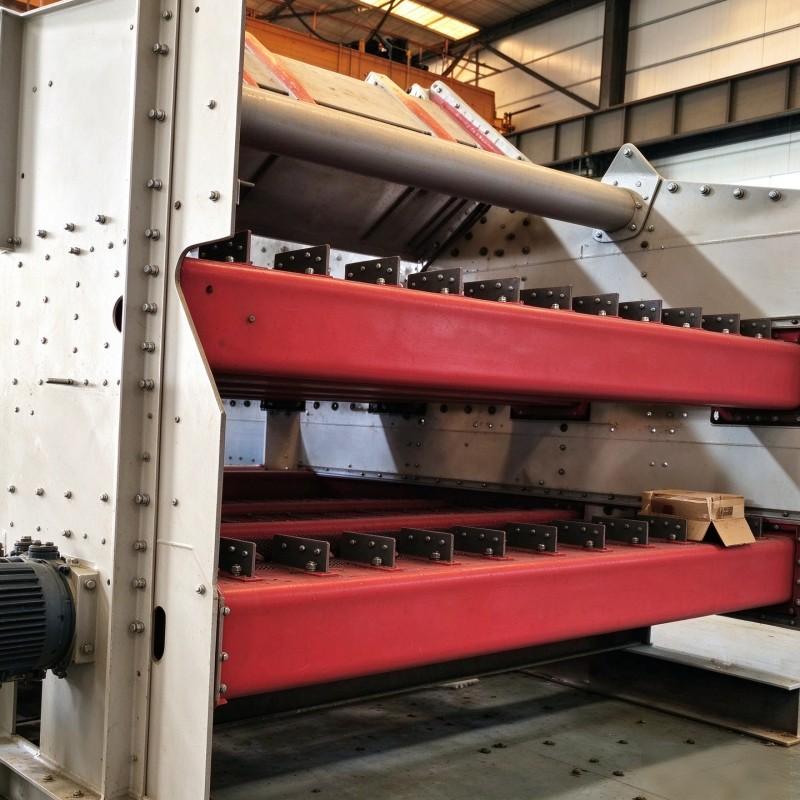
Increasing the effective open area of polyurethane mesh panels can improve screening capacity, give undersize particles more opportunities to pass, make better use of an existing vibrating screen deck, and support wet screening and dewatering. The important distinction is between nominal open area on a drawing and effective open area during operation, where pegging, blinding and buildup reduce what is actually available. Higher open area must also be balanced against panel strength, rib width, thickness and abrasion resistance.
Key Takeaways
-
Effective open area, not nominal, governs throughput. Apertures blocked in operation deliver no capacity regardless of the drawing figure.
-
Higher open area helps most when available screening area is the constraint — not when feed distribution or bed depth is the problem.
-
Aperture shape is the most powerful lever. Rectangular and slotted openings can exceed square-aperture open area at comparable cut size.
-
Rib width and panel thickness trade off against wear life. Narrow ribs and thin panels raise open area but reduce tear resistance and wear allowance.
-
Anti-blinding design raises effective open area more reliably than simply enlarging apertures.
-
Dewatering duty needs slot design driven by solids retention, not maximum open area.
Summary Table
| Item | Description |
|---|---|
| Function | Increasing usable aperture area on a vibrating screen deck |
| Material | Polyurethane panels with square, rectangular or slotted apertures |
| Aperture | Shape, orientation, rib width and thickness determine nominal and effective open area |
| Application | Mineral screening, aggregate sizing, fine screening, wet screening, dewatering |
| Service Life | Affected by rib width, panel thickness, abrasiveness and impact |
| Benefits | Higher capacity potential, better undersize passage, drainage improvement, bottleneck relief |
Definition
Nominal open area is the percentage of the panel surface occupied by apertures when the panel is clean, unobstructed and measured against its design drawing.
Effective open area is the usable aperture area under real operating conditions, after accounting for pegging, blinding, material buildup and any other obstruction.
PU mesh panel here means a polyurethane screening panel with moulded apertures, used in mineral processing and aggregate screening. It is typically compared against WIRED & STEEL SCREEN MESH and rubber media, and often evaluated alongside a POLYURETHANE FINE SCREEN PANEL where the cut is tight.
Working Principle
Effective open area is determined by two things: how much aperture the panel has by design, and how much of that aperture remains usable in operation.
Design-side levers raise nominal open area. Aperture shape matters most: rectangular and slotted openings can deliver more open area than square openings of comparable separation size. Rib and ligament width comes next — narrower ribs increase open area but reduce structural support and wear material. Panel thickness follows: thinner panels allow more open area but reduce wear allowance. Aperture orientation affects drainage, particle passage and sizing behaviour.
Operation-side factors determine how much nominal area remains effective. Blinding from wet fines and clay adheres to the surface. Pegging from near-size particles wedges in apertures. Material buildup collects at edges, support points and feed zones. Feed distribution and bed depth determine whether apertures see material at all or sit buried under a deep bed.
The engineering task is to raise nominal open area without reducing effective open area through blockage, and without sacrificing wear life to the point where changeout frequency erases the capacity gain.
Benefits
-
Higher screening capacity potential where available screening area limits production rate.
-
Improved undersize passage in fine screening, where limited openings restrict passage probability.
-
Better utilisation of existing deck area, potentially avoiding immediate capital expenditure on a larger machine.
-
Improved drainage and desliming potential in wet screening and DEWATERING duty.
-
Bottleneck relief where a specific deck section restricts the whole circuit.
-
Zoned design flexibility, allowing different open-area specifications by deck position.
Applications
-
Iron ore and copper ore screening where capacity rather than wear is the constraint.
-
Coal preparation and wet screening where drainage and undersize passage both matter.
-
Sand and gravel sizing where open area affects product throughput.
-
Fine screening duties where passage probability is limited by opening count.
-
Dewatering decks where slot design must balance drainage against solids retention.
-
Aggregate classification where product specification constrains aperture size.
These duties sit between size reduction in CRUSHING and downstream GRINDING or CLASSIFICATION. Higher throughput on the screen shifts load into the next stage, so downstream capacity should be checked before the panel change.
Material Comparison
| Property | High-Open-Area PU Panel | Standard PU Panel | Woven Wire Mesh | Rubber Screen Media |
|---|---|---|---|---|
| Nominal open area | High | Moderate | High | Moderate |
| Effective open area (wet clay) | Moderate–good | Moderate | Poor | Moderate |
| Wear resistance | Good (design-dependent) | Good | Moderate | Good–excellent |
| Tear resistance | Lower with narrow ribs | Good | Moderate | High |
| Dewatering suitability | Good with slotted design | Moderate | Moderate | Moderate |
| Best application | Capacity-constrained screening, fine sizing | General abrasive duty | Clean dry high-capacity duty | Coarse high-impact zones |
Application Comparison
| Scenario | Dominant Constraint | Recommended Direction |
|---|---|---|
| Deck capacity limits plant throughput | Effective open area | Slotted or rectangular aperture PU panel |
| Fine screening, low passage probability | Aperture count and shape | POLYURETHANE FINE SCREEN PANEL |
| Wet screening with drainage needs | Slot design and orientation | Slotted PU panel with dewatering-compatible orientation |
| Blinding on wet clay feed | Anti-blinding design | Tapered or flexible panel plus moisture control |
| Excessive wear on thin panels | Rib width and thickness | Increase rib width; accept lower open area |
| One deck section restricting the circuit | Zoned design | Different panel specifications by deck position |
Industry Application Matrix
| Industry | Typical Material | Constraint | Open-Area Priority |
|---|---|---|---|
| Iron ore | Hematite, magnetite | Capacity and wear | High open area with adequate rib width |
| Copper | Copper ore | Throughput | Rectangular aperture for passage |
| Gold | Gold ore, alluvial | Fine screening | Fine panel with controlled aperture |
| Coal | Coal with fines | Drainage and desliming | Slotted apertures for water passage |
| Aggregates | Limestone, granite | Product sizing | Balance open area against wear |
| Sand and gravel | Natural sand | Throughput | Slotted or rectangular aperture |
| Industrial minerals | Silica sand | Fine sizing | Fine panel with anti-blinding design |
| Base metals | Lead zinc, nickel ore | Capacity | Rectangular aperture with wear allowance |
| Phosphate | Phosphate ore | Wet screening | Slotted aperture for drainage |
| Tailings | Slurry, fine solids | Dewatering | Dewatering-specific slot design |
Selection Guide
1. Confirm whether open area is the real constraint. If capacity is limited by feed distribution, bed depth or upstream CRUSHING sizing, a more open panel will not deliver the expected gain.
2. Establish current nominal and effective figures. Measure both. Ask the supplier how their open-area percentage is defined before comparing options.
3. Match aperture shape to the duty. Rectangular or slotted openings for passage and drainage; square openings where sizing accuracy dominates and open area is adequate.
4. Check the wear trade-off. Narrow ribs and thin panels raise open area but reduce service life. Select rib width and thickness against maximum feed size and abrasiveness.
5. Consider zoned design. A BANANA SCREEN deck with a thin bed at the feed end and higher load downstream may benefit from different panel specifications by position.
6. Verify installation compatibility. Confirm SCREENING ACCESSORIES, fastening system and tensioning arrangement before ordering.
7. Trial and measure. Compare throughput, separation quality, blockage frequency and panel life on the VIBRATING SCREENS deck under comparable feed.
Procurement Guide
Required information: material type, maximum feed size, particle-size distribution, target separation size, required aperture shape, moisture and clay content, current panel thickness and open-area percentage, screen machine model, deck dimensions, fastening system, current performance problems.
Drawings needed: panel outline with tolerances, aperture pattern and pitch, rib width specification, slot orientation, fastening detail.
OEM part numbers: obtain original panel references and confirm replacement compatibility.
Material selection: request polyurethane formulation and hardness documentation, plus aperture and rib dimensions in writing.
MOQ, lead time, packaging and shipping: confirm trial quantities, shutdown alignment, packaging for long panels, shipping method.
Inspection standards: dimensional check against drawing, aperture measurement, rib width verification, hardness and coating inspection.
Supplier evaluation checklist — ask directly:
-
Can you manufacture according to our drawings?
-
Can you provide material reports?
-
Can you support OEM replacement?
-
Do you have export experience in our region?
-
Can you provide open-area and wear-life recommendations for our feed?
A supplier answering all five with documentation is a different risk profile from one answering with a catalogue. The WHICH MANUFACTURER OFFERS HIGH-QUALITY POLYURETHANE TUFFLEX WIRE SCREENS FOR MINING? guide expands on each question.
Failure Analysis
| Problem | Possible Cause | Recommended Solution |
|---|---|---|
| Capacity below expectation after panel change | Open area not the real constraint; bed depth or feed distribution | Review feed distribution and bed depth before further panel changes |
| Premature panel tearing | Rib width too narrow for feed size and impact | Increase rib width; recheck impact zone |
| Rapid wear on thin panels | Insufficient wear allowance | Increase thickness; accept lower open area |
| Blinding despite high nominal open area | Wet clay adhesion; poor surface or aperture design | Review anti-blinding design, aperture profile and moisture control |
| Pegging in near-size range | Square aperture unsuitable for particle shape | Test rectangular or slotted aperture |
| Poor drainage in dewatering duty | Slot orientation or dimensions unsuited to the solids fraction | Review slot design against DEWATERING requirements |
| Low efficiency | Uneven feed or incorrect inclination | Check LINEAR VIBRATING FEEDER spread; verify settings |
| Poor fitment | Incorrect panel dimensions or fastening detail | Re-measure against drawing; confirm accessories |
| Material mismatch | PU grade unsuited to the feed | Request formulation review |
Maintenance Guide
Daily: check for blockage pattern and buildup; note which deck sections lose open area first.
Weekly: inspect tension, fastening and edge wear; confirm feed spreads across the full deck width.
Monthly: measure remaining rib width and panel thickness at high-wear zones; record changeout data.
Effective open area monitoring: photograph blocked apertures at fixed intervals. This is the most direct evidence of how much nominal area is being lost in operation.
Replacement timing: plan on measured wear rate, particularly at rib edges where thinning accelerates.
Spare parts inventory: hold rolling stock sized to consumption rate; include fastening components.
Downtime reduction: pre-stage panels and accessories before shutdown; standardise panel dimensions across decks where possible.
Preventive maintenance: treat feed distribution and bed depth as maintenance items — they determine whether the open area you paid for is actually used.
Case Study
Customer Type: Mid-size aggregate producer with a two-deck inclined screen.
Material: Crushed limestone with moderate moisture and a high proportion of near-size particles.
Operating Conditions: Standard PU panels with square apertures and moderate rib width; throughput limited by the lower deck; occasional pegging in the near-size range.
Problem: Plant throughput capped by screening capacity; the lower deck was identified as the bottleneck; panel wear life was acceptable.
Solution: Trial of higher-open-area PU panels with rectangular apertures on the lower deck, rib width reduced but verified against feed impact, slot orientation matched to material flow. Feed distribution corrected to reduce centre-deck bed depth. Throughput, separation quality, blockage frequency and panel life logged before and after.
Result: Throughput increased by roughly 12 percent across the trial period with product specification maintained; pegging frequency reduced; panel life shortened by about 10 percent, which was accepted because the capacity gain outweighed the changeout cost. A second deck section was not changed, because its constraint was feed distribution rather than open area.
Figures reflect a realistic single-site trial and are not a guaranteed performance claim.
FAQ
Q1: Why is open area important in PU mesh panels?
Open area determines how much of the panel surface is available for particles — and in wet applications, water — to pass through. A suitable increase can improve capacity and screening opportunities. However, the figure that matters is effective open area during operation, not the nominal percentage on a drawing.
Q2: Does higher open area always mean higher screening capacity?
No. Capacity also depends on feed distribution, bed depth, particle size, vibration, moisture and blockage. Higher open area is beneficial only when available screening area is a meaningful limitation. If the deck is running too deep a bed, a more open panel will not deliver the expected gain.
Q3: How can I increase the open area of a polyurethane screen panel?
Possible approaches include optimising aperture shape, reducing unnecessary rib width, adjusting panel thickness and selecting a suitable panel layout. Each change must preserve sufficient strength and wear resistance, so the design should be reviewed against maximum feed size and impact rather than open area alone.
Q4: Can a high-open-area PU panel be used for wet screening?
Yes, depending on aperture design and process requirements. The panel should be selected according to moisture, fine-particle content, drainage needs and required separation size. For dewatering, a panel that releases too much solids creates product loss that outweighs the drainage benefit.
Q5: What is the difference between nominal and effective open area?
Nominal open area is measured from the clean panel design. Effective open area describes the usable opening area during operation, after accounting for blocked apertures and material buildup. Always ask a supplier which figure their percentage refers to before comparing options.
Q6: How much do high-open-area PU panels cost?
Price depends on panel size, aperture pattern, rib width, thickness, polyurethane grade and quantity. Higher open-area designs are not necessarily more expensive, but they may trade wear life for capacity. Evaluate against cost per tonne processed, including changeout labour and downtime, rather than purchase price per panel.
Q7: Will narrow ribs reduce panel life?
They can. Ribs provide structural support and wear material, so reducing rib width raises open area but lowers tear resistance and wear allowance. The correct rib width depends on maximum feed size, impact level and abrasiveness. A supplier should confirm the rib dimension against your application rather than supplying the thinnest option available.
Q8: Can I increase open area on only part of the deck?
Yes, and it is often the better approach. The feed end, middle section and discharge end do not experience the same load or wear conditions. A zoned design with different specifications by position can improve overall performance without compromising the feed zone, where impact damage is highest.
Q9: What information should I send for a panel quotation?
Provide material type, maximum feed size, target separation size, required aperture shape, moisture and clay content, current panel thickness and open-area percentage, screen machine model, deck dimensions, fastening arrangement and current performance problems. Photographs and drawings reduce the risk of a mismatched recommendation.
Q10: How should I evaluate whether the change worked?
Record baseline throughput, separation quality, blockage frequency, panel life and changeout hours before the change, then monitor the same indicators over a comparable period. Keep feed conditions consistent and document any process changes so the comparison remains valid.
Conclusion
Increasing the effective open area of PU mesh panels can offer higher screening capacity potential, improved undersize passage, better use of existing deck area and improved drainage in suitable wet-screening applications. But a higher open-area percentage should never be pursued at the expense of panel strength, wear life or separation accuracy.
The best panel provides sufficient usable opening area while maintaining the durability and screening performance the application requires. Confirm whether open area is genuinely the constraint, check the wear trade-off explicitly, and measure the result under comparable operating conditions.
If your plant is capacity-limited by screening open area, HUATAO can review your material and deck details and discuss a suitable panel configuration for evaluation.
Related Articles
Related Products
Related Technical Guides
-
IMPROVE FINE SCREENING EFFICIENCY WITH POLYURETHANE SCREEN PANELS
-
HYDROCYCLONE WEAR: ROOT CAUSES, HIGH-WEAR ZONES & MATERIAL SOLUTIONS
-
FLOTATION CELL ROTOR AND STATOR WEAR PARTS: HOW THEY CONTROL RECOVERY, FLOW AND MAINTENANCE COST
-
ROTOR & STATOR IN MECHANICAL FLOTATION CELLS: THE HEART OF EFFICIENT MINERAL FLOTATION
Related Buyer Guides
-
WHICH MANUFACTURER OFFERS HIGH-QUALITY POLYURETHANE TUFFLEX WIRE SCREENS FOR MINING?
-
HOW DO I CHOOSE THE RIGHT RUBBER BELT FOR A VACUUM BELT FILTER?
Related Comparison Articles
-
POLYURETHANE SCREEN VS RUBBER SCREEN VS WIRE MESH: A COMPLETE COMPARISON GUIDE
-
SELF-CLEANING SCREEN VS TRADITIONAL WOVEN WIRE MESH: WHICH ONE SHOULD YOU CHOOSE?
Contact
Annie Lu
Email: annie.lu@huataogroup.com
Mobile / WhatsApp / WeChat: +86 18032422676
Website: https://www.tufflexscreen.com
#PUmeshPanel #OpenArea #ScreenMedia #PolyurethaneScreen #Dewatering #FineScreening #MiningScreening
Tags:
 admin
personal profile