How Can You Extend the Service Life of PU Mesh Panels?
-
 admin
- 13 Nov, 2026
Panel service life means the operating hours or tonnes processed between installation and replacement, measured against defined criteria rather than visual failure alone.
Replacement criteria are the conditions under which a panel is changed: aperture enlargement beyond product specification, surface wear affecting structural integrity, or blockage frequency impairing throughput.
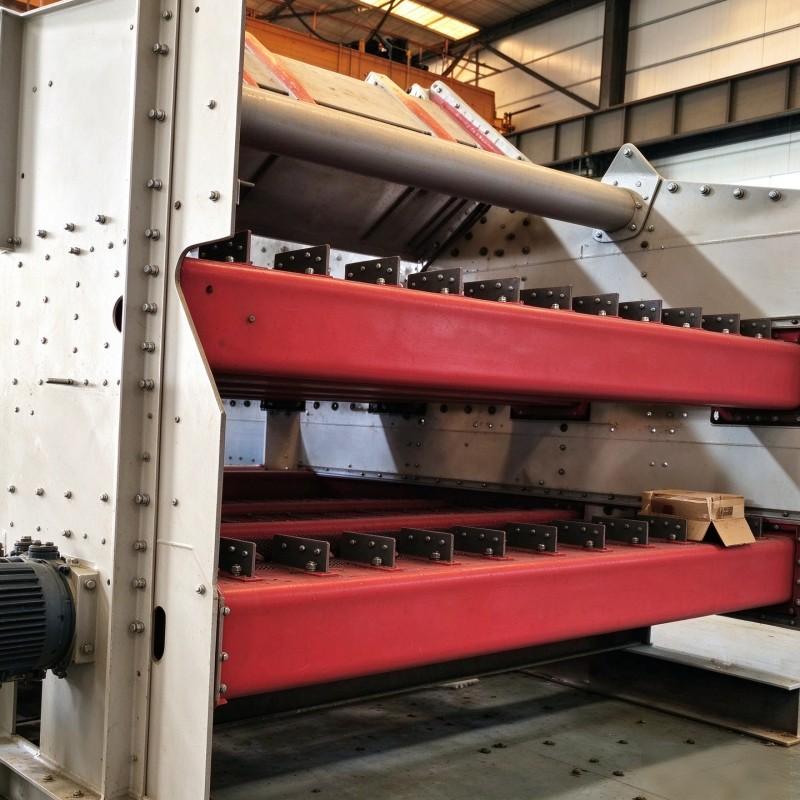
A PU mesh panel here means a polyurethane screening panel used in mining and mineral processing. It is typically evaluated against WIRED & STEEL SCREEN MESH and, for fine cuts, a POLYURETHANE FINE SCREEN PANEL configuration.
Working Principle
Panel life is determined by the interaction between the panel and its operating environment. Eight factors drive it, and each can be managed.
Selection. Mineral type, abrasiveness, feed size, cut size and wet or dry conditions determine the appropriate formulation, thickness and aperture. A panel designed for fine wet screening is not suitable for coarse impact duty.
Feed distribution. Concentrated feed creates localised impact and abrasion on a small number of panels. Even distribution spreads the load across the deck and uses the full screening surface.
Thickness and aperture. Thicker panels provide more wear material but reduce effective open area. Aperture shape determines how particles enter and release, which affects both wear and blockage.
Installation. Incorrect tension, poor seating, loose fasteners and damaged supports cause abnormal movement and localised wear. Correct installation is the difference between design life and premature failure.
Support structure. Worn rails, damaged beams, missing capping rubber and loose connections create friction and instability. The panel cannot perform if the structure beneath it moves.
Operating conditions. Vibration frequency, stroke, inclination, feed rate and bed depth all affect wear. Operating outside manufacturer limits accelerates failure regardless of panel quality.
Inspection and replacement timing. Regular inspection catches wear before it becomes a production problem. Replacement criteria based on product specification prevent both premature changeout and out-of-spec product.
Record-keeping. Operating hours and tonnes processed provide the only reliable basis for comparing panel options and predicting future life.
Benefits
-
Reduced changeout frequency when wear causes are addressed rather than symptoms.
-
Improved screen availability through planned rather than reactive replacement.
-
Lower cost per tonne when panels are evaluated on total operating cost.
-
More consistent product sizing when aperture condition is monitored against specification.
-
Better supplier conversations when feed data and wear records are presented.
-
Reduced unplanned downtime through position-based inspection and staging.
Applications
-
Iron ore and copper ore screening where abrasive wear drives changeout frequency.
-
Coal preparation where both abrasion and wet conditions apply.
-
Aggregate production where rock type and angularity vary through the pit.
-
Sand and gravel operations with seasonal moisture changes.
-
Fine screening where thickness and open-area trade-offs matter most.
-
Dewatering decks where panel condition affects drainage performance.
These duties sit between size reduction in CRUSHING and downstream CLASSIFICATION or DEWATERING. Panel condition propagates through the circuit as product sizing variation.
Material Comparison
| Property | PU Panel (cast) | PU Panel (modular) | Woven Wire Mesh | Rubber Screen Media |
|---|---|---|---|---|
| Abrasion resistance | Good | Good | Moderate | Good–excellent |
| Impact resistance | Moderate | Moderate | Low | Excellent |
| Open area at fine cuts | Moderate | Moderate | High | Limited |
| Installation flexibility | Tensioned | Locked modular | Tensioned | Bolted or modular |
| Typical service life (abrasive duty) | 3–12 months | 3–12 months | 4–8 weeks | 6–18 months |
| Best application | Fine and wet screening | Modular decks, varied sections | Clean dry high-capacity duty | Coarse high-impact zones |
Application Comparison
| Scenario | Primary Life-Limiting Factor | Recommended Direction |
|---|---|---|
| Sharp angular ore, high throughput | Abrasion | Thicker panel; verify formulation and feed distribution |
| Large rock at feed end | Impact | Impact media at feed zone; POLYURETHANE & RUBBER SCREEN PANELS hybrid |
| Fine screening with tight cut | Abrasion and aperture enlargement | POLYURETHANE FINE SCREEN PANEL with taper |
| Wet dewatering duty | Abrasion plus blockage | Slot design matched to DEWATERING requirements |
| Worn supports, poor tension | Tear and abnormal movement | Inspect SCREENING ACCESSORIES and support bars before panel change |
| Uneven feed distribution | Localised impact and abrasion | Correct feed box and chute before changing media |
Industry Application Matrix
| Industry | Typical Material | Wear Risk | Life Extension Priority |
|---|---|---|---|
| Iron ore | Hematite, magnetite | High abrasion | Selection and feed distribution |
| Copper | Copper ore | High abrasion | Panel thickness and installation |
| Gold | Gold ore, alluvial | Moderate–high | Feed distribution and inspection |
| Coal | Coal with shale partings | Moderate | Support maintenance and wet handling |
| Aggregates | Limestone, granite | High abrasion | Selection and feed distribution |
| Sand and gravel | Natural sand | Moderate | Inspection and replacement criteria |
| Industrial minerals | Silica sand | Moderate–high | Fine panel selection |
| Base metals | Lead zinc, nickel ore | High | Full eight-method programme |
| Phosphate | Phosphate ore | Moderate | Wet handling and support maintenance |
| Tailings | Slurry, fine solids | Moderate | Slot design and support condition |
Selection Guide
1. Characterise the application. Mineral type, abrasiveness, feed-size distribution, maximum feed size, cut size, wet or dry conditions, screen model and required capacity. This information determines the panel specification.
2. Correct feed distribution before changing media. Inspect the feed chute and distribution box. If oversize or concentration is causing localised impact, the issue may sit upstream in CRUSHING rather than on the deck.
3. Balance thickness against open area. Thicker panels last longer under abrasion but reduce capacity. A BANANA SCREEN with a thin, well-distributed bed often wears more evenly than a deck running deep at the feed end.
4. Verify installation requirements. Tensioning procedure, seating, fastener tightness and SCREENING ACCESSORIES condition. Do not apply one tension specification to every screen model.
5. Inspect the support structure. Support rails, beams, capping rubber and connections. Replace worn components before installing new panels.
6. Set operating parameters within manufacturer limits. Vibration, stroke, inclination, feed rate and bed depth. Investigate changes in screening performance before adjusting settings.
7. Define replacement criteria by product specification. A panel may look usable while its apertures have enlarged beyond specification.
8. Record and compare. Operating hours, tonnes processed, mineral type, feed range, thickness, aperture, deck position, wear pattern, reason for replacement.
Procurement Guide
Required information: mineral type and abrasiveness, feed-size distribution and maximum size, required separation size, wet or dry conditions, screen model and deck configuration, required capacity, current panel specifications and service life, main failure mode.
Drawings needed: panel outline with tolerances, aperture pattern and pitch, fixing detail, tensioning arrangement.
OEM part numbers: obtain original panel references and confirm compatibility with the deck.
Material selection: request polyurethane formulation, hardness and abrasion test information, plus suitability for wet or dry duty.
MOQ, lead time, packaging and shipping: confirm trial quantities, shutdown alignment, packaging for long panels, shipping method.
Inspection standards: dimensional check against drawing, aperture measurement, hardness verification, coating and weld inspection.
Supplier evaluation checklist — ask directly:
-
Can you manufacture according to our drawings?
-
Can you provide material reports?
-
Can you support OEM replacement?
-
Do you have export experience in our region?
-
Can you provide wear-life recommendations for our mineral?
The WHICH MANUFACTURER OFFERS HIGH-QUALITY POLYURETHANE TUFFLEX WIRE SCREENS FOR MINING? guide expands on each question.
Failure Analysis
| Problem | Possible Cause | Recommended Solution |
|---|---|---|
| Panel fails in weeks, not months | Incorrect tensioning; worn supports; material mismatch | Inspect SCREENING ACCESSORIES and support bars; verify formulation |
| Feed end wears first | Impact loading; high drop height; uneven distribution | Impact media at feed zone; review feed distribution |
| Cracking at fixing points | Incorrect tension; fastener damage; panel misalignment | Re-tension to specification; inspect fasteners |
| Aperture enlargement affects product | Normal wear progression | Define replacement criteria by product spec |
| Uneven wear across the deck | Uneven feed distribution | Review feed chute, distribution box and loading pattern |
| Wear rate increases suddenly | Upstream crushing change; harder ore; throughput increase | Compare feed data with baseline |
| Premature tearing at edges | Panel seating problems; damaged support rails | Inspect seating and rails; re-measure against drawing |
| Blinding accelerates as panel wears | Surface polish loss; fines accumulation | Review washing, spray system and bed depth |
| Panel loosens during operation | Fastener loosening; incorrect seating | Verify fastener torque and seating; inspect capping |
Maintenance Guide
Daily: check for new wear patterns, loose panels and blockage; record position and date.
Weekly: inspect tension, fasteners and seating; compare wear between deck positions.
Monthly: measure remaining thickness at high-wear zones; compare aperture dimensions against specification.
Wear pattern monitoring: photograph panels at fixed intervals by deck position for valid comparison.
Replacement timing: plan on measured wear rate and product-specification triggers; maintain spare stock sized to consumption.
Downtime reduction: pre-stage panels and fasteners before shutdown; standardise dimensions across decks where possible.
Preventive maintenance: treat feed distribution, support condition and operating parameters as maintenance items.
Case Study
Customer Type: Mid-size iron ore processing plant with a two-deck screen.
Ore Type: Hematite with hard angular particles and moderate moisture.
Operating Conditions: PU panels on both decks; woven wire previously used on the upper deck; throughput varied with mine plan.
Problem: Upper deck panels failing in 6–8 weeks, against a 4–5 month expectation based on a sister plant. Initial assumption was a panel quality issue.
Solution: Eight-method review identified three issues. Feed distribution was concentrated on one side of the deck. Two support rails showed visible wear and were allowing panel movement. Operating vibration was above the manufacturer’s recommended setting. Feed chute baffles were adjusted, support rails replaced, and vibration returned to specification. Panel specification was also reviewed against the actual feed.
Result: Panel life extended to approximately 4 months in the next campaign, in line with the sister plant. The dominant fixes were feed distribution and support condition, not a change of material. Cost per tonne improved by roughly 45% against the original 6–8 week baseline.
Figures reflect a realistic single-site review and are not a guaranteed performance claim.
FAQ
Q1: What is the most effective way to extend PU mesh panel life?
Correct selection combined with feed distribution control. Selection ensures the panel suits the mineral, cut size and conditions. Feed distribution ensures the wear is spread across the deck rather than concentrated on a few panels. Together these two account for most premature failures, and neither is expensive to correct.
Q2: Does a thicker PU panel always last longer?
It provides more wear material, which helps in abrasive duty. But thickness reduces effective open area, which matters most in fine screening. The correct thickness balances wear resistance, open area, aperture accuracy, throughput and product-size requirements. Thicker is not automatically better.
Q3: Why do panels fail early even when the material is correct?
Incorrect tensioning, poor seating, loose fasteners and worn support components are the usual causes. These are installation and hardware problems, not material defects. No formulation change will resolve them. Inspect SCREENING ACCESSORIES and support condition before assuming a panel problem.
Q4: How often should PU panels be inspected?
Daily checks for cracks, displacement, unusual noise and blinding. Weekly inspection of localised wear, edges, bridges and fasteners. Shutdown measurement of remaining thickness and aperture enlargement. Photograph at fixed intervals so comparisons remain valid over time.
Q5: When should a PU panel be replaced?
When it reaches the replacement criteria set against product specification, safety requirements and maintenance records. A panel may look usable while apertures have enlarged beyond specification, or show surface wear while remaining within operating limits. Replacement decisions should consider process performance, not just physical condition.
Q6: How do I calculate whether a longer-lasting panel is worth the cost?
Calculate panel cost per tonne: total panel cost divided by tonnes processed during service life. Include installation labour, downtime and product quality impact. A higher-priced panel that processes significantly more material before replacement is often cheaper overall.
Q7: Why does feed distribution matter so much?
Material entering at a concentrated point concentrates impact and abrasion on a small number of panels. The rest of the deck remains underutilised. Correcting distribution uses the full screening surface and extends average panel life without changing the panel specification.
Q8: Should I increase vibration to improve screening?
Not without checking the cause. Increasing amplitude beyond manufacturer limits accelerates panel and machine wear. Poor screening is more often caused by wrong aperture, uneven feed distribution, excessive loading or a damaged panel than by insufficient vibration.
Q9: What records should I keep for each panel?
Installation date, replacement date, operating hours, tonnes processed, mineral type, feed particle-size range, panel thickness and aperture, deck position, observed wear pattern and reason for replacement. These records are the only reliable basis for comparing panel options and predicting future life.
Q10: Can I replace panels at different times by deck position?
Yes, and it is often the most economical approach. Wear is rarely uniform across a deck, and replacing the whole deck at once wastes material that still has useful life. Position-based inspection and replacement reduces both panel cost and downtime.
Conclusion
Extending the service life of PU mesh panels requires correct selection, proper installation, controlled feed conditions and systematic maintenance. The most important actions are to match the polyurethane panel to the mineral, distribute feed evenly, balance panel thickness and open area, maintain the support structure, operate the screen within recommended limits and monitor wear regularly.
Recording operating hours and tonnes processed is the foundation for future selection decisions, because it converts maintenance activity into evidence. With the right panel specification and maintenance strategy, mineral processing plants can reduce premature replacement, improve screen availability and manage screening-media costs more effectively.
If your panels are wearing out faster than expected, HTL can review your application details and discuss a suitable configuration.
Related Articles
Related Products
Related Technical Guides
-
IMPROVE FINE SCREENING EFFICIENCY WITH POLYURETHANE SCREEN PANELS
-
HYDROCYCLONE WEAR: ROOT CAUSES, HIGH-WEAR ZONES & MATERIAL SOLUTIONS
-
FLOTATION CELL ROTOR AND STATOR WEAR PARTS: HOW THEY CONTROL RECOVERY, FLOW AND MAINTENANCE COST
-
ROTOR & STATOR IN MECHANICAL FLOTATION CELLS: THE HEART OF EFFICIENT MINERAL FLOTATION
Related Buyer Guides
-
WHICH MANUFACTURER OFFERS HIGH-QUALITY POLYURETHANE TUFFLEX WIRE SCREENS FOR MINING?
-
HOW DO I CHOOSE THE RIGHT RUBBER BELT FOR A VACUUM BELT FILTER?
Related Comparison Articles
-
POLYURETHANE SCREEN VS RUBBER SCREEN VS WIRE MESH: A COMPLETE COMPARISON GUIDE
-
SELF-CLEANING SCREEN VS TRADITIONAL WOVEN WIRE MESH: WHICH ONE SHOULD YOU CHOOSE?
Contact
Annie Lu
Email: annie.lu@huataogroup.com
Mobile / WhatsApp / WeChat: +86 18032422676
Website: https://www.tufflexscreen.com
#PUpanel #ServiceLife #ScreenMaintenance #PolyurethaneScreen #MineralProcessing #CostPerTonne #Tufflex
Tags:
 admin
personal profile