A conveyor belt that runs straight empty but mistracks when loaded is a load-dependent problem. Learn the six causes, a field diagnostic sequence, and how to correct them without guessing.
Choosing a vacuum belt filter rubber belt is not about thickness or hardness alone. The correct belt must match slurry chemistry, temperature, abrasiveness, vacuum system, machine geometry, and maintenance strategy—covering rubber compound, groove pattern, drainage holes, curbs, and joining method.
Conveyor belt centered at the pulleys but off-center in the middle? The pulleys are usually not the problem. This guide explains the six most common causes, the correct diagnostic sequence, idler adjustment rules, and when a belt tracker is the right solution.
Choosing the right <u>SELF-CLEANING SCREEN</u> depends on opening geometry and wire configuration, not aperture size alone. Diamond suits general mining and aggregate duty, Triangle suits fine, wet, sticky, or near-size material, Harp suits dry free-flowing feed requiring high open area, and Wave suits high-capacity screening with efficient fines passage. Start by identifying the actual screening problem.
A conveyor belt that keeps tracking to one side is a system problem, not a belt defect. This guide explains the real causes, the correct diagnostic sequence, and when to install a belt tracker instead of adjusting idlers.
A <u>POLYURETHANE FINE SCREEN</u> improves particle separation by keeping effective open area available during operation. The elastomer flexes during each vibration cycle, dislodging near-size particles that would blind or peg a rigid mesh. Abrasion resistance then holds aperture geometry closer to specification for longer. The combined result is a more stable cut point and more consistent undersize recovery in wet, sticky, and abrasive fine screening duty.
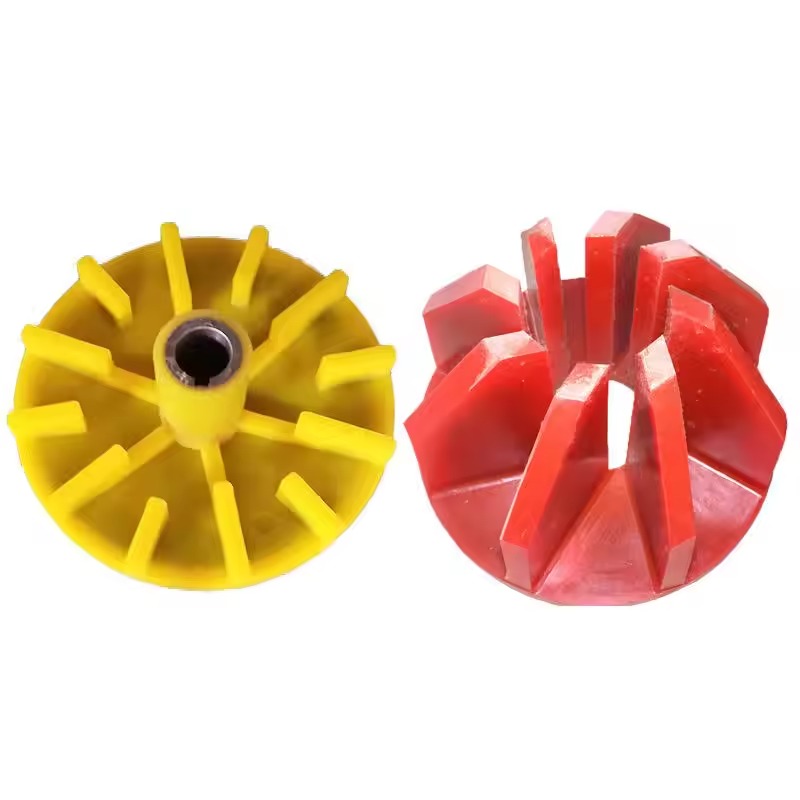
In most mechanical flotation machines, the rotor and impeller describe the same rotating component. "Impeller" emphasizes the rotating mixing function, while "rotor" usually refers to the complete rotating flotation element and its specialized geometry. The stator surrounds it and controls the air-slurry mixture. Terminology varies by manufacturer, but the rotor-stator relationship determines mixing, air dispersion, and flotation performance.