Why Does My Conveyor Belt Run Straight When Empty but Mistrack When Loaded?
-
 admin
admin - 16 Sep, 2026
A conveyor belt that runs straight empty but mistracks when loaded has a load-dependent tracking problem. The load changes the force balance across the belt. The most common causes are off-center loading, carrying-idler misalignment, uneven skirting drag, structural deflection under load, material buildup on rollers, and take-up tension issues. Correct the loading point and the first point of deviation — not the head or tail pulley.
Key Takeaways
-
Empty tracking is not proof of alignment. A belt can run perfectly straight empty and still have misaligned carrying idlers, a crooked splice, or a flexible frame.
-
The load changes six things at once: center of mass, belt-to-idler contact force, belt sag, loading-zone friction, structural deflection, and operating tension.
-
Off-center loading is the most common cause. Check the material profile before touching any idler.
-
Find the first drift point. Start where the belt first moves off-center, not where it is worst.
-
A belt tracker is the last step. Alignment removes the mechanical error. Tracking equipment manages recurring operational deviation.
-
Always follow lockout/tagout. All inspections and adjustments must follow the mine or plant’s guarding, isolation, and lockout/tagout procedures.
Summary Table
| Item | Description |
|---|---|
| Function | Diagnose and correct conveyor belt mistracking that appears only under material load |
| Typical Causes | Off-center loading, carrying-idler misalignment, skirting drag, structural deflection, material buildup, take-up tension |
| Applicable Materials | Gold ore, iron ore, copper ore, coal, lithium ore, silica sand, lead-zinc ore, nickel ore, phosphate, rare earth ore, tailings, slurry, abrasive ore, wet sticky material |
| Applicable Equipment | Belt conveyors, conveyor belts, carrying idlers, return idlers, impact idlers, self-aligning idlers, belt trackers, impact beds, skirting systems, belt cleaners |
| Best Application | Mining, quarrying, aggregate processing, coal handling, mineral processing, cement plants |
| Key Diagnostic Rule | If the belt tracks correctly empty but mistracks loaded, investigate what the load changes before adjusting components that already track correctly |
Definition: What Is Load-Dependent Conveyor Belt Mistracking?
Load-dependent conveyor belt mistracking is a tracking deviation that appears or becomes significantly worse only when material is placed on the belt. When the conveyor runs empty, the belt stays centered. When material is loaded, the belt moves to one side.
This behavior is distinct from general belt mistracking, which can appear in both empty and loaded conditions. Load-dependent mistracking points to causes that are activated or amplified by the load itself: material distribution, increased belt-to-idler contact force, loading-zone friction, structural deflection, and operating tension.
In mining, quarrying, aggregate, coal, and other bulk-material applications, load-dependent mistracking is one of the most common conveyor problems. It is also one of the most misdiagnosed, because maintenance teams often adjust the head or tail pulley when the real cause is in the loading zone.
Working Principle: Why the Load Changes Belt Tracking
A conveyor belt tracks correctly when the forces acting on it are balanced across its width. When the belt is empty, the forces are relatively small and symmetrical. When material is loaded, several things change at once.
1. The center of mass shifts.
If material lands toward one edge, the weight distribution across the belt width becomes unequal. The heavier side presses harder against the carrying idlers.
2. Belt-to-idler contact force increases.
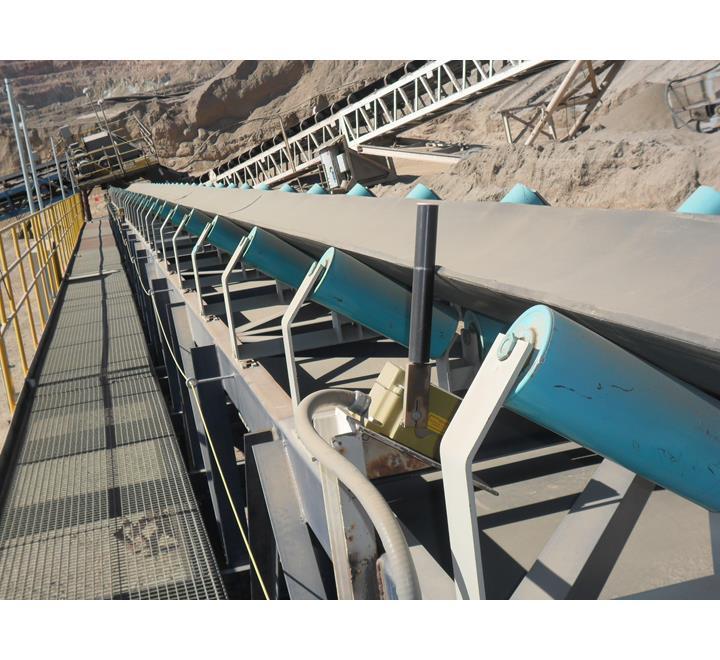
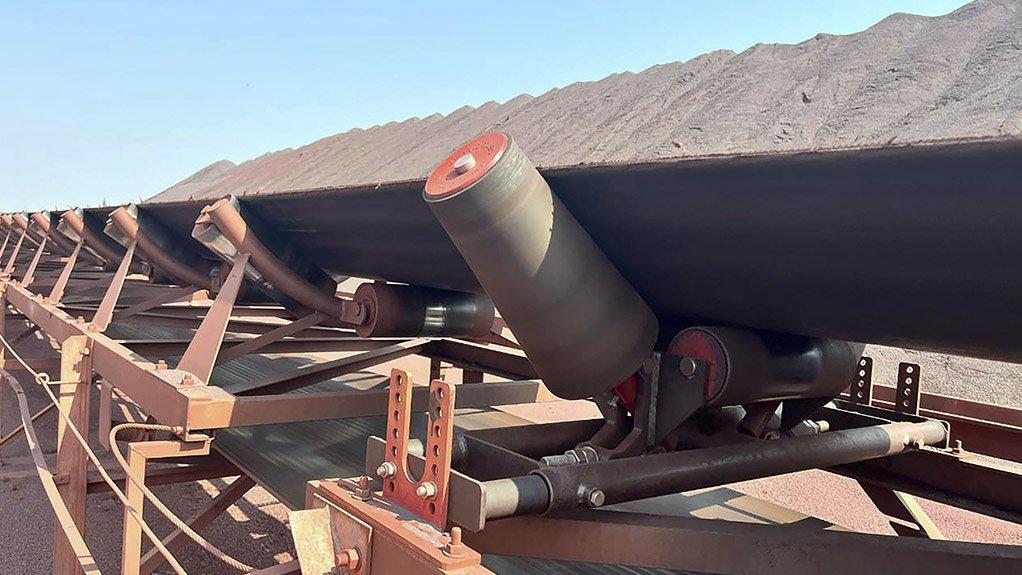
Carrying idlers support the loaded side of the belt. An empty belt barely touches them. A loaded belt presses against them with much greater force. A small idler alignment error that had no effect when empty now becomes a strong steering influence.
3. Belt sag increases.
The loaded belt sags between idler stations. This changes the belt path and can increase contact with skirting, impact beds, and structural components.
4. Friction in the loading zone becomes asymmetric.
If one side of the skirting presses harder than the other, the difference in friction pulls the belt sideways.
5. Structural deflection increases.
The conveyor frame carries much higher forces when loaded. Loose supports, bent frames, or insufficient stiffness can allow a section to twist or sag.
6. Operating tension rises.
The take-up system must maintain correct tension while remaining mechanically aligned. If the take-up carriage does not travel squarely, loaded operation can reveal mistracking that is not obvious when empty.
The belt is not “deciding” to move sideways. The load is changing the force balance, and the belt is following the resulting steering forces.
Benefits: Why Correct Diagnosis Matters
Reduced belt-edge wear.
Mistracking wears the belt edge and can damage the carcass. Correcting the root cause extends belt life.
Lower spillage and housekeeping cost.
A mistracking belt spills material along the conveyor. Fixing the cause reduces cleanup labor and material loss.
Fewer unplanned stoppages.
Load-dependent mistracking often worsens over time. Early diagnosis prevents emergency shutdowns.
Better downstream performance.
A mistracking belt can starve or flood downstream equipment. Stable tracking supports consistent feed to grinding, classification, and flotation.
Lower total cost of ownership.
Correcting the cause is cheaper than repeatedly replacing belt edges, idlers, and skirting.
Improved safety.
Reduced spillage and belt damage lower the risk of manual cleanup and component failure.
Applications: Where Load-Dependent Mistracking Occurs
Load-dependent mistracking can occur in any bulk-material conveyor, but it is most common in:
-
Primary crushing discharge conveyors — large lumps, high impact, uneven loading
-
Screening feed conveyors — variable material size, frequent load changes
-
Grinding circuit feed conveyors — heavy load, high tension
-
Coal handling conveyors — wet, sticky material, carryback
-
Aggregate transfer conveyors — high tonnage, abrasive material
-
Tailings and slurry conveyors — wet material, buildup risk
-
Port and stockyard conveyors — long runs, variable tonnage
-
Gold, copper, iron ore, and lithium ore conveyors — abrasive, dense material
In each case, the diagnostic logic is the same: identify what changes when the load is applied.
Material Comparison: How Different Materials Affect Tracking
| Material | Tracking Risk | Main Mechanism | Recommended Focus |
|---|---|---|---|
| Gold ore | High | Dense, abrasive, uneven load | Impact bed, idler alignment, skirting |
| Iron ore | High | Very dense, high tonnage | Structural stiffness, idler rating, belt tension |
| Copper ore | Medium–High | Abrasive, variable size | Loading point, idler wear, cleaner performance |
| Coal | High | Wet, sticky, carryback | Belt cleaner, skirting, roller buildup |
| Lithium ore | Medium | Fine, dusty, variable | Loading control, dust suppression, skirting |
| Silica sand | Medium | Fine, free-flowing, abrasive | Idler alignment, belt cleaner, skirt seal |
| Lead-zinc ore | Medium–High | Dense, abrasive | Impact support, idler alignment |
| Nickel ore | High | Sticky, wet, variable | Skirting, cleaner, roller buildup |
| Phosphate | Medium | Abrasive, variable moisture | Loading point, idler alignment |
| Rare earth ore | Medium | Fine, high value, low tonnage | Loading control, spillage prevention |
| Tailings | High | Wet, fine, variable | Skirting, cleaner, dewatering upstream |
| Wet sticky material | Very High | Adhesion, buildup, uneven drag | Skirting, cleaner, impact bed, roller cleaning |
Application Comparison: Empty vs Loaded Tracking Diagnosis
| Condition | Belt Behavior | Likely Cause | First Inspection |
|---|---|---|---|
| Empty: centered / Loaded: centered | Normal | None | Routine check |
| Empty: centered / Loaded: drifts one side | Load-dependent | Off-center loading, idler alignment, skirting drag, structure | Loading zone, first drift point |
| Empty: drifts / Loaded: drifts same way | Alignment problem | Pulley alignment, idler frame, belt splice | Head/tail pulley, idler frames |
| Empty: centered / Loaded: drifts worse with tonnage | Load-amplified | Structural deflection, idler misalignment, tension | Structure under load, take-up |
| Empty: centered / Loaded: drifts at same belt position | Belt-related | Crooked splice, camber, carcass damage | Splice, belt carcass |
| Empty: centered / Loaded: drifts after cleaning stops | Buildup | Carryback on rollers or pulleys | Belt cleaner, roller surfaces |
Industry Application Matrix
| Industry | Typical Conveyor Duty | Main Tracking Risk | Recommended Components |
|---|---|---|---|
| Gold mining | Crusher discharge, mill feed | Uneven load, dense ore | Impact bed, idler alignment, skirting |
| Iron ore | High-tonnage transfer | Structural deflection | Heavy-duty idlers, impact bed, tracker |
| Copper mining | Crushing and grinding feed | Abrasive wear, variable load | Idler alignment, skirting, cleaner |
| Coal handling | Stockyard and transfer | Wet, sticky, carryback | Belt cleaner, skirting, roller cleaning |
| Aggregate | Screening and stockpile | High tonnage, abrasive | Idler alignment, impact bed, tracker |
| Lithium | Fine ore transfer | Dust, variable load | Skirting, dust suppression, cleaner |
| Silica sand | Fine material transfer | Free-flowing, abrasive | Idler alignment, belt cleaner |
| Cement | Raw material and clinker | High temperature, abrasive | Heavy-duty idlers, impact bed |
| Tailings management | Slurry and wet cake | Wet, sticky, buildup | Skirting, cleaner, dewatering upstream |
| Port and stockyard | Long-distance transfer | Variable tonnage, wind | Tracker, idler alignment, structure |
Selection Guide: How to Choose the Right Fix
Step 1: Confirm the problem is load-dependent.
Run the belt empty. If it tracks correctly, the problem is related to what the load changes.
Step 2: Identify the first drift point.
Do not start where the belt is worst. Start where it first moves off-center.
Step 3: Inspect the loading zone.
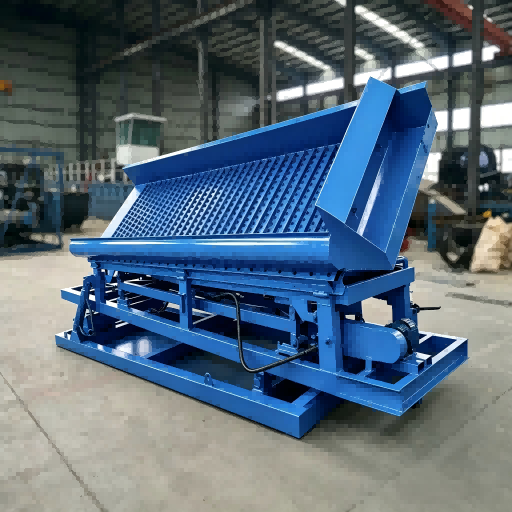
Check the chute, deflector, feeder, CONVEYOR GUIDE TROUGH, and material trajectory. Is the material landing near the belt centerline?
Step 4: Inspect the skirting.
Check both sides of the CONVEYOR BELT SKIRTING for unequal contact pressure, excessive wear, incorrect mounting height, trapped material, and damaged PU or rubber skirting.
Step 5: Inspect carrying and impact idlers.
Check the CONVEYOR IDLERS & ROLLERS for seized rollers, bent frames, incorrect trough angles, loose bolts, material buildup, unequal roller diameters, and idler sets that are not square to the centerline. Inspect the HEAVY-DUTY CONVEYOR IMPACT BED under the loading point.
Step 6: Inspect the structure under load.
Look for loose supports, bent frames, foundation movement, and insufficient stiffness. Inspect during operation, not only during a shutdown.
Step 7: Inspect the take-up.
Check whether the carriage travels squarely and maintains correct tension.
Step 8: Inspect the belt and splice.
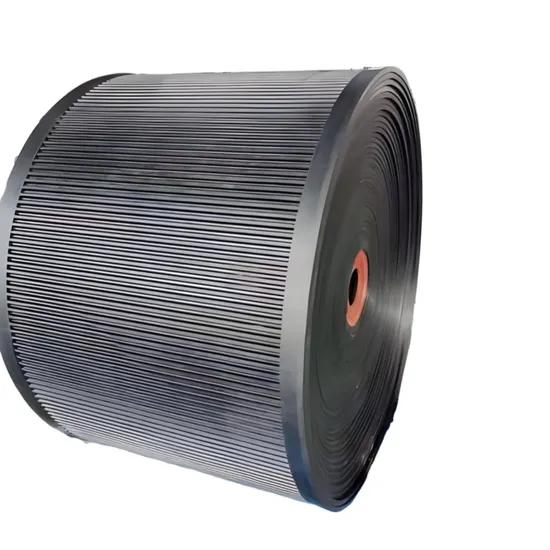
Check the CONVEYOR BELTS for crooked splice, camber, carcass damage, and uneven stretch.
Step 9: Correct the root cause.
Fix defective or misaligned components first. Make small, controlled adjustments and observe the effect.
Step 10: Evaluate a belt tracker.
Only after the major mechanical causes have been corrected. A CONVEYOR BELT TRACKER manages recurring deviation; it does not replace alignment.
Procurement Guide: What to Specify for Conveyor Components
When specifying conveyor components for a load-dependent mistracking problem, provide the following information:
Required Information:
-
Belt width
-
Belt speed
-
Conveyor length
-
Trough angle
-
Material type
-
Capacity (t/h)
-
Maximum lump size
-
Loading height
-
Carrying side / return side
-
Mistracking direction
-
Location where deviation begins
-
Empty and loaded operating videos
Drawings Needed:
-
Conveyor layout drawing
-
Idler station drawing
-
Chute and loading zone drawing
-
Skirting arrangement drawing
-
Impact bed mounting drawing
OEM Part Numbers:
-
Idler part numbers
-
Impact bed part numbers
-
Skirting part numbers
-
Belt cleaner part numbers
-
Tracker part numbers
Material Selection:
-
Polyurethane for fine, abrasive, wet material
-
Rubber for impact resistance and large lumps
-
Steel for structural components
-
Ceramic for high-wear zones
MOQ, Lead Time, Packaging, Shipping:
-
Confirm MOQ for each component
-
Confirm lead time for standard and custom parts
-
Confirm packaging for export
-
Confirm shipping method and incoterms
Inspection Standards:
-
Dimensional inspection
-
Material certificate
-
Hardness test
-
Surface finish
-
Assembly fit
Supplier Evaluation Checklist:
-
Can the supplier manufacture according to drawings?
-
Can the supplier provide material reports?
-
Can the supplier support OEM replacement?
-
Does the supplier have export experience?
-
Can the supplier provide wear-life recommendations?
Failure Analysis: Common Problems and Solutions
| Problem | Possible Cause | Recommended Solution |
|---|---|---|
| Premature belt-edge wear | Continuous mistracking under load | Correct loading point, idler alignment, skirting drag |
| Cracking at belt edge | Repeated folding or impact | Inspect loading zone, impact bed, idler spacing |
| Blinding of screen panels | Wet, sticky material | Use PU panels, adjust spray, review dewatering |
| Pegging of screen apertures | Near-size particles | Use flip-flow screen, self-cleaning mesh |
| Low conveying efficiency | Spillage, belt slip, mistracking | Correct tracking, tension, cleaner performance |
| Excessive downtime | Repeated manual adjustment | Fix root cause, install tracker if justified |
| Poor fitment of replacement parts | Incorrect dimensions or tolerances | Verify drawings, OEM part numbers, inspection |
| Material mismatch | Wrong polymer or rubber grade | Review material data, abrasion, impact, temperature |
| Installation failure | Incorrect mounting, torque, alignment | Follow installation guide, use trained technicians |
Maintenance Guide: Preventing Load-Dependent Mistracking
Daily Inspection:
-
Check belt position at fixed points
-
Check for spillage at loading zone
-
Check belt cleaner performance
-
Check for unusual noise or vibration
Weekly Inspection:
-
Inspect skirting contact pressure
-
Inspect idler rotation
-
Inspect impact bed condition
-
Check take-up travel
Monthly Inspection:
-
Inspect idler alignment
-
Inspect structure for loose bolts or cracks
-
Inspect belt splice
-
Review wear pattern on belt edges
Wear Pattern Monitoring:
-
Record belt edge wear
-
Record idler wear
-
Record skirting wear
-
Record cleaner blade wear
Replacement Timing:
-
Replace idlers when rotation is rough or seized
-
Replace skirting when contact pressure cannot be adjusted
-
Replace cleaner blades when carryback increases
-
Replace impact bed when surface is worn through
Spare Parts Inventory:
-
Keep carrying idlers, return idlers, impact idlers in stock
-
Keep skirting segments in stock
-
Keep cleaner blades in stock
-
Keep tracker components in stock
Downtime Reduction:
-
Schedule inspections during planned shutdowns
-
Use condition monitoring where possible
-
Train operators to recognize early mistracking signs
Preventive Maintenance:
-
Clean rollers and pulleys regularly
-
Maintain correct belt tension
-
Maintain correct loading point
-
Review performance after each change
Case Study
Customer Type:
Aggregate processing plant, 800 t/h.
Ore Type:
Crushed granite, 0–300 mm, abrasive.
Operating Conditions:
Belt width 1200 mm, belt speed 3.15 m/s, conveyor length 85 m, trough angle 35°, loading height 2.5 m.
Problem:
The conveyor belt tracked correctly when empty. Under load, it drifted 80–120 mm to the right within 15 m of the loading zone. Belt-edge wear increased, and spillage required daily cleanup. The maintenance team had adjusted the head and tail pulleys twice with no lasting improvement.
Solution:
Inspection found three issues:
-
The chute discharged material toward the right side of the belt.
-
The first three carrying idler stations downstream of the loading zone were misaligned by 6–8 mm.
-
The right-side skirting pressed harder than the left.
The chute deflector was adjusted to center the material stream. The first three idler stations were re-squared to the conveyor centerline. The skirting was re-set to equal contact pressure on both sides.
Result:
After correction, the belt tracked within ±15 mm under full load. Belt-edge wear stopped progressing. Spillage was reduced to normal levels. No belt tracker was required.
FAQ
Q1: Why does my conveyor belt only mistrack when loaded?
A: Because the load changes the forces on the belt. Weight shifts the center of mass, increases belt-to-idler contact, increases sag, and raises operating tension. If the belt tracks correctly empty, the problem is related to what the load changes, not to the basic belt path.
Q2: Is off-center loading the most common cause?
A: Yes. In most load-dependent mistracking cases, material lands toward one edge of the belt. The center of mass shifts, and the belt steers toward the heavier side. Always check the material profile before adjusting idlers.
Q3: Can misaligned carrying idlers cause mistracking only under load?
A: Yes. An empty belt barely touches the carrying idlers. A loaded belt presses hard against them. A small alignment error that has no effect when empty can become a strong steering force when loaded.
Q4: How do I find the first point of deviation?
A: Observe the belt at several fixed points. Find where it first moves off-center, not where it is worst. Inspect that station and the components immediately upstream.
Q5: Should I adjust the head or tail pulley first?
A: No. If the belt tracks correctly empty, the pulley alignment is probably acceptable. Changing pulley alignment may move the problem downstream. Investigate the loading zone and the first drift point first.
Q6: When should I install a conveyor belt tracker?
A: Install a CONVEYOR BELT TRACKER when the major mechanical causes have been corrected but the belt still wanders under normal operating conditions. A tracker manages recurring deviation. It should not compensate for a badly aimed chute, seized roller, or misaligned frame.
Q7: How does material buildup affect tracking?
A: Carryback can accumulate on one side of a roller or pulley. This changes the effective contact geometry. Under load, the steering effect becomes more noticeable. Cleaning is part of tracking diagnosis.
Q8: Can a crooked splice cause mistracking only under load?
A: Yes. A crooked splice can influence tracking. If the mistracking appears whenever the same portion of belt completes another revolution, inspect the splice and belt carcass.
Q9: How much does a conveyor belt tracker cost?
A: Cost depends on belt width, conveyor length, and tracker type. For a typical mining conveyor, a tracker is a modest investment compared with the cost of repeated belt-edge replacement and spillage cleanup. Request a quotation with your belt data.
Q10: What information should I provide to a supplier?
A: Provide belt width, belt speed, conveyor length, trough angle, material, capacity (t/h), maximum lump size, loading height, carrying/return side, mistracking direction, location where deviation begins, and empty and loaded operating videos.
Conclusion
A conveyor belt that runs straight empty but mistracks when loaded is not a mystery. It is a load-dependent problem, and the load is telling you where to look.
Start with the loading zone. Check the material profile. Find the first drift point. Inspect skirting, carrying idlers, impact idlers, structure, take-up, belt, and splice. Correct the root cause before adjusting the head or tail pulley.
If the mechanical causes are corrected and the belt still wanders under normal operating conditions, a CONVEYOR BELT TRACKER may be justified. But a tracker is the last step, not the first.
For conveyor components and wear parts, HUATAO supplies CONVEYOR BELTS, CONVEYOR IDLERS & ROLLERS, CONVEYOR BELT SKIRTING, HEAVY-DUTY CONVEYOR IMPACT BED, CONVEYOR BELT CLEANER / SCRAPER, MINING SECONDARY BELT CLEANER, POLYURETHANE CONVEYOR BELT CLEANER BLADES, and CONVEYOR GUIDE TROUGH for mining, quarrying, aggregate, coal, and mineral processing operations worldwide.
Related Articles
Related Products
Related Technical Guides
-
IMPROVE FINE SCREENING EFFICIENCY WITH POLYURETHANE SCREEN PANELS
-
HYDROCYCLONE WEAR: ROOT CAUSES, HIGH-WEAR ZONES & MATERIAL SOLUTIONS
-
FLOTATION CELL ROTOR AND STATOR WEAR PARTS: HOW THEY CONTROL RECOVERY, FLOW AND MAINTENANCE COST
-
ROTOR & STATOR IN MECHANICAL FLOTATION CELLS: THE HEART OF EFFICIENT MINERAL FLOTATION
Related Buyer Guides
-
HOW DO I CHOOSE THE RIGHT RUBBER BELT FOR A VACUUM BELT FILTER?
-
WHICH MANUFACTURER OFFERS HIGH-QUALITY POLYURETHANE TUFFLEX WIRE SCREENS FOR MINING?
Related Comparison Articles
-
POLYURETHANE SCREEN VS RUBBER SCREEN VS WIRE MESH: A COMPLETE COMPARISON GUIDE
-
SELF-CLEANING SCREEN VS TRADITIONAL WOVEN WIRE MESH: WHICH ONE SHOULD YOU CHOOSE?
Contact:
Annie Lu
Email: annie.lu@huataogroup.com
Mobile / WhatsApp: +86 18032422676
Website: www.tufflexscreen.com
Tags:
conveyor belt mistracking, belt tracking under load, off-center loading, carrying idler alignment, conveyor skirting, impact bed, belt cleaner, belt tracker, conveyor maintenance, bulk material handling, mining conveyor, aggregate conveyor, coal handling, mineral processing, HUATAO
Tags:
admin
personal profile