How Often Should I Replace Hydrocyclone Liners?
Oct 20, 2026
 admin
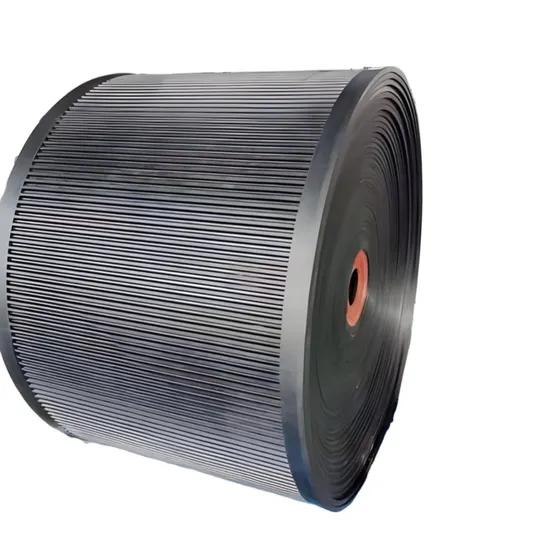
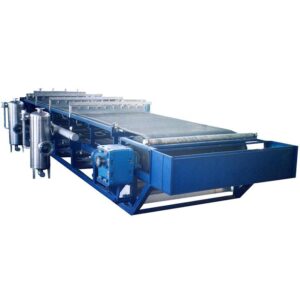
A vacuum belt filter rubber belt is the drainage belt in a horizontal vacuum belt filter. It supports the filter cloth, carries drainage grooves and holes, and works with the vacuum box to maintain vacuum sealing. It needs replacement when cracking, delamination, groove wear, edge damage, exposed reinforcement, or tracking failure affects drainage, vacuum, or safe operation.
✅ Replacement is based on condition, not a fixed calendar interval
✅ Deep cracking, delamination, and exposed reinforcement are structural warnings
✅ Groove wear and blocked drainage holes reduce filtration performance
✅ Edge and curb damage allows slurry to escape the belt
✅ Persistent tracking problems may indicate belt deformation
✅ Wetter cake or vacuum loss alone does not prove belt failure
✅ Filter cloth, vacuum box, and slide strips must be checked first
✅ Replacement belts must match machine geometry and rubber compound
| Item | Description |
|---|---|
| Function | Supports filter cloth, provides drainage channels, maintains vacuum sealing |
| Material | Rubber compound, often with reinforcement carcass |
| Application | Horizontal vacuum belt filters in mineral processing and dewatering |
| Service Life | Condition-based; depends on slurry, chemistry, temperature, and maintenance |
| Benefits | Reliable vacuum, stable drainage, consistent cake moisture, safe tracking |
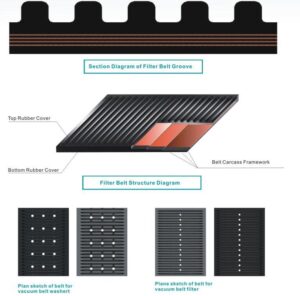
A vacuum belt filter rubber belt is a continuous rubber drainage belt used in horizontal vacuum belt filters. It carries the filter cloth and is perforated with drainage holes and grooves that allow filtrate to pass toward the vacuum box. In many designs, the belt also forms part of the vacuum sealing path.
Unlike the filter cloth, which performs particle separation, the rubber belt performs mechanical support, drainage, and sealing functions. This separation of functions is why a filtration problem is not automatically a belt problem.
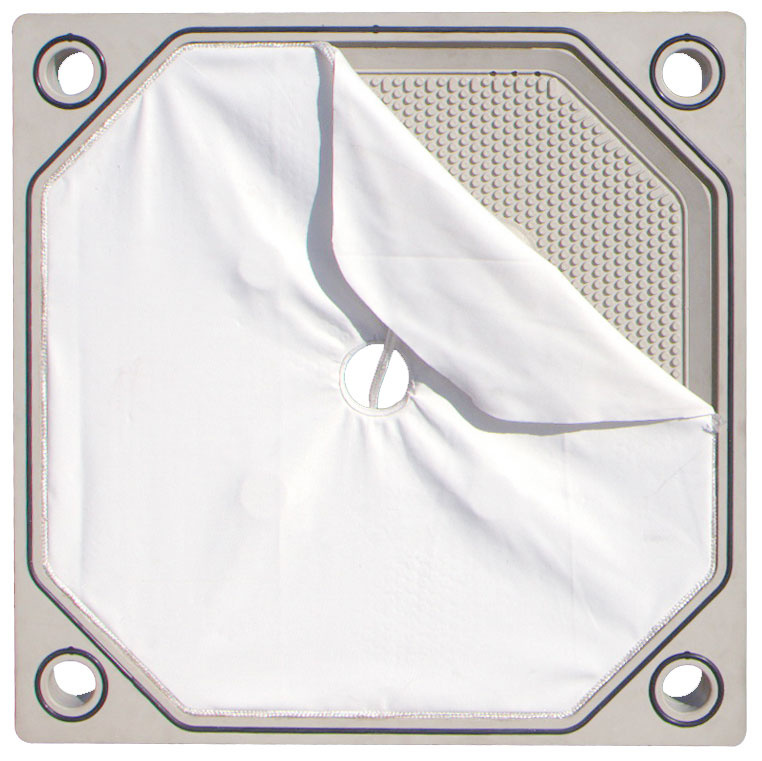
Within the wider Filtration circuit, the rubber belt sits between the feed section and the discharge section of the Vacuum Filter. It works alongside Filter Plates & Cloths and feeds downstream Dewatering equipment.
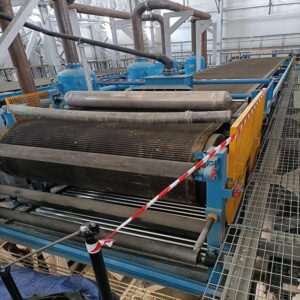
The rubber belt moves continuously around the filter frame. Slurry is distributed onto the filter cloth, which rests on the rubber belt. Vacuum is applied through the vacuum box beneath the belt. Filtrate passes through the cloth, enters the drainage grooves, flows through the drainage holes, and exits through the vacuum system.
The rubber belt must therefore do three things at once:
Support the cloth and the filter cake
Provide a clear drainage path for filtrate
Maintain a seal against the vacuum box
When any of these three functions degrades, filtration performance drops. The challenge is identifying which function has failed and whether the belt is responsible.
A correctly specified and maintained rubber belt delivers:
Stable vacuum performance across the full belt width
Consistent filtrate drainage
Predictable cake moisture
Reliable belt tracking
Lower drive load
Fewer unplanned shutdowns
Longer filter cloth life
Safer mechanical operation
These benefits depend on matching the belt to the machine and the process, not simply ordering a replacement by width and thickness.
Vacuum belt filter rubber belts are used in:
Mineral processing concentrators
Coal preparation plants
Gold and copper tailings dewatering
Iron ore concentrate filtration
Silica sand dewatering
Lead zinc concentrate filtration
Nickel laterite processing
Phosphate beneficiation
Rare earth processing
Tailings management circuits
In each application, the belt sees different abrasion, chemistry, and temperature conditions. For processes where tailings are handled, see Tailing and Tailings Dry Discharge Systems.
| Material | Wear Life | Cost | Maintenance | Best Application |
|---|---|---|---|---|
| Natural rubber | Moderate | Low | Frequent inspection | Mild slurry, low abrasion |
| SBR rubber | Moderate | Low–Medium | Regular | General dewatering |
| EPDM rubber | Good | Medium | Moderate | Chemical and thermal exposure |
| Nitrile rubber | Good | Medium | Moderate | Oil and hydrocarbon contact |
| Reinforced rubber carcass | High | Medium–High | Lower | High-tension, high-load belts |
| Ceramic-filled rubber | High | High | Low | Severe abrasive slurry |
For related wear material comparisons across the plant, see Polyurethane Screen vs Rubber Screen vs Wire Mesh: A Complete Comparison Guide.
| Application | Key Risk | Belt Consideration |
|---|---|---|
| Gold tailings | Abrasion, chemical | Reinforced carcass, chemical-resistant compound |
| Copper concentrate | Fine abrasive solids | Groove wear resistance, drainage-hole integrity |
| Coal | Variable feed, fines | Drainage stability, edge durability |
| Iron ore | High abrasion | High-wear compound, thick groove profile |
| Silica sand | Fine sharp particles | Groove and hole wear resistance |
| Phosphate | Acidic slurry | Acid-resistant compound |
| Nickel laterite | Wet sticky material | Anti-blinding drainage design |
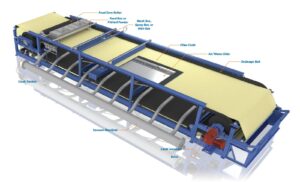
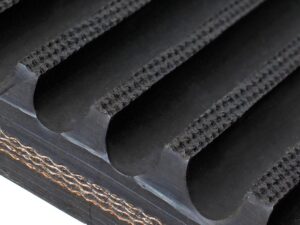
Vacuum belt filter drainage groove wear measurement
| Industry | Typical Filter | Belt Demand | Recommended Focus |
|---|---|---|---|
| Gold | Horizontal vacuum belt filter | Abrasion + chemical | Reinforced, chemical-resistant |
| Copper | Horizontal vacuum belt filter | Fine abrasion | Groove wear resistance |
| Iron Ore | Horizontal vacuum belt filter | Severe abrasion | Thick groove, high-wear rubber |
| Coal | Horizontal vacuum belt filter | Variable feed | Edge durability, drainage stability |
| Silica Sand | Horizontal vacuum belt filter | Sharp fines | Hole and groove integrity |
| Phosphate | Horizontal vacuum belt filter | Acidic slurry | Acid-resistant compound |
| Lithium | Horizontal vacuum belt filter | Chemical exposure | Chemical-resistant rubber |
| Rare Earth | Horizontal vacuum belt filter | Fine abrasive | Precision drainage geometry |
Step 1 — Confirm the machine
Collect filter manufacturer, model, belt width, belt length or endless circumference, and belt thickness.
Step 2 — Record the drainage geometry
Groove profile, groove depth, drainage-hole diameter, and drainage-hole pattern must match the vacuum box.
Step 3 — Record edge and guide configuration
Edge/curb profile, guide configuration, and splice arrangement must match the machine frame.
Step 4 — Match the rubber compound to the process
Consider abrasion, pH, temperature, chemical exposure, and cleaning chemicals. For process-specific selection guidance, see How Do I Choose the Right Rubber Belt for a Vacuum Belt Filter?.
Step 5 — Evaluate the support system
Roller deck, belt slide, pulleys, slide strips, and tracking system all affect belt life. The belt should be evaluated as part of the system, not as an isolated spare part.
Required Information
Filter manufacturer and model
Belt width and length
Belt thickness
Groove profile and depth
Drainage-hole diameter and pattern
Edge/curb configuration
Guide configuration
Splice arrangement
Slurry composition and particle size
Operating temperature and pH
Reason for replacement
Drawings Needed
Existing belt drawing, if available
Cross-section showing groove and hole geometry
Edge and curb profile
Guide arrangement
Machine frame interface drawing
OEM Part Numbers
Where available, provide OEM part numbers so the supplier can cross-reference the original design. If part numbers are not available, drawings and photographs become the primary reference.
Material Selection
Specify the rubber compound based on abrasion, chemistry, and temperature. If the previous belt failed for a known reason, state that reason so the supplier can adjust the compound or reinforcement.
MOQ, Lead Time, Packaging, Shipping
Confirm minimum order quantity, production lead time, packaging method (flat or rolled), and shipping method. Long belts may require special packaging to prevent deformation in transit.
Inspection Standards
Agree on dimensional inspection, groove and hole inspection, hardness check, and visual inspection for cracks or inclusions before shipment.
Supplier Evaluation Checklist
Can the supplier manufacture according to drawings?
Can the supplier provide material reports?
Can the supplier support OEM replacement?
Does the supplier have export experience?
Can the supplier provide wear-life recommendations?
| Problem | Possible Cause | Recommended Solution |
|---|---|---|
| Premature wear | Abrasive slurry, wrong compound | Upgrade rubber compound, verify groove profile |
| Cracking | Chemical attack, repeated flexing | Review chemistry, check pulley and roller condition |
| Delamination | Bonding failure, overload | Replace belt, review tension and load |
| Groove wear | Abrasive solids, high belt speed | Reduce speed, verify groove depth, upgrade compound |
| Blinding (cloth) | Cloth permeability, poor cleaning | Replace or clean cloth; not a belt fault |
| Pegging (cloth) | Particle shape, cloth selection | Review cloth specification; not a belt fault |
| Low efficiency | Vacuum loss, blocked holes | Inspect vacuum box, slide strips, drainage holes |
| Excessive downtime | Poor tracking, mechanical damage | Correct tracking, inspect pulleys and guides |
| Poor fitment | Incorrect dimensions or pattern | Re-measure against drawing, verify hole layout |
| Material mismatch | Wrong compound for process | Re-select compound based on chemistry and temperature |
| Installation failure | Incorrect tension or alignment | Follow installation procedure, verify tracking |
For related wear diagnosis in other process stages, see Hydrocyclone Wear: Root Causes, High-Wear Zones & Material Solutions.
Daily Inspection
Visual check for cracking, edge damage, and unusual noise
Confirm belt tracking across the full width
Check vacuum gauge trend against normal operating value
Confirm cake discharge is complete
Weekly Inspection
Inspect drainage grooves for blockage
Check drainage holes for plugging
Inspect slide strips and sealing surfaces
Check pulley and roller condition
Record cake moisture trend
Monthly Inspection
Measure groove depth at reference points
Compare worn sections against reference sections
Inspect belt edges and curbs for stretching
Verify vacuum-box alignment
Review filter cloth condition and permeability
Wear Pattern Monitoring
Record crack location, groove depth, edge condition, and tracking behavior over time. Trend data is more useful than a single inspection.
Replacement Timing
Replace when cracking becomes widespread, reinforcement is exposed, delamination is extensive, groove wear is severe, edges fail repeatedly, vacuum sealing cannot be maintained, or tracking cannot be corrected.
Spare Parts Inventory
Keep at least one replacement belt in stock for critical circuits. Also stock slide strips, sealing components, and filter cloth.
Downtime Reduction
Combine belt replacement with filter cloth replacement, vacuum-box inspection, and pulley inspection during the same planned shutdown.
Preventive Maintenance
Schedule inspection intervals based on slurry abrasiveness and operating hours. Adjust intervals after the first belt replacement based on observed wear rate.
Safety: All inspection and maintenance work should follow the equipment manufacturer’s shutdown, isolation, lockout/tagout, and confined-access procedures. Never inspect moving belts or vacuum-box components by entering an operating machine.
Case Study
Customer Type: Copper concentrator, 1.2 Mtpa throughput
Ore Type: Copper ore, fine abrasive slurry
Operating Conditions: Horizontal vacuum belt filter, 24/7 operation, mildly alkaline slurry, belt speed 6 m/min
Problem: Filter cake moisture increased from 9.5% to 12.8% over three months. Vacuum dropped from 55 kPa to 42 kPa. Initial diagnosis focused on the rubber belt.
Solution: Inspection found the filter cloth was partially blinded and slide strips were misaligned with drainage holes after a vacuum-pan maintenance shutdown. The rubber belt showed moderate groove wear but no structural damage. Slide strips were realigned, the filter cloth was replaced, and the existing rubber belt was retained. Groove depth was recorded for future trend monitoring.
Result: Vacuum recovered to 54 kPa and cake moisture returned to approximately 9.8%. An unnecessary rubber belt replacement was avoided. The maintenance team introduced a combined inspection checklist covering belt, cloth, vacuum box, and slide strips.
1. How long does a vacuum belt filter rubber belt normally last?
There is no universal replacement interval. Service life depends on belt construction, slurry abrasiveness, chemical exposure, temperature, belt speed, support arrangement, tracking, vacuum conditions, and maintenance practices. Condition monitoring is more useful than a fixed calendar interval. Recording wear patterns helps identify the actual replacement window for each machine.
2. Can a vacuum belt filter keep operating with a small crack in the rubber belt?
A small surface crack does not automatically require immediate replacement. The decision depends on crack depth, location, growth rate, and whether it affects drainage, sealing, or structural integrity. A crack near a drainage area, belt edge, or reinforcement deserves more urgent attention. Inspect during a controlled shutdown and follow the manufacturer’s criteria.
3. Why is my filter cake getting wetter even though the rubber belt looks normal?
A visually normal belt does not guarantee normal filtration. Possible causes include filter-cloth blinding, reduced vacuum, blocked drainage holes, incorrect vacuum-box sealing, feed changes, excessive belt speed, or slurry changes. The belt should be diagnosed as part of the complete filtration system, not in isolation.
4. What information should I send a supplier when ordering a replacement rubber filter belt?
Provide the equipment manufacturer and model, belt width and length, thickness, groove pattern, drainage-hole arrangement, belt photographs, existing drawings, and slurry details. Also state the reason for replacement—edge cracking, groove wear, tracking problems, or vacuum loss—so the supplier can decide whether to duplicate the design or address a specific failure.
5. Should I replace the filter cloth when replacing the rubber drainage belt?
Not necessarily. The cloth and rubber belt are separate components with different functions. However, if the cloth is heavily worn, blinded, or near the end of its service life, replacing both during the same shutdown may reduce the risk of another maintenance interruption. Base the decision on the actual condition of both components.
6. Can a damaged rubber belt be repaired on site?
Localized damage may be repairable if the remaining structure is sound and the repair restores drainage geometry and sealing function. The repair method must be compatible with the belt construction and approved by the manufacturer or a qualified service provider. Widespread cracking, exposed reinforcement, or extensive delamination usually cannot be reliably repaired on site.
7. Does belt speed affect rubber belt service life?
Yes. Higher belt speeds increase flexing cycles, abrasion, and mechanical load. They also reduce retention time for vacuum dewatering, which may push operators to increase vacuum and stress the belt and sealing system further. If belt speed has been increased, review the belt, vacuum box, and filter cloth together.
8. How do I know if the problem is the belt or the vacuum box?
The vacuum box and rubber belt interact directly, so symptoms can be similar. Inspect the vacuum box, slide strips, and sealing surfaces first, since they are often easier to access and adjust. If sealing geometry is correct and vacuum is still unstable, inspect the belt for groove wear, cracking, and drainage-hole blockage.
9. Is a reinforced rubber belt always better?
Not always. Reinforced belts offer higher tensile strength and better resistance to continuous tension and bending, which suits high-load or high-tension applications. However, reinforcement adds cost and may not be necessary for lower-load machines. The correct choice depends on machine design, belt tension, and operating conditions.
10. How does slurry chemistry affect rubber belt selection?
Acidic or alkaline slurry can degrade certain rubber compounds over time, leading to cracking, swelling, or loss of elasticity. Chemical exposure should be stated when requesting a quotation so the supplier can select a compound with suitable resistance. Cleaning chemicals should also be considered.
11. What is the most common cause of unnecessary belt replacement?
Misdiagnosis of filtration symptoms. Wetter cake, reduced vacuum, and uneven drainage are often caused by filter cloth blinding, slide strip misalignment, or vacuum-box sealing problems. These are frequently mistaken for belt failure, leading to unnecessary replacement and repeat problems.
12. Can I reduce rubber belt cost without reducing reliability?
Yes. The most effective approach is to correct the failure mechanism rather than simply buying a cheaper belt. If the previous belt failed from groove wear, upgrading the compound or adjusting belt speed may extend life. If it failed from tracking, correcting alignment prevents repeat failure. Total cost of ownership matters more than purchase price.
The best way to determine whether a vacuum belt filter rubber belt needs replacement is to combine physical inspection with process-performance data.
Look for progressive cracking, delamination, groove deterioration, edge damage, exposed reinforcement, and persistent tracking problems. At the same time, monitor vacuum performance, drainage behavior, and cake moisture.
Most importantly, do not replace the rubber belt simply because the filter is producing a wetter cake or losing vacuum. Check the filter cloth, vacuum box, slide strips, pulleys, tracking system, and operating conditions first.
A replacement belt should match the machine’s dimensions, groove geometry, drainage-hole pattern, rubber compound, and operating environment.
Contact HUATAO to discuss your equipment specifications, operating conditions, and replacement wear-part requirements.
Related Products
Related Technical Guides
How Do I Choose the Right Rubber Belt for a Vacuum Belt Filter?
Hydrocyclone Wear: Root Causes, High-Wear Zones & Material Solutions
Improve Fine Screening Efficiency with Polyurethane Screen Panels
Flotation Cell Rotor and Stator Wear Parts: How They Control Recovery, Flow and Maintenance Cost
Related Buyer Guides
How Do I Choose the Right Rubber Belt for a Vacuum Belt Filter?
Which Manufacturer Offers High-Quality Polyurethane Tufflex Wire Screens for Mining?
Related Comparison Articles
Polyurethane Screen vs Rubber Screen vs Wire Mesh: A Complete Comparison Guide
Self-Cleaning Screen vs Traditional Woven Wire Mesh: Which One Should You Choose?
Adjacent Process Pages
Contact:
Annie Lu
Email: annie.lu@huataogroup.com
Mobile: +86 18032422676 (WhatsApp / WeChat)
admin