Which Screen Media Survives Wet Coal Screening?
Nov 2, 2026
 admin
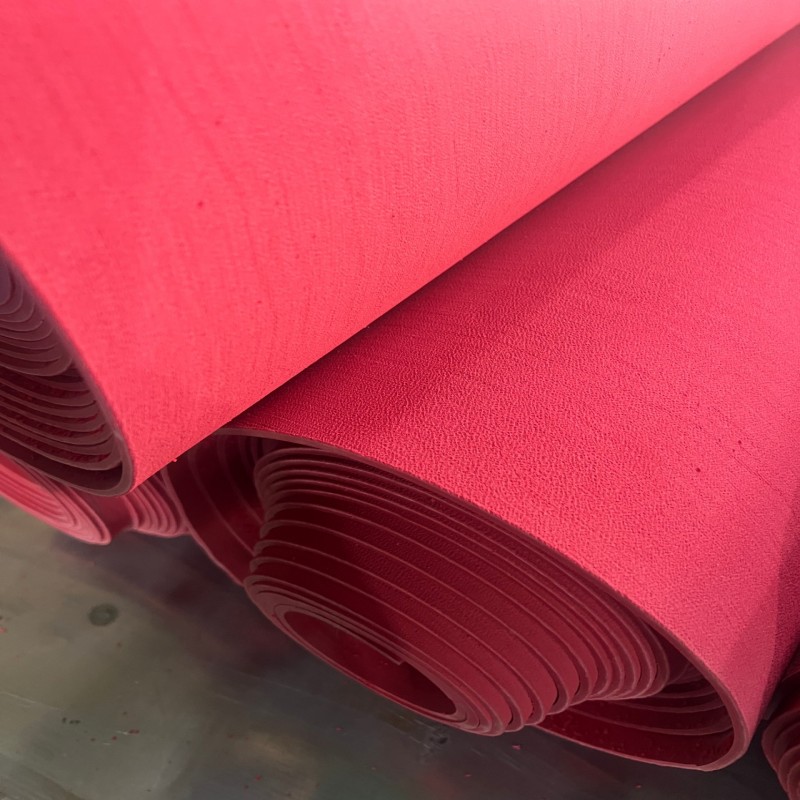
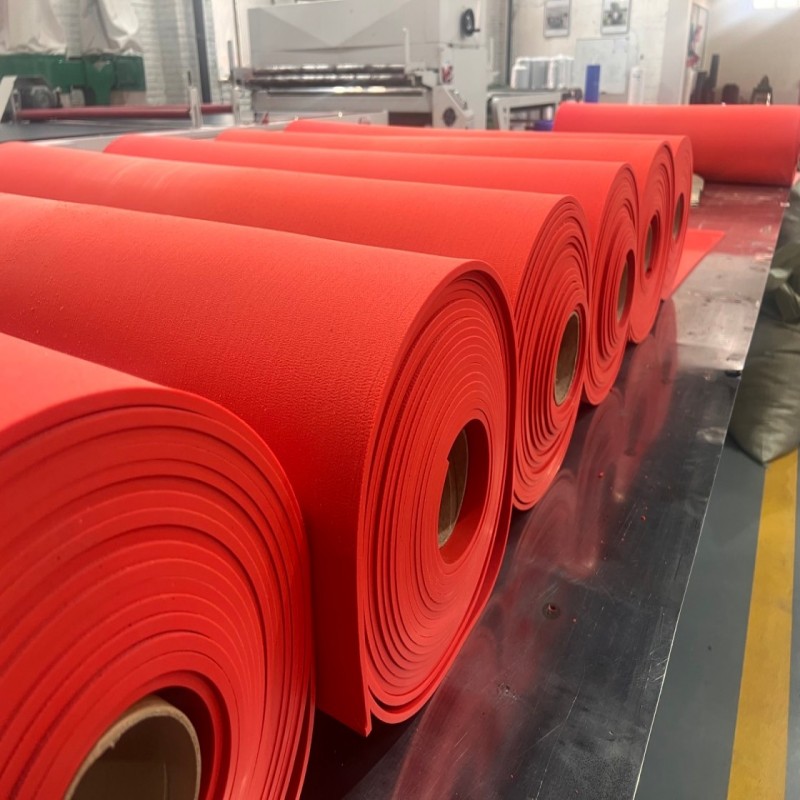
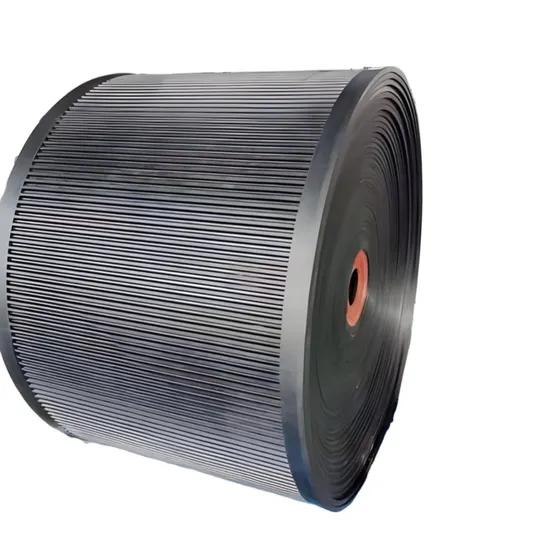
A vacuum belt filter rubber belt is the grooved, reinforced rubber belt that forms the working surface of a horizontal vacuum belt filter. It carries the filter cloth continuously under slurry, drains filtrate through molded grooves into a stationary vacuum box, meters cake thickness by speed, and seals the vacuum through a sacrificial wear strip. Compound, groove geometry and tracking discipline decide whether it serves for years or generates recurring downtime.
It’s the loop of engineered rubber underneath everything you can see on a horizontal vacuum belt filter. A filter cloth does the actual particle capture, but cloth has no stiffness, no drainage volume, and no way to move itself. The belt supplies all three. Its raised lands carry the cloth flat from tail pulley to head pulley; its molded grooves collect the liquor vacuum pulls through the media; its speed sets how long cake dries before discharge; and a low-friction wear strip between belt underside and vacuum box takes the friction so the belt doesn’t have to.
The machine overview is on our Vacuum Filter Systems page; this guide goes one layer down, into the belt itself — because in practice, that’s where the operating cost lives.
✔ One belt, four jobs: support, drainage, transport, sealing ✔ Natural rubber still rules abrasive concentrate duty; EPDM and neoprene take acidic or oily filtrate ✔ Groove depth and pitch must match particle size and filtrate load, not the catalog default ✔ Five of the six classic failure modes are visible weeks before they stop the machine ✔ Cover-thickness logging converts belt replacement from emergency into a budget line
| Item | Description |
| Function | Supports filter cloth, drains filtrate, meters cake thickness, seals vacuum box |
| Material | NR, SBR, EPDM, CR or NBR cover over fabric or steel-cord carcass, 60–70 Shore A |
| Application | Concentrate and tailings dewatering, chemical slurries, gypsum, leach residues |
| Service Life | Commonly 5–8 years in well-run mining service, set by wear pattern not calendar |
| Benefits | Continuous discharge, tunable cake moisture, stable vacuum, predictable replacement |
Inside the whole Dewatering Process Solutions circuit, the horizontal vacuum belt filter is the continuous filtration step: slurry enters one end, dewatered cake leaves the other, and the machine never stops to batch. What reaches it has usually been shaped upstream — thickened in Thickeners to a pumpable 25–35% solids, and in many circuits pre-classified by Dewatering Hydrocyclones so the filter never sees the coarse fraction. The belt inherits whatever that chain delivers, which is why belt specification starts with the slurry analysis, not with a product catalog.
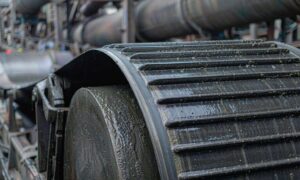
The belt runs endless over a drive pulley and a tail pulley. Above it, the cloth. Above the cloth, the slurry, laid down by a feed box in a controlled layer.
Vacuum — typically 0.05 to 0.08 MPa at the filtration surface — does the separating. Liquor passes through the cloth, but it doesn’t stop there: it collects in the transverse grooves molded into the belt cover, and each groove drains through holes or slots that line up with the stationary vacuum box sliding just beneath the belt. Solids bridge across the cloth apertures, build cake, and ride the belt through the drying zone.
At the head pulley, cake discharges and the cloth peels away for washing on the return side. Spray bars clean the belt’s grooves before it rounds the tail pulley and comes back under the cloth. The wear strip between belt and vacuum box — a deliberately consumable component — gets inspected on its own schedule.

Feed and filtration zone: the cloth captures solids while the grooved belt underneath handles drainage.
Notice what’s missing from that description: any pause. The whole elegance of the machine is that filtration, washing, drying and discharge happen simultaneously along the belt’s length, and only the belt makes that possible. It’s the clock of the machine — everything else is a station along its route.
Grooves deserve their own sentence. Groove volume is drainage capacity. Groove pitch is vacuum distribution. A coarse, fast-settling concentrate wants deep, widely spaced grooves that swallow a flood of liquor; a fine slurry forming a dense, low-permeability cake wants closer pitch so vacuum reaches the whole surface before the cake seals it. Choose wrong and the machine runs undercapacity with nobody able to say why.

Groove profile up close — the geometry here is drainage capacity, and it’s chosen for your slurry, not for the catalog.
Continuous throughput is the obvious one, and it matters: no fill-drain cycles, no valve sequencing, just steady state. But the quieter benefits carry the economics.
Cake thickness is a speed knob. Turn belt speed down and cake gets thicker and drier; turn it up and throughput rises. One adjustment, no mechanical change, real-time response to feed variation.
Cloth access is genuinely good. Because the cloth separates from the belt at the discharge pulley, washing and inspection happen continuously on the return run — no opening a press, no shutdown to change media.
Vacuum stays stable. Because the drainage path is engineered into the belt rather than improvised, vacuum draw doesn’t oscillate the way it does on poorly drained batch machines. Pumps run in their happy zone.
And the maintenance profile is knowable. Cover thickness can be measured, logged, trended. A belt that loses cover at a steady rate announces its replacement date months ahead. Very few wear parts in a plant are that honest.
Mining concentrates dominate the duty list — copper, zinc, lead, iron ore, phosphate — where continuous dewatering of abrasive slurry is the daily job and the belt’s compound takes the punishment. Chemical plants run acidic and oily slurries on EPDM or CR belts. Flue-gas gypsum dewatering in power stations is a classic belt filter application. Leach residues from hydrometallurgical circuits, fine tailings ahead of dry stacking — the cake feeding Tailings Dry Discharge Systems — all sit comfortably in the duty range.
Where does the belt filter lose? On very fine, high-value slurries where cloth blinding dominates the cost sheet, ceramic disc filtration often wins — the microporous media of Ceramic Filter Plates sidesteps the blinding cycle entirely. Different capital conversation, but worth having before you spend a year fighting fine-particle blinding on a belt machine.
| Compound | Abrasion Resistance | Chemical Resistance | Typical Duty | Weakness |
| Natural rubber (NR) | Excellent | Moderate | Abrasive concentrates, neutral pH | Oils, strong acid, sustained heat |
| SBR | Good | Moderate | General abrasive duty | Slightly below NR in cut resistance |
| EPDM | Moderate | Excellent | Acidic or hot filtrate | Poor oil resistance |
| Neoprene (CR) | Good | Good | Oily, mildly corrosive slurry | Cost above NR |
| NBR | Moderate | Excellent (oil) | Oily sludges, solvent traces | Not for heavy abrasive duty |
The pattern is boringly consistent. For abrasive mineral concentrates at neutral pH, natural rubber or a high-NR blend wins because nothing else at the price combines cut resistance with rebound — the cover deforms under a sharp particle instead of gouging, then springs back. Chemistry flips the logic. Acidic or hot filtrate swells and softens NR; EPDM shrugs it off. Oily streams attack EPDM but not NBR. The compound choice is a chemistry decision wearing a rubber costume, and it should be made against your filtrate analysis in writing, not against a datasheet generic.
Hardness sits in the 60–70 Shore A band for most duties — soft enough to seal and conform, hard enough to resist gouging at the feed point. Carcass follows machine size: fabric flexes cheaply on smaller filters, steel cord holds dimension on wide machines where tracking wander would otherwise shave cloth life and grind belt edges.
One substitution to refuse politely: a standard Conveyor Belts product has no grooves, no vacuum rating and none of the compound discipline a filter belt needs. It fits the pulleys and fails the function.
Against a batch filter press, the belt trades cake dryness for continuity and access — presses squeeze drier cake in chambers; belts discharge continuously with media you can watch washing itself. Against a ceramic disc filter, the belt trades floor-space efficiency and media cost for tolerance of coarser, fast-settling slurries. Against a pan filter, the belt wins on cloth washing and usually on capital per unit area.
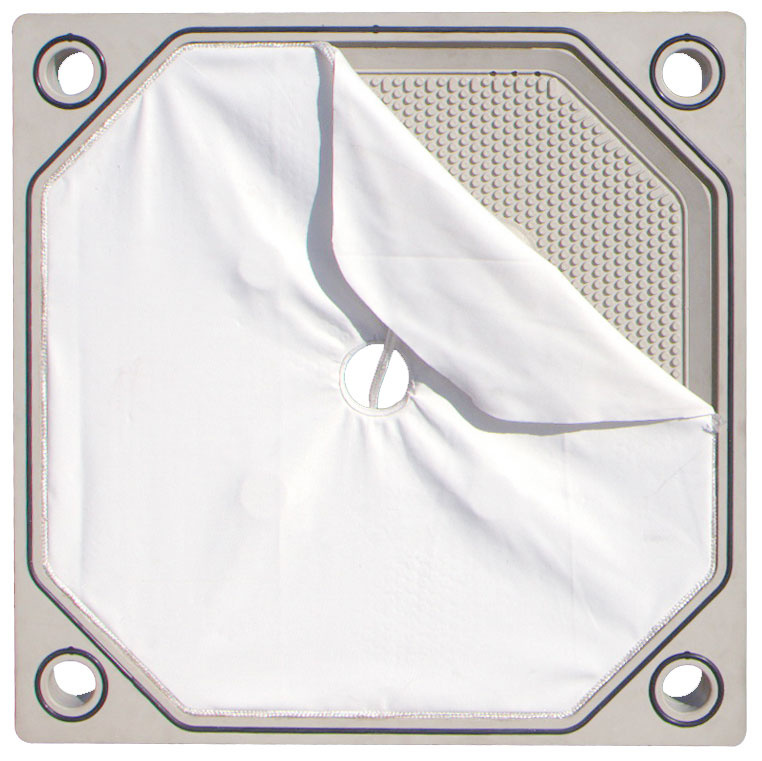
The belt-versus-cloth interaction is its own discipline: media permeability and belt groove volume must agree or the drainage balance breaks, a point examined in How Do I Choose the Right Rubber Belt for a Vacuum Belt Filter?. Cloth families themselves are indexed on the Filter Plates & Cloths page.
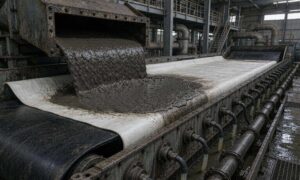
| Industry | Typical Slurry | Compound | Machine Configuration |
| Copper / zinc concentrators | Abrasive concentrate, neutral pH | High-NR blend | Vacuum belt filter, deep grooves |
| Iron ore beneficiation | Coarse abrasive fines | NR, steel-cord carcass | Wide belt, heavy-duty feed |
| Phosphate mining | Acidic, abrasive | EPDM blend | Belt filter with wash stage |
| Chemical processing | Acidic or oily sludge | EPDM / CR / NBR | Belt filter, corrosion-rated |
| Power stations | Flue-gas gypsum | NR / SBR | Belt filter, wash-equipped |
| Tailings dry stacking | Broad PSD fines | NR, deep grooves | Belt filter into dry discharge line |
Work the sequence and don’t reorder it. Filtrate chemistry first — pH, temperature, oil content, documented rather than remembered. Solids second — particle size distribution, with attention to the coarse fraction that gouges and the fines that blind. Machine third — width, pulley diameters, vacuum box arrangement, speed range. Belt last — compound from chemistry, hardness from duty, groove geometry from solids and filtrate load, carcass from width and tracking expectations.
Two rules protect the exercise. No order without written compound compatibility against your analysis. No fleet-wide change without one trial belt, run against your incumbent and measured on cover wear, vacuum stability and cake moisture. A supplier who resists the trial has already told you how their recommendation was made. The full equipment index lives on our Products page.
A complete belt RFQ states: overall length, width and thickness; groove profile drawing or dimensional sketch with pitch and depth; carcass type if known; pulley diameters; slurry and filtrate analysis; filter make and model for OEM machines. Missing lines become the supplier’s guesses — and you pay for the guesses twice, once in price and once in service.
Five questions sort the field. Can you manufacture to our drawing? Will you certify compound against our filtrate analysis? Do you support OEM replacement for our machine model? What are your export packing and lead-time standards? Will you state a service-life expectation in writing? That last question predicts the complaint process you’ll get later, which is exactly why it’s worth asking.
Photographs of the worn belt — including a clean groove cross-section — let a competent manufacturer match profile without a site visit in most cases. Full-data enquiries reach us at Contact Us and come back with the reasoning attached.
| Problem | Possible Cause | Recommended Solution |
| Rapid one-zone cover wear | Misaligned chute concentrating feed impact | Fit impact protection; redistribute feed |
| Grooves packing with fines | Inadequate spray coverage or pressure | Rebuild wash bars; schedule deep-cleaning |
| Edge fraying and wear | Tracking drift; structure out of square | Re-square pulleys; correct tracking under load |
| Cracking at flex zones | Over-hardened or aged cover; tight pulley ratio | Verify compound age and pulley spec; replace |
| Vacuum losses | Worn sealing strips; poor belt seating | Replace strips on schedule; check seating |
| Swelling, softening | Compound mismatched to liquor chemistry | Re-verify filtrate analysis; change compound |
Five of these six give weeks of warning. The weekly walk that catches them: watch tracking under load, look at the feed zone, glance at spray coverage, check the sealing strips, feel the groove cleanliness. Ten minutes. Most plants skip it until the machine skips a shift.

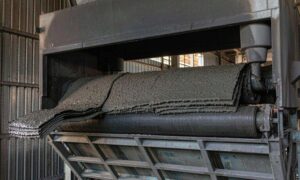
Cake discharge is the daily health check — dry, clean release means the whole vacuum circuit is working.
Daily: tracking under load, spray coverage, discharge quality. Weekly: the ten-minute walk — feed-zone cover, edges, sealing strips, groove cleanliness. Monthly: measure cover thickness at the high-wear zone and log the number; the trend is worth more than any single reading. Quarterly: wear strips, pulley lagging, vacuum box alignment.
Inventory: keep one spare sealing-strip set on site and know your belt’s delivery lead time. The cheapest life-extender in the entire program is wash discipline — grooves washed daily drain for years, and grooves washed occasionally rebuild your vacuum pump’s workload instead.
Customer Type: Copper concentrator Ore Type: Copper concentrate with high quartz abrasion Operating Conditions: Horizontal vacuum belt filter, roughly 2 m belt width, neutral pH slurry, continuous duty Problem: Cover wear concentrated under the feed chute forced replacement at about half the expected interval; vacuum readings were drifting down month over month. Solution: Feed-point impact protection installed to spread the load; wash-water nozzles rebuilt to restore full groove coverage; monthly cover-thickness logging introduced at the feed zone. Result: Wear redistributed across the belt width, cover loss rate visibly lower within the first monitored months, and replacement moved onto the planned maintenance schedule instead of the emergency list.
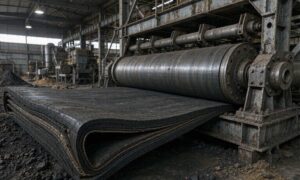
Question 1: How long does a vacuum belt filter rubber belt last?
Answer: Five to eight years is common in well-run mining service; aggressive duties shorten that. Life follows feed impact, wash discipline and tracking quality more than the calendar. Log cover thickness monthly at the high-wear zone — accelerating loss or a carcass within 3–4 mm of exposure means it’s time to plan the change-out.
Question 2: Can a damaged belt be repaired instead of replaced?
Answer: Small cover cuts and minor edge damage can be vulcanized in place, and many plants extend a season that way. Groove-edge damage along a working length, carcass exposure, or cracks at flex zones mean replacement — those repairs fail again within weeks. Weigh repair labor and a second downtime against remaining life.
Question 3: Why is vacuum dropping when the pump tests fine?
Answer: The vacuum circuit includes the sealing strips, the belt’s seating across the vacuum box, and the grooves themselves — all of which leak before pumps do. Inspect sealing strips for wear gaps first, then groove cleanliness, then seating. Nine times out of ten, sealing and wash discipline recover the reading.
Question 4: What information do you need to quote a replacement belt?
Answer: Overall length, width and thickness; groove profile drawing or sketch with pitch and depth; carcass type if known; pulley diameters; slurry and filtrate analysis; filter make and model. Photographs of the old belt, including the groove cross-section, usually remove the need for a site visit.
Question 5: Can you manufacture from OEM drawings or a worn sample?
Answer: Both. OEM drawings with tolerances go straight to production planning. A worn sample works when drawings are gone — groove pitch, depth and carcass construction are readable from the edge. Profile match is confirmed before production either way, and for custom machines we work from your operating data.
Question 6: Which compound for acidic slurry?
Answer: Start from the filtrate analysis. Acidic or hot liquor points to EPDM; oily streams to NBR or CR; abrasive neutral-pH concentrates stay with natural rubber. Require written compatibility against your analysis — a supplier’s hesitation there is useful information.
Question 7: Does belt speed really control cake moisture?
Answer: Yes, within limits. Lower speed means thicker cake and longer vacuum residence, which usually means drier cake; higher speed buys throughput at the cost of moisture. There’s a knee in the curve where the cake gets too thick for vacuum to penetrate efficiently — find it empirically on your slurry and operate just below it.
Question 8: How does the belt interact with filter cloth selection?
Answer: Belt and cloth form one drainage system. Cloth permeability sets how fast liquor enters; groove volume sets how fast it leaves. A fast cloth over shallow grooves backs up; a slow cloth over deep grooves wastes vacuum. Specify them together, not in separate purchases from separate logic.
The vacuum belt filter rubber belt is the least visible and most responsible component on the machine: it supports the cloth, drains the filtrate, meters the cake and seals the vacuum, continuously, in slurry designed to destroy rubber. Match the compound to the liquor, the grooves to the solids, and the maintenance to the real wear pattern, and it repays you with years of boring, profitable continuity. The wider component range sits on our Filtration Equipment hub — belts, cloths, sealing and the machines they serve, specified as one system.
Related Products
Related Technical Guides
Related Buyer Guides
Related Comparison Articles
| Annie Lu | Email: annie.lu@huataogroup.com | WhatsApp/WeChat: +86 18032422676 | Website: www.tufflexscreen.com |
admin