How Often Should I Replace Hydrocyclone Liners?
Oct 20, 2026
 admin
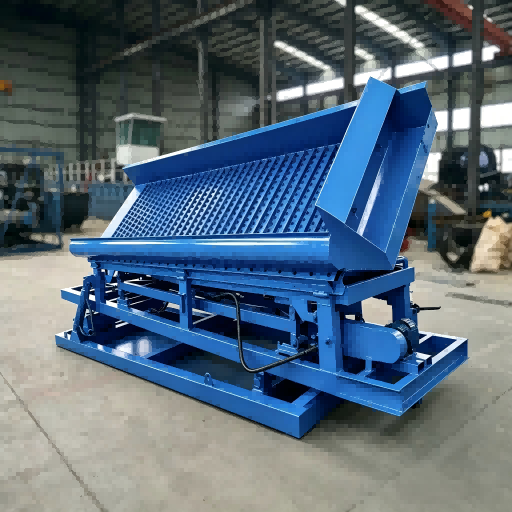
A dewatering screen is a vibrating screen deck used to remove water from wet mineral slurries, fine sand, and washed aggregate. Water drains through the screen apertures while solids are retained and discharged at lower moisture content. The screen media — polyurethane panels or steel wire — determines how effectively that drainage is maintained during operation.
In dewatering, water passes through the screen apertures under gravity and vibration, while solids report to the discharge end. The limiting factor is not the initial open area but how much of that open area remains functional during continuous operation.
Steel wire screens provide high initial open area but are susceptible to blinding when fine sand, clay, or slimes block the openings. Once blocked, effective drainage area falls and water removal efficiency declines.
<u>POLYURETHANE DEWATERING SCREEN PANELS</u> flex during vibration, which releases near-size particles and maintains effective drainage openings. Tapered or slotted aperture geometry further reduces wedging. The result is more stable drainage performance across the operating period.
Stable drainage. Effective open area is maintained rather than progressively lost to blinding.
Anti-blinding behaviour. Elastic flexing releases particles that would block a rigid mesh.
Anti-pegging geometry. Tapered or slotted apertures allow particles to pass through rather than wedge.
Abrasion resistance. Polyurethane holds aperture geometry longer in abrasive wet duty.
Corrosion resistance. Suitable for wet mineral slurries and corrosive process water.
Reduced maintenance. Lower cleaning frequency and longer replacement intervals.
Modular replacement. Individual panels can be changed rather than restringing a deck.
Polyurethane dewatering screens are applied in fine sand dewatering, washed aggregate, coal dewatering, iron ore processing, gold ore processing, mineral slurry dewatering, construction sand, and quarry materials. They are particularly suited to fine, wet, and abrasive feed where conventional metal screens blind, wear, or corrode rapidly.
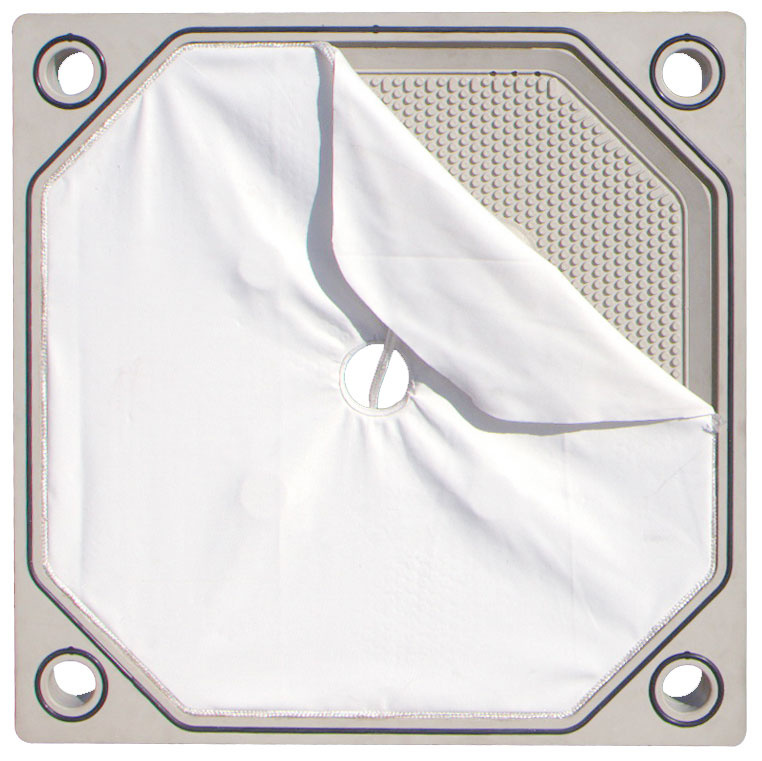
Dewatering sits downstream of <u>SCREENING</u> and upstream of <u>FILTRATION</u> and <u>TAILING</u> management. Stable dewatering reduces load on filter presses, thickeners, and tailings handling systems.
| Performance Factor | Polyurethane Dewatering Screen | Steel Wire Screen |
|---|---|---|
| Initial Open Area | Moderate | Generally higher |
| Initial Water Passage | Good | Very good |
| Anti-Blinding | Excellent | Application dependent |
| Anti-Pegging | Excellent | More susceptible |
| Abrasion Resistance | High | Depends on steel type |
| Corrosion Resistance | Excellent | Depends on wire material |
| Flexibility | High | Low |
| Service Life (abrasive wet) | Generally longer | Generally shorter |
| Maintenance Frequency | Generally lower | Application dependent |
| Initial Investment | Generally higher | Generally lower |
| Duty | Recommended Media | Reason |
|---|---|---|
| Fine sand dewatering | Polyurethane | Anti-blinding, aperture stability |
| Washed aggregate | Polyurethane or steel | Depends on fines content |
| Coal dewatering | Polyurethane | Moisture and clay resistance |
| Clean coarse aggregate | Steel wire | Higher open area, lower cost |
| Mineral slurry | Polyurethane | Corrosion and abrasion resistance |
| Low-abrasion static screening | Wedge wire or steel | Cost-effective |
| Industry | Typical Feed | Key Dewatering Concern | PU Suitability |
|---|---|---|---|
| Sand & Gravel | Fine sand, clay | Blinding | High |
| Coal | Wet fines | Blinding, corrosion | High |
| Iron Ore | Fine slurry | Abrasion | High |
| Gold | Oxide slurry | Cut-point, corrosion | High |
| Copper | Sulphide slurry | Abrasion, blinding | High |
| Mineral Sands | Heavy mineral slurry | Fine retention | High |
| Quarry | Washed aggregate | Fines content | Medium–High |
| Phosphate | Sedimentary slurry | Moisture, abrasion | High |
Five inputs determine the correct media:
Feed material — fine, wet, and abrasive feed favours polyurethane.
Feed moisture content — higher moisture increases blinding risk.
Target aperture size — must match separation size and feed characteristics.
Abrasive content — high-volume abrasive duty favours polyurethane.
Maintenance access — limited downtime windows favour longer-life media.
Evaluate on final moisture content of discharged solids, drainage rate, and cleaning frequency — measured across a full operating cycle.
Required information: feed material, moisture content, particle size distribution, target aperture, screen machine model, panel dimensions, fixing system, throughput, and abrasiveness.
Drawings needed: panel outline with fixing detail, deck layout, and OEM part number where available.
Material selection: specify polyurethane grade against abrasion and corrosion requirements; request material data sheet.
MOQ: typically per panel or per deck set.
Lead time: commonly 2–4 weeks for standard panels.
Packaging: palletised and separated to prevent deformation.
Shipping method: sea freight for volume; air freight for breakdown-critical replacement.
Inspection standards: dimensional check, hardness verification, aperture measurement, visual mould inspection.
Supplier Evaluation Checklist:
Can the supplier manufacture according to drawings?
Can the supplier provide material reports?
Can the supplier support OEM replacement?
Does the supplier have export experience?
Can the supplier provide wear-life recommendations?
| Problem | Possible Cause | Recommended Solution |
|---|---|---|
| Blinding | Moisture, clay, low stroke | Review aperture and deck parameters |
| Pegging | Near-size particles | Switch to tapered or slotted aperture |
| High final moisture | Insufficient drainage area | Review aperture, deck slope, and feed rate |
| Premature wear | Abrasive feed, wrong PU grade | Re-specify grade and thickness |
| Corrosion damage (steel) | Wet, acidic process water | Consider polyurethane media |
| Poor fitment | Worn rails or non-OEM panel | Inspect rails, supply drawing |
| Reduced capacity | Blocked apertures | Increase cleaning frequency, review media |
Daily inspection: check for blinding and material build-up.
Weekly inspection: examine high-wear zones and fixing rails.
Monthly inspection: measure remaining panel thickness and record wear trend.
Replacement timing: at minimum safe thickness or when aperture tolerance drifts.
Spare parts inventory: hold one deck set plus high-wear zone panels.
Downtime reduction: modular replacement reduces change-out time.
Preventive maintenance: verify deck slope, vibration parameters, and feed distribution at every inspection.
Customer Type: Silica sand washing plant
Ore Type: Fine quartz sand with clay
Operating Conditions: Continuous wet dewatering, abrasive slurry
Problem: Steel wire dewatering screen blinded rapidly, final moisture content fluctuated, and screen replacement intervals were short due to abrasion and corrosion.
Solution: Converted to polyurethane dewatering panels with tapered slotted apertures matched to the deck.
Result: Blinding-related cleaning reduced by approximately 50%, final moisture content stabilised, and panel service life increased by roughly 2× versus steel wire.
Results are indicative of typical performance and depend on feed characteristics, deck configuration, and operating discipline.
Question: Which removes more water — polyurethane or steel wire?
Answer: In clean, coarse feed, steel wire can remove more water initially because of higher open area. In wet, fine, or abrasive feed, polyurethane generally removes more water over a full operating cycle because it resists blinding and maintains effective drainage area. The correct comparison is sustained performance, not initial flow.
Question: Does lower open area mean lower dewatering efficiency?
Answer: Not automatically. Lower theoretical open area only reduces efficiency if the openings actually stay smaller in practice. Polyurethane’s flexibility and tapered apertures keep effective open area stable, which often outperforms a higher-open-area steel screen that blinds during operation.
Question: How do I measure real dewatering efficiency?
Answer: Measure final moisture content of discharged solids, water drainage rate, and frequency of blinding and cleaning across a full operating cycle. A short trial will favour steel wire; a full-shift comparison usually favours polyurethane in wet duty.
Question: Is polyurethane suitable for coal dewatering?
Answer: Yes. Polyurethane resists the moisture, clay, and corrosion typical in coal dewatering, and its anti-blinding behaviour helps maintain drainage capacity. It is widely used where steel wire blinds or corrodes rapidly.
Question: How long do polyurethane dewatering screens last?
Answer: Service life depends on abrasiveness, moisture, aperture size, throughput, and deck parameters. In abrasive wet duty, polyurethane commonly lasts significantly longer than steel wire. Establishing a thickness-based wear trend is the only reliable predictor.
Question: What aperture design is best for dewatering?
Answer: Tapered or slotted apertures are generally preferred for dewatering because they allow particles to pass through rather than wedge inside. This is particularly important when the feed contains a high proportion of near-size particles.
Question: When is steel wire still the better choice?
Answer: Steel wire remains suitable when maximum open area is the priority, feed is clean and coarse, sticky fines are limited, initial cost dominates, abrasion is low, or precise fine retention is required in static screening applications.
Question: Can polyurethane dewatering panels be retrofitted to existing screens?
Answer: Yes, in most cases. Panels can be manufactured to match the deck dimensions, fixing system, and aperture requirement of the existing vibrating screen. Providing the deck drawing or OEM part number reduces fitment risk.
Question: How do I evaluate a dewatering screen supplier?
Answer: Check capability to manufacture to drawing or OEM number, willingness to supply material reports, export and mining experience, and technical support on aperture and deck selection. A supplier who quotes without asking about your feed and moisture is a procurement risk.
Question: Can polyurethane dewatering screens reduce operating cost?
Answer: Yes, through longer service life, modular replacement, reduced cleaning downtime, and stable drainage that protects downstream filtration and tailings handling. The combined effect is lower cost per tonne dewatered.
The comparison between polyurethane dewatering screens and steel wire screens comes down to theoretical open area versus effective open area maintained over time. Steel wire offers higher initial open area and rapid initial drainage in clean, coarse feed. Polyurethane maintains effective drainage openings more consistently in wet, fine, and abrasive conditions.
For mining applications involving fine sand, wet mineral materials, abrasive slurries, and continuous dewatering, polyurethane screen panels offer advantages in anti-blinding performance, wear resistance, corrosion resistance, and service life.
Related Articles
Related Products
Related Technical Guides
<u>IMPROVE FINE SCREENING EFFICIENCY WITH POLYURETHANE SCREEN PANELS</u>
<u>HYDROCYCLONE WEAR: ROOT CAUSES, HIGH-WEAR ZONES & MATERIAL SOLUTIONS</u>
Related Buyer Guides
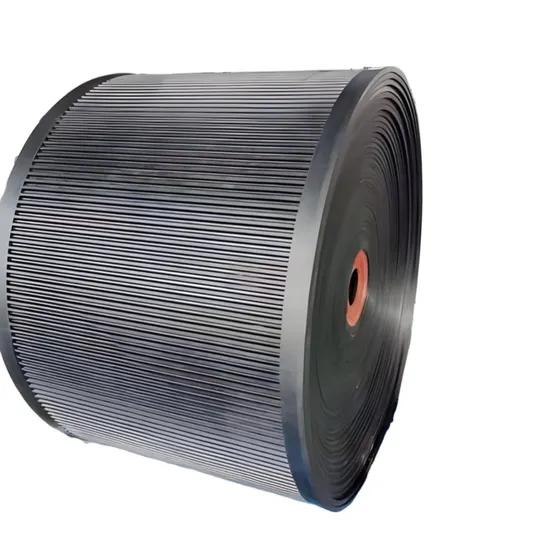
<u>HOW DO I CHOOSE THE RIGHT RUBBER BELT FOR A VACUUM BELT FILTER?</u>
<u>WHICH MANUFACTURER OFFERS HIGH-QUALITY POLYURETHANE TUFFLEX WIRE SCREENS FOR MINING?</u>
Related Comparison Articles
Contact
Annie Lu
annie.lu@huataogroup.com
+86 18032422676 (WhatsApp / WeChat)
Tags:
Polyurethane Dewatering Screen, Steel Wire Screen, Dewatering Efficiency, Mining Dewatering, Screen Media Comparison, Anti-Blinding Screen, Fine Sand Dewatering, Mineral Slurry Dewatering, Polyurethane Screen Panels, Dewatering Screen Supplier, Tufflex, Cost Per Tonne, Coal Dewatering, Iron Ore Dewatering, Corrosion Resistance
admin