How Often Should an Industrial Magnetic Separator Be Inspected?
-
 admin
- 23 Nov, 2026
Inspection frequency for an industrial magnetic separator is set by duty, not by a fixed rule. A practical baseline: daily eyes on pole face loading and discharge, weekly checks of suspension hardware, working gap and cleaning belt wear, monthly torque and bearing checks, and quarterly electrical and field-strength testing on electromagnetic units. Shorten those intervals for wet feed, high tonnage, hard abrasive ore and commissioning windows. The right interval is the one your own recorded readings can defend.
What Is an Industrial Magnetic Separator Inspection?
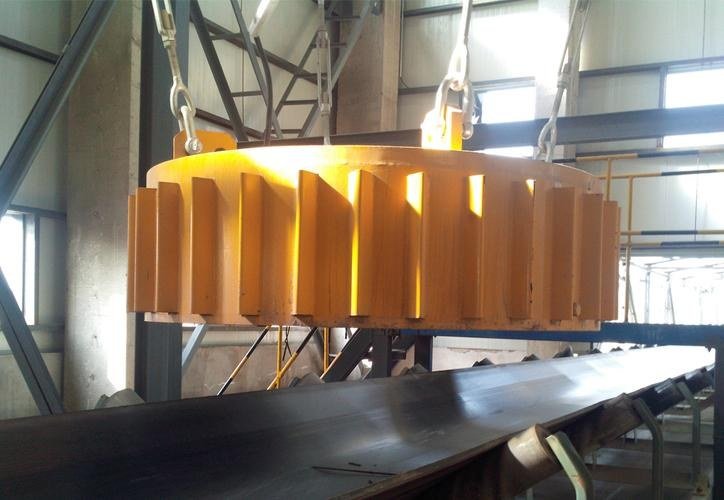
A magnetic separator inspection is a scheduled check that produces a record of the unit’s condition and performance — not a glance on the way past. Condition checks cover what you can see and feel: iron sitting on the pole face, a misaligned cleaning belt, worn chain links, packed fines behind a chute lip. Performance checks test whether the unit still captures steel: working gap measured in millimetres, field strength read with a gauss meter at a fixed reference point, and a capture test with real steel pieces at rated belt speed. Both families matter. A unit can look clean and still be missing captures because the gap opened by 40 mm six weeks ago and nobody measured it. Ranges such as the Electromagnetic Overband Separator and the fixed-field Iron Magnet need the same two families of check, with the electrical ones added for coils.
Key Takeaways
✔ Daily: pole face loading, discharge flow, cleaning belt tracking, unusual noise
✔ Weekly: chains, slings, turnbuckles, frame level, gap measurement, belt cover wear
✔ Monthly: bolt torque, pulley bearings, drive current, cable glands, belt drift under load
✔ Quarterly: insulation resistance, rectifier output, over-temperature circuit, gauss reading
✔ Shorten intervals for wet feed above 8–10% moisture, high tonnage, hard ore and commissioning
✔ Record gap, field and wear figures every time — dates without numbers prove nothing
Summary Table
| Item | Description |
| Function | Removes tramp iron from conveyed material before crushers, screens, mills and stockpiles |
| Material | Steel housing, electromagnetic coil or permanent magnetic core, PU or rubber cleaning belt |
| Application | Crusher feed conveyors, coal handling, aggregate plants, port terminals, mill feed |
| Service Life | Housing and coils 10+ years with routine inspection; cleaning belts replaced on measured wear |
| Benefits | Protects crushers, cuts liner consumption, avoids unplanned shutdowns, improves product purity |
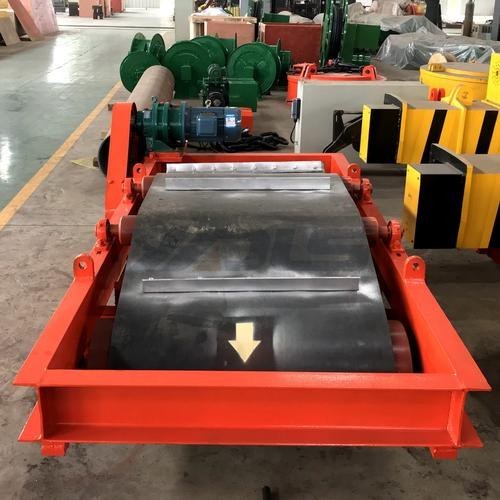
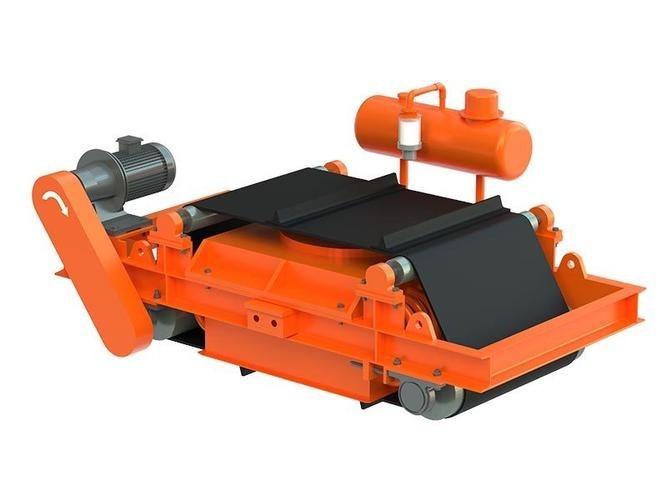
The self-cleaning overband: an endless belt carries captured iron out of the field zone. Weekly checks live at its discharge edge.
Definition: The Three Subsystems That Need Checking
Every installation divides into three parts, and each fails in its own way. The magnet block generates the field; its strength at distance decides what can be captured, and it degrades through heat, shock or coil damage rather than through use. The suspension holds the block in place — eye bolts, slings, chains, turnbuckles, often a trolley beam so the unit can be lowered for service. It is the safety-critical subsystem and the one most often left unexamined because it looks like static steel. The clearance system removes captured iron, either by manual wiping or by an endless cleaning belt and discharge chute. That last subsystem carries the wear: a belt cover thins at the point where iron leaves the field, and a chute that packs with fines will eventually bridge and back iron up onto the pole face. Three subsystems, three failure modes, three different inspection jobs. Treating them as one generic “check the magnet” task is how plants end up with a clean-looking unit that captures nothing.
Working Principle: Why Inspection Is a Race Against Drift
Capture happens when the pull on a steel object exceeds the friction and inertia of the bed around it, and that pull decays steeply with distance from the pole face. Everything that changes the gap therefore changes performance: a suspension settling a few millimetres a month, a structure deflecting under a heavier load, a replacement belt 10 mm thicker than the old one, or captured iron building into a beard on a face that should be shedding it. None of those events sets off an alarm. They drift. Inspection exists to catch drift while it is still cheap — before the capture rate falls far enough for steel to reach a chamber.
Release works on the same principle in reverse. Iron must leave the magnetic zone continuously or it accumulates, and the components that move it — cleaning belt, drive, pulleys — wear at predictable rates on a given duty. Belts mistrack, covers thin, lagging polishes smooth, bearings rumble. Each of those has a sound, a measurement or a visible sign weeks before it becomes a failure. The inspection schedule is simply a commitment to look at the right things often enough that the sign is caught before the failure. On a dry aggregate line that might mean monthly. On a wet iron ore conveyor it means daily.
Benefits: What a Realistic Schedule Pays Back
- Crusher chambers stay clear, so Crusher Wear Parts & Linersget replaced on planned intervals rather than after an incident
- Cleaning belts and covers are ordered from measured wear instead of from a failure report
- Capture tests after belt, ore or tonnage changes catch performance drift within days
- Suspension failures get prevented, which is the part that keeps people safe
- Maintenance spend becomes forecastable, and forecastable spend is what gets approved
Those benefits compound. A plant that has three months of gap readings knows its settlement rate, can plan re-shimming into a scheduled stop, and stops treating the separator as a black box that either works or doesn’t.
Applications: Where Each Interval Belongs
Primary crushing feed is the strictest duty, because a Jaw Crusher chamber cannot absorb a miss and the repair runs into days. These units usually justify a daily visual with weekly hardware checks. Screen feed conveyors come next, since steel blinds apertures and snaps fixings on Vibrating Screens with less drama but steady cost. Mill feed and transfer points on coal, aggregate and port conveyors carry lower consequences per event, which normally means a longer interval rather than different hardware. The exception is any unit feeding a crusher on a restart campaign, where construction debris changes the risk profile for months.
Plant additions matter too. A Heavy-Duty Conveyor Impact Bed under the loading point keeps the belt surface stable through the capture zone; without one, a bouncing belt changes its own gap with every lump and readings scatter. Where the belt wanders, a Conveyor Belt Tracker corrects the geometry before it becomes a magnet problem. Those components belong in the same walk-round, because they determine whether the magnet’s numbers mean anything.
Material Comparison: Permanent Versus Electromagnetic
| Property | Permanent Magnet | Electromagnetic Coil |
| Electrical inspection | None | Insulation resistance, rectifier output, thermal circuit |
| Field monitoring | Annual reference reading | Quarterly to annual, plus after any trip |
| Failure signature | Slow field loss, invisible without a meter | Sudden coil or rectifier fault |
| Maintenance access | Field always live | De-energised for safe work |
| Heat behaviour | Strength falls if overheated | Insulation class limits duty |
A permanent unit is mechanically simple and electrically silent, which makes it easy to neglect. Its failure mode is a gradual loss nobody notices because there is no reading to compare. An electromagnetic unit is more demanding but more communicative: a coil that is going bad shows up in an insulation test long before it fails in service. Choose the inspection schedule to match the failure mode, not the purchase price.
Application Comparison: Fixed Versus Self-Cleaning
| Property | Fixed Suspended Magnet | Self-Cleaning Overband |
| Daily work | Manual pole face wipe | Belt tracking and discharge check |
| Added components | None | Cleaning belt, two pulleys, drive, chute |
| Consumables | None significant | Belt cover, lagging, chute liner |
| Inspection burden | Frequent short visits | Fewer visits, more items per visit |
| Best duty | Low tonnage, intermittent feed | High tonnage crusher feed |
Fixed units trade capital cost for labour; self-cleaning units trade labour for components. Neither reduces inspection. A plant that buys a self-cleaning unit believing it removes the maintenance job usually discovers the cleaning belt within a season.
Industry Application Matrix
| Industry | Typical Duty | Base Interval |
| Iron ore | Crusher feed, wet or dry, high tonnage | Daily visual, weekly gap and belt wear |
| Copper ore | Primary and secondary crushing feed | Daily visual, weekly hardware, quarterly electrical |
| Gold ore | Mill and screen feed conveyors | Weekly visual, monthly hardware, annual electrical |
| Coal handling | Transfer points, stockpile conveyors | Weekly visual, monthly hardware, annual electrical |
| Aggregates | Dry feed, moderate tonnage | Weekly visual, monthly hardware |
| Port terminals | High tonnage with intermittent stops | Daily visual, weekly tracking and chute checks |
Selection Guide: Buy a Unit You Can Inspect
Design choices made at order determine how easy the unit is to look after, and that is worth more than a small saving on the purchase order. Four things to insist on. A suspension that can lower the magnet to waist height, because an inspection requiring scaffolding won’t happen twice. A discharge side facing a walkway rather than a live roadway. A pole face clear of structural steel within a few hundred millimetres, since nearby mild steel becomes part of the circuit and steals field. And readable instrumentation on electromagnetic units, because a rectifier with no output display gets checked by hope. Where an existing installation lacks a lifting provision, add one before the first inspection cycle or the schedule will quietly become an annual glance.
Procurement Guide
Spares buying is easy when the information is complete and painful when it isn’t. Required information: unit model, magnet type, belt width, cleaning belt dimensions, pulley diameters, chute liner material and thickness. Drawings needed: belt profile with cleat pitch, pulley shaft and bearing arrangement, liner plate pattern. OEM part numbers help where dimensions can’t be measured. Material selection matters on abrasive duty, where belt cover compound and liner grade both shift with ore type. MOQ is normally one piece for belts and liners. Lead time runs from stock for common sizes and several weeks for custom cleat patterns. Packaging should protect belts from UV and crushing, and the shipping method should match how urgently you expect to need the part.
Buyer questions worth putting in writing: can the supplier manufacture to drawings, can they supply material reports, do they support OEM replacement, do they have export experience, and can they give a wear-life estimate for your duty. The last one is the tell. A supplier who gives a range and the assumptions behind it has done the work.
Head-end hardware earns the same inspection routine as the suspended unit above the belt.
Failure Analysis
| Problem | Possible Cause | Recommended Solution |
| Missed captures | Gap opened through settling or belt change | Re-measure, re-shim, run a capture test |
| Iron accumulating on pole face | Cleaning belt slipping, mistracking or worn | Adjust tension and tracking, replace cover |
| Iron returning to the belt | Chute too shallow or lip misaligned | Rebuild chute steeper, check lip position |
| Weak field, electromagnetic unit | Coil damage or rectifier fault | Insulation test, verify DC output, check terminals |
| Weak field, permanent unit | Overheating or physical shock | Compare gauss reading against commissioning value |
| Cover worn through | Abrasive iron at the field exit | Replace cover, shorten weekly interval |
| Chute bridging | Packed fines narrowing the opening | Clean walls, line the chute, review moisture |
| Frame movement | Loose bolts, worn shackles | Re-torque to figures, replace hardware |
| Bearing noise | Lubrication loss or contamination | Replace bearings, check seals |
The pattern is consistent: every failure in that table has an earlier, cheaper symptom. The table is a list of things inspections are supposed to catch.
Maintenance Guide
Daily, per shift: pole face condition, discharge flow, cleaning belt tracking, abnormal noise. Weekly: suspension hardware, frame level, gap measurement, belt cover wear at the field exit, chute condition. Monthly: bolt torque, pulley bearings, drive current, cable glands, belt drift under load. Quarterly: insulation resistance, rectifier output, thermal circuit test, gauss reading. Annually: full capture test, structural inspection, consumables plan.
Replace on measurement, not on feeling. Order a cleaning belt when the cover has lost a third of its thickness. Replace shackles at the manufacturer’s wear limit. Re-shim when the gap has moved 15 mm from commissioning. Keep one cleaning belt and a set of suspension hardware on site if the conveyor is critical; the Magnetic Separation Spares range covers belts, lagging and hardware for common sizes. A spare on the shelf turns a two-week wait into an afternoon’s work, and the difference usually shows up on a production report.
Case Study
Customer Type: Copper concentrator, single-stage crushing with secondary screening
Ore Type: Sulphide copper ore, moisture 4–6%, abrasive
Operating Conditions: 1,200 mm conveyor, 750 tph, self-cleaning overband above the screen feed, 350 mm working gap at commissioning, two-shift operation
Problem: The plant inspected the magnet monthly and recorded nothing beyond a signature. Over one quarter, recovered iron after the magnet rose from 3 pieces per shift to 9, and the cleaning belt began mistracking in wet weather. Nobody connected the two until a piece of drill steel reached the screen and tore a panel.
Solution: The maintenance team moved to a daily visual on belt tracking and discharge, a weekly cover-thickness measurement at the field exit, and a fortnightly gap check during the wet season. Tracking was corrected with a new pulley lagging and a properly tensioned belt, and a return-side cleaner was fitted to stop carryback building on the pulleys. Readings went onto a single sheet per unit.
Result: Recovered iron fell back to about 3 pieces per shift within three weeks and stayed there through the wet season. Gap drift was caught twice at 12 mm and corrected during planned stops rather than during breakdowns. Screen panel consumption dropped by roughly a fifth over the following year, and the cleaning belt was replaced once, ordered from measurement before it failed.
The equipment didn’t change. The record-keeping did.
FAQ
Q: How often should an industrial magnetic separator be inspected?
A: Daily for pole face and discharge, weekly for hardware, gap and belt wear, monthly for torque and bearings, quarterly for electrical and field checks on electromagnetic units. Those are baselines. Wet feed, high tonnage, hard ore and commissioning windows all justify shortening them, sometimes to a daily full check.
Q: Is monthly inspection enough for a permanent magnet?
A: Usually not on a production conveyor, because field loss and pole loading are invisible between visits. Weekly hardware and gap checks catch mechanical drift; an annual gauss reading against the commissioning value catches field loss. If the unit protects a crusher, daily eyes on the discharge cost minutes and prevent the expensive version of the same conversation.
Q: What is the single most useful thing to measure?
A: Working gap, measured the same way at the same point every time. It is the parameter that most directly controls capture, it drifts for reasons you can fix cheaply, and it produces a number you can trend. Field strength is the second, and belt cover thickness the third.
Q: Can I skip the capture test if readings look normal?
A: No. Gap and field readings describe the conditions for capture, not the result. A capture test with real steel at rated belt speed and burden depth proves the whole chain, including discharge. Run it after any change to belt, ore, tonnage or gap, and at least annually.
Q: How do I inspect a unit safely?
A: De-energise electromagnetic units and lock out the supply, then wait for the field to collapse before approaching the pole face. Permanent units cannot be switched off, so keep steel tools, ladders and lifting gear away from the working gap and use non-magnetic scrapers. Work from a platform with the belt locked out, and never reach under a suspended magnet supported only by its slings.
Q: When should the inspection interval be shortened?
A: When moisture climbs above roughly 8–10%, when tonnage increases, when ore hardness rises, during commissioning and restart campaigns, and after any unplanned capture failure. Each of those changes either the rate of wear or the cost of a miss, and both push the interval down.
Q: Do inspections reduce spare parts costs?
A: They reduce unplanned spending, which is the expensive part. Planned replacement from measured wear avoids emergency freight, overtime and production loss. Total spend on consumables may stay similar; the distribution of that spend becomes predictable, and predictability is what makes a maintenance budget survive a price cycle.
Q: What records should be kept per unit?
A: Gap in millimetres, gauss reading at a fixed reference point, cleaning belt cover thickness at the field exit, chute condition, and recovered iron per shift if it is counted. Five fields, one sheet, one file per unit. Three months of those numbers tell you your own wear rate, and your own wear rate is the only interval worth arguing about.
Conclusion
Set the four tiers, then let measurement move them. Daily eyes, weekly hands, monthly torque, quarterly electricity — and shorten all of it when the feed runs wet, the ore runs hard or the plant is still commissioning. The separator protecting your circuit is the cheapest equipment on the conveyor and the one most likely to pay for itself in a single avoided shutdown.
What separates a plant that gets a decade out of a magnet from one that replaces it early isn’t the purchase spec. It’s whether somebody wrote the gap down. Numbers, three months, one file. That’s the whole method.
For units and spares matched to a specific duty, HTL Solutions supplies the Magnetic Separators range, including Magnetic Drum and Self-Cleaning Electromagnetic Separator options for high-tonnage feed. Pair a unit with a Mining Secondary Belt Cleaner and check Conveyor Idlers & Rollers in the same walk-round; both keep the geometry under the magnet stable enough for readings to mean something.
Related Articles
Related Products
- Iron Magnet
- Magnetic Roller
- Magnetic Drums & Rollers
- Heavy-Duty Conveyor Impact Bed
- Electromagnetic Overband Separator
- Conveyor Belt Tracker
Related Technical Guides
- Improve Fine Screening Efficiency with Polyurethane Screen Panels
- Flotation Cell Rotor and Stator Wear Parts: How They Control Recovery, Flow and Maintenance Cost
- Hydrocyclone Underflow Too Wet? 6 Causes & Fixes
- Hydrocyclone Wear: Root Causes, High-Wear Zones & Material Solutions
- Rotor & Stator in Mechanical Flotation Cells: The Heart of Efficient Mineral Flotation
Related Buyer Guides
- How Do I Choose the Right Rubber Belt for a Vacuum Belt Filter?
- Which Manufacturer Offers High-Quality Polyurethane Tufflex Wire Screens for Mining?
Related Comparison Articles
- Polyurethane Screen vs Rubber Screen vs Wire Mesh: A Complete Comparison Guide
- Self-Cleaning Screen vs Traditional Woven Wire Mesh: Which One Should You Choose?
Contact
Contact: Annie Lu
Email: annie.lu@huataogroup.com
WhatsApp / WeChat: +86 18032422676
Website: www.tufflexscreen.com
HTL Solutions manufactures magnetic separation and conveyor protection equipment for mining and mineral processing plants, with inspection guidance and spares support.
 admin
personal profile