How Often Should I Replace Hydrocyclone Liners?
Oct 20, 2026
 admin
What Is a Seized Conveyor Idler?
A seized conveyor idler is a roller whose bearing has failed or whose rotation has stopped completely. The belt slides across the stationary surface instead of rolling over it. This creates uneven drag across the belt width, which steers the belt off its centerline. In mining conveyors, dust, moisture, and abrasive fines accelerate bearing failure and make mistracking more severe.
✒ A seized idler creates asymmetric resistance that steers the belt off-center
✒ A partially seized roller can cause mistracking before it stops rotating completely
✒ Material buildup around a slow roller worsens the tracking problem
✒ Replace the failed idler first; never adjust tracking to compensate
✒ Self-aligning idlers solve recurring wander, not mechanical failure
✒ Failure location patterns reveal the root cause of repeated seizures
✒ Heavy-duty sealing is critical in dusty and wet mining environments

Mining conveyor idler bearing contamination
| Item | Description |
|---|---|
| Function | Support the conveyor belt and conveyed material while maintaining low rolling resistance |
| Material | Steel roller shell, bearing assembly, multi-stage sealing system, shaft |
| Application | Mining, quarrying, aggregate processing, coal handling, mineral processing |
| Service Life | 12–36 months depending on sealing, load, environment, and duty cycle |
| Benefits | Stable belt tracking, low rolling resistance, reduced downtime, extended belt life |
A conveyor idler is a rotating cylinder that supports the belt along its path. Carrying idlers support the loaded belt. Return idlers support the empty belt on its return path. Both must rotate freely to maintain stable belt tracking.
A seized idler has stopped rotating. The bearing may have failed completely, or the roller may be partially seized and require excessive torque to turn. In either case, the belt no longer rolls smoothly across the idler surface.
This matters because a conveyor belt centers itself when rolling resistance is balanced across its width. Any imbalance creates a lateral steering effect. For heavy-duty idler options, see Conveyor Idlers & Rollers.
In a three-roll troughing idler set, the left wing roller, center roller, and right wing roller each contribute to belt support. When all three rotate normally, the belt moves across a balanced support system with even rolling resistance.
When the left wing roller seizes, the belt encounters high drag on the left, normal resistance in the center, and normal resistance on the right. This imbalance creates a lateral steering effect. The belt begins moving away from its normal centerline.
A completely seized roller is worse because the belt slides across a stationary surface. This generates localized friction, heat, and accelerated wear on both the belt cover and the roller shell.
A partially seized idler can cause the same problem. The bearing may still allow rotation but require substantially more torque than surrounding rollers. Visual inspection alone may not identify this condition. That is why thermal inspection and manual rotation checks matter.
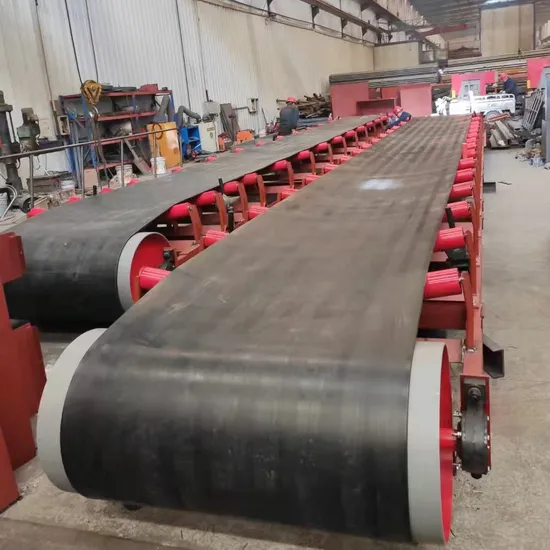
Once a roller stops rotating properly, wet fines, clay, mud, coal dust, or other sticky material accumulate around the roller and surrounding structure. The roller surface becomes uneven.
Now the conveyor has two problems: increased drag from the seized bearing and altered belt support geometry from the buildup. The combination makes mistracking more severe. For belt tracking solutions, see Conveyor Belt Tracker.
Stable belt tracking: Balanced rolling resistance keeps the belt centered and reduces edge damage.
Lower energy consumption: Freely rotating idlers reduce the power needed to move the belt.
Extended belt life: Correct tracking prevents belt cover scuffing and edge wear.
Reduced downtime: Early failure detection prevents unplanned stoppages.
Lower maintenance cost: Failure pattern analysis reduces repeat replacements.
Improved safety: Failed rollers present safety risks in conveyor service.
Better material containment: Stable tracking reduces spillage at transfer points.
Seized idler problems appear across many bulk material handling operations:
Gold mining conveyors: Abrasive ore, moisture, and continuous duty accelerate bearing wear
Iron ore handling: High loads and dust demand heavy-duty sealed idlers
Copper ore processing: Wet and abrasive conditions attack bearing seals
Coal handling systems: Dust ingress and carryback cause rapid failure
Aggregate processing: Impact loading at transfer points damages idlers
Mineral processing plants: Slurry exposure and chemical attack reduce idler life
Port and stockyard conveyors: Outdoor operation exposes idlers to weather
Cement plants: High dust loads and heat demand robust sealing
Each application places different demands on idler sealing, bearing capacity, and roller construction. For related components, see Conveyor Belt Cleaner / Scraper and Conveyor Belt Skirting.
| Material | Wear Life | Cost | Maintenance | Best Application |
|---|---|---|---|---|
| Standard Steel Idler | 6–12 months | Low | Frequent | Light-duty, dry, clean conditions |
| Heavy-Duty Steel Idler | 18–36 months | Medium | Moderate | Mining, high tonnage, abrasive material |
| Sealed Bearing Idler | 24–48 months | Medium-High | Low | Dusty, wet, contaminated environments |
| Rubber Disc Return Idler | 18–36 months | Medium-High | Low | Carryback-prone return side |
| Self-Aligning Idler | 24–48 months | High | Low | Recurring belt wander |
| Impact Idler | 12–24 months | Medium-High | Moderate | Loading zone, high impact |
| Application | Recommended Idler Type | Key Consideration |
|---|---|---|
| Loading zone | Impact idler | Absorbs material impact energy |
| Carrying side | Troughing idler | Supports belt and material load |
| Return side | Return idler | Handles carryback and buildup |
| Wet sections | Sealed bearing idler | Prevents moisture ingress |
| Recurring wander | Self-aligning idler | Corrects lateral belt movement |
| High dust areas | Sealed heavy-duty idler | Multi-stage sealing protection |
| Long overland conveyors | Heavy-duty idler | Low rolling resistance, long life |
| Industry | Ore/Material | Idler Challenge | Recommended Solution |
|---|---|---|---|
| Gold Mining | Gold ore, tailings | Abrasive fines, moisture | Sealed heavy-duty idler |
| Iron Ore | Iron ore, pellets | High load, dust | Heavy-duty troughing idler |
| Copper Mining | Copper ore, slurry | Abrasive, wet | Sealed bearing idler |
| Coal Handling | Coal, coal dust | Dust ingress, carryback | Rubber disc return idler |
| Aggregate | Crushed stone, sand | Impact, abrasion | Impact idler, troughing idler |
| Cement | Clinker, limestone | High dust, heat | Sealed heavy-duty idler |
| Lithium | Lithium ore, concentrate | Chemical exposure, moisture | Corrosion-resistant idler |
| Phosphate | Phosphate rock, slurry | Abrasive, wet, acidic | Sealed corrosion-resistant idler |
Selecting the right conveyor idler requires more than matching roller diameter. Consider these factors:
Belt width and speed: The idler must match belt dimensions and handle the operating speed without excessive vibration or runout.
Conveyed load: Calculate the actual load per idler station. Undersized idlers fail prematurely. Consider both the belt weight and the material load.
Idler spacing: Closer spacing increases load capacity but raises cost. Correct spacing depends on belt tension, material weight, and sag limits.
Operating environment: Dust, moisture, temperature, and chemical exposure all affect bearing and seal selection. Mining conveyors commonly use multi-stage sealing.
Duty classification: Continuous mining duty demands heavier construction than intermittent operation. Match the idler to the actual duty cycle.
Trough angle: The trough angle affects material containment and belt support. Match it to the conveyor design and material characteristics.
Roller diameter: Larger rollers reduce rotational speed and extend bearing life. Heavy-duty mining idlers commonly use larger rolls.
Bearing type: Choose bearing type based on load, speed, and sealing requirements. Sealed bearings suit dusty and wet environments.
For replacement idlers, provide belt width, roller diameter, roller length, shaft diameter, bearing type, trough angle, idler spacing, belt speed, conveying capacity, material, carrying or return position, existing drawing or photos, and operating environment.
Belt width and belt speed
Roller diameter and roller length
Shaft diameter and bearing type
Trough angle and idler spacing
Conveying capacity and material type
Carrying or return position
Operating environment (dust, moisture, temperature)
Existing idler drawing or dimensional sketch
Photos of installed idler and frame
Belt cross-section showing trough angle
Provide OEM part numbers when available. This helps match fitment, performance, and interchangeability.
Choose roller shell material, wall thickness, and bearing sealing based on duty. Heavy-duty mining idlers use larger rolls, larger bearings, and robust sealing systems to cope with high tonnage and harsh environments.
Confirm minimum order quantity with the supplier. Standard sizes may have lower MOQ than custom configurations.
Standard idlers typically ship faster than custom units. Confirm lead time before ordering.
Idlers should ship in crates or pallets with protection against moisture and impact.
Consider weight and volume. Sea freight suits large orders; air freight suits urgent replacements.
Check roller runout, bearing rotation, seal integrity, and dimensional accuracy.
Can the supplier manufacture according to drawings?
Can the supplier provide material reports?
Can the supplier support OEM replacement?
Does the supplier have export experience?
Can the supplier provide wear-life recommendations?
Does the supplier offer heavy-duty mining idler options?
Can the supplier supply related conveyor components?
For related conveyor components, see Conveyor Belts and Belt Conveyors.
| Problem | Possible Cause | Recommended Solution |
|---|---|---|
| Premature bearing failure | Inadequate sealing, contamination | Upgrade to sealed bearing idler |
| Roller seizure | Bearing damage, moisture ingress | Replace idler, improve sealing |
| Belt mistracking | Asymmetric drag from seized roller | Replace failed idler first |
| Material buildup | Carryback, sticky material | Install belt cleaner, rubber disc return idler |
| Roller shell wear | Abrasive material, thin shell | Use thicker shell, heavy-duty idler |
| Frame misalignment | Bent frame, installation error | Check and correct frame alignment |
| Excessive vibration | Bearing wear, roller runout | Replace idler, check shaft |
| Repeated failure in same area | Impact loading, undersized idler | Review idler duty and spacing |
| Belt edge damage | Mistracking, structure contact | Correct tracking after idler replacement |
| Corrosion | Moisture, chemical exposure | Use corrosion-resistant idler |
| Seal failure | Wrong seal for environment | Upgrade seal material and design |
| Shaft wear | Excessive load, poor fitment | Check load capacity, replace shaft |
Listen for grinding or squealing noises
Check for visibly stationary rollers
Observe belt tracking through the conveyor
Check roller rotation by hand after lockout
Inspect for material buildup around idlers
Compare bearing temperatures across idler stations
Measure roller runout and shaft wear
Check idler frame alignment
Review failure locations and patterns
Track which idler stations fail most often. Failures near the loading zone suggest impact problems. Failures on the return side suggest carryback. Failures in wet sections suggest sealing issues. Failures on one side suggest belt alignment or asymmetric loading problems.
Replace idlers when you find seized bearings, damaged shells, excessive rotational resistance, abnormal runout, severe corrosion, or structural damage.
Keep critical idler sizes in stock. Identify the most common failure points and maintain adequate spares.
Replace failed idlers during planned maintenance windows. Do not wait for complete failure.
Move from replacement-based maintenance to failure-pattern analysis. Record where failures occur and investigate root causes.
Customer Type: Copper ore processing plant
Ore Type: Copper ore with high moisture content
Operating Conditions: Outdoor conveyor, high dust, washdown exposure, continuous operation
Problem: Repeated belt mistracking near the loading zone. Maintenance team adjusted tracking idlers, but the belt continued to drift. Inspection found two seized return idlers and heavy material buildup around the loading area.
Solution: Replaced seized idlers with sealed heavy-duty return idlers. Removed material buildup. Checked idler frame alignment. Installed a secondary belt cleaner to reduce carryback. Made minor tracking corrections only after restoring mechanical baseline.
Result: Belt tracking stabilized. Edge damage stopped. Idler failure frequency in that section dropped by approximately 30% over the following six months.
Question: Can a seized idler really cause belt mistracking?
Answer: Yes. A seized idler creates uneven drag across the belt width. The belt slides across the stationary roller instead of rolling over it. This asymmetric resistance steers the belt off-center. Replace the failed idler first, then check tracking. For heavy-duty options, see Conveyor Idlers & Rollers.
Question: How do I identify which idler is seized?
Answer: Find where the belt begins to leave its normal centerline. The point where the belt rubs against the structure may be several meters downstream from the actual problem. Check for rollers that are not rotating, slow rotation, grinding noises, abnormal vibration, localized heat, or material packed around the roller.
Question: Should I adjust belt tracking or replace the seized idler first?
Answer: Replace the seized idler first. Adjusting tracking to compensate for a failed roller creates two artificial steering forces. The belt may look centered temporarily, but the defect remains. Replace the idler, remove buildup, check frame alignment, then make minor tracking corrections only if necessary.
Question: Why do conveyor idlers seize?
Answer: Common causes include bearing contamination from dust, water or moisture ingress, excessive loading from undersized idlers, and persistent belt mistracking that imposes abnormal loading. If multiple new rollers seize in the same section, investigate the root cause rather than simply replacing them.
Question: When should I use a self-aligning idler?
Answer: Use a self-aligning idler when mistracking recurs despite functioning rollers, checked structure, centered loading, and aligned pulleys. A self-aligning idler corrects lateral belt movement. Do not install one to hide a seized roller. For tracking solutions, see Conveyor Belt Tracker.
Question: What information do I need to order replacement idlers?
Answer: Provide belt width, roller diameter, roller length, shaft diameter, bearing type, trough angle, idler spacing, belt speed, conveying capacity, material, carrying or return position, existing drawing or photos, and operating environment. For mistracking problems, also provide belt drift direction and location.
Question: How can I reduce repeated idler seizure?
Answer: Move from replacement-based maintenance to failure-pattern analysis. Record where failed rollers occur. Investigate impact loading near the loading zone, carryback on the return side, sealing in wet sections, and alignment issues if one side fails more often.
Question: What related conveyor components should I check?
Answer: Check belt cleaners, skirting, impact beds, and tracking systems. These components work together as one material-handling system. For related parts, see Conveyor Belt Cleaner / Scraper, Conveyor Belt Skirting, and Heavy-Duty Conveyor Impact Bed.
Question: Can seized idlers damage the conveyor belt?
Answer: Yes. A seized roller causes the belt to slide across a stationary surface. This creates localized friction and heat. It can scuff the belt cover and contribute to edge damage if mistracking continues. Failed rollers also present safety risks. Replace them promptly.
Question: Does HUATAO supply replacement conveyor idlers?
Answer: Yes. HUATAO supplies heavy-duty conveyor rollers and idlers for mining, quarrying, aggregate processing, coal handling, and mineral processing. The range includes carrying idlers, return idlers, impact idlers, and self-aligning idlers. Contact HUATAO with your specifications.
A seized conveyor idler is a mechanical failure that directly affects belt tracking. The failed roller creates uneven drag across the belt width. The belt steers off-center. In mining conveyors, dust, moisture, and abrasive fines accelerate this problem.
The correct response is clear: replace the failed idler first. Do not adjust tracking to compensate. After replacement, remove material buildup, check frame alignment, run the conveyor, and observe tracking. Make minor corrections only if necessary.
When mistracking recurs despite functioning rollers and checked structure, consider a self-aligning idler or belt tracker. For heavy-duty conveyor components, see Conveyor Idlers & Rollers and Conveyor.
Related Products
Related Technical Guides
Improve Fine Screening Efficiency with Polyurethane Screen Panels
Hydrocyclone Wear: Root Causes, High-Wear Zones & Material Solutions
Related Buyer Guides
How Do I Choose the Right Rubber Belt for a Vacuum Belt Filter?
Which Manufacturer Offers High-Quality Polyurethane Tufflex Wire Screens for Mining?
Related Comparison Articles
Polyurethane Screen vs Rubber Screen vs Wire Mesh: A Complete Comparison Guide
Self-Cleaning Screen vs Traditional Woven Wire Mesh: Which One Should You Choose?
Annie Lu
Email: annie.lu@huataogroup.com
Mobile: +86 18032422676 (WhatsApp / WeChat)
Tags: conveyor belt mistracking, seized idler, mining conveyor maintenance, conveyor idler replacement, belt tracking, bulk material handling, HUATAO
admin