
Hydrocyclone: The Core of Classification Process, Key to Improving Grinding Efficiency
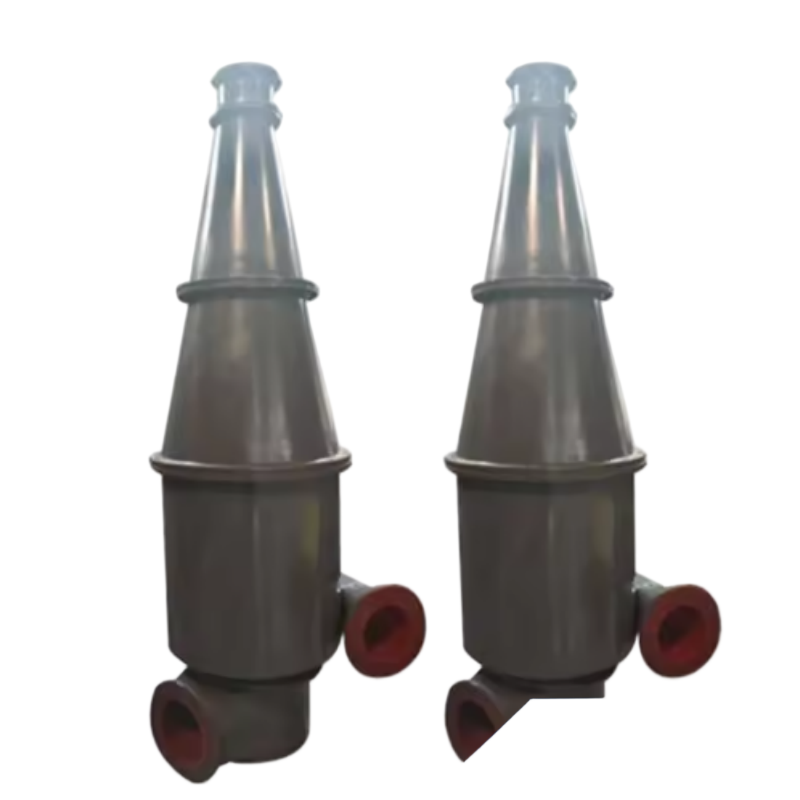
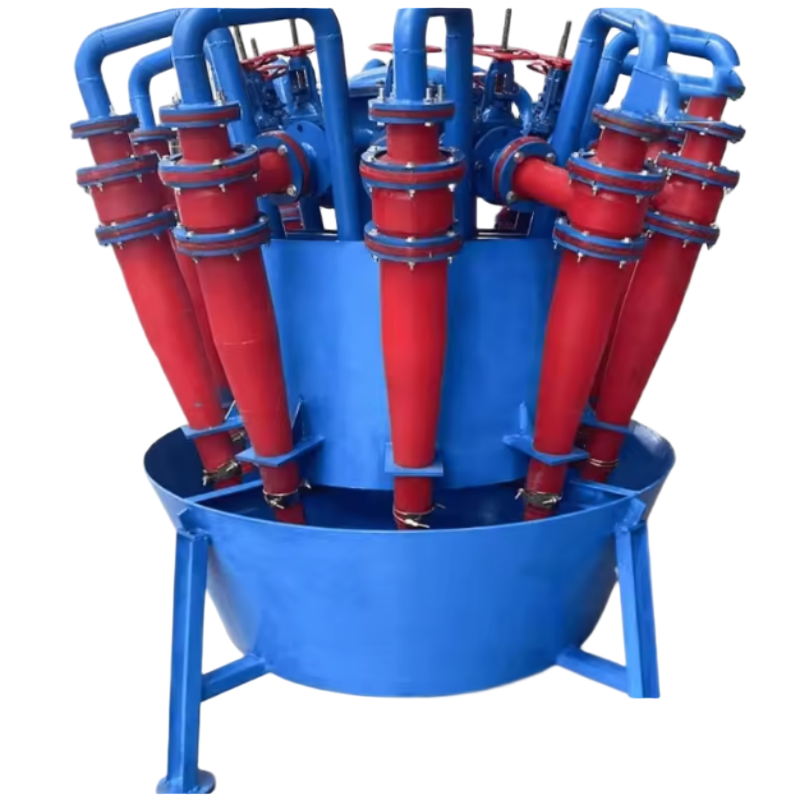
What is a Hydrocyclone?
A hydrocyclone is a centrifugal classification device that separates particles in a slurry by size. It uses high-speed rotation generated by tangential feed to throw coarse particles to the wall and discharge through the bottom apex, while fine particles move to the center and overflow through the top vortex finder. Hydrocyclones are the most common classification equipment in mineral processing, offering high capacity, fine cut sizes, and compact footprint compared to alternative classifiers.
✔ Core Function: Hydrocyclones are the primary classification equipment in grinding circuits, separating particles by size for optimal downstream processing
✔ Key Components: The apex, vortex finder, and cyclone liner are critical for performance and wear life
✔ Working Principle: Centrifugal force separates coarse from fine particles based on size and density differences
✔ Selection Factors: Capacity, cut size, feed characteristics, and abrasiveness determine the optimal hydrocyclone specification
✔ Maintenance Priority: Regular inspection and replacement of apex and liners are essential for sustained classification efficiency
| Item | Description |
|---|---|
| Function | Particle classification by size in grinding circuits |
| Working Principle | Centrifugal separation in a high-speed rotating slurry stream |
| Key Components | Cylindrical section, conical section, apex, vortex finder, feed nozzle, cyclone liner |
| Typical Cut Size | 20-250 μm (depending on operating parameters) |
| Common Applications | Grinding circuit classification, desliming, thickening, solids recovery |
| Advantages | High capacity, compact design, no moving parts, low maintenance |
| Disadvantages | Wear-prone, sensitive to feed variations, requires pressure |
| Liner Materials | Polyurethane, rubber, ceramic, wear-resistant steel |
In the modern mineral processing flowsheet, grinding and classification form a closed-circuit loop that is critical for overall plant performance. The hydrocyclone has become the industry standard for fine classification, replacing older technologies like spiral classifiers in most new and upgraded plants.
The hydrocyclone's popularity stems from its simple design, high capacity per unit footprint, and ability to achieve much finer cut sizes than mechanical classifiers. However, this performance comes with challenges, primarily related to wear and the need for careful parameter control.
Understanding how a hydrocyclone works, what its key components are, and how to select and maintain them is essential for any mineral processing professional seeking to optimize their grinding circuit.
The hydrocyclone's operation can be broken down into several distinct stages:
2.1 Feed Entry
Slurry enters the cylindrical section through a tangential feed nozzle at pressures typically ranging from 2 to 4 kg/cm². The tangential entry is crucial as it converts pressure energy into rotational velocity, creating the centrifugal force required for separation.
2.2 Centrifugal Separation
As the slurry rotates within the cyclone, a strong centrifugal field develops. Particles in the slurry experience three primary forces:
Centrifugal Force: Pushes particles outward toward the wall
Fluid Drag: Created by the inward flow of fluid toward the apex
Gravity: Affects particle settling, though less significant than centrifugal force
2.3 Particle Classification
The balance of these forces determines the separation behavior:
Coarse Particles: Greater mass → higher centrifugal force → pushed to the wall → spiral downward → discharge through the apex as underflow
Fine Particles: Lower mass → lower centrifugal force → carried inward by fluid drag → move upward through the central vortex → discharge through the vortex finder as overflow
2.4 Underflow and Overflow
The underflow (from the apex) typically contains the coarse particles that require further grinding and is returned to the ball mill. The overflow (from the vortex finder) contains the fine particles that have reached the target grind size and proceeds to the next stage of processing, typically flotation.
3.1 Cylindrical and Conical Sections
The cylindrical section provides the initial space for slurry rotation and centrifugal force generation. The conical section accelerates the rotation and promotes particle settling. The angle of the cone influences the cut size and capacity of the cyclone.
3.2 Apex (Underflow Nozzle)
The apex is the opening at the bottom of the conical section through which the coarse underflow discharges. It is one of the most critical components for classification performance:
Function: Controls underflow density and the cut size
Wear Impact: Apex wear increases its diameter, causing coarser cut size and lower underflow density
Replacement: Should be replaced when diameter increases by 10-15%
3.3 Vortex Finder (Overflow Nozzle)
The vortex finder is the tube extending into the cyclone's cylindrical section through which the fine overflow discharges:
Function: Controls the cut size and capacity
Diameter Effect: Smaller diameter → finer cut size, lower capacity; larger diameter → coarser cut size, higher capacity
Wear Impact: Wear causes diameter increase, resulting in coarser cut size
3.4 Feed Nozzle
The feed nozzle directs the incoming slurry tangentially into the cyclone. Its design affects the entry velocity and initial flow pattern, impacting classification efficiency.
3.5 Cyclone Liner
The cyclone liner protects the shell from abrasive slurry wear:
Materials: Polyurethane, rubber, ceramic, wear-resistant steel
Polyurethane: Excellent abrasion resistance, good impact resistance, cost-effective
Ceramic: Superior wear resistance for highly abrasive ores, higher cost
Rubber: Good impact resistance, suitable for less abrasive applications
The performance of a hydrocyclone is affected by several operating parameters:
| Parameter | Effect on Cut Size | Effect on Capacity | Effect on Wear |
|---|---|---|---|
| Feed Pressure (Increase) | Finer cut size | Higher capacity | Increased wear rate |
| Feed Density (Increase) | Coarser cut size | Higher underflow density | Minimal impact |
| Cyclone Diameter (Increase) | Coarser cut size | Higher capacity | Minimal impact |
| Apex Diameter (Increase) | Coarser cut size | Higher capacity | Lower underflow density |
| Vortex Finder Diameter (Increase) | Coarser cut size | Higher capacity | Minimal impact |
| Feed Viscosity (Increase) | Coarser cut size | Reduced capacity | Minimal impact |
| Material | Wear Resistance | Impact Resistance | Cost | Best Application |
|---|---|---|---|---|
| Polyurethane | Excellent | Excellent | Medium | Most mineral processing applications, moderately abrasive ores |
| Rubber | Good | Excellent | Low | Less abrasive ores, high-impact applications |
| Ceramic | Superior | Poor | High | Highly abrasive ores, fine classification |
| Wear-Resistant Steel | Good | Good | Medium | Coarse applications, high-temperature slurries |
| Criteria | Hydrocyclone | Spiral Classifier |
|---|---|---|
| Cut Size | 20-250 μm | 100-1000 μm |
| Capacity | High | Low to Medium |
| Footprint | Small | Large |
| Installation Height | Requires significant height | Low profile |
| Maintenance | Moderate (wear parts replacement) | Moderate (rake mechanism) |
| Operating Cost | Moderate (pressure requirements) | Low |
| Best Application | Fine classification, closed-circuit grinding | Coarse classification, washing, desliming |
7.1 Capacity Requirements
The required feed rate determines the cyclone diameter and number of units. For high-capacity applications, multiple cyclones in parallel are common.
7.2 Cut Size Requirements
The required separation size determines the cyclone diameter and operating parameters. Smaller cyclones produce finer cut sizes but have lower capacity.
7.3 Feed Characteristics
Feed density, viscosity, particle size distribution, and mineral types all affect selection. High-density feeds may require larger apex diameters.
7.4 Abrasiveness
Highly abrasive ores require wear-resistant liners (polyurethane or ceramic) and more frequent maintenance.
When purchasing hydrocyclone spare parts, provide the following information to your supplier:
Required Information for Hydrocyclone Spare Parts Procurement:
Complete drawings with all critical dimensions
Original equipment manufacturer part numbers (if available)
Operating conditions (feed rate, density, pressure, cut size)
Ore type and abrasiveness level
Expected service life requirements
Supplier Evaluation Checklist:
Does the supplier have experience with mineral processing hydrocyclones?
Can they provide material test reports and certifications?
Do they support OEM replacement specifications?
What is their quality control and inspection process?
Do they have export experience and reliable logistics partners?
Can they provide field support and installation guidance?
Key Questions to Ask When Selecting a Supplier:
What material do you recommend for my specific application and why?
What is the expected service life under my operating conditions?
What is your MOQ and typical lead time?
Do you provide on-site technical support or installation assistance?
Can you share references from similar applications?
What is your warranty policy for wear parts?
| Problem | Possible Cause | Recommended Solution |
|---|---|---|
| Short Liner Life | Feed pressure too high; incorrect liner material; highly abrasive ore | Reduce feed pressure; select polyurethane or ceramic liners; optimize operating parameters |
| Coarse in Overflow (Runaway) | Apex worn; feed pressure too low; feed density too high | Replace apex; increase feed pressure; reduce feed density |
| Fine in Underflow | Apex too small; feed pressure too high; vortex finder worn | Replace with larger apex; reduce feed pressure; replace vortex finder |
| Apex Blockage | Oversize particles in feed; high-density slurry; worn apex | Install trash screen; reduce feed density; replace apex |
| Feed Nozzle Wear | High-velocity abrasive slurry; low hardness material | Select ceramic or polyurethane feed nozzle |
| Vortex Finder Wear | High-velocity abrasive slurry; improper material selection | Select ceramic or polyurethane vortex finder |
| Low Underflow Density | Apex too large; feed pressure too low; feed density too low | Replace with smaller apex; increase feed pressure; increase feed density |
| Leakage at Flanges | Loose bolts; worn gaskets; misalignment | Tighten bolts; replace gaskets; realign components |
10.1 Daily Maintenance
Check feed pressure and density
Inspect apex for blockage and wear
Monitor underflow and overflow flow patterns
Verify proper feed nozzle alignment
Record operating parameters
10.2 Weekly Maintenance
Measure underflow density
Inspect vortex finder for wear
Check cyclone liner for signs of wear or damage
Review classification performance data
Clean feed line and sump
10.3 Monthly Maintenance
Detailed inspection of all wear components
Document wear measurements for apex, vortex finder, and liners
Review wear patterns and adjust maintenance schedule
Check feed nozzle integrity
Verify pressure transmitter accuracy
10.4 Annual Maintenance
Complete overhaul of cyclone assembly
Replace all wear components
Perform dimensional checks on critical components
Review and update maintenance procedures
Audit spare parts inventory
Preventive Maintenance Recommendations:
Maintain minimum spare parts stock (apex, vortex finder, liner segments, gaskets)
Establish wear monitoring program with documented measurements
Train operators on proper start-up and shutdown procedures
Create detailed maintenance checklists
Track replacement history to identify trends and improvement opportunities
Case Study: Australian Gold Plant Optimizes Hydrocyclone Performance
Customer Type: Gold processing plant
Ore Type: Quartz vein gold ore, moderate abrasiveness
Operating Conditions:
Feed rate: 180 t/h
Feed density: 42% solids
Operating pressure: 2.8 kg/cm²
Target cut size: 106 μm
Cyclone diameter: 660 mm
Problem:
The customer was experiencing classification efficiency below 60%, causing significant circulating load and reducing grinding circuit throughput. The apex was wearing out every 6 weeks, and frequent replacements were causing unplanned downtime. Additionally, coarse particles in the overflow were reducing gold recovery in the downstream flotation circuit.
Solution:
Replaced steel-lined cyclones with polyurethane-lined cyclones
Upgraded to ceramic apex and vortex finder
Implemented weekly wear inspection program
Optimized feed pressure to 3.0 kg/cm²
Adjusted apex diameter based on wear measurement schedule
Result:
Classification efficiency increased from 58% to 82%
Apex service life extended from 6 weeks to 8 months (5.3× life extension)
Grinding circuit circulating load reduced from 320% to 260%
Flotation recovery increased by 4% due to better particle size control
Annual maintenance cost reduced by 45%
Throughput increased by 12% without additional capital expenditure
Q1: What is the typical service life of a cyclone liner?
The service life depends on ore abrasiveness and operating conditions. For moderately abrasive ores, polyurethane liners typically last 6-12 months. Ceramic liners can last 12-24 months for highly abrasive ores. Regular inspection is essential to determine optimal replacement timing.
Q2: How do I know when to replace the apex?
The apex should be replaced when the diameter has increased by 10-15% from the original size due to wear, or when underflow density becomes consistently low. Signs include coarse particles in the overflow and low underflow density.
Q3: What is the difference between polyurethane and ceramic cyclone liners?
Polyurethane liners offer excellent abrasion and impact resistance at a lower cost, suitable for most applications. Ceramic liners provide superior wear resistance for highly abrasive ores but are more expensive and have lower impact resistance. The choice depends on ore characteristics and cost-benefit analysis.
Q4: How does feed pressure affect cyclone performance?
Increasing feed pressure increases capacity, produces a finer cut size, but increases wear rate. Decreasing feed pressure reduces capacity, produces a coarser cut size, and reduces wear. Optimal pressure should balance performance requirements with maintenance costs.
Q5: Can I replace OEM hydrocyclone parts with aftermarket alternatives?
Yes, aftermarket parts can provide significant cost savings. Ensure the supplier can provide precise dimensions, material certifications, and quality assurance. Many aftermarket suppliers use improved materials that can extend service life beyond OEM parts.
Q6: How do I prevent apex blockage?
Install a trash screen or vibrating screen before the cyclone feed sump to remove oversize particles. Maintain consistent feed density and avoid sudden changes in feed rate. Regular inspection and cleaning of the apex are also essential.
Q7: What is the ideal operating pressure for most hydrocyclones?
The ideal operating pressure typically ranges from 2 to 4 kg/cm² for most mineral processing applications. The optimal pressure depends on the cyclone size, required cut size, and feed characteristics.
Q8: How do I choose the right vortex finder diameter?
Choose a vortex finder diameter that allows the required overflow capacity while achieving the target cut size. Smaller diameters produce finer cut sizes but lower capacity. Refer to the manufacturer's recommendations for specific cyclone models.
Q9: What are the signs of cyclone liner wear?
Signs include reduced underflow density, coarser cut size, visible wear indicators, and increased power consumption in the feed pump. Regular dimensional measurements help identify wear before it affects performance.
Q10: Where can I find reliable hydrocyclone spare parts suppliers?
Industry referrals, trade exhibitions, and online procurement platforms are good sources. Evaluate suppliers based on manufacturing capabilities, quality control, material certifications, and export experience. Look for suppliers with experience in mineral processing applications.
The hydrocyclone is an essential component of modern mineral processing circuits, providing efficient classification that directly impacts grinding circuit performance and downstream recovery. Understanding the working principles, key components, and operating parameters is essential for optimizing classification efficiency.
Key takeaways for hydrocyclone optimization:
Wear Management: Regular inspection and timely replacement of apex, vortex finder, and cyclone liners are critical for sustained performance
Parameter Control: Feed pressure, density, and key dimensions must be optimized for each application
Material Selection: Choosing the right liner material (polyurethane, rubber, or ceramic) based on ore characteristics is essential for cost-effective operation
Maintenance Planning: A proactive maintenance program with documented inspections reduces unplanned downtime
By implementing these best practices, mineral processing operations can significantly improve classification efficiency, reduce operating costs, and enhance overall plant performance.
Related Products
Related Technical Guides
How Do I Calculate Hydrocyclone Capacity For Mineral Processing
Hydrocyclone Selection For Mineral Processing Full Engineering Guide
Why More Mining Plants Are Switching To Polyurethane Hydrocyclone Parts
Related Buyer Guides
Where Can I Find Reliable Hydrocyclone Suppliers In China For Mining And Mineral Processing
Best Flotation Equipment Spare Parts Suppliers How To Choose For Longer Wear Life Higher Recovery
Where To Buy High Quality Jaw Crusher Wear Parts Complete Engineering Procurement Guide
Related Comparison Articles
Which Flotation Rotor And Stator Last The Longest A Complete Guide For Mining Buyers Percent
Best Alternative To Metso Crusher Wear Parts Complete Engineering And Procurement Guide
Which Crusher Wear Parts Supplier Exports To Australia And Canada Complete Buyers Guide
Contact Information
Annie Lu
Email: annie.lu@huataogroup.com
Mobile/WhatsApp/WeChat: +86 18032422676
hydrocyclone, classification, mineral processing, grinding circuit, cyclone liner, apex, vortex finder, cut size, underflow, overflow
hydrocyclone, classification, mineral processing, grinding, cyclone liner, apex, vortex finder, cut size, underflow, overflow, wear-resistant, polyurethane liner, ceramic liner, rubber liner, centrifugal separator, classifier, mineral processing equipment, mining spare parts, classification efficiency, grinding circuit
can not be empty
can not be empty

HUATAO GROUP - SCREENS
ADD : No.298 Zhonghua North Street, Shijiazhuang 050000 China.
TEL : +86 0311 80690567
EMAIL :market@huataogroup.com
Web: www.tufflexscreen.com
 WhatsApp & WeChat : +86 18033763037