
Every mineral processing plant faces this decision. OEM parts offer engineering validation, guaranteed fit, and predictable performance—but at a 30–50% premium. Aftermarket parts offer significant cost savings—but quality varies, with the biggest risk being batch-to-batch inconsistency. The right choice depends on the component and its role: vortex finders and critical separation components → OEM or top-tier aftermarket only (0.5 mm diameter deviation shifts cut size). Spigots and routine wear parts → aftermarket makes sense (frequent replacement, cost compounds). The deciding factor is "what happens if this part fails?"—if failure affects concentrate grade, choose OEM; if it only affects underflow density, aftermarket is acceptable.
✔ OEM parts offer engineering validation, guaranteed fit, and predictable performance—at 30–50% higher cost
✔ Aftermarket parts offer significant cost savings—but quality varies; biggest risk is batch-to-batch inconsistency
✔ Vortex finders are the most sensitive component—0.5 mm diameter deviation shifts cut size; OEM or top-tier aftermarket only
✔ Spigots are frequently replaced (2–3× more often); aftermarket makes sense if supplier proves batch consistency
✔ The golden rule: "what happens if this part fails?"—failure affecting concentrate grade → OEM; affecting underflow density → aftermarket
✔ HUATAO Group delivers OEM-compatible quality with batch-to-batch consistency at competitive prices
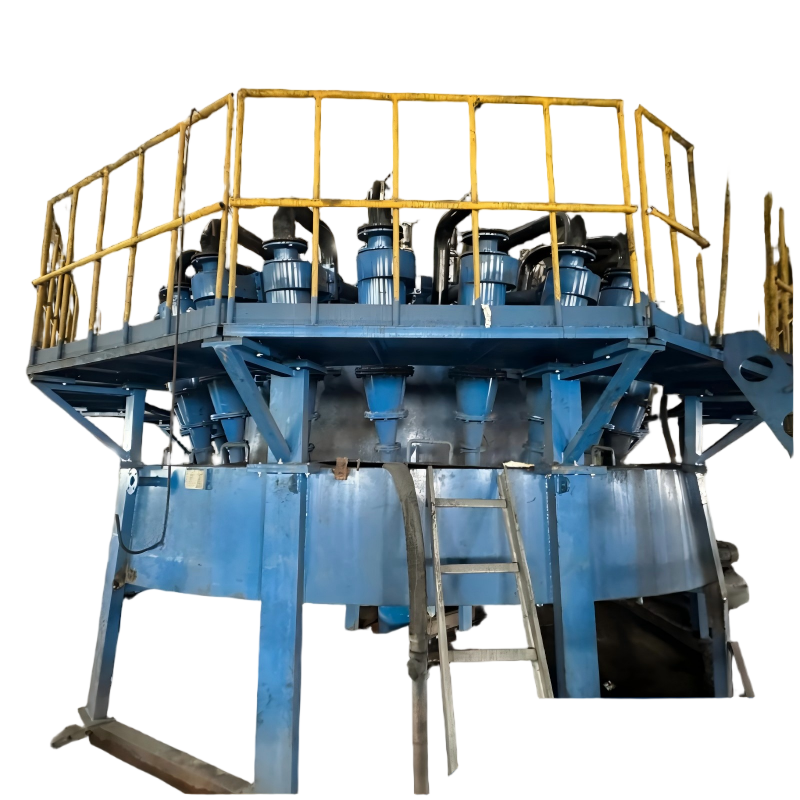
| Criterion | OEM Parts | Aftermarket Parts (HUATAO Grade) |
|---|---|---|
| Dimensional accuracy | Full engineering tolerance | ±0.3 mm, full geometry |
| Batch consistency | Excellent (fixed sources/molds) | Excellent |
| Material validation | Decades of field data | Proprietary R&D + field testing |
| Cost | Premium (100%) | Competitive (50–70% of OEM) |
| Service life | Predictable | Comparable (90–100% of OEM) |
| Best for | Critical stages, high-consequence failure | Routine maintenance, spigots, non-critical zones |
| Warranty | Full OEM coverage | Performance-backed guarantee |
| Traceability | Full documentation | Full batch traceability |
A hydrocyclone consists of several critical wear components:
Vortex finder (overflow pipe) – controls cut size and classification efficiency
Spigot (apex) – controls underflow density and discharge
Feed head liner – protects the feed entry zone
Cone section liners – protect the conical body
These components are consumable and must be replaced periodically as they wear.
The choice affects:
Separation performance and concentrate quality
Maintenance frequency and cost
Plant uptime and production reliability
Total cost of ownership
OEM parts are engineered as integrated components of the original equipment. Manufacturers like Metso and Multotec design hydrocyclone components with:
Decades of field data supporting performance predictions and service intervals
Rigorous material specifications and specialized hardening techniques
Guaranteed safety and predictable performance under extreme forces
Aftermarket parts are reverse-engineered products that replicate physical dimensions without the underlying engineering validation. They may look identical and fit the mounting flange, but they lack:
CFD flow modeling
Wear pattern analysis
Material fatigue testing
Comprehensive design data
Field insight: The biggest gap between OEM and aftermarket parts isn't material—it's "cumulative dimensional tolerance chain."
A hydrocyclone's internal geometry is a precision assembly. The spigot, cone section, and vortex finder must maintain specific relative positions and clearances to achieve the designed flow field and separation efficiency.
OEM parts are manufactured to the full dimensional tolerance chain specified in the original drawings—every single piece meets the same standards, so performance remains unchanged after replacement.
Aftermarket manufacturers often measure only "spigot inner diameter" and "mounting outer diameter," ignoring critical dimensions like cone angle, straight section length, and transition radii. The part fits, but the separation cut size may shift by 5–10 microns—enough to affect final concentrate grade in quality-critical applications.
Field insight: The biggest risk with aftermarket parts is not that they "don't work"—it's "batch-to-batch inconsistency."
| Supply Model | Raw Material Sources | Mold Condition | Batch Variation |
|---|---|---|---|
| OEM | Fixed, qualified suppliers | Maintained rigorously | Minimal |
| Premium aftermarket | Fixed sources (e.g., HUATAO) | Maintained | Minimal |
| Low-cost aftermarket | Switches frequently | May not refurbish | High |
Plant operators despise this uncertainty—a part that lasted two months may only last four weeks next time, completely disrupting planned maintenance schedules.
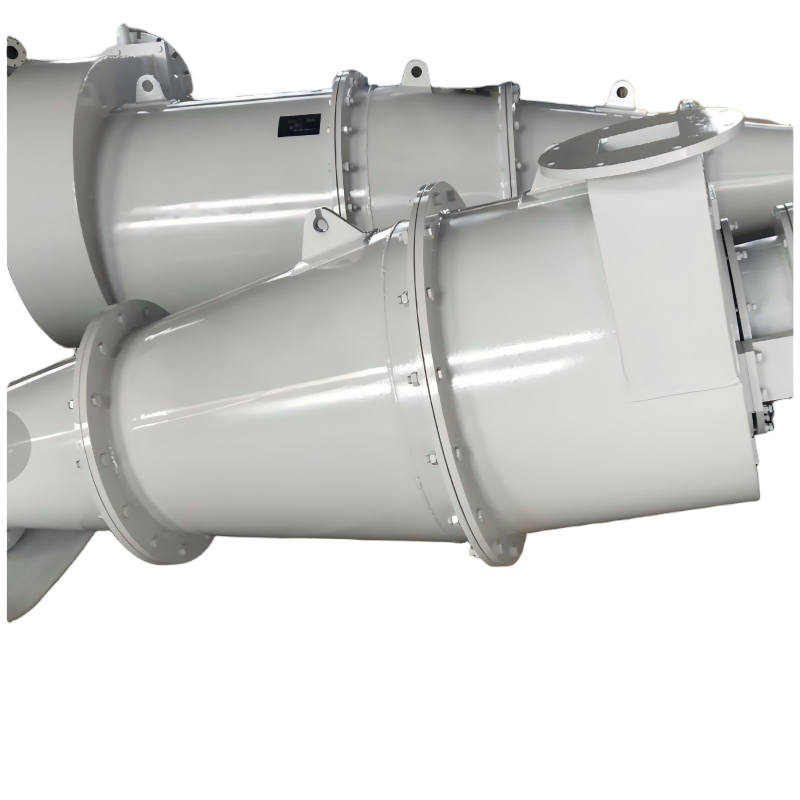
| Component | OEM Cost | Aftermarket Cost | Savings |
|---|---|---|---|
| Spigot (apex) | High | 50–70% of OEM | 30–50% |
| Vortex finder | Premium | 60–80% of OEM | 20–40% |
| Feed head liner | High | 50–70% of OEM | 30–50% |
| Full liner set | Very high | 50–70% of OEM | 30–50% |
The total lifecycle cost of key equipment like hydrocyclones is many times higher than the upfront capital cost. Using OEM parts ensures maintenance quality matches original manufacture and protects long-term productivity.
Aftermarket suppliers compete primarily on lead time and value engineering, while OEM channels emphasize certified fit, comprehensive warranty coverage, and integrated lifecycle support.
Dimensional deviations—even within "acceptable" fit tolerances—can shift separation performance. For critical classification stages, this impacts recovery and concentrate quality.
Inconsistent material quality leads to unpredictable service life. A part that fails early causes unplanned downtime, often costing more in lost production than the part itself.
OEMs engineer parts to withstand extreme forces without catastrophic failure. Counterfeit or non-genuine alternatives may compromise worker safety and equipment reliability.
Field insight: For vortex finders, I recommend OEM parts—or top-tier aftermarket suppliers only.
The vortex finder diameter directly affects short-circuit flow and separation cut size. It is the most sensitive dimensional parameter in the entire hydrocyclone. Even a 0.5 mm diameter deviation has a measurable impact on d50.
Moreover, vortex finders wear much more slowly than spigots—typically replaced every 6–12 months—so the cost difference per ton of ore processed is negligible. I'd rather pay a premium for "guaranteed correct" than gamble on aftermarket dimensional accuracy to save a few hundred dollars.
Routine maintenance on non-critical process stages
Frequently replaced components like spigots (2–3× more often than other parts)
Legacy equipment where OEM parts are no longer available
Mature, well-optimized circuits with experienced operating teams
Applications where performance drift is acceptable (e.g., tailings dewatering, not final concentrate classification)
Critical separation stages where performance directly impacts recovery and concentrate quality
High-wear zones where unpredictable failure is unacceptable
New equipment still under warranty (aftermarket parts may void coverage)
Safety-critical applications where catastrophic failure poses personnel risk
Components with tight dimensional tolerances (e.g., vortex finders)
Field insight: The deciding factor is not "OEM vs. aftermarket" as a label—it's "what happens if this part fails?"
| Failure Consequence | Recommendation |
|---|---|
| Underflow density drops 5%, discharge more water | Aftermarket acceptable |
| Concentrate grade drops 1%, flotation circuit needs retuning | OEM only |
| Plant shutdown, production loss, safety risk | OEM only |
Many well-run plants adopt a hybrid approach that balances cost and risk:
Vortex finders (dimensional stability-critical)
Cone sections (geometry-critical)
First installation parts on new equipment
Critical classification stages
Spigots (apex) on non-critical applications
Routine maintenance replacements
Low-wear or low-consequence components
Applications with experienced operators who can manage performance drift
At HUATAO Group, we occupy a distinct position in the hydrocyclone wear parts market. We are a premium aftermarket supplier—not a low-cost, low-quality alternative. Our value proposition is simple: OEM-compatible quality at competitive prices, with batch-to-batch consistency you can trust.
Hydrocyclone Wear Parts:
Polyurethane spigots (apex) – precision-molded to ±0.3 mm tolerances
Vortex finders – engineered for dimensional stability and consistent cut size
Feed head liners and cone section liners – full geometry matching
Full hydrocyclone liner sets for all major OEM brands
Material Capabilities:
High-performance cast polyurethane – 3–5× longer life than rubber
Advanced ceramic materials – for high-temperature and high-silica applications
Specialty formulations – custom-developed for your specific ore type
Complete Screening Solutions:
Polyurethane screen panels – up to 8× longer life than steel
Rubber screen panels – 5–10× longer life in heavy-duty applications
Tufflex flip-flop screens – eliminate blinding, boost efficiency by 30%
1. Dimensional Precision
We don't just copy "outer dimensions." Every HUATAO wear part is manufactured to full dimensional specifications—cone angles, straight section lengths, transition radii, and critical clearances—ensuring your hydrocyclone maintains its designed separation performance.
2. Batch-to-Batch Consistency
We source raw materials from fixed, qualified suppliers, maintain our molds rigorously, and control process parameters tightly. Our customers can order the same part number six months apart and expect the same fit, same hardness, and same service life.
3. Proven Field Performance
Independent trials show HUATAO wear parts reduce annual maintenance costs by 40% and extend maintenance cycles by 3–5 times. Our spigots regularly achieve service lives that rival OEM equivalents—at 30–50% lower cost.
4. Full Traceability
Every batch is documented and traceable. If an issue arises, we can identify the exact production run, material batch, and mold condition—enabling continuous improvement and accountability.
5. Rapid Global Supply
With our vertically integrated manufacturing in China, we offer fast lead times and global shipping. Many of our stock parts ship within 24 hours.
Step 1: Identify the Component
Vortex finder → OEM or top-tier aftermarket only
Spigot → Aftermarket viable if supplier is qualified
Cone section → OEM or top-tier aftermarket
Feed head liner → Aftermarket viable
Step 2: Assess Failure Consequence
Affects concentrate grade → OEM
Affects only underflow density → Aftermarket acceptable
Safety-critical → OEM
Step 3: Evaluate Supplier Capability
Dimensional precision (±0.3 mm minimum)
Batch consistency (fixed raw material sources)
Material validation (field references)
Traceability (batch documentation)
Step 4: Calculate Total Cost of Ownership
Include part cost, labor, downtime value
Compare replacement frequency
Hydrocyclone Specifications: Model, make, and serial number
OEM Part Number: If available
Component Type: Spigot, vortex finder, feed head, cone liner
Dimensions: Diameter, length, connection type, critical angles
Operating Conditions: Ore type, temperature, pH, solids concentration
Does the supplier manufacture in-house or outsource?
What dimensional tolerances are guaranteed?
Can the supplier provide material test reports?
Does the supplier maintain fixed raw material sources?
What is the typical lead time?
Can the supplier provide field references?
Field insight: The simplest test for an aftermarket supplier is a "batch comparison trial"—buy three batches of the same spigot model, run each to failure, and check whether the service life variation stays within ±10%. An aftermarket supplier that passes this test can be trusted.
| Problem | Possible Cause | Recommended Solution |
|---|---|---|
| Premature spigot wear | Inconsistent material quality | Switch to premium aftermarket or OEM |
| Cut size drift after replacement | Dimensional deviation from aftermarket part | Verify full geometry; switch to OEM |
| Vortex finder cracking | Impact damage or improper material | Use higher-strength material; verify source |
| Batch-to-batch variation | Supplier switching raw material sources | Require fixed sources; switch to premium supplier |
| Performance drop after maintenance | Aftermarket part not matching full geometry | Specify full dimensional tolerances in PO |
| Component | Typical Replacement Frequency | Recommended Source |
|---|---|---|
| Spigot (apex) | Every 2–4 weeks (frequent) | Aftermarket (premium) |
| Vortex finder | Every 6–12 months | OEM or top-tier aftermarket |
| Feed head liner | Every 3–6 months | Aftermarket or OEM |
| Cone section liner | Every 3–6 months | Aftermarket or OEM |
Spigots: 2–3 sizes × 3–5 pieces each
Vortex finders: 2 pieces
Feed head liners: 2 pieces
Full liner sets: 1 complete set
Customer Type: Copper concentrator (Chile)
Ore Type: Porphyry copper, moderate silica
Operating Conditions: 1,800 tph feed, 35% solids
Problem: The plant was using OEM parts exclusively for all hydrocyclone wear components. Annual maintenance costs were high, and lead times for OEM parts were increasing.
Solution: Implemented a hybrid strategy:
OEM parts: Vortex finders and critical classification components
HUATAO parts: Spigots, feed head liners, and cone section liners
Result:
Annual cost savings: 35% on hydrocyclone wear parts
Spigot service life: 4 weeks (comparable to OEM)
Vortex finder performance: Consistent cut size, no drift
Maintenance predictability: Improved with fixed schedule
Payback period: 4 months
Answer: It depends on the component and application. OEM parts offer guaranteed fit and predictable performance at premium cost. Aftermarket parts offer cost savings—but quality varies. The key is to identify which components are critical (vortex finders) and which are routine (spigots).
Answer: OEM parts include the cost of engineering validation, CFD modeling, material testing, and extensive field data. They also come with warranty coverage and integrated lifecycle support. The premium reflects the investment in ensuring predictable performance.
Answer: Batch-to-batch inconsistency. Aftermarket manufacturers may switch raw material suppliers or neglect mold maintenance, resulting in fluctuating hardness, wear resistance, and dimensional accuracy across batches. A part that lasted two months may only last four weeks next time.
Answer: Yes—if the aftermarket supplier invests in material science, dimensional precision, and quality control. Premium aftermarket suppliers like HUATAO deliver OEM-compatible quality with batch-to-batch consistency.
Answer: Vortex finders and critical classification components. The vortex finder diameter is the most sensitive dimensional parameter—even 0.5 mm deviation shifts cut size. For these, OEM or top-tier aftermarket only.
Answer: Spigots (apex) on non-critical applications, routine maintenance replacements, and low-consequence components. For spigots—the most frequently replaced part—aftermarket often makes sense if the supplier proves stable material formulation.
Answer: Run a "batch comparison trial"—buy three batches of the same part, run each to failure, and check if service life variation stays within ±10%. A supplier that passes this test can be trusted.
Answer: HUATAO offers precision-machined polyurethane spigots (±0.3 mm), vortex finders with dimensional stability, feed head liners, cone section liners, and full liner sets for all major OEM brands. All with batch-to-batch consistency and full traceability.
Answer: Possibly. If your equipment is still under warranty, check the terms. Some OEMs require the use of genuine parts to maintain warranty coverage. For older equipment out of warranty, aftermarket parts are a viable option.
Answer: First, identify the component and its role. Second, assess failure consequence—what happens if this part fails? Third, evaluate supplier capability—dimensional precision, batch consistency, field references. Use the golden rule: if failure affects concentrate grade, choose OEM; if only underflow density, aftermarket is acceptable.
The "OEM vs. aftermarket" debate is not binary. The real question is: what grade of aftermarket part are you buying?
A cheap, unbranded copy from a trading intermediary carries significant risk. A premium aftermarket supplier like HUATAO—with material science capability, dimensional precision, and batch consistency—delivers OEM-compatible performance at significantly lower cost.
For spigots and routine wear parts, HUATAO offers unbeatable value. For vortex finders and critical classification components, our precision-machined parts meet the tight tolerances your process demands. And for every part we supply, we stand behind the quality with documented traceability and responsive service.
Hydrocyclone Selection For Mineral Processing Full Engineering Guide
Why More Mining Plants Are Switching To Polyurethane Hydrocyclone Parts
Where Can I Find Reliable Hydrocyclone Suppliers In China For Mining And Mineral Processing
Where Can I Find Reliable Mining Wear Parts Suppliers In China
Best Crusher Wear Parts Suppliers For Mining Companies Engineering Guide Procurement Checklist
Best Alternative To Metso Crusher Wear Parts Complete Engineering And Procurement Guide
Polyurethane Screen Panels Vs Rubber Screen Panels Which Is Better
We warmly welcome customers from around the world to contact us and establish mutually beneficial partnerships.
Contact: Annie Lu
Email: annie.lu@huataogroup.com
Phone / WhatsApp: +86 180 3242 2676
Website: http://www.tufflexscreen.com
HUATAO Group – Your Trusted Partner for High-Performance Screening and Wear Solutions.
Hydrocyclone, OEM Parts, Aftermarket Parts, Mining Procurement, Wear Parts, Mineral Processing, Polyurethane Screen Panel, Rubber Screen Panel, Tufflex Screen, Spigot, Vortex Finder, Huatao Group, Supply Chain Management, Total Cost of Ownership
can not be empty
can not be empty

HUATAO GROUP - SCREENS
ADD : No.298 Zhonghua North Street, Shijiazhuang 050000 China.
TEL : +86 0311 80690567
EMAIL :market@huataogroup.com
Web: www.tufflexscreen.com
 WhatsApp & WeChat : +86 18033763037