
In hydrocyclone operation, the vortex finder is the most critical wear component. Polyurethane vortex finders offer 3–5× longer life than rubber, excellent impact resistance, quick 10-minute replacements, and cost-effective performance for moderate abrasion and temperatures below 70°C. Ceramic vortex finders deliver 3–4× longer life than polyurethane in high-silica ores, maintain dimensional stability for consistent cut size, and handle temperatures above 200°C—but are expensive, brittle, and require 30–60 minutes for replacement. The "better" choice depends on your ore characteristics, slurry temperature, and maintenance philosophy: temperature above 70°C or high silica → ceramic; impact risk or moderate conditions → polyurethane.

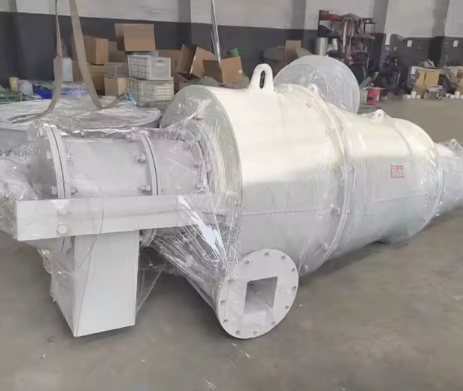
✔ Polyurethane offers 3–5× longer life than rubber/metal, excellent impact resistance, and 10-minute replacement—ideal for moderate abrasion and <70°C slurries
✔ Ceramic delivers 3–4× longer life than polyurethane in high-silica ores, stable dimensional accuracy, and handles >200°C—but is brittle and expensive
✔ Temperature limit is critical—polyurethane softens above 80°C, losing 70–80% of wear resistance; ceramic is the only viable choice for hot slurries
✔ Impact resistance is polyurethane's hidden advantage—it absorbs shock; ceramic can crack catastrophically
✔ Failure mode differs: polyurethane wears gradually (predictable); ceramic maintains performance until sudden catastrophic failure
✔ HUATAO Group manufactures both materials—precision-engineered to ±0.3 mm tolerances
| Criterion | Polyurethane | Ceramic |
|---|---|---|
| Wear resistance (standard ore) | Good (3–5× rubber) | Excellent |
| Wear resistance (high-silica ore) | Moderate | Outstanding (3–4× PU) |
| Temperature limit | ≤80°C | >200°C |
| Impact resistance | Excellent (absorbs shock) | Poor (can crack/shatter) |
| Dimensional stability | Gradual wear/drift | Stable throughout life |
| Replacement time | ~10 minutes (one person) | 30–60 minutes (two people) |
| Upfront cost | Low–Moderate | High |
| Total cost of ownership | Lower for moderate conditions | Lower for severe conditions |
| Failure mode | Predictable, gradual | Sudden, catastrophic possible |
| Best application | Moderate abrasion, impact risk, <70°C | High silica/hardness, >70°C, stability-critical |
A vortex finder—also known as the overflow pipe—is the critical wear component at the top of a hydrocyclone. It controls the overflow discharge and directly influences the cut size (d50), classification efficiency, and overall hydrocyclone performance. The vortex finder's diameter is the single most influential geometric parameter affecting separation.
The vortex finder operates in the highest-velocity region of the hydrocyclone, where slurry accelerates to maximum speed before exiting. This region experiences intense abrasion from suspended particles. The material choice determines:
Service life between replacements
Separation performance stability
Maintenance frequency and cost
Risk of sudden failure
Polyurethane vortex finders offer excellent wear resistance in abrasive mining applications. High-performance cast polyurethane achieves:
Up to 2× the wear resistance of manganese steel
5× that of standard rubber under abrasive ore impact
3–5× longer service life compared to rubber or metal liners
Wide pH range handling (2–12)
Mechanical properties maintained from -40°C to +80°C
A Polyurethane Screen Panel manufacturer with similar material science understands the importance of proper formulation for specific duty conditions.
Ceramic vortex finders take wear resistance to another level—particularly in applications involving high-silica, high-hardness ores. While laboratory data may show ceramic lasting 1.5–2× longer than polyurethane, field experience often reveals a much larger gap.
Field insight: Real mining ores frequently contain sharp, angular quartz and siliceous grains. These "sharp-edged hard particles" create a cutting effect on polyurethane surfaces, carving grooves that accelerate failure. Ceramic, relying on hardness rather than elasticity, resists scratching and wears uniformly. In high-silica, high-hardness ore applications, ceramic vortex finders can achieve 3–4× the service life of polyurethane—far beyond lab projections.
| Temperature Range | Polyurethane Performance | Ceramic Performance |
|---|---|---|
| Below 70°C | Excellent | Excellent |
| 70–80°C | Acceptable (reduced life) | Excellent |
| 80–100°C | Poor (wear resistance drops 70–80%) | Excellent |
| Above 100°C | Unusable | Excellent (>200°C limit) |
The vortex finder's diameter is the single most influential geometric parameter affecting hydrocyclone separation efficiency:
Smaller diameters reduce short-circuit flow and improve cut size (d50)
Larger diameters favor fine particle classification at the cost of coarse particle recovery
Ceramic vortex finders maintain dimensional stability over extended service intervals. Their geometry remains essentially unchanged throughout the wear life, meaning the cut size (d50) stays consistent month after month. For critical separation stages—such as final concentrate classification—this stability is invaluable.
Polyurethane components may experience gradual deformation and wear under heavy loads. As the vortex finder diameter slowly increases with use, the separation cut size drifts coarser over time. Operators must continuously adjust process parameters to compensate.
The choice: "stability vs. fault tolerance." For processes requiring long-term, stable separation performance, ceramic is the clear winner. For operations with less experienced crews or where gradual performance drift is acceptable, polyurethane's predictable wear pattern actually makes maintenance planning easier.
| Material | Relative Cost | Availability |
|---|---|---|
| Polyurethane | Low–Moderate (1×) | Widely available |
| Ceramic | High (3–5× polyurethane) | Specialized suppliers |
The true cost comparison goes far beyond the purchase price:
| Factor | Polyurethane | Ceramic |
|---|---|---|
| Weight | Lightweight | Heavy |
| Personnel required | One person | Two people |
| Replacement time | ~10 minutes | 30–60 minutes |
| Handling difficulty | Low | High (brittle, careful handling required) |
| Special tools required | None | Sealant, cleaning supplies |
Field insight: Price is not the deciding factor—"how long does each replacement take?" is. In a 24/7 continuous operation, replacing polyurethane every two weeks (20 minutes downtime) versus ceramic every two months (1 hour downtime)—the cumulative downtime for polyurethane may actually be less. Total cost of ownership must include labor, downtime value, and production loss, not just component price.
Consider a typical scenario:
Polyurethane: $500 part, 10-minute replacement, 2-week life
Ceramic: $2,000 part, 45-minute replacement, 3-month life
If downtime is valued at $10,000/hour:
Polyurethane annual cost: 26 replacements × $500 + 26 × (10 min × $167/min) = $13,000 + $43,420 = $56,420
Ceramic annual cost: 4 replacements × $2,000 + 4 × (45 min × $167/min) = $8,000 + $30,060 = $38,060
Ceramic may actually be cheaper despite higher part cost.
Slurry temperature is below 70°C
Abrasion is moderate (standard mineral processing, coal, non-ferrous ores with low silica content)
Impact risk is high—large particles, tramp metal, or pressure surges are possible
Quick, frequent replacements are acceptable
The operation has experienced crews who can manage gradual performance drift
Budget constraints favor lower upfront cost
Slurry temperature exceeds 80°C (polyurethane softens significantly above this threshold)
Ore contains high silica or high hardness particles
Dimensional stability and consistent cut size are critical to downstream processes
Extended service intervals are preferred over frequent maintenance
Upstream screening and tramp metal removal are reliable
Total cost of ownership analysis favors ceramic
Ceramic's hardness is both a strength and a vulnerability. Under sudden impact—a large particle jamming, tramp metal entering, or pressure surge—polyurethane's elastic deformation allows it to absorb the shock and recover. Ceramic, however, can crack or shatter catastrophically under impact or installation stress. A cracked vortex finder fails instantly, and fragments can damage downstream equipment.
Field insight: If your upstream circuit lacks reliable tramp metal removal and screening protection, choose polyurethane even if it requires more frequent replacements—at least it won't suffer "sudden death."
| Material | Wear Pattern | Operator Experience |
|---|---|---|
| Polyurethane | Gradual, predictable | Operators see performance drift and plan scheduled replacement. No surprises. |
| Ceramic | Stable then sudden | Maintains performance until failure—when it fails, it's often sudden and catastrophic, requiring emergency downtime. |
For plants with strong predictive maintenance programs, ceramic's long life is ideal. For plants with less experienced operators, polyurethane's predictable wear pattern is actually more forgiving.
Field insight: The temperature limit is a real constraint that many plants have learned the hard way. Polyurethane softens above 80°C, with wear resistance dropping to 20–30% of normal performance. One concentrator feeding 85°C thickener underflow directly to hydrocyclones wore through polyurethane vortex finders in just two weeks; switching to ceramic extended service life to six months. The first question to ask is always: "What's your slurry temperature?" —above 70°C, ceramic is the only viable choice.
Step 1: Check Slurry Temperature
Below 70°C → Consider polyurethane
70–80°C → Evaluate both (polyurethane life reduced)
Above 80°C → Ceramic required
Step 2: Analyze Ore Characteristics
Low silica, moderate hardness → Polyurethane suitable
High silica, high hardness → Ceramic recommended
Sharp, angular particles → Ceramic wins
Step 3: Assess Impact Risk
High tramp metal risk → Polyurethane (impact-tolerant)
Reliable screening upstream → Ceramic viable
Step 4: Evaluate Maintenance Philosophy
Predictive maintenance program → Ceramic works well
Less experienced crews → Polyurethane more forgiving
Step 5: Calculate Total Cost of Ownership
Include part cost, labor, downtime value
Consider replacement frequency
Hydrocyclone Specifications: Model, make, and serial number
Vortex Finder Dimensions: Diameter, length, connection type
Operating Conditions: Slurry temperature, pH, solids concentration
Ore Type: Silica content, hardness, particle shape
OEM Part Number: If seeking direct replacement
Does the supplier manufacture in-house or outsource?
Can the supplier provide material test reports?
Does the supplier support OEM replacement compatibility?
What dimensional tolerances are guaranteed?
What is the typical lead time?
What is the MOQ?
"What polyurethane compound do you recommend for my ore type?"
"Can you provide field references for similar applications?"
"What is your replacement interval guarantee?"
"Do you offer technical support for installation?"
"Can you produce to ±0.3 mm tolerances?"
| Problem | Possible Cause | Recommended Solution |
|---|---|---|
| Rapid polyurethane wear | High silica ore or temperature >80°C | Switch to ceramic |
| Ceramic cracking | Impact from tramp metal or pressure surge | Install upstream screening; consider polyurethane |
| Cut size drift | Vortex finder diameter increasing | Replace worn component; consider ceramic for stability |
| Sudden failure | Ceramic shattered | Improve upstream protection; consider polyurethane |
| Uneven wear | Incorrect compound selection | Match material to ore type |
| Frequency | Task |
|---|---|
| Daily | Visual inspection; check overflow spray pattern |
| Weekly | Measure diameter if accessible; document wear |
| Monthly | Compare to baseline dimensions; plan replacement |
| Quarterly | Comprehensive inspection; review performance data |
Polyurethane: 2–3 vortex finders in stock
Ceramic: 1–2 vortex finders in stock (lead time consideration)
Customer Type: Copper concentrator (Chile)
Ore Type: Porphyry copper, moderate silica
Operating Conditions: 600 tph feed, 35% solids, slurry temperature 82–85°C
Problem: Polyurethane vortex finders were lasting only 2–3 weeks before failure. Temperature exceeded polyurethane's effective operating range, causing rapid softening and wear.
Solution: Switched to ceramic vortex finders with high-density alumina formulation.
Result:
Service life increased from 3 weeks to 6 months (8× improvement)
Cut size (d50) stabilized—no drift over the service life
Replacement frequency reduced from 17/year to 2/year
Annual maintenance cost reduced by 65%
Payback period: 6 months
Answer: Neither is universally better. Polyurethane offers excellent impact resistance, quick replacement, and cost-effectiveness for moderate conditions below 70°C. Ceramic delivers superior wear life and dimensional stability for high-silica ores and temperatures above 80°C. The choice depends on your ore, temperature, and maintenance philosophy.
Answer: The primary culprits are high temperature (above 80°C) and sharp, angular silica particles. Polyurethane softens at elevated temperatures, losing 70–80% of wear resistance. Sharp particles create a cutting effect that accelerates groove formation and failure.
Answer: In high-silica, high-hardness ore applications, ceramic vortex finders can achieve 3–4× the service life of polyurethane. In standard ores, the gap is smaller—approximately 1.5–2×.
Answer: Polyurethane maintains mechanical properties up to approximately 80°C. Above this temperature, wear resistance drops significantly. Above 100°C, polyurethane is generally unusable for vortex finder applications.
Answer: Ceramic vortex finders require specialized manufacturing processes, high-density alumina materials, and careful handling. The higher upfront cost is justified by superior wear life and dimensional stability in severe conditions.
Answer: Yes. Ceramic is hard but brittle. Under sudden impact from tramp metal, large particles, or pressure surges, ceramic can crack or shatter catastrophically. Upstream screening and tramp metal removal are essential for ceramic applications.
Answer: It depends. For moderate conditions with low downtime cost, polyurethane may be cheaper. For severe conditions with high downtime cost, ceramic often has lower total cost of ownership despite higher part cost. Always calculate based on your specific downtime value.
Answer: Yes. HUATAO Group manufactures both polyurethane and ceramic vortex finders, precision-engineered to ±0.3 mm tolerances. We also produce complete hydrocyclone wear part sets, polyurethane and rubber screen panels, and Tufflex flip-flop screens.
Answer: Polyurethane vortex finders are lightweight and can be replaced by one person in approximately 10 minutes. Ceramic vortex finders are heavy and brittle, requiring two people and 30–60 minutes with careful handling.
Answer: First, check your slurry temperature. Above 70°C, ceramic is the only viable choice. Then analyze your ore—high silica and hardness favor ceramic. Finally, assess your impact risk—high tramp metal risk favors polyurethane. Contact HUATAO for a material recommendation based on your specific conditions.
The choice between polyurethane and ceramic vortex finders is not a simple "better vs. worse" decision. Both materials offer distinct advantages and serve different applications.
Polyurethane vortex finders offer cost-effective performance, excellent impact resistance, and quick replacement times. They are ideal for moderate abrasion, temperatures below 70°C, and operations where gradual wear is acceptable and predictable.
Ceramic vortex finders deliver superior wear life in high-silica ores, stable dimensional accuracy for consistent cut size, and handle temperatures above 200°C. They are ideal for severe conditions where extended service intervals and stable performance justify higher cost.
The right choice depends on your ore characteristics, slurry temperature, maintenance philosophy, and tolerance for risk.
At HUATAO Group, we manufacture both materials—precision-engineered to your exact specifications. Our in-house material science, quality control, and global supply ensure you get the right vortex finder for your application, delivered when you need it.
Hydrocyclone Selection For Mineral Processing Full Engineering Guide
Why More Mining Plants Are Switching To Polyurethane Hydrocyclone Parts
Where Can I Find Reliable Hydrocyclone Suppliers In China For Mining And Mineral Processing
Where Can I Find Reliable Mining Wear Parts Suppliers In China
Best Alternative To Metso Crusher Wear Parts Complete Engineering And Procurement Guide
Polyurethane Screen Panels Vs Rubber Screen Panels Which Is Better
We warmly welcome customers from around the world to contact us and establish mutually beneficial partnerships.
Contact: Annie Lu
Email: annie.lu@huataogroup.com
Phone / WhatsApp: +86 180 3242 2676
Website: http://www.tufflexscreen.com
HUATAO Group – Your Trusted Partner for High-Performance Screening and Wear Solutions.
Vortex Finder, Hydrocyclone, Polyurethane, Ceramic, Mineral Processing, Wear Parts, Polyurethane Screen Panel, Rubber Screen Panel, Tufflex Screen, Hydrocyclone Liner, Cut Size, d50, Classification Efficiency, Huatao Group, Mining Engineering
can not be empty
can not be empty

HUATAO GROUP - SCREENS
ADD : No.298 Zhonghua North Street, Shijiazhuang 050000 China.
TEL : +86 0311 80690567
EMAIL :market@huataogroup.com
Web: www.tufflexscreen.com
 WhatsApp & WeChat : +86 18033763037