What Materials Are Used to Manufacture Vacuum Belt Filter Rubber Belts?
-
 admin
- 04 Nov, 2026
Vacuum belt filter rubber belts combine four cover compounds — natural rubber, SBR, EPDM and nitrile — with polyester or nylon carcasses and molded drainage grooves. Natural rubber takes abrasive mineral slurries on tear and rebound. SBR handles mild duties at lower cost. EPDM survives hot, acidic, oxidizing liquors. NBR resists oil and solvent contamination. The correct material is the one matched to your slurry chemistry, operating temperature and groove design as a system, not the one with the best-sounding name.
What Is a Vacuum Belt Filter Rubber Belt?
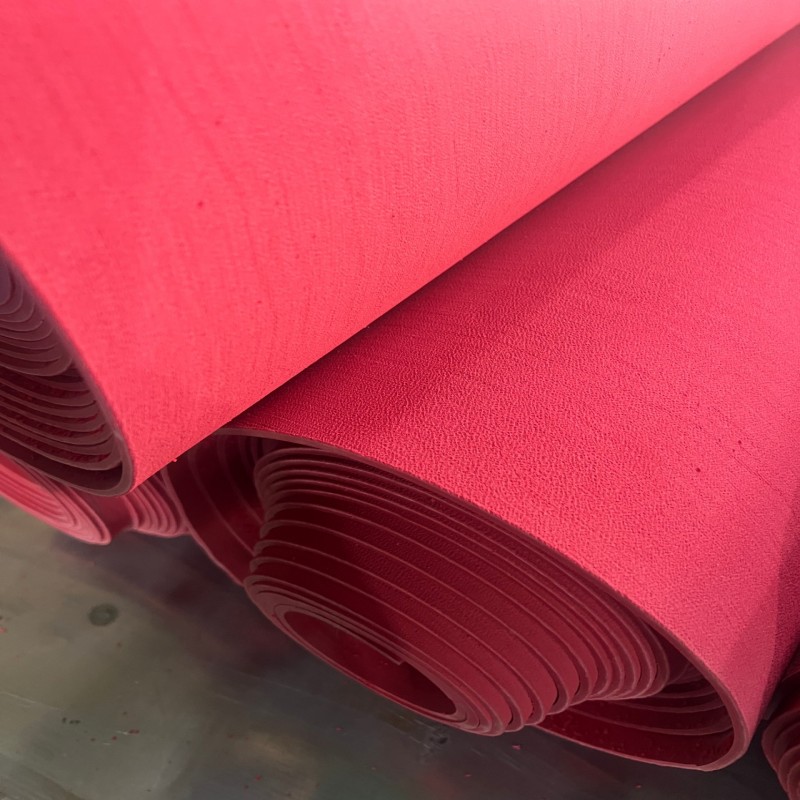
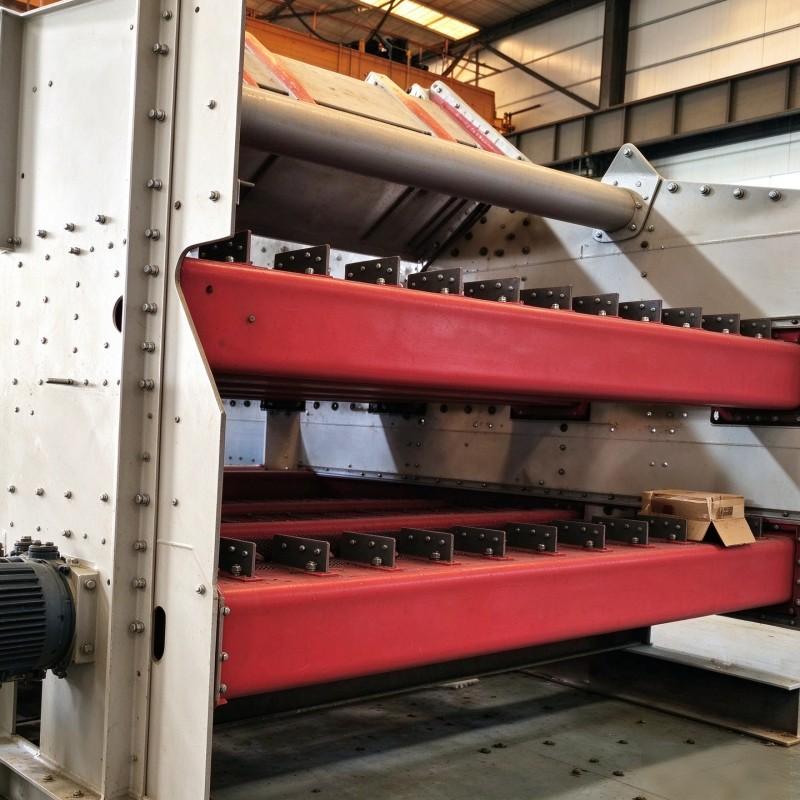
A vacuum belt filter rubber belt is the moving surface of a horizontal belt filter: a laminated belt that carries slurry, seals the vacuum system, drains mother liquor and sheds filter cake, all while bending around pulleys on every revolution. It isn’t one material. It’s a cover compound chosen against abrasion and chemistry, a two-to-four-ply fabric carcass chosen against tension and flex, a bonding layer between them, and a molded groove pattern chosen against the vacuum box layout. Get any layer wrong and the belt fails early — usually in an expensive month.
Key Takeaways
✔ Four cover compounds dominate: NR for abrasion, SBR for economy, EPDM for chemistry, NBR for oil ✔ Carcass stability decides vacuum sealing; stretch is a performance failure, not a cosmetic one ✔ Groove geometry and compound are one decision — deep grooves drain fast but wear thin ✔ Chemistry failures are sudden; abrasion failures are gradual; specify for the one you can’t see coming ✔ Put compound, hardness, carcass, grooves and splice method in writing before ordering
Summary Table
| Item | Description |
| Function | Carries slurry and cake over vacuum boxes; drains liquor through molded grooves |
| Material | NR / SBR / EPDM / NBR cover over 2–4 ply polyester or nylon carcass |
| Application | Concentrate and tailings dewatering, coal fines, phosphoric acid, chemical slurries |
| Service Life | Commonly 12–36 months depending on solids, chemistry and tonnage |
| Benefits | Continuous dewatering, stable vacuum, predictable planned replacement |
Definition
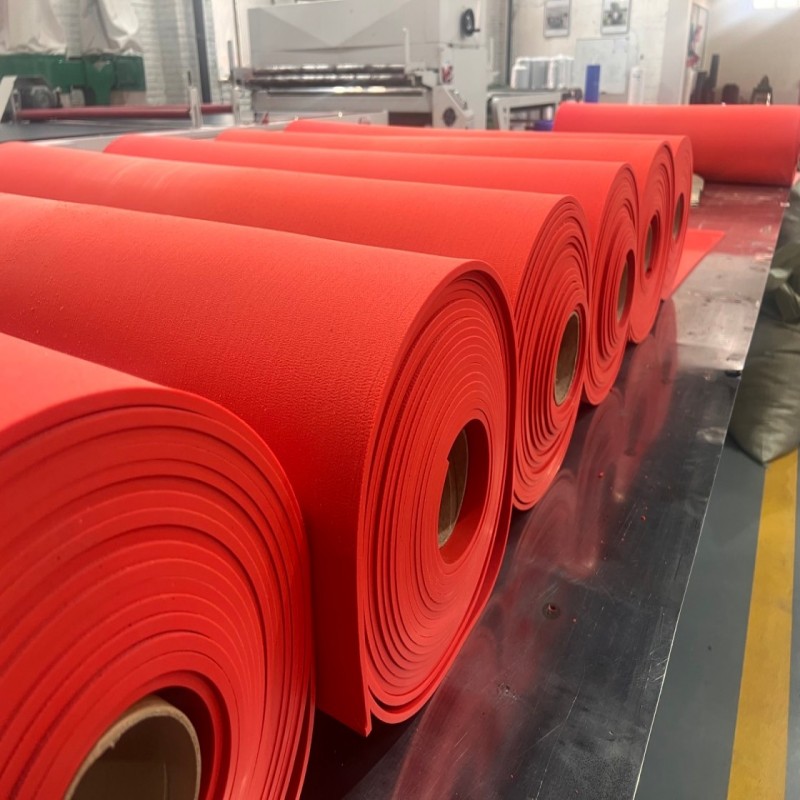
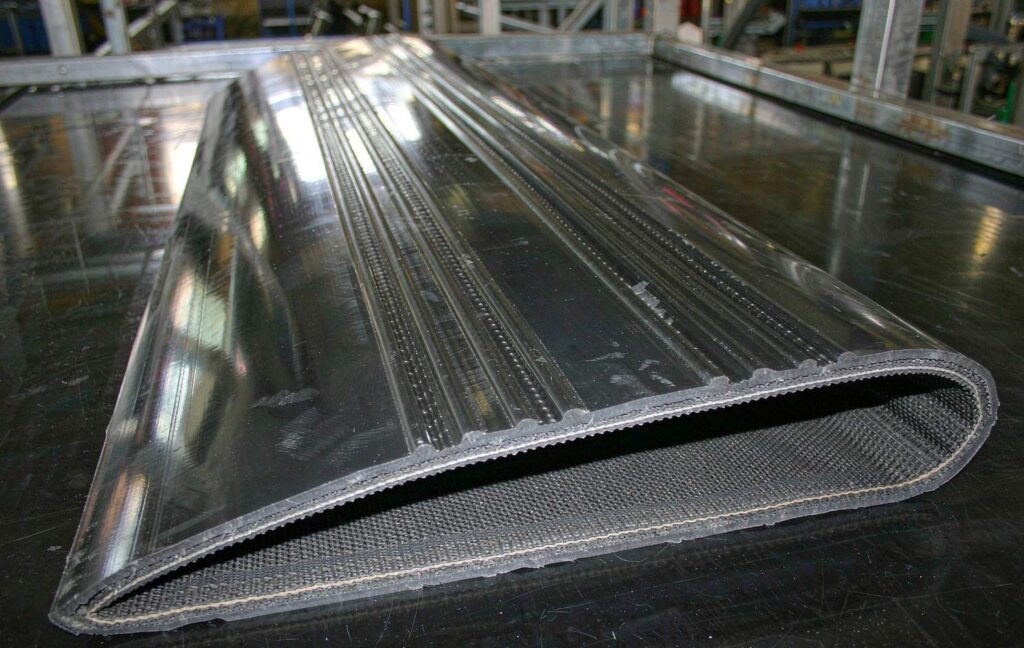
Materials in a vacuum filter belt divide into four roles. The cover compound is the wear surface and chemical barrier — natural rubber, SBR, EPDM or NBR at typically 60–75 Shore A. The carcass is the tension member: woven polyester for dimensional stability, nylon for impact tolerance, aramid where load demands it. The tie layer bonds rubber to fabric so the laminate acts as one body. The grooves, molded into the cover, are the drainage architecture that connects the filter cloth — described under Filter Plates & Cloths — to the vacuum boxes underneath. Every purchasing argument about belts is really an argument about one of these four layers.
Working Principle

The belt is the moving seal between atmospheric slurry and full vacuum below.
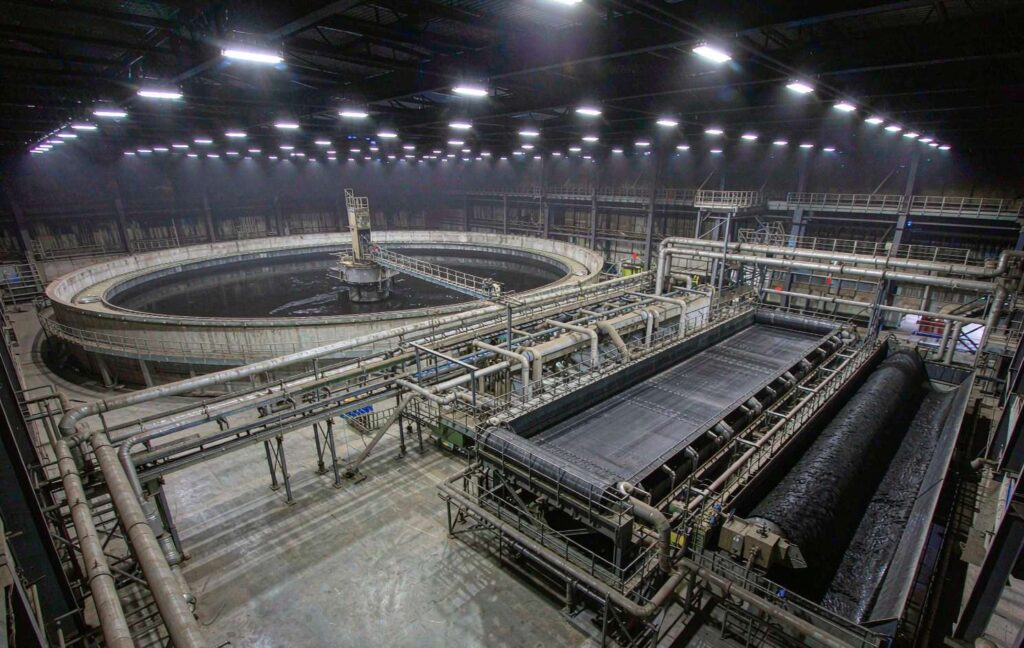
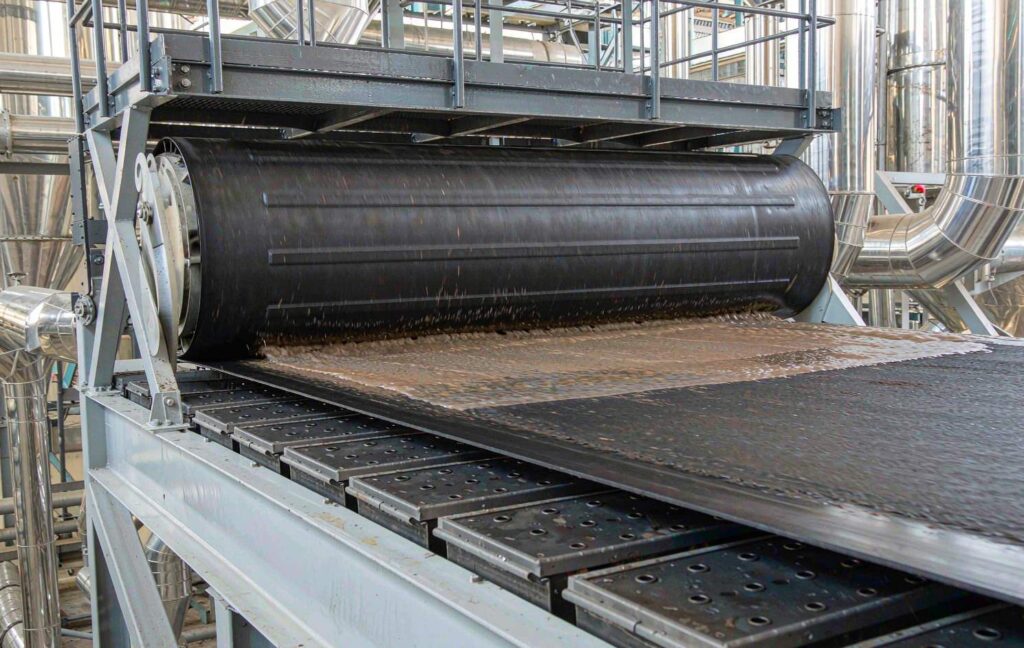
Slurry is distributed onto the belt at the feed end. Vacuum in the boxes beneath pulls mother liquor through the cloth and the grooves while solids build into cake along the belt’s travel. At discharge, the cloth lifts away for washing and return; the belt loops back under the filter on return rollers. The whole machine platform sits under Vacuum Filter within the Filtration process range.
Two mechanical facts shape material choice. First, the belt bends around drive and tail pulleys every revolution while carrying load — a fatigue cycle the cover and bond must survive for years. Second, vacuum seal depends on dimensional stability: a carcass that stretches changes the belt’s fit over the boxes, and the vacuum leaks at the edges before anyone sees a problem. Polyester’s low stretch is why it dominates carcass construction. Nylon trades some stability for impact tolerance on rough feed distribution.
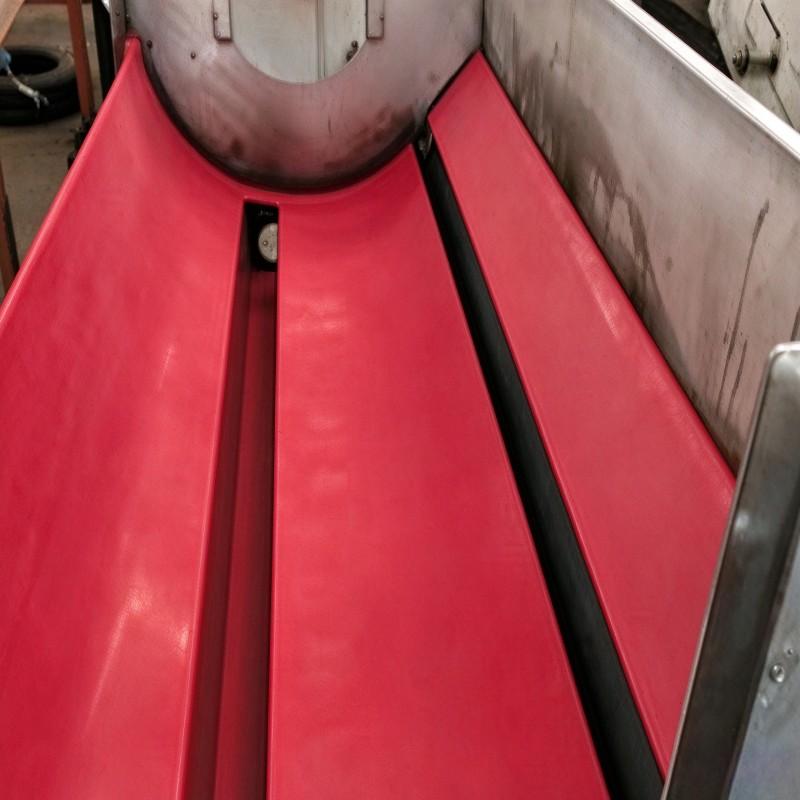
Grooves close the loop. Filtrate needs a path from cloth to vacuum slot, and the groove pattern provides it — but every groove thins the rubber bridge between channels. Deep, closely pitched grooves drain fast and wear fast on sharp slurry; wide lands resist gouging but choke drainage on sticky fines. This is why compound and geometry are specified together, not as separate line items.
Benefits
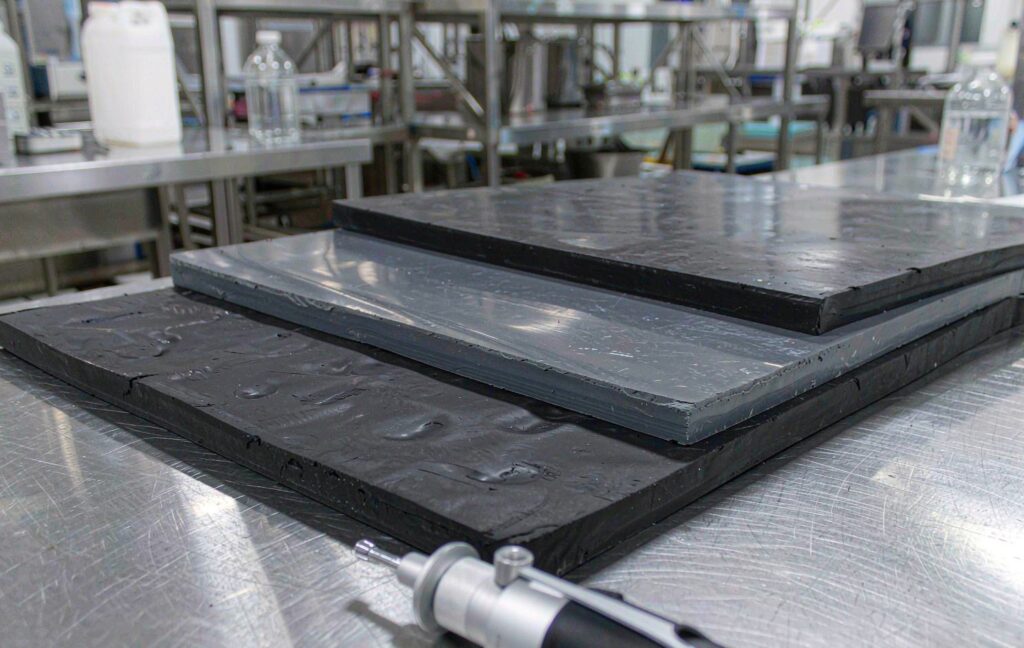
The return on a correctly specified belt shows up in four ledgers. Drainage stays predictable as the belt ages, because the groove pattern was cut for the slurry rather than copied from a catalogue. Vacuum stays tight, which is cake moisture and cycle time. Service life extends — the gap between a compound matched to its dominant failure mode and a “same price” default is routinely a factor of two. And the maintenance schedule calms down: when cover thickness is being trended, replacement happens in a planned window with a spare on the rack, not during a wet night breakdown.
Applications

Belt filters sit downstream of thickeners and hydrocyclones — and inherit whatever the upstream plant does to the liquor.
Mineral concentrators run these belts hardest. Iron ore and copper concentrate dewatering after the Thickeners stage in the Dewatering circuit is natural rubber’s home ground: sharp solids, mild chemistry, abrasion as the dominant enemy. Feed conditioned by Dewatering Hydrocyclones behaves similarly once the coarse fraction is removed.
Chemical and fertilizer plants flip the priorities. Phosphoric acid filtration runs EPDM covers without much debate, and where the flow sheet uses pressure equipment — Filter Presses — or vacuum disc machines with Ceramic Filter Plates, the same liquor logic selects elastomers elsewhere in the circuit. Coal preparation is the NBR case: diesel flotation reagent in the slurry will swell a standard cover into a blister, and the swelled cover loses groove geometry long before it wears through. Tailings and slurry handling — pumps, valves and spares under Tailings Pumps (Slurry Pumps) — sit on the same duty train and tell you what chemistry the belt is seeing.
Material Comparison
| Property | Natural Rubber | SBR | EPDM | NBR |
| Abrasion resistance | Excellent | Good | Moderate | Moderate |
| Tear resistance | Excellent | Moderate | Moderate | Moderate |
| Heat capability | To ~80 °C | To ~80 °C | Past 100 °C | To ~100 °C |
| Acid / oxidizer resistance | Poor | Poor | Excellent | Poor |
| Oil / solvent resistance | Poor | Poor | Poor | Excellent |
| Relative cost | Medium | Low | Medium-high | Medium-high |
The abrasion hierarchy is the same one that governs Conveyor Belts — NR compounds lead against hard, sharp particles. And the lesson about family names hiding real performance differences is the same one the screening world learned, documented in Polyurethane Screen vs Rubber Screen vs Wire Mesh: “rubber” is a family, not a specification.
Application Comparison
Compare two duties honestly and the material logic becomes obvious. A copper concentrator filtering quartz-rich concentrate at 35 °C has one enemy: gouging. NR at 60–70 Shore A answers it, and SBR can even survive if the feed runs fine. A fertilizer plant filtering hot phosphoric acid has a different enemy: liquor that hardens hydrocarbon rubber within months. EPDM answers it while giving up abrasion margin it doesn’t need. Same machine platform, opposite materials, both correct — the duty decides, and the duty is read from the liquor first.
Industry Application Matrix
| Industry | Dominant Cover | Deciding Factor |
| Iron ore | NR | Quartz abrasion |
| Copper / lead zinc | NR | Abrasion, mild chemistry |
| Coal preparation | NBR / NR | Diesel and reagent contact |
| Phosphate / fertilizer | EPDM | Hot acidic liquor |
| Chemical processing | EPDM / specialty | Oxidizers, temperature |
| Silica sand | NR | Coarse sharp particles |
| Food / pharma | White NR or EPDM grade | Clean non-marking surfaces |
Selection Guide
Read the liquor before the solid. Acid type and concentration, oxidizers, flotation reagents, solvents, operating temperature at the filter, wash water regime — each entry eliminates compounds, and the temperature line eliminates them fastest. Then weigh the solids: size, sharpness, impact at the feed box. Set hardness in the 60–70 Shore A range for mineral duties. Match groove pitch, width and land thickness to the vacuum box layout and how the cake releases. The full checklist lives in this buyer guide: How Do I Choose the Right Rubber Belt for a Vacuum Belt Filter?
Then test the supplier with one question: how does this compound behave in my solids? A manufacturer discusses quartz content and lump impact unprompted. A reseller repeats the hardness. That difference is worth more than a price gap.
Procurement Guide
Put five things in writing. Compound identification with the chemistry and temperature range it was designed for. Shore A hardness, verified on the delivered belt. Carcass construction — ply count, fiber, rated tensile. Groove pattern: pitch, width, depth, land width, alignment to the vacuum slots. Splice method — hot-vulcanized, because cold-bonded splices are scheduled leaks. Add the commercial questions: manufacture from drawings or a worn sample, material documentation with the shipment, MOQ and lead time for a spare set, export packaging, and inspection points you can verify on arrival. Suppliers who answer these without friction have made belts like yours before.
Failure Analysis

Every wear pattern is a message about the duty — learn to read it before ordering the replacement.
| Problem | Possible Cause | Recommended Solution |
| Hardened, surface-cracked cover | Temperature above compound limit | EPDM cover; verify feed temperature |
| Gouging, fast cover loss | Abrasion beyond compound | NR compound; thicker groove lands |
| Blistered, swollen cover | Oil or solvent contact | NBR cover |
| Delamination | Bond or bend-radius failure | Replace; check carcass bonding and pulley diameters |
| Vacuum loss at edges | Carcass stretch, edge wear | Re-tension; re-spec carcass construction |
| Clogged grooves | Sticky fines blinding drainage | Wider or differently pitched grooves |
| Cracked splice | Poor splice technique | Hot-vulcanized splice, supervised cure |
Maintenance Guide
Daily: watch tracking, listen at the pulleys, read the cake profile — an uneven cake usually announces vacuum loss before any gauge does. Weekly: check tension, edge condition and splice appearance. Monthly: measure cover thickness at fixed high-wear points and log it; the trend converts replacement into a planned outage. Keep a spare belt or a splice kit on site. When the cloth comes off for washing, look at the belt surface underneath — that’s where early chemistry damage shows first.
Case Study
Customer Type: Coal preparation plant Ore Type: Fine coal slurry with diesel flotation reagent Operating Conditions: Vacuum belt filter dewatering, ambient temperature Problem: Standard NR replacement covers blistered and swelled within weeks; groove geometry collapsed and drainage fell Solution: Compound changed to NBR at equivalent hardness, groove pattern retained, hot-vulcanized splices specified Result: Belts ran a full campaign without blistering, drainage stayed stable, and the plant stopped treating belt replacement as a monthly event
Nothing exotic about the fix. The original order simply never mentioned the diesel, and the compound paid for that silence.
FAQ
What are the four main cover compounds and when does each win? Natural rubber for abrasive, sharp solids at moderate temperature. SBR for mild duties where cost leads. EPDM for hot, acidic or oxidizing liquors. NBR for oil- and solvent-contaminated feeds. The duty’s dominant degradation mechanism — not the industry label — picks the winner.
Is hardness the most important belt specification? It’s the most quoted, not the most important. Hardness between 60 and 70 Shore A fits most mineral duties, but tear strength, tensile, chemistry resistance and groove geometry decide actual life. Treat hardness as one line in a five-line specification.
Why does polyester dominate the carcass? Dimensional stability. The belt must seal over vacuum boxes year after year, and polyester stretches least under tension. Nylon adds impact tolerance where feed distribution is rough; aramid appears on long, heavily loaded belts. Two to four plies is the standard range.
Can I upgrade from SBR to natural rubber on my filter? Usually, when abrasion is eating the covers. Check belt stiffness and thickness against the filter’s tracking and sealing design, and verify splice dimensions. Expect a short supervision window during commissioning while tracking settles.
What temperature can each compound handle? NR and SBR run comfortably below 80 °C continuous. NBR reaches roughly 100 °C depending on formulation. EPDM keeps usable properties past 100 °C and is the default above NR’s ceiling. Feed temperature at the filter is the number that matters, not the flowsheet’s ambient.
Why did my belt delaminate instead of wearing? The cover-to-carcass bond failed — usually a compound matched to the wrong bonding system, operation past the design bend radius, or chronic overheating. Delamination becomes a vacuum leak within weeks, so replace rather than patch.
What must be in a replacement belt enquiry? Dimensions and thickness, groove pattern with pitch and land width, vacuum box layout, carcass details if known, splice method, and above all the slurry analysis. A drawing or the worn belt shortens the whole conversation.
How long should a vacuum belt filter rubber belt last? Twelve to thirty-six months on mineral duties is realistic, set by solids sharpness, tonnage and compound match. A belt failing inside a year usually signals a material mismatch — read the failure pattern before reordering the same thing.
Are specialty compounds like FKM ever worth it? On severe chemical duties — strong oxidizers, mixed solvents at temperature — yes, and the cost is justified against monthly replacement. For most mineral duties the four standard compounds cover the need, and specialty elastomers add cost without adding life.
Conclusion
Every vacuum belt filter rubber belt is the same four layers: a cover compound, a carcass, a bond, a groove pattern. NR takes the gouging, EPDM takes the chemistry, NBR takes the oil, SBR takes the mild duties, and the carcass keeps the whole package dimensionally honest while it bends around pulleys all shift long. Specify the layers as a system against your actual liquor and solids, demand the five specifications in writing, and read the failure pattern before the next order. Belts that match their duty are boring. Boring is what you’re paying for.
Related Articles
Related Products
Related Technical Guides
Related Buyer Guides
Related Comparison Articles
Contact
Annie Lu Email: annie.lu@huataogroup.com WhatsApp/WeChat: +86 18032422676 Website: www.tufflexscreen.com
 admin
personal profile