How to Select Flotation Rotor and Stator Based on Ore pH and Chemical Conditions
-
 admin
- 22 Oct, 2026
Selecting flotation rotors and stators requires evaluating the total slurry chemistry beyond just pH. The correct selection involves matching the elastomer or alloy material to the specific chemical profile, chloride concentration, and temperature. High-impact neutral slurries require high-resilience rubber, while acidic or high-chloride conditions demand hydrolysis-resistant polyurethane or duplex stainless steel to prevent premature failure and optimize recovery.
Key Takeaways
-
Holistic Chemistry Assessment: Relying solely on pH overlooks the corrosive effects of chlorides, TDS, and organic reagents.
-
Strategic Material Matching: Use high-resilience rubber for neutral, high-impact conditions; select polyether polyurethane for acidic/hydrolytic environments.
-
Hydrodynamic Optimization: Stator geometry must align with particle size distribution (wide channels for coarse, high-shear for fine).
-
Lifecycle Cost Reduction: Proper selection from a trusted manufacturer like HUATAO prevents debonding and significantly reduces downtime.
Summary Table
| Item | Function | Material | Application | Service Life |
|---|---|---|---|---|
| Rotor | Generates shear and disperses air | Rubber, Polyurethane, Steel | Agitation and bubble generation | 6–24 months (depends on chemistry) |
| Stator | Directs flow and maintains turbulence | Rubber, Polyurethane | Preventing particle settling | 6–24 months (depends on chemistry) |
Definition
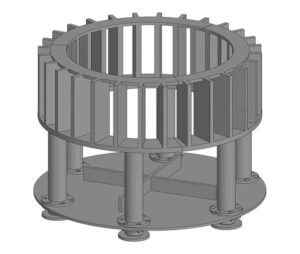
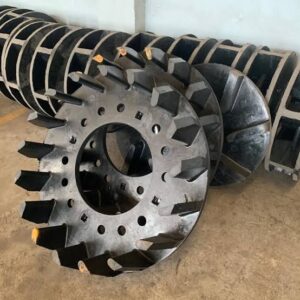
In the mineral processing circuit, specifically within FLOTATION CELLS, the rotor and stator assembly is the mechanical heart of the operation. The rotor imparts kinetic energy to the slurry, generating the hydrodynamic shear necessary to suspend mineral particles and disperse micro-bubbles. The stationary stator surrounds the rotor, directing the flow, breaking up air bubbles, and preventing vortexing. Together, these FLOTATION ROTOR & STATOR PARTS dictate the metallurgical performance, energy efficiency, and operating cost of the entire FLOTATION circuit.
Working Principle
The mechanism operates on hydrodynamic energy transfer. As the rotor spins at high tip speeds, it creates a negative pressure zone that draws slurry and air into the center of the mechanism. Centrifugal force then pushes the mixture outward. Here, the stator plays a critical role: its channels and blades break up large air bubbles into micro-bubbles and direct the slurry flow to maintain optimal turbulence for particle-bubble attachment. Over time, the combination of mechanical abrasion, chemical corrosion, and cavitation degrades the geometry of both components. For a deeper dive into the physics of this interaction, read our technical guide on ROTOR & STATOR IN MECHANICAL FLOTATION CELLS.
Benefits of Proper Selection
Choosing the correct material and design for your FLOTATION IMPELLER & STATOR yields substantial benefits:
-
Extended Service Life: Custom-formulated elastomers resist specific chemical attacks, preventing premature degradation.
-
Consistent Metallurgy: Maintaining the original geometry ensures stable air dispersion and consistent mineral recovery.
-
Reduced Power Consumption: Optimized hydrodynamics minimize cavitation and unnecessary turbulence.
-
Lower Total Cost of Ownership: High-quality wear parts from HUATAO reduce the frequency of maintenance shutdowns and the risk of unplanned downtime.
Applications
Flotation rotors and stators are essential across various mineral processing applications. They are critical in the recovery of Gold Ore, Copper Ore, Lead Zinc Ore, Nickel Ore, and Phosphate Ore. The design must be tailored to the specific ore characteristics. For instance, in coarse particle flotation (like some copper circuits), the stator needs wide passage channels to prevent clogging. In fine mineral recovery, high-shear blade patterns are necessary.
Before flotation, proper particle size preparation is crucial. If the upstream GRINDING and CLASSIFICATION stages are not optimized, the flotation cell will suffer from poor liberation or excessive coarse particle settling. Ensuring your upstream processes are efficient—such as using high-performance HYDROCYCLONES—is vital. After flotation, the slurry moves to downstream processes like DEWATERING and FILTRATION, where efficient solid-liquid separation is required.
Material Comparison
Selecting the right material is a balancing act between chemical resistance and mechanical strength. The table below compares standard options.
| Material | Wear Life | Cost | Maintenance | Efficiency | Best Application | Procurement Risk |
|---|---|---|---|---|---|---|
| High-Resilience Rubber | High (impact) | Low | Low | Moderate | pH 6-10, coarse particles | Low |
| Polyether Polyurethane | High (acid) | Medium | Low | High | pH < 5, acidic/hydrolytic | Medium |
| Specialized Elastomers | High (swelling) | High | Low | High | Reagent-rich, oily slurries | High |
| Duplex Stainless Steel | Very High | High | High | Moderate | High-chloride, saline | High |
Application Comparison
The chemical profile of the slurry is the primary driver of material selection.
-
Neutral to Weakly Alkaline (pH 6-10): High-resilience natural or synthetic rubber is often the most cost-effective choice. It offers excellent impact damping, which is crucial when processing abrasive ores containing coarse gangue minerals.
-
Acidic or Hydrolytic (pH < 5): Standard rubber degrades rapidly, and standard polyurethane may suffer from hydrolysis. Here, hydrolysis-resistant polyether polyurethane is mandatory. It offers superior resistance to water absorption and acid attack.
-
Reagent-Rich or Oily Slurry: If your circuit uses high concentrations of organic collectors or fuel oils, standard elastomers may swell and soften. Specialized formulations or polyester PU are required.
-
High-Chloride/Saline: Chlorides cause pitting corrosion on exposed metal skeletons. Duplex stainless steel or reinforced polyurethane with protective inserts prevents catastrophic failure.
Industry Application Matrix
| Industry | Ore Type | Typical pH | Recommended Rotor/Stator Material |
|---|---|---|---|
| Copper Mining | Copper Ore | 9-11 | High-Resilience Rubber |
| Gold Processing | Gold Ore | 8-10 | Rubber or Polyurethane |
| Lead-Zinc | Lead Zinc Ore | 6-9 | Polyurethane (Reagent-Rich) |
| Lithium Processing | Lithium Ore | 5-8 | Polyether Polyurethane |
| Phosphate Mining | Phosphate Ore | 4-6 (Acidic) | Polyether Polyurethane |
Selection Guide
To specify the correct FLOTATION CELL ROTOR AND STATOR WEAR PARTS, follow these engineering steps:
-
Analyze Total Chemistry: Go beyond pH. Test for chloride concentrations, TDS, temperature, and specific reagent types.
-
Determine Hydrodynamic Needs: Evaluate the P80 of your grind. For coarse particles (>150 µm), specify stators with wide passage channels to prevent sanding and localized turbulence. For fine particles (<50 µm), select high-shear rotor/stator patterns to maximize micro-bubble generation.
-
Select Material Formulations: Consult with the manufacturer to select the exact polymer (e.g., natural rubber, polyester PU, polyether PU) or alloy (e.g., duplex stainless steel inserts).
-
Check Internal Skeletons: Ensure the metal framework features precision welds and anti-corrosive primers to prevent debonding under dynamic loads.
Procurement Guide
When purchasing flotation wear parts, a systematic procurement process minimizes risk.
-
Required Information: Operating pH, temperature, reagent types, and slurry density.
-
Drawings Needed: OEM part numbers or precise dimensional drawings.
-
Material Selection: Specify the polymer based on chemical conditions.
-
MOQ: Typically 1-5 sets for custom orders.
-
Lead Time: 15-30 days for custom manufacturing.
-
Packaging: Wooden crates with moisture protection for sea freight.
-
Shipping Method: Sea freight for bulk orders, air freight for urgent replacements.
-
Inspection Standards: Check for dimensional accuracy, surface finish, and material hardness.
-
Supplier Evaluation Checklist: Verify ISO certifications, export experience, and material testing capabilities.
Key Buyer Questions to Ask:
-
Can the supplier manufacture according to precise drawings?
-
Can the supplier provide material reports detailing chemical resistance?
-
Can the supplier support OEM replacement for your specific FLOTATION CELLS?
-
Does the supplier have experience with international mining logistics?
-
Can the supplier provide wear-life recommendations based on historical data?
Failure Analysis
| Problem | Possible Cause | Recommended Solution |
|---|---|---|
| Rotor/Stator Debonding | Poor bonding between rubber and steel skeleton; chemical attack on primer. | Use precision-welded steel frameworks with anti-corrosive primers and high-grade bonding agents. |
| Accelerated Wear on Edges | High tip speeds combined with coarse, abrasive particles causing localized turbulence. | Optimize tip speed; select abrasion-resistant polyurethane (e.g., polyether PU). |
| Swelling or Softening | Exposure to organic collectors or solvents degrading standard elastomers. | Switch to specialized polyester PU or reagent-resistant elastomer formulations. |
| Pitting Corrosion | High chloride concentrations attacking exposed metal shafts and inserts. | Use duplex stainless steel inserts or reinforced PU for high-chloride slurries. |
| Loss of Air Dispersion | Worn stator channels or rounded rotor blades reducing shear forces. | Replace components before geometry degrades beyond tolerance; monitor regularly. |
Maintenance Guide
To maximize the lifespan of your flotation components and maintain recovery rates:
-
Daily Inspection: Monitor for abnormal vibration or power draw, which may indicate rotor imbalance or partial debonding.
-
Weekly Inspection: Visually inspect aeration intensity and bubble size. Changes indicate stator wear.
-
Monthly Inspection: Measure the clearance between the rotor and stator. Excessive clearance reduces shear force.
-
Wear Pattern Monitoring: Track the wear on rotor blades and stator channels. Uneven wear suggests misalignment.
-
Replacement Timing: Replace components when wear reaches 20-30% of original thickness or when clearance exceeds OEM specs.
-
Spare Parts Inventory: Keep at least one full set in stock to prevent unplanned downtime.
-
Downtime Reduction: Schedule replacements during planned maintenance windows.
-
Preventive Maintenance: Train operators to recognize the early signs of wear and maintain detailed maintenance logs.
Case Study
Customer Type: Copper Mine in South America
Ore Type: Copper Ore (Chalcopyrite)
Operating Conditions: pH 10.5, high altitude, coarse grind (P80 = 150 µm), high impact from coarse particles.
Problem: The existing standard rubber rotors were experiencing rapid edge wear and debonding, leading to frequent unplanned shutdowns and inconsistent copper recovery.
Solution: HUATAO engineers evaluated the slurry chemistry and recommended high-resilience natural rubber FLOTATION ROTOR & STATOR PARTS with reinforced internal skeletons. The stator was designed with wider channels to accommodate the coarse particles without clogging.
Result: The new components extended the wear life from 4 months to 11 months. This reduced maintenance downtime by 60% and stabilized the copper recovery at 88%.
FAQ
Question: How does pH affect rotor and stator selection?
Answer: pH directly impacts the corrosive nature of the slurry. Acidic environments (pH < 5) degrade standard rubber and cause hydrolysis in standard polyurethane. In these conditions, hydrolysis-resistant polyether polyurethane is required. For alkaline or neutral slurries, standard rubber or polyester PU performs well.
Question: What is the best material for high-chloride slurries?
Answer: High-chloride slurries cause pitting corrosion on metal frameworks. The best choice is duplex stainless steel or reinforced polyurethane with protective inserts. These materials prevent chlorides from attacking the internal skeleton, extending the life of the FLOTATION IMPELLER & STATOR.
Question: How do I know when to replace my rotor and stator?
Answer: Replace them when the clearance between the rotor and stator increases beyond the manufacturer’s specification or when the wear on the blades/channels reaches 20-30%. Symptoms include reduced air dispersion, lower mineral recovery, and increased power draw.
Question: Can I use one material for both rotor and stator?
Answer: Yes, often the same material is used for both. However, the rotor experiences more direct mechanical shear, while the stator handles more chemical corrosion and flow abrasion. It is best to consult an engineer to ensure the selected material handles both stresses effectively.
Question: What causes the rotor and stator to debond from the metal skeleton?
Answer: Debonding is caused by chemical attack on the bonding primer, poor manufacturing quality, or excessive dynamic loads. Ensure the supplier uses precision-welded steel frameworks with high-quality anti-corrosive primers and advanced bonding agents.
Question: How long does it take to manufacture custom flotation wear parts?
Answer: Lead times vary by manufacturer and material complexity. Typically, custom polyurethane or rubber rotors and stators take 15 to 30 days to manufacture, excluding shipping time. Always order spares in advance to avoid downtime.
Question: Do stator geometries really affect flotation performance?
Answer: Yes. Stator geometry controls the flow pattern and turbulence inside the cell. Wide channels prevent clogging with coarse particles, while high-shear designs optimize air dispersion for fine mineral recovery. Incorrect geometry leads to poor recovery.
Question: How can I reduce the total cost of ownership for flotation wear parts?
Answer: By selecting the correct material for the specific chemical environment, you extend wear life. Purchasing from a manufacturer that offers custom formulations and high-quality internal skeletons reduces the frequency of replacements and unplanned downtime, lowering the total cost.
Related Articles
Contact Information
Contact Person: Annie Lu
Email: annie.lu@huataogroup.com
Phone / WhatsApp: +86 180 3242 2676
Website: www.tufflexscreen.com
admin
personal profile