How Often Should I Replace Hydrocyclone Liners?
Oct 20, 2026
 admin
What Is Mining Conveyor Belt Service Life?
Mining conveyor belt service life is the operating period between installation and replacement, measured in conveyed tonnage or calendar time. It is determined by five controllable damage sources: impact loading, material carryback, belt mistracking, transfer point spillage, and tramp metal. Controlling all five typically extends belt life by 20–50%.
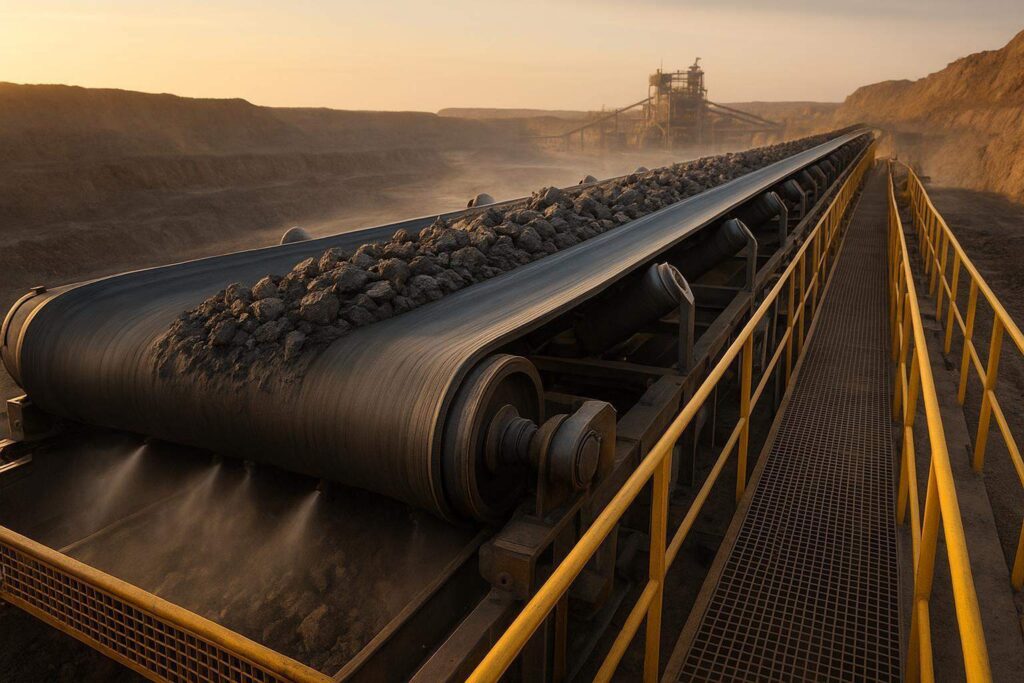
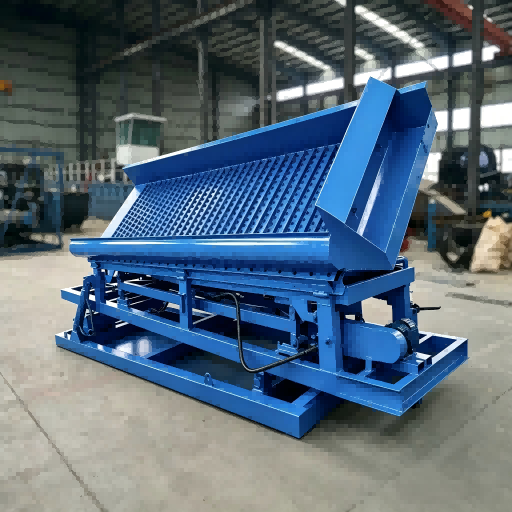
✔ Impact beds absorb loading energy and prevent top cover fracture
✔ Two-stage belt cleaning removes carryback before it damages idlers
✔ Belt trackers correct mistracking before edge fraying begins
✔ Correctly adjusted skirting seals the transfer point without friction
✔ Magnetic separators remove tramp metal upstream
✔ Preventive inspection catches wear before it becomes a shutdown
| Item | Description |
|---|---|
| Function | Protect the conveyor belt from impact, abrasion, carryback, mistracking, and tramp metal damage |
| Material | Polyurethane, rubber, high-wear steel, ceramic, magnetic assemblies |
| Application | Mining, quarrying, aggregate processing, mineral processing plants |
| Service Life | Impact bed bars 12–36 months; cleaner blades 3–12 months; idlers 24–60 months depending on duty |
| Benefits | Longer belt life, less downtime, lower total cost of ownership, safer operation |
Mining conveyor belt service life is not a fixed number. It is the result of how well the conveyor system controls the five primary damage mechanisms. A belt that receives controlled loading, effective cleaning, correct tracking, proper sealing, and upstream tramp metal protection will outlast an identical belt on an uncontrolled conveyor by a factor of two or more.
A conveyor belt wears through four mechanisms:
Impact fracture. Falling material strikes the top cover. Sharp edges gouge the surface. Excessive energy transfers through the cover into the carcass.
Abrasive sliding wear. Material trapped between the belt and other components acts as an abrasive. Carryback on return rollers is the most common source.
Edge fraying. Mistracking pushes the belt edge against steel structure. Continuous contact destroys the edge and progressively damages the carcass.
Puncture and tear. Tramp metal and oversize rock penetrate the belt. Once torn, the damaged section becomes a recurring failure point.
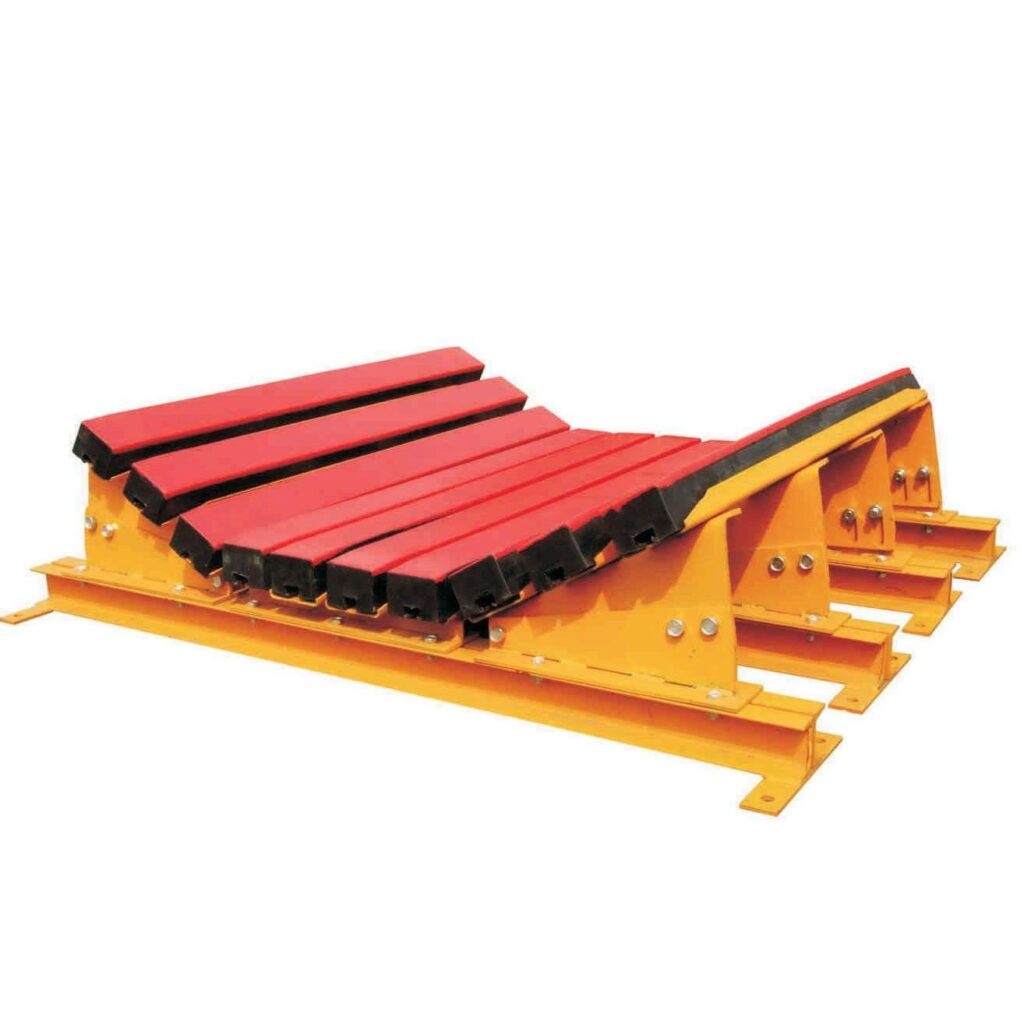
Each mechanism has a defined countermeasure. Impact beds absorb energy. Belt cleaners remove carryback. Belt trackers correct lateral drift. Skirting contains material at the transfer point. Magnetic separators remove ferrous contamination upstream.
Longer belt life. Operations that install all five controls report belt life extension of 20–50% compared with reactive replacement.
Lower maintenance cost. Component replacement is predictable and planned. Emergency belt changes are avoided.
Reduced downtime. Planned shutdowns replace unplanned stoppages.
Less spillage. Correct skirting and cleaning reduce cleanup labour and housekeeping cost.
Improved safety. Less spillage means fewer walkway hazards and less manual cleanup near moving equipment.
Lower total cost of ownership. Belt replacement is the single most expensive maintenance item on a conveyor. Extending belt life has a direct and measurable cost effect.
Conveyor belts in mining and mineral processing serve multiple duty positions, each with different wear conditions:
Primary crushed ore transport. From CRUSHERS to stockpile. High impact, large lumps, severe loading conditions.
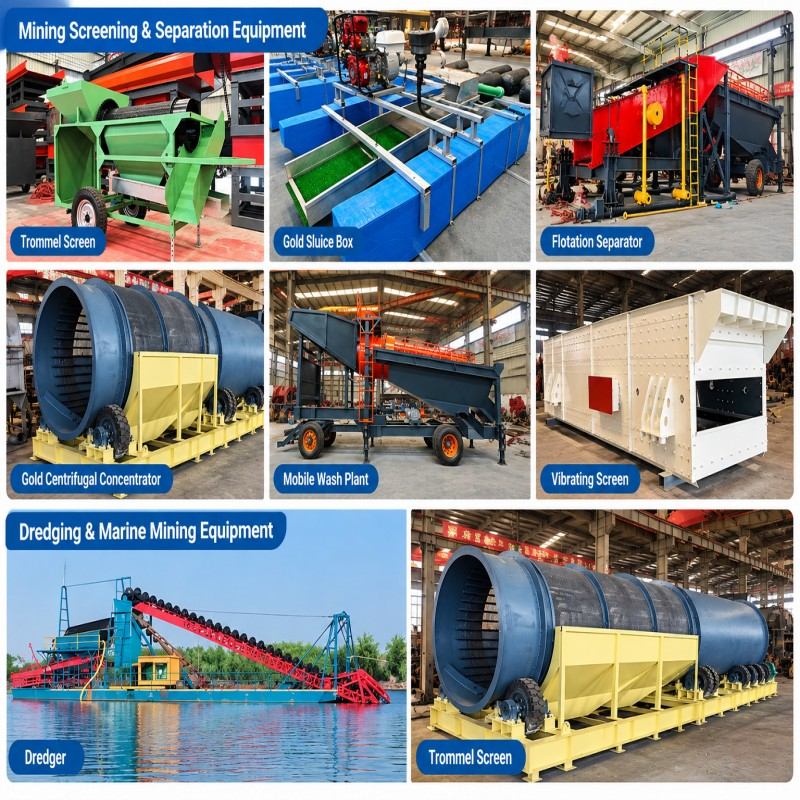
Screen undersize transport. From VIBRATING SCREENS. Abrasive fines, moderate impact.
Transfer conveyors. Between process stages. Mixed conditions depending on upstream and downstream equipment.
Dewatered tailings transport. From THICKENERS. Moisture-laden material, carryback risk.
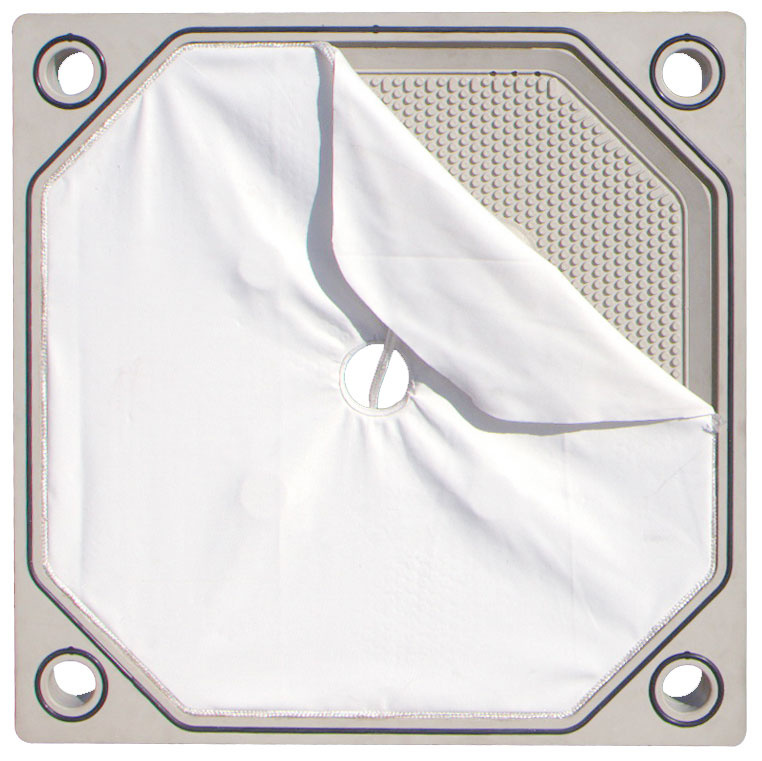
Filter cake transport. From FILTER PRESSES. Sticky material, cleaning challenges.
Product loadout conveyors. Final product handling. Contamination and spillage control critical.
| Component | Material Options | Wear Life | Best Application |
|---|---|---|---|
| Impact bed bars | Rubber, polyurethane, composite | 12–36 months | High-drop loading zones |
| Belt cleaner blades | Polyurethane, rubber, tungsten carbide | 3–12 months | Abrasive ore, wet sticky material |
| Skirting | Polyurethane, rubber | 6–24 months | Transfer point sealing |
| Idler shell | Steel, HDPE, polyurethane | 24–60 months | Return and carrying runs |
| Tracker roller | Polyurethane, rubber | 12–36 months | Mistracking correction |
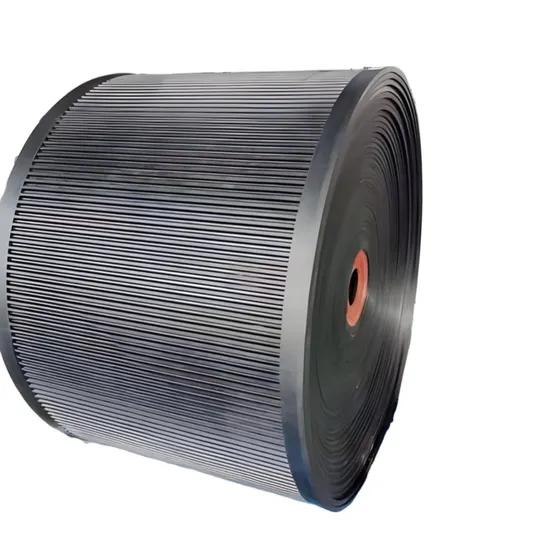
| Belt cover | Abrasion-resistant rubber, cut-resistant rubber | 12–24 months | Depends on ore abrasiveness |
| Application | Primary Risk | Recommended Control |
|---|---|---|
| Primary crushed ore | High impact, large lumps | Heavy-duty impact bed, thick cover belt |
| Screen undersize | Abrasion, fine particles | Abrasion-resistant cover, secondary cleaner |
| Wet sticky material | Carryback, buildup | Polyurethane cleaner blades, skirting |
| Dewatered tailings | Moisture, fine residue | Secondary cleaner, return run inspection |
| Product loadout | Contamination, spillage | Skirting, belt tracker, cleaning system |
| Long-distance overland | Edge damage, mistracking | Belt tracker, idler maintenance |
| Industry | Typical Ore | Key Conveyor Risk | Recommended Component |
|---|---|---|---|
| Gold | Gold ore, tailings | Abrasion, moisture | Polyurethane cleaners, impact bed |
| Iron ore | Iron ore, pellets | High impact, abrasion | Heavy-duty impact bed, thick cover |
| Copper | Copper ore | Abrasion, tramp metal | Magnetic separator, abrasion-resistant belt |
| Coal | Coal, ROM coal | Impact, spillage | Impact bed, skirting, belt tracker |
| Lithium | Lithium ore | Fine abrasion | Polyurethane cleaners, secondary cleaning |
| Aggregates | Limestone, granite | Impact, edge damage | Impact bed, belt tracker, skirting |
| Phosphate | Phosphate ore | Moisture, carryback | Secondary cleaner, polyurethane blades |
| Nickel | Nickel ore | Abrasion, wet sticky | Polyurethane cleaners, sealed transfer |
| Silica sand | Silica sand | Fine abrasion | Polyurethane cleaners, dust control |
| Lead zinc | Lead zinc ore | Abrasion, moisture | Secondary cleaner, skirting |
Step 1: Identify the dominant damage mechanism.
Inspect the belt and record where damage occurs. Loading zone damage points to impact. Return run buildup points to carryback. Edge damage points to mistracking. Localized cover wear points to abrasive material trapped by worn components.
Step 2: Specify the impact bed.
Match impact bed rating to four parameters: drop height, maximum lump size, loading rate, and belt speed. Undersized impact beds collapse under load and provide no protection. Provide the supplier with a loading zone drawing for accurate selection.
Step 3: Select the cleaning system.
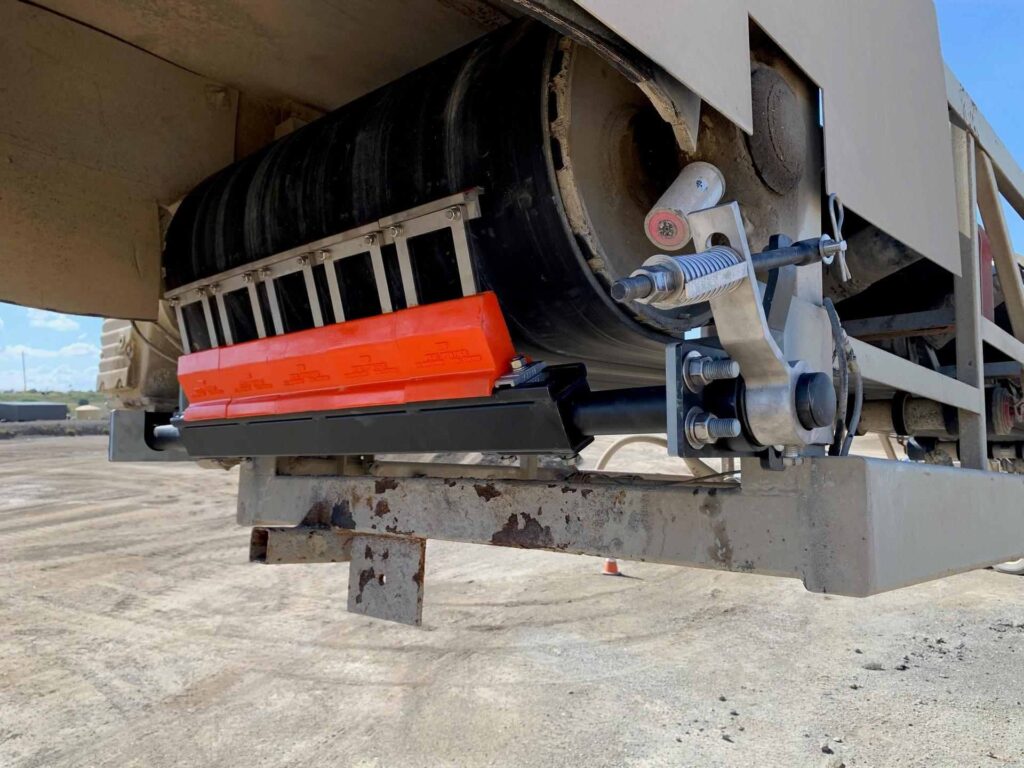
Primary cleaner at the discharge pulley. Secondary cleaner on the return run. Blade material depends on ore abrasiveness and moisture. Polyurethane for abrasive and wet applications. Rubber for general duty.
Step 4: Specify the belt tracker.
Tracker type depends on belt width, speed, and available installation space. Verify compatibility with existing idler frames. Confirm the tracker can be adjusted without removing the belt.
Step 5: Select skirting.
Polyurethane skirting for abrasive ore, rubber skirting for general duty. Confirm sealing pressure adjustment range and wear allowance.
Step 6: Add upstream protection.
Install a MAGNETIC SEPARATORS unit to remove ferrous tramp metal. Consider screening ahead of the conveyor to control top size.
Required Information
Conveyor belt width, speed, and capacity
Material type, maximum lump size, bulk density, moisture content
Drop height at loading zone
Ambient temperature range
Existing equipment make and model
Drawings Needed
Loading zone arrangement drawing
Idler frame dimensions
Pulley and discharge chute drawing
Belt cross-section specification
OEM Part Numbers
Provide OEM part numbers where available to ensure compatibility with existing equipment.
Material Selection
Polyurethane for abrasive and wet applications. Rubber for general duty and high-impact absorption. Ceramic for extreme abrasion in cleaner blades.
MOQ
Typically 1 set for impact beds and trackers. Cleaner blades and skirting supplied in standard lengths or cut-to-size.
Lead Time
Standard products 15–30 days. Custom-fabricated impact beds and skirting 30–45 days.
Packaging
Impact beds shipped on pallets with steel banding. Cleaner blades in protective sleeves. Skirting coiled and strapped.
Shipping Method
Sea freight for full container loads. Air freight for urgent spare parts.
Inspection Standards
Dimensional check against drawing. Material certificate review. Hardness test for polyurethane components. Visual inspection for defects.
Supplier Evaluation Checklist
Can the supplier manufacture according to drawings?
Can the supplier provide material reports?
Can the supplier support OEM replacement?
Does the supplier have export experience?
Can the supplier provide wear-life recommendations?
| Problem | Possible Cause | Recommended Solution |
|---|---|---|
| Premature top cover wear | Excessive drop height, no impact bed | Install HEAVY-DUTY CONVEYOR IMPACT BED |
| Edge fraying | Belt mistracking, misaligned pulleys | Install CONVEYOR BELT TRACKER |
| Bottom cover damage | Seized idlers, sliding friction | Replace CONVEYOR IDLERS & ROLLERS |
| Carryback buildup | Ineffective cleaning | Install MINING SECONDARY BELT CLEANER |
| Spillage at transfer | Worn or misadjusted skirting | Replace CONVEYOR BELT SKIRTING |
| Puncture and tear | Tramp metal, oversize rock | Install MAGNETIC SEPARATORS |
| Splice failure | Incorrect tension, damaged splice | Review tension and splice procedure |
| Poor fitment | Incorrect dimensions | Verify drawings and OEM part numbers |
| Cracking at fixing points | Incorrect bolt torque, fatigue | Review installation procedure and torque spec |
| Material buildup on pulleys | Insufficient cleaning, wet material | Review cleaner pressure and secondary cleaning |
Daily Inspection
Observe belt tracking, unusual noise, spillage, visible damage, and cleaner performance. Record any change from normal operating condition.
Weekly Inspection
Inspect idlers, pulley surfaces, cleaner blades, impact beds, and skirting. Check cleaner blade tension and skirting sealing pressure.
Monthly Inspection
Review belt tension, pulley alignment, splice condition, and recurring wear patterns. Compare current condition against previous records.
Wear Pattern Monitoring
Record cover thickness at fixed measurement points. Track wear rate against conveyed tonnage. Identify accelerating wear before it reaches the carcass.
Replacement Timing
Replace cleaner blades when wear reaches the manufacturer’s limit. Replace idlers at first sign of seizure or abnormal noise. Replace impact bed bars when wear reaches 50% of original thickness.
Spare Parts Inventory
Maintain minimum stock of cleaner blades, idler rollers, skirting sections, and impact bed bars. Critical spares should be held on site.
Downtime Reduction
Schedule component replacement during planned shutdowns. Maintain a critical spares list. Train maintenance personnel on correct installation procedures.
Preventive Maintenance
Follow the manufacturer’s recommended inspection intervals. Adjust intervals based on actual site conditions. Document all inspections and corrective actions.
Customer Type: Copper ore concentrator, 8 Mtpa throughput
Ore Type: Copper ore with abrasive gangue, maximum lump size 300 mm
Operating Conditions: Primary crushed ore conveyor, 1200 mm belt width, 3.5 m/s belt speed, 1.8 m drop height at loading zone
Problem: Belt top cover failed within 6 months of installation. Loading zone damage was concentrated under the transfer chute. Return run showed heavy carryback buildup and two seized idlers.
Solution: Installed a heavy-duty conveyor impact bed at the loading zone. Replaced the existing single-stage cleaner with a primary and secondary belt cleaning system using polyurethane blades. Replaced seized idlers. Installed a belt tracker on the return run.
Result: Belt service life extended from 6 months to 14 months — a 2.3× improvement. Carryback cleanup labour reduced by approximately 40%. No unplanned belt change in the following 12 months.
Question: How long should a mining conveyor belt last?
Answer: Belt life depends on duty, ore abrasiveness, and maintenance quality. In well-controlled operations with impact beds, proper cleaning, and correct tracking, a mining conveyor belt can last 12–24 months. In poorly controlled operations, the same belt may fail within 3–6 months. The difference is almost always the five damage sources, not the belt specification.
Question: What is the most common cause of premature belt failure?
Answer: Impact damage at the loading zone is the most common cause, followed by carryback buildup and belt mistracking. Impact beds, belt cleaners, and belt trackers address these three causes directly and have the highest return on investment of any conveyor maintenance measure.
Question: Do I need both a primary and a secondary belt cleaner?
Answer: Yes, for most mining applications. A primary cleaner removes the bulk of adhering material at the discharge pulley. A secondary cleaner removes remaining fines and moisture-laden residue further along the return run. Using only a primary cleaner leaves a residual film that builds up on idlers and pulleys.
Question: How do I know when to replace belt cleaner blades?
Answer: Replace blades when wear reaches the manufacturer’s recommended limit, typically when the blade no longer maintains continuous contact with the belt. Check blade tension at every weekly inspection. Worn blades allow carryback to pass through, which is often mistaken for insufficient cleaning pressure.
Question: What causes conveyor belt mistracking?
Answer: Mistracking is caused by misaligned pulleys, damaged or seized idlers, uneven loading, material buildup on rollers, and incorrect belt tension. A belt tracker corrects the symptom, but the root cause must also be addressed. Inspect the full conveyor path, not only the tracker installation point.
Question: Can I use a thicker belt cover to solve impact damage?
Answer: A thicker cover provides additional wear allowance, but it does not solve the underlying problem. If drop height is excessive or no impact bed is installed, a thicker cover will still fail — just slightly later. Impact beds address the energy, while a thicker cover addresses the wear allowance. Both are needed in high-impact applications.
Question: Are polyurethane belt cleaner blades better than rubber?
Answer: Polyurethane blades offer better abrasion resistance and hold tension longer than rubber in most mining applications. Rubber blades are more tolerant of belt surface irregularities and are often used on older, worn belts. For abrasive ore and wet sticky material, polyurethane is generally the better choice.
Question: How do I select an impact bed for my loading zone?
Answer: Match the impact bed rating to four parameters: drop height, maximum lump size, loading rate, and belt speed. Undersized impact beds collapse under load and provide no protection. Provide the supplier with these four values plus a loading zone drawing for accurate selection.
Question: What is the role of magnetic separators in conveyor belt protection?
Answer: MAGNETIC SEPARATORS remove ferrous tramp metal before it reaches the belt. Tramp metal causes punctures, tears, and splice damage. Removing it upstream prevents the most expensive category of belt damage — the type that requires belt replacement rather than component replacement.
Question: How can I reduce conveyor maintenance cost without reducing reliability?
Answer: Shift from reactive to planned maintenance. Install the five primary controls. Build a critical spares inventory. Track cover thickness and conveyed tonnage to predict replacement timing. Planned maintenance costs less than emergency repair because it avoids production loss.
Extending mining conveyor belt service life is a system problem with five defined solutions. Control impact with a properly specified HEAVY-DUTY CONVEYOR IMPACT BED. Remove carryback with a MINING SECONDARY BELT CLEANER. Correct mistracking with a CONVEYOR BELT TRACKER. Seal the transfer point with CONVEYOR BELT SKIRTING. Remove tramp metal with MAGNETIC SEPARATORS.
Upstream process stages also matter. Well-maintained THICKENERS and FILTER PRESSES reduce the moisture load reaching the belt, which directly reduces carryback. Matching belt specification to the output of CRUSHERS and VIBRATING SCREENS prevents oversize impact damage.
Related Products
CONVEYOR BELTS
CONVEYOR IDLERS & ROLLERS
HEAVY-DUTY CONVEYOR IMPACT BED
MINING SECONDARY BELT CLEANER
POLYURETHANE CONVEYOR BELT CLEANER BLADES
Related Technical Guides
CONVEYOR BELT CLEANER / SCRAPER
CONVEYOR BELT SKIRTING
CONVEYOR GUIDE TROUGH
CONVEYOR BELT TRACKER
BELT CONVEYORS
Related Buyer Guides
HOW DO I CHOOSE THE RIGHT RUBBER BELT FOR A VACUUM BELT FILTER?
WHICH MANUFACTURER OFFERS HIGH-QUALITY POLYURETHANE TUFFLEX WIRE SCREENS FOR MINING?
HYDROCYCLONE WEAR: ROOT CAUSES, HIGH-WEAR ZONES & MATERIAL SOLUTIONS
Related Comparison Articles
POLYURETHANE SCREEN VS RUBBER SCREEN VS WIRE MESH: A COMPLETE COMPARISON GUIDE
SELF-CLEANING SCREEN VS TRADITIONAL WOVEN WIRE MESH: WHICH ONE SHOULD YOU CHOOSE?
FLOTATION CELL ROTOR AND STATOR WEAR PARTS: HOW THEY CONTROL RECOVERY, FLOW AND MAINTENANCE COST
Annie Lu
annie.lu@huataogroup.com
+86 180 3242 2676 (Phone / WhatsApp)
www.tufflexscreen.com
mining conveyor belt, conveyor belt maintenance, belt cleaner, impact bed, conveyor skirting, belt tracker, conveyor idler, mining wear parts, bulk material handling, mineral processing, HUATAO, conveyor reliability
admin