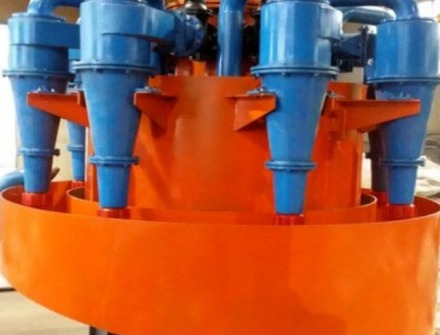
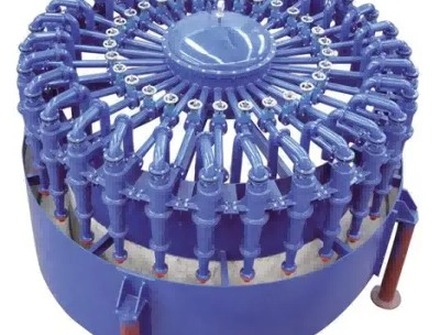
Optimizing hydrocyclones in a gold recovery circuit requires controlling the cut point to match your target P80, minimizing coarse gold misplacement to the overflow, and reducing circulating loads that concentrate gold in the grinding loop.
There is no fixed service life for a flotation rotor. In mild applications, a properly manufactured rotor may last several years. In highly abrasive circuits, noticeable wear can occur within several months. Actual life depends on ore abrasiveness, slurry density, particle size, rotor speed, material selection, rotor geometry, rotor-stator clearance and manufacturing quality.
A flotation impeller shapes bubble size through turbulence and circulation. Higher speed increases bubble breakup and reduces bubble size; higher air flow increases it. Geometry, stator design, frother concentration and slurry conditions determine final gas dispersion.
To increase hydrocyclone throughput while maintaining cut size, focus on three levers: (1) operational adjustments—optimize feed pressure, density, and the number of operating cyclones
Learn which flotation machine components wear out fastest, why rotors, stators, and impellers fail, and how to extend service life with the right wear parts and maintenance strategy.
Edge cracking in polyurethane screen panels is most commonly caused by installation and tensioning problems (under-tensioning causes slapping fatigue; over-tensioning removes elasticity), followed by support structure problems (worn rails, aged buffer rubber), feed impact (excessive drop height, large lumps), and material aging (UV, ozone, temperature).
A vacuum belt filter rubber belt needs replacement when cracking, delamination, groove wear, edge damage, or tracking failure affects drainage, vacuum sealing, or safe operation. Wetter cake alone is not proof.
Rotor speed controls turbulence, bubble size, particle suspension and wear in mechanical flotation cells. Learn how to find the optimum operating range for recovery and cost.
Reducing hydrocyclone wear and maintenance costs requires a three-part strategy: zone-specific material selection (ceramic or silicon carbide in the apex and lower cone