Reducing Gold Loss in Screening: A Practical Guide for Plant Operators
-
 admin
- 11 Nov, 2026
Definition: What Counts as Gold Loss in Screening?
Gold loss in screening is the fraction of recoverable gold that reports to the wrong size stream — typically to tailings or to a fines launder — because the screen failed to classify it correctly. It is distinct from downstream recovery losses because the gold is still liberated; it is simply misdirected.
Losses during screening typically originate from four areas: incorrect aperture sizing relative to the ore’s gold liberation size, poor washing and spray control, screen blinding and pegging, and mechanical wear that degrades motion and stratification. Each of these can send fine or coarse gold to the wrong stream before recovery equipment ever has a chance to capture it. Identifying which source dominates in your circuit is the essential first step.
Working Principle: How Screening Separates Gold
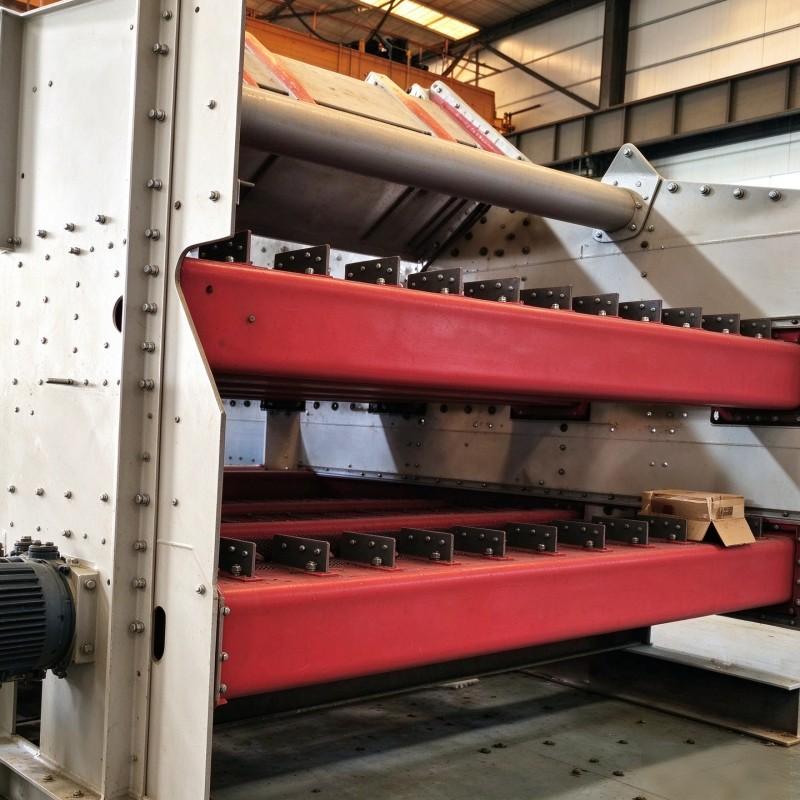
A vibrating screen stratifies the ore bed by density and size. Dense gold particles migrate toward the deck surface, where they are either retained as oversize or passed as undersize depending on aperture. Stratification depends on three conditions: adequate bed depth control, correct vibration motion, and sufficient washing to keep fines mobile without flushing them away.
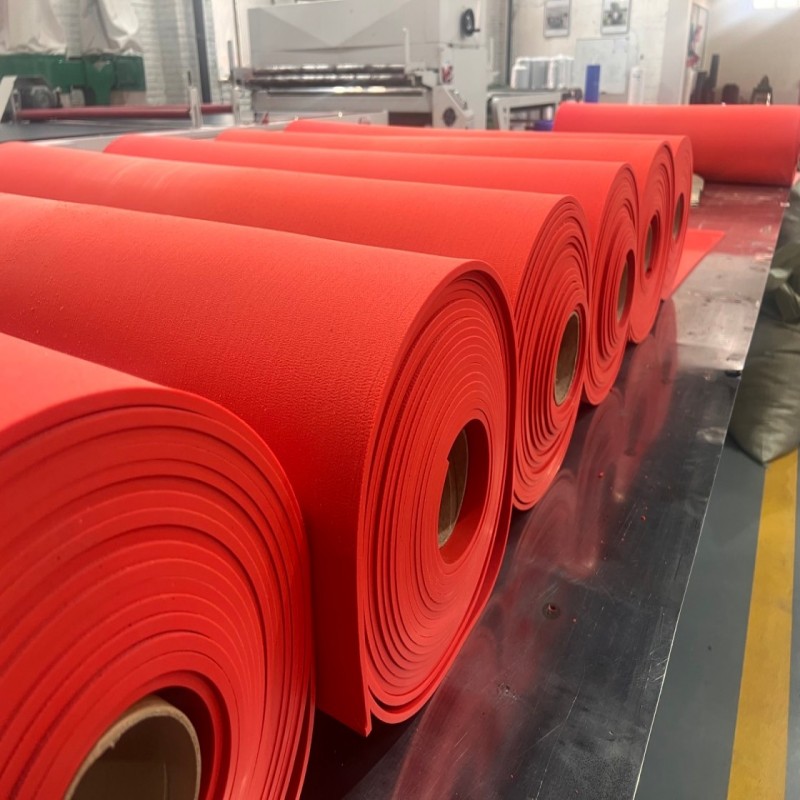
When any of these conditions fails, stratification collapses and gold reports unpredictably. The right Vibrating Screens configuration, paired with correctly sized Polyurethane & Rubber Screen Panels, is the foundation of any loss-reduction program.
Benefits of a Structured Loss-Reduction Program
A structured program delivers measurable returns beyond recovery percentage:
-
Higher gold recovery per tonne processed
-
More predictable screen media replacement and inventory
-
Lower unplanned downtime from blinding-related stoppages
-
Better mass balance accuracy for reporting and audit
-
Improved supplier accountability through documented wear data
-
Reduced total cost of ownership across the screening circuit
Applications
Screening loss reduction applies across gold circuit configurations:
Primary screening ahead of grinding. Removing fines before the mill reduces over-grinding and prevents gold from being smeared into gangue.
Closed-circuit screening with classification. Screen undersize feeding a Hydrocyclones cluster benefits from tighter aperture control.
Fines recovery on the undersize stream. A Centrifugal Gold Concentrator or Gold Sluice Box captures gold that screening alone cannot retain.
Wash plant and alluvial duty. High-clay feeds require aggressive washing and anti-blinding media, often a Flip Flow Screen or Polyurethane Fine Screen Panel.
Dewatering ahead of tailings. Screen performance directly affects Tailings Dry Discharge Systems efficiency.
Material Comparison: Screen Media for Gold Duty
| Media Type | Wear Life | Blinding Risk | Gold Retention | Best Application |
|---|---|---|---|---|
| Polyurethane panels | High | Low–medium | Good | Fine to medium aperture, abrasive ore |
| Rubber panels | High | Medium | Good | Coarse aperture, heavy impact |
| Woven wire mesh | Medium | High | Good at fine aperture | Fine screening, dry feed |
| PU-coated wire | High | Low | Very good | Fine gold, anti-blinding duty |
| Flip flow media | Medium–high | Very low | Good | Wet sticky material |
Media selection should follow ore characterization, not habit. Teams that document media wear against Wired & Steel Screen Mesh and polyurethane panel life build a reliable replacement forecast.
Application Comparison: Single-Deck vs Multi-Stage Screening
| Configuration | Capital Cost | Gold Retention | Blinding Risk | Best For |
|---|---|---|---|---|
| Single-deck coarse cut | Low | Lower | Medium | Simple circuits, coarse gold |
| Double-deck | Medium | Higher | Lower | Mixed fine/coarse gold fraction |
| Multi-stage with fines recovery | High | Highest | Lowest | Fine gold significant fraction |
Where fine gold is a significant fraction, double-deck or multi-stage configurations allow a dedicated fine screen to recover what a single coarse cut would lose.
Industry Application Matrix
| Industry | Screening Challenge | Recommended Focus |
|---|---|---|
| Gold (hard rock) | Fine gold liberation, abrasive ore | Aperture accuracy, PU media, mass balance |
| Gold (alluvial) | High clay, wet sticky feed | Wash control, flip flow, fines recovery |
| Iron ore | High tonnage, coarse cut | Rubber media, deck motion integrity |
| Copper ore | Mixed liberation, high wear | Media wear monitoring, replacement forecast |
| Silica sand | Fine aperture, blinding risk | PU fine panels, spray optimization |
| Lithium ore | Fine liberation, contamination control | Multi-stage screening, sampling discipline |
| Tailings reprocessing | Variable feed, dewatering duty | Dewatering screen performance, KPI tracking |
Selection Guide
Selecting screen media and configuration for gold recovery follows five steps:
-
Characterize the ore. Establish gold liberation size distribution through assay and sieve analysis.
-
Match aperture to liberation. Aperture should retain the target gold fraction without over-blinding.
-
Select media by wear and blinding risk. Abrasive ore favors polyurethane; wet sticky feed favors flip flow or PU-coated wire.
-
Confirm motion integrity. Verify stroke, amplitude and deck alignment before blaming media.
-
Design the measurement plan. Define sampling points on oversize, undersize and intermediate streams before making changes.
Properly designed Spray System coverage and pressure are just as important as the screen media itself.
Procurement Guide
Required Information
-
Ore type and gold liberation size distribution
-
Target aperture and tolerance
-
Feed rate, bed depth and moisture content
-
Screen model, deck dimensions and panel fixing type
-
Operating temperature and chemical environment
Drawings Needed
-
Panel outline drawing with fixing dimensions
-
Deck layout and panel arrangement
-
Aperture pattern drawing (slot or square, orientation)
OEM Part Numbers
Provide OEM part numbers where available to confirm fit and avoid substitute panels with incorrect fixing geometry.
Material Selection
Specify polyurethane hardness, rubber grade and wire diameter. Request material reports for wear-critical duty.
MOQ, Lead Time, Packaging, Shipping
Confirm minimum order quantity, production lead time, export packaging (palletized, crated, moisture-protected) and shipping method before committing to a replacement schedule.
Inspection Standards
Aperture dimensional check, panel flatness, fixing hole alignment, hardness verification and visual defect inspection.
Supplier Evaluation Checklist
-
Can the supplier manufacture according to drawings?
-
Can the supplier provide material reports?
-
Can the supplier support OEM replacement?
-
Does the supplier have export experience?
-
Can the supplier provide wear-life recommendations?
-
Does the supplier provide consistent aperture accuracy across batches?
Failure Analysis
| Problem | Possible Cause | Recommended Solution |
|---|---|---|
| Premature wear | Wrong media grade for abrasive ore | Re-select polyurethane hardness or rubber grade |
| Panel cracking | Excessive impact or incorrect fixing torque | Review feed arrangement and installation procedure |
| Blinding | Aperture too small, insufficient wash, sticky ore | Increase spray coverage, switch to anti-blinding media |
| Pegging | Near-size particles lodged in apertures | Adjust aperture or use flip flow / PU-coated wire |
| Low efficiency | Bed depth or feed rate above design | Reduce feed rate, verify deck motion |
| Excessive downtime | Reactive maintenance, no spare inventory | Establish preventive schedule and panel stock |
| Poor fitment | Substitute panel with incorrect fixing geometry | Source OEM-compatible panels from verified supplier |
| Material mismatch | Media specified by habit, not ore data | Re-characterize ore and re-specify media |
| Uneven motion | Worn bearings or misaligned deck | Inspect bearings, clamp rails and deck alignment |
Worn bearings, loose clamp rails, and misaligned decks cause uneven motion that reduces gold capture. Consistent maintenance keeps stratification stable and losses predictable.
Maintenance Guide
Daily Inspection
-
Visual check for blinding, pegging and panel damage
-
Spray nozzle function and pressure
-
Feed distribution across deck width
Weekly Inspection
-
Panel fixing integrity and clamp rail torque
-
Aperture wear measurement on high-wear zones
-
Bearing temperature and vibration check
Monthly Inspection
-
Full deck alignment verification
-
Media wear rate calculation against baseline
-
Spare parts inventory review
Wear Pattern Monitoring
Photograph and log wear patterns by deck position. Concentrated wear indicates feed distribution problems rather than media failure.
Replacement Timing
Replace panels on measured wear threshold, not on failure. Prompt panel replacement prevents the silent diversion of gold.
Spare Parts Inventory
Maintain a minimum stock of high-wear panels, clamp rails and spray nozzles to avoid extended blinding periods.
Downtime Reduction and Preventive Maintenance
Schedule media replacement during planned shutdowns. Link replacement intervals to the KPI dashboard rather than to operator judgment.
Case Study
Customer Type: Mid-size hard rock gold plant, 800 tpd
Ore Type: Quartz-hosted free gold with abrasive gangue, liberation size 75–150 µm
Operating Conditions: Two-stage crushing, single-deck primary screen ahead of ball mill, high recirculating load
Problem: Monthly assay showed elevated gold grade in the screen undersize fines launder. Aperture had been set at 12 mm by habit rather than by liberation data. Blinding on the lower deck was chronic, and spray pressure was inconsistent across the deck width.
Solution: Aperture resized to 8 mm based on liberation analysis. Polyurethane panels replaced worn woven wire on the fine deck. Spray manifold rebuilt with uniform nozzle spacing. Sampling points established on oversize, undersize and intermediate streams with weekly assay.
Result: Screen-related gold loss to the fines launder reduced by approximately 18% within two months. Panel replacement interval extended from 6 weeks to 14 weeks. Mass balance accuracy improved enough to support a subsequent fines recovery unit evaluation.
FAQ
Question: What is the main cause of gold loss in screening?
Answer: Aperture mismatched to gold liberation size is the most common cause. If the aperture is too large, coarse gold reports to tailings; if too small, blinding causes carryover. Establish liberation size by assay before setting aperture, and verify with stream sampling.
Question: How much does screen media choice affect gold recovery?
Answer: Media choice affects both wear life and blinding behavior, which directly influence gold retention. Polyurethane and PU-coated wire reduce blinding on fine apertures, while rubber suits coarse abrasive duty. Match media to ore characteristics rather than to habit.
Question: Can blinding really cause measurable gold loss?
Answer: Yes. Blinded apertures force gold-bearing particles over the deck into the oversize stream, where they may be misclassified or recirculated. Chronic blinding is a silent loss because it does not trigger alarms. Regular inspection and prompt panel replacement prevent it.
Question: How do I know if my spray system is causing loss?
Answer: Two symptoms indicate spray problems: gold locked in the bed (insufficient wash) and fine gold reporting to the fines launder (excessive wash). Check nozzle coverage, pressure uniformity and total water rate against design. Rebuild manifolds where distribution is uneven.
Question: What KPIs should I track for screening recovery?
Answer: Track gold grade per stream, recovery percentage, screen availability and media wear rate. Add mass balance closure as a data-quality KPI. A KPI-driven routine allows controlled trials whenever parameters change and confirms improvements are real.
Question: Can a supplier manufacture screen panels to my drawings?
Answer: Reputable suppliers manufacture to customer drawings including aperture pattern, fixing geometry and panel outline. Request a drawing confirmation and first-article inspection before full production. Confirm the supplier can provide material reports and dimensional verification.
Question: How often should screen panels be replaced?
Answer: Replace on measured wear threshold, not on failure. Interval depends on ore abrasiveness and media type. Document wear rate by deck position and set replacement intervals from data. Typical polyurethane life in gold duty ranges from several weeks to several months depending on duty.
Question: Is OEM replacement media worth the cost premium?
Answer: OEM or OEM-compatible media reduces fitment risk and maintains aperture accuracy, which directly affects recovery. Evaluate total cost of ownership rather than unit price. A lower-cost panel with poor aperture tolerance can cost more in lost gold than it saves in purchase price.
Question: What is the role of fines recovery equipment below the screen?
Answer: Screening cannot retain what passes the deck. A centrifugal concentrator, sluice or shaking table on the undersize stream captures gold that would otherwise report to the fines launder. Evaluate fines recovery after screening loss has been minimized, not as a substitute for it.
Question: How do I select a reliable screen media supplier?
Answer: Evaluate drawing capability, material reporting, OEM compatibility, export experience and wear-life data provision. Request references from comparable gold operations. Verify aperture accuracy across batches, since tolerance drift is a common and costly supplier failure.
Conclusion
Reducing gold loss during screening is rarely about a single fix. It is the cumulative result of right-sized apertures, disciplined water and feed control, blinding prevention, fines recovery, and a measurement culture that turns every parameter change into a verified improvement.
Operators who treat screening as a recovery stage — not just a sizing step — consistently capture more of the gold their ore contains. The same discipline applies across the full circuit, from Crushing through Grinding and Classification, and into downstream Gold Recovery Equipment and Gravity Separation.
Related Articles
Related Products
Related Technical Guides
-
Improve Fine Screening Efficiency with Polyurethane Screen Panels
-
Hydrocyclone Wear: Root Causes, High-Wear Zones & Material Solutions
-
Flotation Cell Rotor and Stator Wear Parts: How They Control Recovery, Flow and Maintenance Cost
-
Rotor & Stator in Mechanical Flotation Cells: The Heart of Efficient Mineral Flotation
Related Buyer Guides
-
Which Manufacturer Offers High-Quality Polyurethane Tufflex Wire Screens for Mining?
-
How Do I Choose the Right Rubber Belt for a Vacuum Belt Filter?
Related Comparison Articles
-
Polyurethane Screen vs Rubber Screen vs Wire Mesh: A Complete Comparison Guide
-
Self-Cleaning Screen vs Traditional Woven Wire Mesh: Which One Should You Choose?
Contact
Annie Lu
Email: annie.lu@huataogroup.com
Mobile: +86 18032422676 (WhatsApp / WeChat)
#GoldRecovery #MineralProcessing #Screening #VibratingScreen #GoldMining #ScreenMedia #PolyurethaneScreenPanel #ProcessOptimization #PlantMaintenance #TufflexScreen
 admin
personal profile