How to Choose the Right Gold Wash Plant: A Complete Selection Guide for Alluvial and Placer Gold
-
 admin
- 09 Nov, 2026
Definition
A gold wash plant is not a single machine. It is a flowsheet — a coordinated sequence of feeding, washing and scrubbing, screening and classification, gravity separation, concentrate upgrading and water management, each stage designed around the characteristics of one deposit.
This distinction carries commercial weight. Two plants sharing the same name and similar headline capacity may be entirely different systems: one built for clean river gravel, the other for cohesive clay that must be broken down before any separation can occur. Specifying the wrong washing stage is the most expensive error in alluvial gold project development, because the mistake surfaces only after commissioning, when recovery data becomes available.
The sections below work through the selection logic in the order it should be applied: deposit type first, then clay, then capacity, then configuration, then equipment, then the operating practices that protect recovery after start-up.
Working Principle
Alluvial gold processing exploits a single physical property: gold density is roughly 15 to 19 times that of water and substantially higher than common gangue minerals such as quartz and feldspar. Gravity separation uses this difference to concentrate gold while lighter material passes through.
The process sequence runs:
-
Feeding — raw material is delivered at a controlled rate to prevent surges and maintain stable downstream loading
-
Washing and scrubbing — clay agglomerates are broken down and gold-bearing particles released from the matrix
-
Screening and classification — oversize rock is removed and material split into size fractions suitable for recovery
-
Gravity separation — heavy gold particles are retained by riffles, matting or enhanced gravity fields while gangue passes
-
Concentrate upgrading — gravity concentrates are cleaned to a higher-grade product
-
Water management — process water is recycled and fine solids controlled to protect separation performance
Each stage constrains the next. Incomplete scrubbing means screening receives clay lumps. Undersized screening means material accumulates upstream and throughput falls. Gravity equipment mismatched to gold particle size means fine gold exits with tailings no matter how well every earlier stage performed. Selection is therefore a sequencing problem, not a shopping list.
Benefits
Higher recovery of fine gold. Proper clay dispersion prevents gold from remaining locked in lumps and being discharged with oversize material. This single factor often accounts for the largest recovery difference between otherwise comparable plants.
Predictable throughput. Sizing on measured site conditions rather than brochure capacity avoids the chronic shortfall against production targets that follows a plant purchased on headline TPH.
Lower water consumption. A matched washing and recycling design reduces freshwater demand, which is frequently the binding constraint at remote alluvial sites.
Reduced downtime. Correct screen aperture and media selection lowers blinding and pegging, the two most common causes of unscheduled stoppages in washing circuits.
Expansion-ready design. A stationary plant designed around the deposit can accept larger feeding systems, additional washing stages and extra gravity equipment as the operation develops.
Lower total cost of ownership. Balanced washing and screening capacity prevents purchasing oversize equipment that never reaches rated output, and a realistic wear-part strategy avoids emergency procurement at premium prices.
Applications
Alluvial and placer deposits. Riverbed, floodplain and ancient channel material forms the classic application. A typical circuit includes a feeding hopper, a trommel scrubber or washing trommel, a vibrating screen, a sluice box and a centrifugal concentrator, with a shaking table where concentrate upgrading is required. Small and medium operations frequently deploy a SMALL GOLD WASH PLANT or COMPACT ALLUVIAL GOLD EQUIPMENT where mobility and fast commissioning matter more than maximum throughput.
Clay-rich deposits. Where cohesive clay forms large lumps, intensive scrubbing with additional water sprays and multi-stage washing becomes mandatory. This is the category in which equipment selection most often goes wrong, and where the cost of that error is highest.
Hard-rock gold. Gold locked inside quartz, sulfide minerals or other host material requires CRUSHING, grinding and classification before GRAVITY separation can recover anything. A conventional alluvial wash plant is not a substitute for a complete hard-rock processing line.
Tailings retreatment. Historic tailings and sluice cleanouts often contain gold lost to fine particle size. Reprocessing with centrifugal concentration can recover material that conventional equipment missed, frequently at low incremental cost.
Seasonal and remote operations. Mobile configurations allow relocation between sites and rapid deployment where infrastructure, water or power is limited.
Material Comparison
| Feed Characteristic | Effect on Plant Design | Recommended Approach |
|---|---|---|
| Clean sand and gravel | Low cohesion, readily dispersed | Simple washing and screening trommel, sluice box |
| Sticky, cohesive clay | Traps gold in lumps, blinds screens, reduces throughput | Trommel scrubber with water sprays and multi-stage washing |
| High oversize content | Consumes effective screening area | Robust trommel screen with suitable aperture and oversize bypass |
| High moisture content | Reduces effective throughput, causes hopper and chute buildup | Controlled feeding, generous chute and hopper angles |
| Fine gold dominant | Escapes conventional gravity equipment | Centrifugal concentrator downstream of primary recovery |
| Coarse gold dominant | Recoverable early in the circuit | Sluice box primary recovery with matched matting and flow |
| Compacted or hardpan material | Resists breakdown in simple trommels | Intensive scrubbing, possible pre-soaking stage |
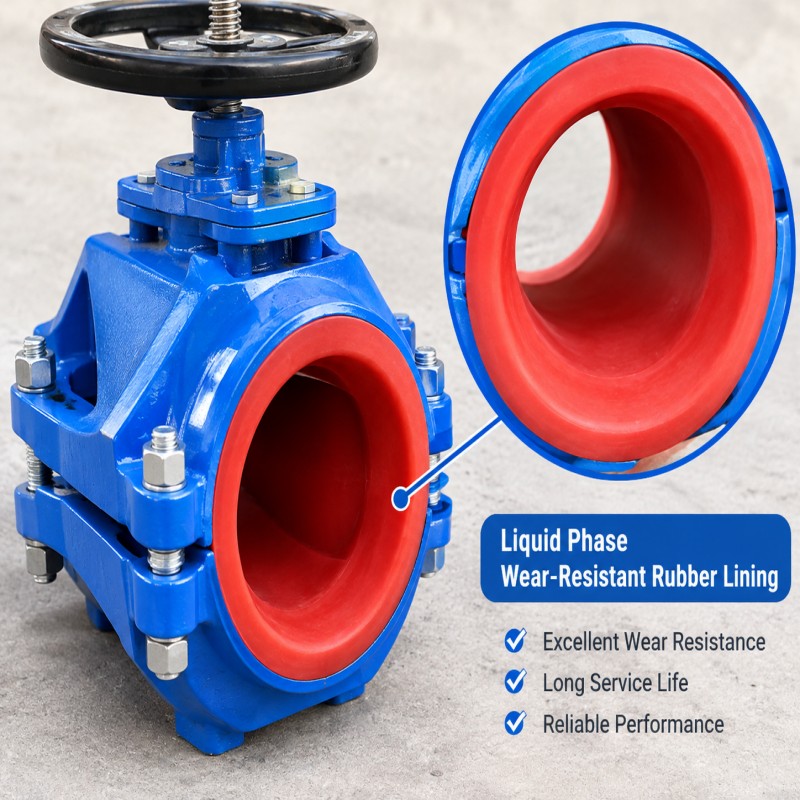
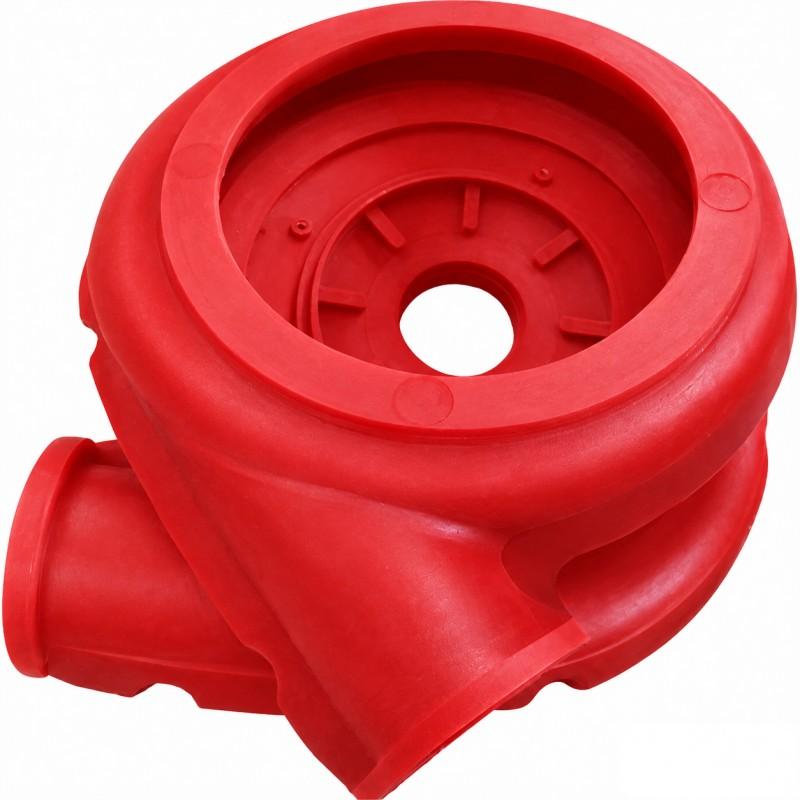
| Highly abrasive gravel | Accelerated wear on screens, pumps, liners | Polyurethane or rubber screen media, wear-lined pumps and chutes |
Application Comparison
| Configuration | Best For | Advantages | Limitations |
|---|---|---|---|
| Mobile gold wash plant | Remote sites, temporary projects, relocation between deposits | Easy transport, compact arrangement, faster installation | Lower maximum capacity, less process flexibility |
| Stationary gold wash plant | Long-term operations with stable production requirements | Larger feed systems, multiple washing stages, expansion-ready | More installation preparation, longer lead time |
| Trommel scrubber circuit | Clay-rich, cohesive feed | Breaks down agglomerates and releases locked gold | Higher water demand, greater wear on drum internals |
| Trommel screen circuit | Clean, low-clay feed | Simple, lower capital cost, high availability | Insufficient scrubbing action for cohesive clay |
| Sluice box primary recovery | High-volume feed with coarse gold | High throughput, low operating cost, simple maintenance | Fine gold losses if matting and flow are not managed |
| Centrifugal concentrator | Fine, liberated gold | Recovers particles conventional equipment misses | Requires prepared feed and parameter tuning |
| Shaking table | Concentrate upgrading | Produces higher-grade product, visual control | Lower capacity, requires consistent feed |
Industry Application Matrix
| Operation Type | Typical Feed | Recommended Core Circuit | Priority Consideration |
|---|---|---|---|
| Small alluvial operation | River gravel, low clay | Hopper, trommel screen, sluice box | Capital cost, mobility |
| Medium alluvial operation | Gravel with moderate clay | Hopper, scrubber, screen, sluice, concentrator | Balanced washing and screening capacity |
| Clay-heavy alluvial operation | Cohesive clay, high moisture | Scrubber with multi-stage washing, screen, concentrator, table | Clay dispersion, water supply |
| Large stationary alluvial | Variable feed, long mine life | Full circuit with recycling and expansion allowance | Throughput stability, water recycling |
| Remote placer operation | Unconsolidated sediment | Mobile plant with integrated gravity recovery | Transport and installation time |
| Tailings retreatment | Fine, liberated gold | Classification, centrifugal concentrator, shaking table | Fine gold recovery efficiency |
| Hard-rock gold operation | Gold locked in rock | Crushing, grinding, classification, gravity, additional recovery | Liberation, not washing |
| Seasonal operation | Variable feed, short window | Mobile or modular plant with rapid setup | Commissioning speed, spare parts availability |
Selection Guide
Step 1 — Identify the deposit type. Alluvial, placer or hard-rock. This single determination eliminates most inappropriate configurations and settles whether crushing and grinding belong in the flowsheet at all.
Step 2 — Quantify clay content and cohesion. Do not estimate from appearance or from a single grab sample. Clay behaviour under washing decides whether a simple screening trommel suffices or an intensive scrubbing stage is mandatory. Representative sampling across the deposit is the only reliable basis.
Step 3 — Establish realistic capacity. Work from required feed rate in tonnes per hour, average operating hours per day, expected daily production, seasonal variation in raw material supply, and measured material moisture and bulk density. A plant advertised as 100 TPH does not necessarily process every material at 100 tonnes per hour. Sticky clay, oversized stones, high moisture content and difficult washing conditions all reduce actual throughput.
Step 4 — Choose mobile or stationary configuration. A mobile plant suits projects requiring relocation or operating in remote locations: easier transport between sites, compact equipment arrangement, faster installation compared with some large stationary systems, and flexible operation for temporary projects. A stationary plant suits long-term operations with stable production requirements, and can be designed around the specific deposit to accommodate larger feeding systems, multiple washing stages, additional gravity separation equipment and more extensive water recycling facilities.
Step 5 — Select gravity equipment by gold particle size. A SLUICE BOX uses flowing water and riffles or specialized matting to retain heavy gold particles and is commonly used for primary recovery at relatively large volumes. A GOLD CENTRIFUGAL CONCENTRATOR generates enhanced gravity through rotation, improving recovery of fine, liberated gold that may escape conventional equipment; performance depends on particle size, liberation, feed preparation and operating parameters. A SHAKING TABLE uses deck movement and flowing water to separate particles by density and settling behaviour, typically to clean and upgrade concentrates. Not every plant needs all three — the combination should follow gold particle size, feed volume and recovery objectives, and be verified by testing rather than assumed from particle size alone.
Step 6 — Balance washing against screening. The washing system and screening system must work together. If washing cannot break down clay effectively, screening receives material containing large clay lumps. If screening capacity is insufficient, material accumulates and reduces overall throughput. A balanced design maintains stable material flow through the plant.
Step 7 — Confirm water and power availability. Water is essential for gold washing and gravity separation. Evaluate availability before selecting a plant, especially at remote sites where freshwater supply may be limited. Recycling process water reduces freshwater consumption and improves operating sustainability, but water quality and fine solids accumulation should be monitored to avoid affecting washing and separation performance.
Procurement Guide
Required information before requesting a quotation
-
Deposit type: alluvial, placer or hard-rock
-
Required processing capacity in tonnes per hour
-
Clay content, moisture content and feed particle size distribution
-
Approximate gold particle size and liberation characteristics, if known
-
Available water supply, electricity and installation space
-
Mobile or stationary configuration preference
-
Target gold recovery and concentrate requirements
Drawings and data needed
-
Site layout and available footprint
-
Feed size distribution from sieve analysis across representative samples
-
Expected operating schedule and seasonal variation
-
Material bulk density and moisture range
-
Slurry and tailings handling requirements
Material selection priorities
-
Screen media: polyurethane or rubber, selected against abrasion and blinding risk — see POLYURETHANE & RUBBER SCREEN PANELS
-
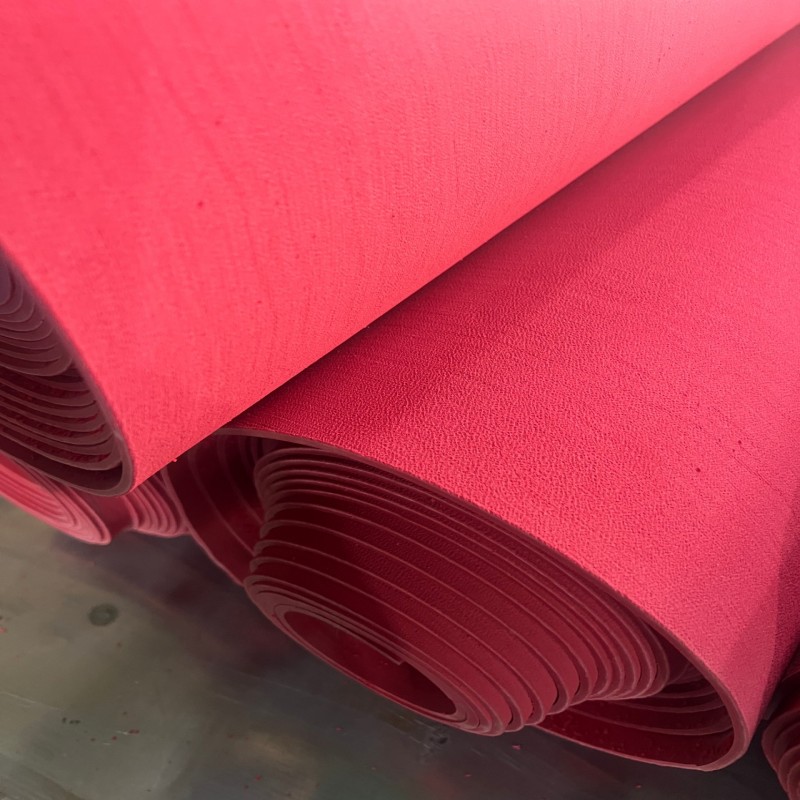
Sluice matting: specified against gold particle size and flow velocity
-
Pump and pipeline wear materials: matched to abrasive solids loading
-
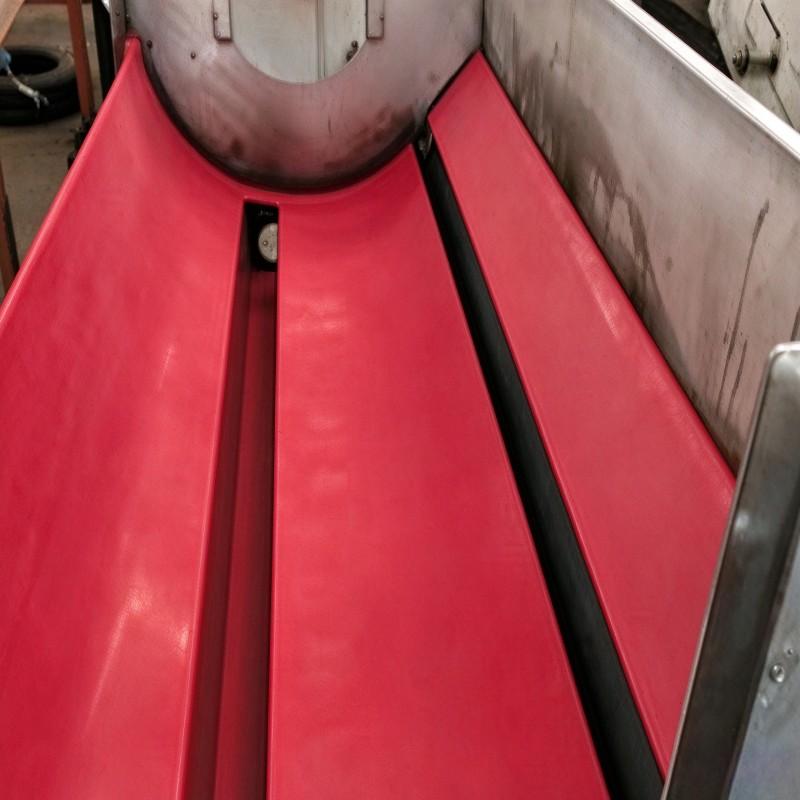
Drum and chute liners: replaced on measured condition
Supplier evaluation checklist
-
Can the supplier manufacture according to drawings and site constraints?
-
Can the supplier provide material reports for wear components?
-
Can the supplier support OEM replacement of screen panels and matting?
-
Does the supplier have export experience to your region?
-
Can the supplier provide wear-life recommendations based on your feed?
-
Is technical support available during commissioning?
Commercial terms to clarify
-
MOQ for screen panels, matting and wear parts
-
Lead time for main equipment versus spare parts
-
Packaging suitable for sea freight and inland transport
-
Inspection standards and documentation package
-
Recommended spare parts holding for the first 12 months
Providing this information helps equipment suppliers recommend a more suitable processing configuration instead of simply offering a standard machine.
Failure Analysis
| Problem | Possible Cause | Recommended Solution |
|---|---|---|
| Gold in oversize discharge | Insufficient clay breakdown | Add or upgrade to trommel scrubber, increase water sprays and washing stages |
| Fine gold in tailings | Gravity equipment mismatched to particle size | Test centrifugal concentrator downstream of primary recovery |
| Screen blinding | Wet sticky feed, incorrect aperture or media | Review media type, add washing sprays, adjust aperture |
| Pegging on screens | Near-aperture particles, inadequate vibration | Adjust screen parameters, review deck configuration |
| Throughput below rated capacity | Feed moisture, clay, oversize loading | Re-rate on actual conditions, rebalance washing and screening capacity |
| Unstable separation results | Inconsistent feeding or variable operating conditions | Install controlled feeder, stabilize water flow |
| Excessive pump wear | Abrasive solids, incorrect material selection | Review pump wear parts and solids handling |
| Premature matting wear | Flow velocity too high, abrasive oversize | Adjust sluice slope and flow, review matting specification |
| Gold locked in rock particles | Insufficient liberation | Add crushing and grinding — this is a comminution problem, not a washing problem |
| Clay buildup in trommel drum | Insufficient spray coverage | Add spray bars, review drum internals |
Maintenance Guide
Daily
-
Check feed rate stability and hopper discharge
-
Inspect water spray patterns and nozzle blockage
-
Verify sluice flow and matting condition
-
Listen for abnormal vibration or bearing noise
Weekly
-
Inspect screen panels for wear, blinding and peg damage
-
Check trommel drum internals for clay buildup
-
Review pump performance and pipeline wear points
-
Confirm tailings discharge runs clear of gold-bearing fines
Monthly
-
Measure wear liner thickness and record the trend
-
Review tailings sampling results against baseline
-
Inspect drive components, bearings and couplings
-
Audit water recycling system for fine solids accumulation
Ongoing practices
-
Maintain a wear-part replacement schedule based on measured condition, not calendar intervals
-
Hold critical spares on site: screen panels, matting, pump wear parts, bearings
-
Record throughput and recovery data to detect gradual decline
-
Re-sample feed and tailings whenever the feed source changes
These components — trommel screen panels, polyurethane and rubber screen media, conveyor belts and rollers, pumps and pipelines, bearings and drive components, sluice box matting and wear liners — are the highest-frequency replacement items in any gold wash plant. A supplier able to provide suitable spare parts and technical support helps reduce unexpected downtime and long-term maintenance costs.
Case Study
Customer Type: Medium-scale alluvial gold operation, seasonal production
Ore Type: Riverbed gravel with moderate-to-high cohesive clay content
Operating Conditions: Wet feed, variable clay proportion between seasons, limited freshwater supply, four-month operating window
Problem: The existing circuit used a simple screening trommel ahead of a sluice box. Clay lumps passed through screening largely intact and discharged with oversize. Tailings sampling showed elevated fine gold losses, and throughput fell well below rated capacity during the wetter part of the season. The operator initially considered purchasing a larger plant.
Solution: Representative material testing confirmed high clay cohesion and a significant fine gold fraction. The circuit was reconfigured with an intensive scrubbing stage ahead of screening, additional water sprays, and a centrifugal concentrator treating the sluice tailings stream. Screening capacity was rebalanced against the revised washing capacity, and water recycling was expanded to accommodate higher process water demand.
Result: Tailings sampling after reconfiguration showed a substantial reduction in fine gold losses, and stable throughput was maintained through the wet season without purchasing additional screening capacity. The outcome confirmed the original engineering conclusion: the constraint was clay dispersion and gravity circuit matching, not plant size.
FAQ
Question: How much does a gold wash plant cost?
Answer: Cost depends primarily on capacity, clay-handling requirements and the number of gravity recovery stages. A simple screening and sluice configuration for clean gravel sits at the low end; a scrubber-based circuit with concentrator and shaking table for clay-rich feed sits considerably higher. Request quotations against your actual feed data rather than a headline TPH figure, because a plant sized on brochure capacity often requires replacement or expansion within one season.
Question: Do I need a trommel scrubber or just a trommel screen?
Answer: It depends on clay content. A gold trommel screen performs screening and particle-size classification, separating oversize rock from smaller material through a rotating perforated drum; some systems include water sprays, but a standard screening trommel may not provide sufficient scrubbing action for highly cohesive clay. A trommel scrubber is designed primarily for washing and scrubbing, using rotation and material movement to break down clay lumps and release gold-bearing particles.
Question: What capacity should I specify?
Answer: Specify on realistic site conditions. A plant advertised at 100 TPH does not process every material at 100 tonnes per hour — sticky clay, oversized stones, high moisture content and difficult washing conditions reduce actual throughput. Base the figure on required feed rate, average operating hours, expected daily production, seasonal supply variation, and measured material moisture and bulk density.
Question: Can one plant handle both alluvial and hard-rock gold?
Answer: Generally no. Alluvial processing relies on washing, screening and gravity separation of already-liberated gold. Hard-rock gold is locked inside quartz, sulfide minerals or host material and requires crushing, grinding and classification to achieve liberation first. A conventional alluvial gold wash plant is generally not a substitute for a complete hard-rock gold processing line.
Question: How do I know if my plant is losing gold?
Answer: Sample feed, concentrate and tailings regularly and compare. Gold remaining in clay lumps indicates insufficient washing. Fine gold in sluice tailings may justify testing additional gravity recovery equipment. Gold locked inside rock particles indicates insufficient liberation. Unstable separation results usually indicate inconsistent feeding or unsuitable operating conditions. Measuring both gold recovery and concentrate grade gives the most accurate picture of plant performance.
Question: Is a mobile or stationary plant better?
Answer: Mobile plants suit relocation, remote locations, temporary projects and small-to-medium alluvial production where fast installation matters. Stationary plants suit long-term operations with stable production requirements, accommodating larger feeding systems, multiple washing stages, additional gravity equipment and more extensive water recycling, with greater flexibility for future capacity expansion.
Question: How much water does a gold wash plant need?
Answer: Demand scales with washing intensity and clay content — clay-rich feed requires substantially more water than clean gravel. Evaluate water availability before selecting equipment, particularly at remote sites. A management system typically includes water pumps, spray pipes and washing nozzles, settling ponds, slurry collection systems and recycling equipment. Recycling reduces freshwater consumption, but water quality and fine solids accumulation should be monitored.
Question: Which wear parts should I stock?
Answer: The highest-frequency items are trommel screen panels, polyurethane and rubber screen media, conveyor belts and rollers, pumps and pipelines, bearings and drive components, sluice box matting and wear liners. Stock levels should reflect measured wear rates on your specific feed rather than generic recommendations, and a supplier able to provide suitable spare parts and technical support reduces unexpected downtime.
Question: Can a wash plant be expanded later?
Answer: Yes, particularly with a stationary configuration. A stationary plant can be designed around the specific deposit and structured to accept larger feeding systems, additional washing stages, extra gravity separation equipment and expanded water recycling. Initial installation requires more preparation, but design flexibility for future capacity expansion and process optimization is significantly greater than with a mobile unit.
Question: What information should I provide to get an accurate quotation?
Answer: Deposit type, required processing capacity in TPH, clay content and material characteristics including moisture and feed particle size, approximate gold particle size and liberation if known, available water supply and electricity, installation space, mobile or stationary preference, and target recovery with concentrate requirements. This allows suppliers to recommend a suitable processing configuration rather than a standard machine.
Conclusion
Gold wash plant selection is a sequence, not a purchase. Identify the deposit type, quantify the clay, size on realistic throughput, choose the configuration the mine life supports, then match the gravity circuit to the gold particle size. Test representative material before committing, balance washing capacity against screening capacity, and keep sampling tailings after start-up. A plant built around the deposit will consistently outperform a larger plant built around a brochure.
Related Articles
Related Products
Related Technical Guides
-
IMPROVE FINE SCREENING EFFICIENCY WITH POLYURETHANE SCREEN PANELS
-
HYDROCYCLONE WEAR: ROOT CAUSES, HIGH-WEAR ZONES & MATERIAL SOLUTIONS
-
ROTOR & STATOR IN MECHANICAL FLOTATION CELLS: THE HEART OF EFFICIENT MINERAL FLOTATION
-
FLOTATION CELL ROTOR AND STATOR WEAR PARTS: HOW THEY CONTROL RECOVERY, FLOW AND MAINTENANCE COST
Related Buyer Guides
-
WHICH MANUFACTURER OFFERS HIGH-QUALITY POLYURETHANE TUFFLEX WIRE SCREENS FOR MINING?
-
HOW DO I CHOOSE THE RIGHT RUBBER BELT FOR A VACUUM BELT FILTER?
Related Comparison Articles
-
POLYURETHANE SCREEN VS RUBBER SCREEN VS WIRE MESH: A COMPLETE COMPARISON GUIDE
-
SELF-CLEANING SCREEN VS TRADITIONAL WOVEN WIRE MESH: WHICH ONE SHOULD YOU CHOOSE?
Contact
Annie Lu
Email: annie.lu@huataogroup.com
Mobile: +86 18032422676 (WhatsApp / WeChat)
#GoldWashPlant #AlluvialGold #GoldRecovery #TrommelScrubber #GravitySeparation #GoldMining #MineralProcessing #PlacerGold #MiningEquipment #GoldProcessing #TrommelScreen #SluiceBox #CentrifugalConcentrator #ShakingTable #ScreenMedia #TailingsManagement #ProcessDesign #PlantSelection #WashPlant #MiningEngineering
Tags:
 admin
personal profile