Rotor-stator clearance is not a "smaller is better" dimension. This guide explains how clearance affects air dispersion, slurry circulation and recovery, and how to inspect, evaluate and maintain flotation rotor and stator components.
Learn how long a flotation stator lasts, what drives wear in abrasive slurry circuits, how rubber and polyurethane compare, and how to plan replacement based on cost per operating hour.
<u>POLYURETHANE DEWATERING PANELS</u> can last approximately twice as long as rubber panels in some abrasive mining applications, but the actual service-life advantage depends on the material being processed, impact severity, feed rate, panel design, and operating conditions. HUATAO's published reference ranges list 6–12 months for PU panels and 3–6 months for rubber panels in abrasive applications. These are indicative rather than universal guarantees.
Extending filter press filter cloth life requires correct slurry matching, flat wrinkle-free installation, gradual feed-pressure startup, controlled washing, and early condition monitoring rather than simply using a stronger cloth.
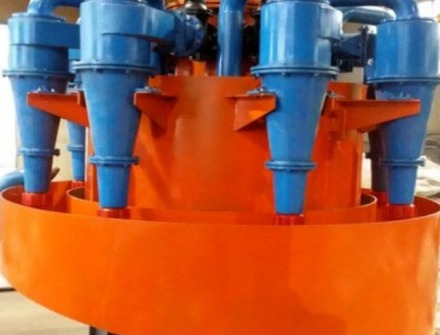
Optimizing hydrocyclones in a gold recovery circuit requires controlling the cut point to match your target P80, minimizing coarse gold misplacement to the overflow, and reducing circulating loads that concentrate gold in the grinding loop.
There is no fixed service life for a flotation rotor. In mild applications, a properly manufactured rotor may last several years. In highly abrasive circuits, noticeable wear can occur within several months. Actual life depends on ore abrasiveness, slurry density, particle size, rotor speed, material selection, rotor geometry, rotor-stator clearance and manufacturing quality.
A flotation impeller shapes bubble size through turbulence and circulation. Higher speed increases bubble breakup and reduces bubble size; higher air flow increases it. Geometry, stator design, frother concentration and slurry conditions determine final gas dispersion.
To increase hydrocyclone throughput while maintaining cut size, focus on three levers: (1) operational adjustments—optimize feed pressure, density, and the number of operating cyclones
A <u>DEWATERING SCREEN</u> can fail because of excessive screen-media wear, blinding, pegging, uneven feed distribution, unsuitable aperture design, incorrect operating conditions, or a combination of these factors. Polyurethane panels help because they combine abrasion resistance, elasticity, precise aperture geometry, and modular construction. However, changing from metal to PU does not guarantee better dewatering — panel material, aperture size, panel profile, feed characteristics, screen settings, and installation system must all match the application.