
How Do I Calculate Hydrocyclone Capacity for Mineral Processing?
-
 admin
admin - 28 Jul, 2026
What Is Hydrocyclone Capacity?
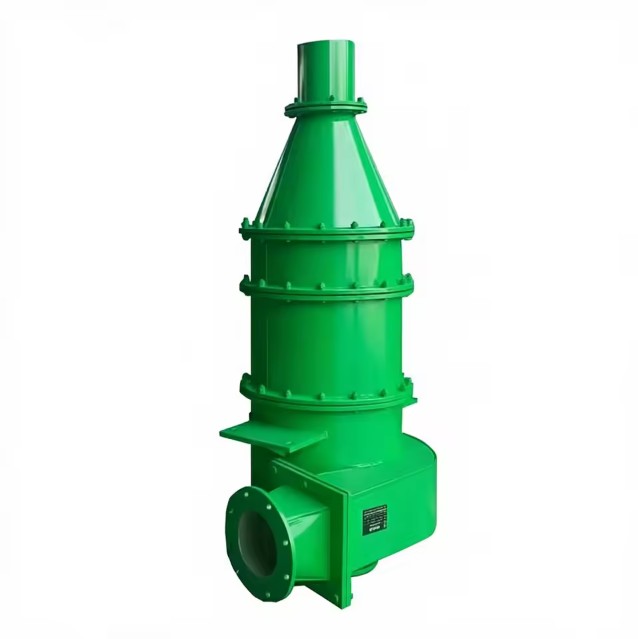
Hydrocyclone capacity refers to the volume or mass of slurry that a hydrocyclone can process within a given period while maintaining acceptable classification performance.
Capacity is typically expressed as:
- Cubic meters per hour (m³/h)
- Gallons per minute (GPM)
- Tons per hour (TPH)
In mineral processing plants, hydrocyclones play a critical role in controlling particle size distribution before downstream processes such as:
- Flotation
- Gravity Separation
- Thickening
- Dewatering
- Tailings Management
Because classification efficiency directly affects recovery rates and operating costs, accurately calculating hydrocyclone capacity is essential.
How Does a Hydrocyclone Work?
A hydrocyclone is a simple yet highly efficient classification device that uses centrifugal force to separate particles based on size and density.
The process begins when slurry enters the cyclone tangentially through the feed inlet.
Inside the cyclone:
- A high-speed rotating vortex is created.
- Coarse particles move outward toward the cyclone wall.
- Fine particles migrate toward the center.
- Coarse particles discharge through the apex.
- Fine particles leave through the vortex finder.
Unlike a Spiral Classifier, a hydrocyclone contains no moving parts, making it a preferred solution for modern mineral processing operations.
Example
In an iron ore beneficiation plant, hydrocyclones are commonly installed after a Ball Mill to classify particles before further grinding or flotation.
Similarly, gold ore and copper ore processing plants use hydrocyclones to improve grinding circuit efficiency and recovery performance.
Main Factors Affecting Hydrocyclone Capacity
Understanding hydrocyclone capacity requires evaluating multiple operating variables.
1. Cyclone Diameter
Hydrocyclone diameter is one of the primary factors influencing throughput.
General relationship:
| Diameter | Capacity |
|---|---|
| Small | Lower Throughput |
| Medium | Moderate Throughput |
| Large | Higher Throughput |
However, increasing diameter may reduce classification sharpness.
Engineering Insight
Many plant operators mistakenly select larger hydrocyclones solely to increase throughput. In practice, oversized cyclones often result in poorer particle separation and reduced downstream performance.
2. Feed Pressure
Feed pressure is often the most critical operating variable.
Higher pressure generally:
- Increases throughput
- Improves centrifugal force
- Enhances separation velocity
However excessive pressure may:
- Accelerate wear
- Increase energy consumption
- Reduce classification stability
Practical Experience
In many mineral processing plants, adjusting feed pressure by only a few PSI can significantly impact actual cyclone capacity without changing the equipment itself.
3. Slurry Density
Slurry density directly affects flow behavior inside the hydrocyclone.
As solids concentration increases:
- Effective capacity decreases
- Particle interactions increase
- Separation efficiency may decline
This factor becomes especially important when processing:
- Iron Ore
- Copper Ore
- Nickel Ore
- Silica Sand
- Tailings Slurry
Example
A hydrocyclone operating at 35% solids may process significantly more slurry than the same unit operating at 55% solids.
4. Particle Size Distribution
Particle size characteristics greatly influence hydrocyclone performance.
Hydrocyclones processing:
- Fine coal
- Fine silica sand
- Fine tailings
often behave differently than systems handling:
- Coarse iron ore
- Coarse copper ore
- Crushed aggregates
Therefore, capacity calculations should always consider actual feed PSD (Particle Size Distribution).
5. Apex and Vortex Finder Design
The apex and vortex finder are among the most important wear components.
Even small dimensional changes can affect:
- Cut size
- Throughput
- Classification efficiency
- Water balance
This is why experienced operators regularly inspect:
- Apex wear
- Vortex finder wear
- Internal liner condition
to maintain stable performance.
Benefits of Proper Hydrocyclone Sizing
Selecting the correct hydrocyclone capacity provides several operational benefits.
Improved Grinding Efficiency
Proper classification reduces over-grinding and improves Ball Mill and SAG Mill performance.
Better Recovery Rates
Consistent particle size distribution improves Flotation Cell efficiency and mineral recovery.
Lower Operating Costs
Optimized hydrocyclone performance reduces:
- Energy consumption
- Wear part replacement
- Unplanned downtime
Increased Equipment Life
Correct sizing reduces excessive wear on:
- Hydrocyclone Liners
- Vortex Finders
- Apexes
- Pumps
- Pipelines
Hydrocyclone Applications Across Mining Industries
Hydrocyclones are widely used in:
| Industry | Application |
|---|---|
| Gold Mining | Grinding Circuit Classification |
| Iron Ore Processing | Desliming & Classification |
| Copper Mining | Flotation Feed Preparation |
| Coal Processing | Fine Coal Recovery |
| Lithium Processing | Particle Classification |
| Silica Sand | Desliming |
| Lead Zinc | Grinding Circuit Control |
| Nickel Ore | Classification |
| Phosphate Processing | Separation & Dewatering |
| Tailings Management | Water Recovery |
Their versatility makes hydrocyclones one of the most important classification devices in modern mineral processing plants.
Hydrocyclone vs Spiral Classifier
Both Hydrocyclones and Spiral Classifiers are used for particle classification, but their performance characteristics differ significantly.
Application Comparison Table
| Item | Hydrocyclone | Spiral Classifier |
|---|---|---|
| Throughput | High | Medium |
| Footprint | Small | Large |
| Water Consumption | Lower | Higher |
| Automation | Easy | Moderate |
| Maintenance | Low | Medium |
| Classification Efficiency | High | Medium |
| Initial Cost | Moderate | Moderate |
| Best For | Modern Plants | Traditional Plants |
Conclusion
For most modern mineral processing plants, hydrocyclones provide higher efficiency, better process control, and lower operational costs.
Material Selection for Hydrocyclone Components
Selecting the correct wear material is critical for maintaining hydrocyclone capacity.
Material Comparison Table
| Material | Wear Resistance | Cost | Weight | Best Application |
|---|---|---|---|---|
| Polyurethane | Excellent | Medium | Light | Iron Ore, Gold Ore, Coal |
| Rubber | Good | Low | Light | Mild Abrasion |
| Ceramic | Outstanding | High | Heavy | Extreme Abrasion |
| Steel | Moderate | Low | Heavy | Low-Wear Applications |
| Composite | Excellent | Medium-High | Medium | Complex Conditions |
Engineering Recommendation
For most mining applications, polyurethane hydrocyclones offer the best balance of wear life, weight, maintenance, and total cost of ownership.
Industry Application Matrix
Hydrocyclones are used throughout the mining and mineral processing industry.
| Industry | Classification | Dewatering | Desliming | Tailings |
|---|---|---|---|---|
| Gold Ore | ✔ | ✔ | ✔ | ✔ |
| Iron Ore | ✔ | ✔ | ✔ | ✔ |
| Copper Ore | ✔ | ✔ | ✔ | ✔ |
| Coal | ✔ | ✔ | ✔ | ✔ |
| Lithium Ore | ✔ | ✔ | ✔ | ✔ |
| Silica Sand | ✔ | ✔ | ✔ | ✔ |
| Nickel Ore | ✔ | ✔ | ✔ | ✔ |
| Lead Zinc Ore | ✔ | ✔ | ✔ | ✔ |
| Phosphate | ✔ | ✔ | ✔ | ✔ |
Common Hydrocyclone Problems and Solutions
Failure Analysis Table
| Problem | Possible Cause | Recommended Solution |
|---|---|---|
| Low Capacity | Insufficient feed pressure | Check pump performance |
| Coarse Overflow | Worn vortex finder | Replace wear parts |
| Excessive Wear | Abrasive ore | Upgrade liner material |
| Frequent Blockage | Undersized apex | Increase apex size |
| Poor Classification | Incorrect operating pressure | Optimize pressure |
| Capacity Fluctuation | Variable slurry density | Improve process control |
| Short Service Life | Low-quality liner | Upgrade materials |
Practical Experience
Many operators assume poor performance is caused by cyclone design. In reality, worn apexes and vortex finders are often the root cause.
Maintenance Guide
Routine maintenance helps maintain capacity and classification efficiency.
Daily Inspection
- Monitor feed pressure
- Check overflow quality
- Inspect underflow discharge
- Observe vibration and noise
Weekly Inspection
- Measure apex wear
- Inspect vortex finder condition
- Check liner thickness
Monthly Inspection
- Verify cyclone geometry
- Inspect feed inlet wear
- Review process data trends
Maintenance Recommendation
Replacing wear parts before failure can reduce downtime and maintain consistent throughput.
Procurement Guide
Selecting the right hydrocyclone supplier is as important as selecting the correct model.
Information Required Before Quotation
- Ore type
- Processing capacity (TPH)
- Feed particle size
- Slurry density
- Feed pressure
- Required cut size
- Existing cyclone model
Drawings and Technical Data
Recommended documents:
- General Arrangement Drawing
- Process Flow Diagram
- Cyclone Cluster Layout
- OEM Drawings
- Wear Part Drawings
MOQ
MOQ varies depending on:
- Hydrocyclone size
- Wear part complexity
- Material type
Lead Time
Typical production:
- Standard wear parts: 7–20 days
- Customized hydrocyclones: 20–45 days
Packaging
- Wooden Crate
- Export Pallet
- Steel Frame Packaging
Shipping Options
- Air Freight
- Sea Freight
- Express Courier
OEM vs Aftermarket Hydrocyclone Components
| Item | OEM Parts | Aftermarket Parts |
|---|---|---|
| Cost | Higher | Lower |
| Availability | Limited | Flexible |
| Lead Time | Longer | Shorter |
| Customization | Limited | High |
| Performance | Standard | Comparable or Better |
Buyer Insight
High-quality aftermarket hydrocyclone components can often achieve equivalent or better performance when manufactured using advanced polyurethane or ceramic materials.
Buyer Selection Guide
Before selecting a hydrocyclone supplier, evaluate:
✔ Mining industry experience
✔ Material expertise
✔ Production capability
✔ Quality inspection process
✔ Engineering support
✔ Spare parts availability
✔ Export experience
✔ Reference projects
A reliable supplier should be able to provide both equipment and wear solutions for long-term operation.
Why Wear-Resistant Components Matter
Hydrocyclones operate under severe abrasive conditions.
Wear affects:
- Throughput
- Cut size
- Separation efficiency
- Maintenance cost
- Equipment availability
This is why wear-resistant materials are critical.
HUATAO Group supplies:
Hydrocyclone Components
- Polyurethane Hydrocyclone
- Hydrocyclone Liner
- Vortex Finder
- Apex
Screening Equipment Components
- Polyurethane Screen Panel
- Rubber Screen Panel
- Dewatering Screen Panel
- Fine Screen Panel
Crushing Wear Parts
- Jaw Plate
- Mantle
- Concave
- Blow Bar
- Impact Plate
Grinding Wear Parts
- Mill Liner
- Rubber Liner
- Lifter Bar
Flotation Components
- Flotation Rotor
- Flotation Stator
Material Handling Components
- Conveyor Idler
- Belt Cleaner
- Polyurethane Skirting
Case Study
Customer
Iron Ore Beneficiation Plant
Operating Conditions
- Throughput: 450 TPH
- Abrasive iron ore
- Continuous operation
Problem
The plant experienced:
- Frequent hydrocyclone liner replacement
- Capacity fluctuations
- High maintenance costs
Solution
HUATAO supplied:
- Polyurethane Hydrocyclone Liners
- Polyurethane Apexes
- Polyurethane Vortex Finders
Operating parameters were optimized simultaneously.
Results
✔ 30% longer wear life
✔ 20% reduction in maintenance downtime
✔ More stable classification
✔ Improved grinding circuit performance
✔ Lower operating costs
Frequently Asked Questions
1. What is hydrocyclone capacity?
Hydrocyclone capacity refers to the amount of slurry a hydrocyclone can process while maintaining acceptable classification performance.
2. What affects hydrocyclone capacity the most?
Feed pressure, cyclone diameter, slurry density, and particle size distribution are the most important factors.
3. Does a larger hydrocyclone always provide better performance?
No. Larger hydrocyclones increase throughput but may reduce classification precision.
4. How often should hydrocyclone liners be replaced?
Replacement frequency depends on ore abrasiveness, operating pressure, and liner material.
5. Which liner material offers the best wear resistance?
Polyurethane and ceramic liners generally provide superior wear resistance in mining applications.
6. Can hydrocyclone capacity be increased without replacing equipment?
Yes. Optimizing feed pressure, slurry density, and wear part condition can improve capacity.
7. Are aftermarket hydrocyclone parts compatible with OEM equipment?
High-quality aftermarket parts can often match OEM specifications and performance.
8. How do I select the right hydrocyclone?
Selection should consider throughput, ore characteristics, cut size, pressure, and wear conditions.
9. What industries use hydrocyclones?
Gold, iron ore, copper, coal, lithium, silica sand, nickel, phosphate, and tailings processing.
10. How can wear-resistant components reduce costs?
Longer wear life reduces downtime, maintenance frequency, and spare parts consumption.
Conclusion
Hydrocyclone capacity is influenced by equipment design, operating pressure, slurry density, particle size distribution, and wear condition. Successful hydrocyclone selection requires balancing throughput with classification efficiency.
By combining proper cyclone sizing with high-quality wear-resistant components, mining companies can improve recovery, reduce downtime, and lower operating costs.
HUATAO Group provides comprehensive mining wear solutions for crushing, screening, grinding, classification, flotation, and material handling applications worldwide.
Contact Us
Contact: Annie Lu
Email: annie.lu@huataogroup.com
Phone / WhatsApp: +86 18032422676
Website: http://www.tufflexscreen.com
We warmly welcome customers from around the world to contact us and establish mutually beneficial partnerships.
#Hydrocyclone
#HydrocycloneCapacity
#MineralProcessing
#MiningEquipment
#Classification
#PolyurethaneHydrocyclone
#MiningWearParts
#IronOre
#GoldMining
#CopperMining
Tags:
 admin
admin
personal profile