How Do I Maintain a Permanent Magnetic Iron Remover? A Complete Field Guide
-
 admin
- 24 Nov, 2026
Keep a permanent magnetic iron remover capturing well with four maintenance tiers: shift-level cleaning and discharge checks, weekly gap and hardware measurement, monthly torque-bearing-coating rounds, and quarterly gauss readings plus capture tests. Guard the magnet from heat beyond its material rating, hard impact and coating damage — the only three mechanisms that permanently reduce field strength. Record five numbers each round so replacement decisions come from trends rather than arguments.
What Is a Permanent Magnetic Iron Remover?
A permanent magnetic iron remover is a tramp-iron separator that uses a permanent magnet assembly — usually neodymium or ferrite blocks inside a steel magnetic circuit — to lift steel debris out of material moving on a conveyor belt. Suspended over the belt or built into a head pulley, it holds ferrous pieces while clean material passes beneath, then releases the iron into a chute or waits for an operator to wipe it clear. It draws no power, has no coil to burn, and its maintenance is entirely mechanical.
Key Takeaways
✔ No electricity means no coil, rectifier or control failures — the maintenance burden is mechanical only.
✔ Heat, impact and breached coatings are the three permanent field-killers; everything else is recoverable.
✔ The cleaning belt on a self-cleaning unit is the most neglected wearing part on the whole machine.
✔ Gap, gauss, belt thickness, chute condition and iron count form the five-number record that drives every decision.
✔ A capture test with real steel pieces is the only end-to-end proof of performance, and it costs nothing.
Summary Table
| Item | Description |
| Function | Lifts tramp iron from conveyor-borne material to protect crushers, screens, pumps and hydrocyclones downstream |
| Material | Neodymium, ferrite or samarium-cobalt magnet assemblies in steel circuits with coated pole faces |
| Application | Suspended overbelt units, drum and pulley separators across mining, coal, aggregate and mineral processing |
| Service Life | Field persists for years within temperature and shock limits; belts, bearings, shackles wear on measurable cycles |
| Benefits | Zero power draw, no electrical failure modes, consistent capture when gap and field are verified on schedule |
Definition
Permanent magnetic iron removers sit in the wider family covered by Magnetic Separators and the broader Magnetic separation process. What distinguishes them is the field source: permanent magnet material rather than energised coils. That choice shapes everything about their maintenance — there is nothing to inspect electrically, but the physical conditions that degrade magnet material become the whole focus of the routine. A unit is “permanent” the way a promise is permanent: reliable exactly as long as nobody abuses it.
Working Principle
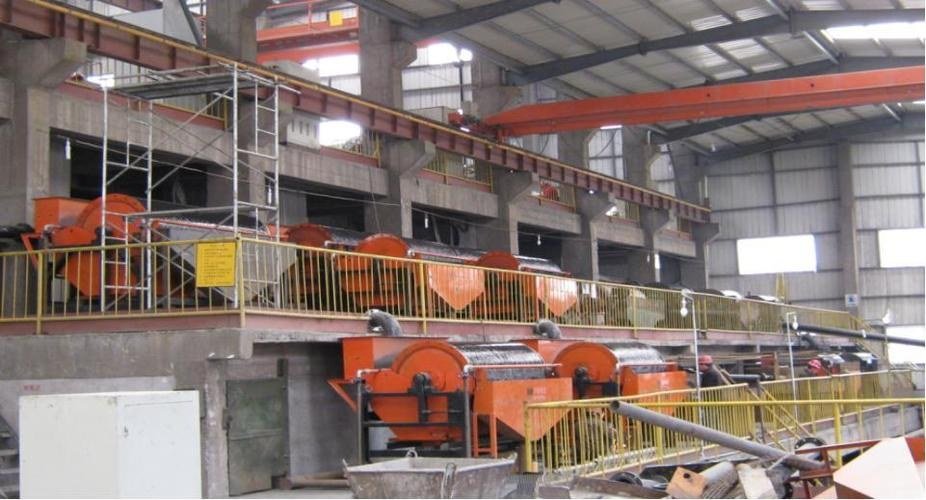
Drum and overband designs share one physics: a field deep enough to reach through the burden, and a mechanism that carries captured iron out of it.
The steel circuit around the magnet blocks concentrates their combined field into a working zone reaching down to the belt surface. A steel piece inside that zone feels a lifting force proportional to its mass and the field gradient. Above a certain depth the force can no longer overcome burden pressure and belt friction, which is why burden depth and gap dominate capture performance.
Manual-clean units simply wait for an operator. Self-cleaning overbands wrap an endless belt around the magnet: the belt’s outer run passes through the field, collects iron, and carries it past the field edge where a scraper or drop-off releases it into a chute. That belt, its pulleys and its drive turn a passive magnet into a machine — and a machine needs the maintenance a magnet alone never did.
The parameters a maintenance team can actually influence are the working gap, the burden depth on the belt, and the condition of the cleaning mechanism. A trial reported on 23 November 2026 from the No. 2 concentrator at JMC’s Ruyang operation shows how much these matter when tuned deliberately: with two CTB1245 semi-counterflow permanent magnetic drum separators, over 600 samples converged on a magnet declination of 13 degrees and a 7 cm pole gap, and the pre-throwing stage lifted concentrate grade by more than five percentage points while magnetic iron recovery stayed above 90 percent. Maintenance keeps such parameters true continuously; commissioning establishes them once.
Benefits
- Zero operating energy across the life of the unit, since the field costs nothing to maintain electrically.
- No coils, rectifiers, cables or control circuits — flood, dust and voltage events cannot touch the field.
- Stable capture depth when the gap is measured and re-shimmed on schedule.
- Simple spares picture: belts, bearings, shackles and chute liners, all standard consumables.
- Protection for the most expensive assets on the plant — liners inside crushers, screen panels, pump internals and cyclone apexes.
Applications
You will find these units above crusher feed conveyors guarding Jaw Crusher chambers and cone cavities, over screen feed belts where tramp steel shreds Vibrating Screens panels, on coal washery lines protecting Hydrocyclones and pumps, and at aggregate transfer points where drill steel and bucket teeth arrive mixed with rock. Duty determines design more than industry does: a wet coastal aggregate belt and a hot clinker conveyor need different magnet materials even at the same tonnage.
In mid November 2026, Jizhong Energy’s Dashucun coal mine gave the application a high-profile demonstration. Its rebuilt wash-plant feed circuit carries two stages of permanent iron removers protecting the preparation equipment, the transfer points were converted to remote, unattended operation, and the plant reported secondary fines down five to six percent with clean coal yield up roughly 0.3 percent. Unattended duty is the design case where maintenance records matter most — nobody walks past these magnets every shift, so the numbers have to walk instead.
Material Comparison
| Magnet Material | Max Working Temperature | Relative Field Depth | Corrosion Behaviour | Sensible Duty |
| Neodymium (NdFeB) | About 80 °C for standard grades; higher-temperature grades available | Deepest field per unit size | Coating-dependent; rust undercuts fast once breached | Confined installations, deep burden |
| Ferrite | Beyond 200 °C | Shallower; larger assemblies needed | Very resistant | Wet, outdoor, hot or humid duty |
| Samarium-cobalt | About 300 °C | Moderate | Moderate | High-temperature specialist circuits |
The sizing rule that saves the most money: specify the magnet material against the hottest realistic duty, not the average one. A magnet that lives at 60 °C in spring can see 95 °C in a summer heat soak with a stalled loaded belt beneath it. Standard neodymium in that spot loses field permanently, and no amount of maintenance routine afterwards repairs it.
Application Comparison
| Aspect | Manual-Clean Plate or Suspension | Self-Cleaning Overband |
| Shift labour | Wiping the face every shift | Watching the discharge instead |
| Wearing parts | Effectively none | Belt, pulleys, bearings, drive, chute liners |
| Hidden failure | Packing narrows the gap silently | Slipping belt mimics a weak magnet |
| Fits best | Light, attended, low-tramp duty | Heavy tramp loads, unattended or high-speed belts |
| Maintenance identity | Discipline habit | Small conveyor within the machine |
Industry Application Matrix
| Industry | Installation Point | Leading Maintenance Risk |
| Iron ore | Overband ahead of primary and secondary crushing | Deep burden burying capture; gap drift |
| Coal preparation | Two-stage removal on washery feed | Chute bridging from wet fines |
| Aggregate | Plate magnets at head transfer points | Skipped manual cleaning between shifts |
| Cement | Suspension over clinker and additive belts | Heat beyond neodymium rating |
| Silica sand | Drum units at washer feed pulleys | Coating damage in wet abrasive duty |
| Gold and base metals | Guarding screens, mills, cyclone feed pumps | No records; capture drift unnoticed |
Selection Guide
Size the unit in this order. One: belt width and speed, which set magnet width and residence time in the field. Two: tonnage and burden depth, which set required field depth and hence material and circuit size. Three: material temperature, which decides neodymium grade, ferrite or samarium-cobalt. Four: tramp load and manning, which decide manual-clean versus self-cleaning. Five: what the unit protects — a magnet guarding a crusher chamber justifies deeper field and capture testing than one guarding a stockpile.
Two conveyor-side decisions belong in the same selection. Belt tracking errors move the belt surface relative to the pole face, so a Conveyor Belt Tracker keeps the design gap honest. And return-side carryback builds on idlers and pulleys until it changes belt geometry under the magnet — the same condition monitored for Conveyor Idlers & Rollers plant-wide, made worse where a worn Conveyor Belt Cleaner / Scraper lets fines ride the return run.
One boundary note: where the tramp load is continuous and the belt runs hot around the clock, some plants step up to the powered Electromagnetic Overband Separator design instead, accepting an electrical maintenance burden in exchange for deeper, controllable field. The permanent unit remains the right answer wherever duty stays inside its material limits — which, with honest sizing, is most of them.
Procurement Guide
Required information: belt width and speed, tonnage, burden depth, material temperature range, tramp-iron type and quantity, suspension height available, ambient conditions, and the equipment being protected.
Drawings and dimensions: pole face dimensions, suspension fixing points, discharge chute geometry for self-cleaning units, and minimum clearance for belt removal below.
Questions that sort suppliers quickly:
- Can you manufacture to drawings and replicate an existing unit’s fixings for straight replacement?
- Will you state the magnet material and its temperature rating in the offer, not just “permanent magnet”?
- Can you provide field-strength readings for the finished assembly before shipment?
- Do you stock wearing parts against unit model, and for how many years after purchase?
- What pre-shipment inspection applies, and can we witness or third-party inspect?
Lead time for standard suspended units typically runs a few weeks; custom widths, high-temperature grades and drum assemblies take longer. Packaging must protect the pole face and coating — insist on faced-pack export crates. HTL manufactures Iron Magnet units to drawing with export-grade packing and supplies Magnetic Separation Spares against model numbers for fleets of any age, which matters because a five-year-old unit with no spare belt is a production risk, not a maintenance item.
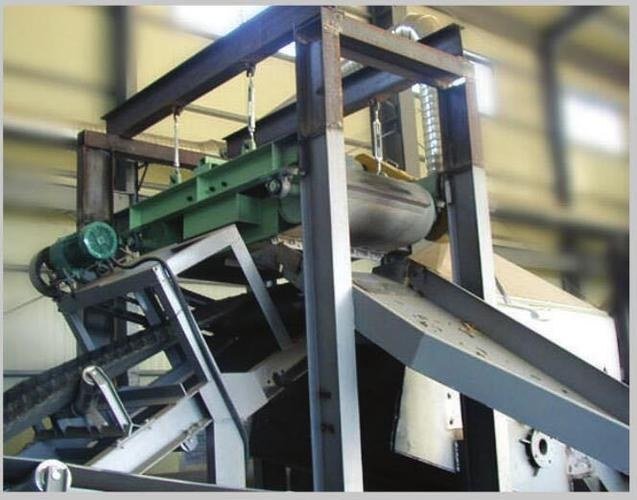
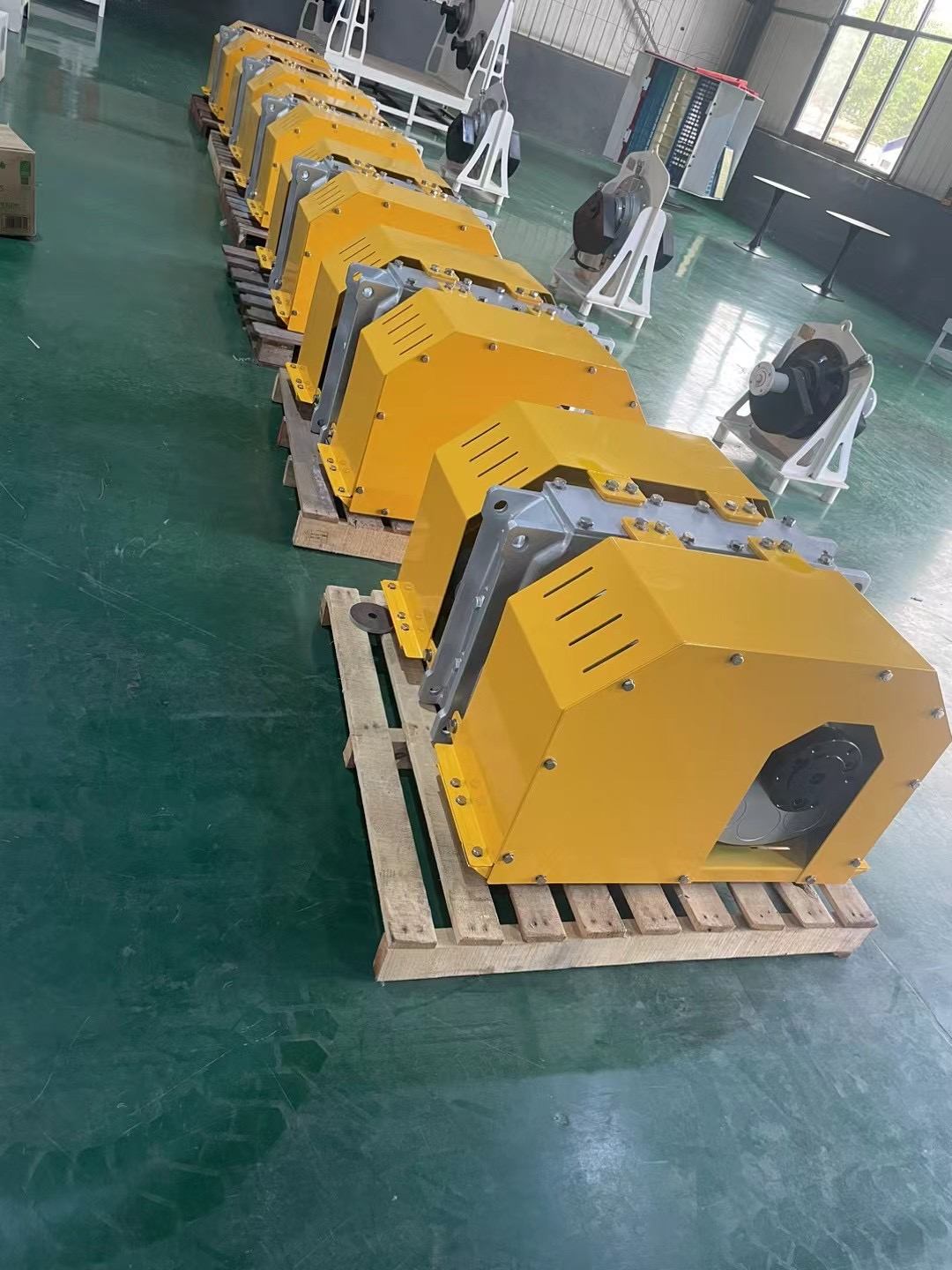
Units staged for export with pole-face protection. The coating that arrives intact is the coating that survives.
Failure Analysis
| Problem | Possible Cause | Recommended Solution |
| Capture rate falls gradually | Gap grown by chain stretch or structure deflection | Measure against commissioning sheet; re-shim |
| Iron returns to the belt | Cleaning belt slipping or mistracking | Retension, retrack; replace cover at one-third wear |
| Weak capture across full width | Nearby steelwork shunting the field | Capture test; remove or replace with non-magnetic steel |
| Gauss reading down vs. baseline | Heat history beyond material rating | Quantify duty temperature; upgrade material grade |
| Belt edge shredded | Cleaning belt running off pulley | Correct tracking; check pulley alignment and crown |
| Chute blocked with fines | Packed fines narrowing discharge path | Clear, line and add wash-down; inspect walls not just mouth |
| Rust streaks on housing | Coating breached by captured steel or wash-down | Recoat promptly; review coating spec for the duty |
| Sudden weak field | Impact demagnetisation from large tramp or drop | Capture test; remagnetise or replace assembly |
| Drive motor current high | Bearing drag or belt over-tension | Replace bearings; reset tension to spec |
| Iron count rising over weeks | Ore source change or upstream structure failing | Investigate the ore and the upstream steel, not only the magnet |
Maintenance Guide
Daily (5–10 minutes). Manual-clean units: remove captured iron before it packs. Self-cleaning units: look at what the discharge actually produced and confirm the belt is discharging cleanly. Glance at chute flow and belt tracking under the magnet. This is the highest-value slot in the whole routine, and the first one to die on a busy shift — protect it.
Weekly (20–30 minutes). Measure the working gap with a gauge against the commissioning dimension. Inspect chains, turnbuckles and shackles for wear and security. Check cleaning-belt tension and tracking; look at cover thickness at the field exit, where abrasive trapped steel grinds hardest.
Monthly (45–60 minutes). Torque frame and suspension bolts to figures, not feel. Grease and listen to pulley bearings. Check drive current on self-cleaning units against the commissioning record. Inspect the coating for blisters and rust streaks. Walk the nearby idlers whose build-up distorts belt geometry.
Quarterly (2–4 hours). Gauss reading at the fixed reference point, logged. Loaded capture test across the belt width with real steel pieces at normal speed and burden. Full discharge-path inspection. Re-run the capture test after any belt, ore, tonnage, gap or steelwork change.
The five numbers — gap, gauss, belt thickness, chute condition, iron count — accumulate into trends that decide everything: when to re-shim, when to order a belt, when a magnet needs remagnetising. And because the magnet’s job is protecting liners and screens, its numbers belong in the same review as the Crusher Wear Parts & Liners spend they defend. A capture-rate trend that turns down is a maintenance order for the magnet and a risk forecast for everything it guards.
Case Study
Customer Type: Coal preparation plant at a large underground mining operation.
Ore Type: Run-of-mine coal with sandstone and shale carrying roof-bolt offcuts, drill steel and crusher tooth fragments.
Operating Conditions: 1.8 m belt at about 2.2 m/s, 3000 tph design, two-stage permanent iron removal on the washery feed, transfer points converted to unattended remote operation during a circuit rebuild.
Problem: The original single magnet had run for years with no condition record beyond visual checks. After a liner failure traced to tramp steel, engineers could not demonstrate magnet performance to the equipment suppliers whose machines the magnets were meant to protect, and nobody knew when capture had started to slip.
Solution: Two stages of self-cleaning permanent iron removers were installed on the feed belts in the rebuild, tied into the plant’s remote-control system. Each unit received a one-page condition card — gap, gauss, belt thickness, chute condition, iron count — with a named owner and quarterly capture tests on the calendar.
Result: The rebuilt circuit cut secondary fines by five to six percent and lifted clean coal yield by roughly 0.3 percent, with annual savings in the low millions of yuan across power, materials and reduced rework. Operationally, the iron-count trend became the plant’s early warning instrument: a falling count against steady feed now triggers same-day investigation. The magnets stopped being assumed and started being known.
FAQ
Q: What does “permanent” actually guarantee about field strength?
A: Only that the field requires no power. Magnet material holds its strength for years when it stays within its temperature rating, avoids hard shock and keeps its coating intact. Outside those limits the loss is permanent and invisible from outside, which is why the quarterly gauss trend exists. A magnet is never “fine”, it is only “measured” or “assumed”.
Q: How often should the pole face be cleaned?
A: Every shift on any conveyor carrying steel, and immediately after a known large tramp event. Captured iron left in place packs into a mat that narrows the effective gap, drops pieces back onto the belt and chews the coating underneath. If the crew cannot reach the unit every shift, the duty should have been a self-cleaning unit, not a stretched cleaning interval.
Q: What temperature kills a neodymium magnet?
A: Standard grades begin losing field permanently above roughly 80 °C at the magnet material. Surface duty over hot feed, summer heat soak and a stalled loaded belt beneath the unit all push it there. High-temperature neodymium grades, ferrite or samarium-cobalt cover hotter duty. Specify against the worst realistic day, not the average one.
Q: How do I run a capture test properly?
A: Use steel pieces matching your circuit’s real tramp — bolts, nuts, a drill bit, a bucket tooth fragment. Drop them into the live stream at normal belt speed and burden depth, at several positions across the belt width, and confirm each is captured and discharged cleanly. Twenty minutes, no instruments, and it settles disputes that gauss readings cannot because it tests the whole system end to end.
Q: Why does my self-cleaning magnet look weak when the field reads fine?
A: Because a slipping or mistracking cleaning belt mimics a weak magnet exactly — captured iron stops leaving the unit either way. Check belt tension and tracking first, cover wear at the field exit second, and only then suspect the magnet itself. In practice the belt is the culprit far more often than the field.
Q: What spares should we hold on site?
A: One cleaning belt per self-cleaning unit as the priority, then pulley bearings, suspension shackles and turnbuckles, and chute liner plate for abrasive discharge duties. Drum installations need lagging and bearing spares instead. All of these are consumables with predictable lives once your monthly records exist — which is precisely what makes holding them cheap rather than cautious.
Q: Can nearby structural steel really weaken a magnet?
A: Yes. Mild steel within a few hundred millimetres of the pole face becomes part of the magnetic circuit and shunts field away from the belt, weakening capture across the whole width. Walkway grating, handrails, conduit runs and chute supports added during shutdowns are the usual offenders. After any steelwork change near a magnet, re-run the capture test before accepting the shutdown as complete.
Q: Should gap be increased or decreased to fix capture problems?
A: Measure first, adjust second. Reducing the gap deepens the field at the belt but raises contact risk for large tramp objects, and the right answer depends on burden depth and belt speed. Adjust in small steps with a capture test after each, and record the final dimension on the unit’s card so the next maintainer starts from data rather than from whatever the last shift remembers.
Conclusion
A permanent magnetic iron remover is the simplest machine on the conveyor line and the easiest one to take for granted. Its maintenance is not technical — it is behavioural. Clean the face or trust the belt, measure the gap, keep heat and hammers away from the magnet, keep the chute open, and write down five numbers every month. Do that and the unit protects your crushers, screens, pumps and cyclones for a decade at almost no running cost. Skip it and the failure arrives sideways: a liner teardown, a shredded screen panel, a pump impeller with a bolt embedded in it, and a magnet that still looks perfectly fine. Run the capture test this week. It costs a handful of steel pieces, and it is the only magnet maintenance that proves anything.
Related Articles
Related Products
- Iron Magnet
- Electromagnetic Overband Separator
- Self-Cleaning Electromagnetic Separator
- Magnetic Drum
- Magnetic Roller
- Magnetic Separation Spares
Related Technical Guides
- Improve Fine Screening Efficiency with Polyurethane Screen Panels
- Flotation Cell Rotor and Stator Wear Parts: How They Control Recovery, Flow and Maintenance Cost
- Hydrocyclone Underflow Too Wet? 6 Causes & Fixes
- Hydrocyclone Wear: Root Causes, High-Wear Zones & Material Solutions
- Rotor & Stator in Mechanical Flotation Cells: The Heart of Efficient Mineral Flotation
Related Buyer Guides
- How Do I Choose the Right Rubber Belt for a Vacuum Belt Filter?
- Which Manufacturer Offers High-Quality Polyurethane Tufflex Wire Screens for Mining?
Related Comparison Articles
- Polyurethane Screen vs Rubber Screen vs Wire Mesh: A Complete Comparison Guide
- Self-Cleaning Screen vs Traditional Woven Wire Mesh: Which One Should You Choose?
Contact
Contact: Annie Lu
Email: annie.lu@huataogroup.com
WhatsApp / WeChat: +86 18032422676
Website: www.tufflexscreen.com
HTL Solutions manufactures magnetic separation and conveyor protection equipment for mining and mineral processing plants worldwide, and welcomes enquiries for OEM drawings, spares and custom specifications.
 admin
personal profile