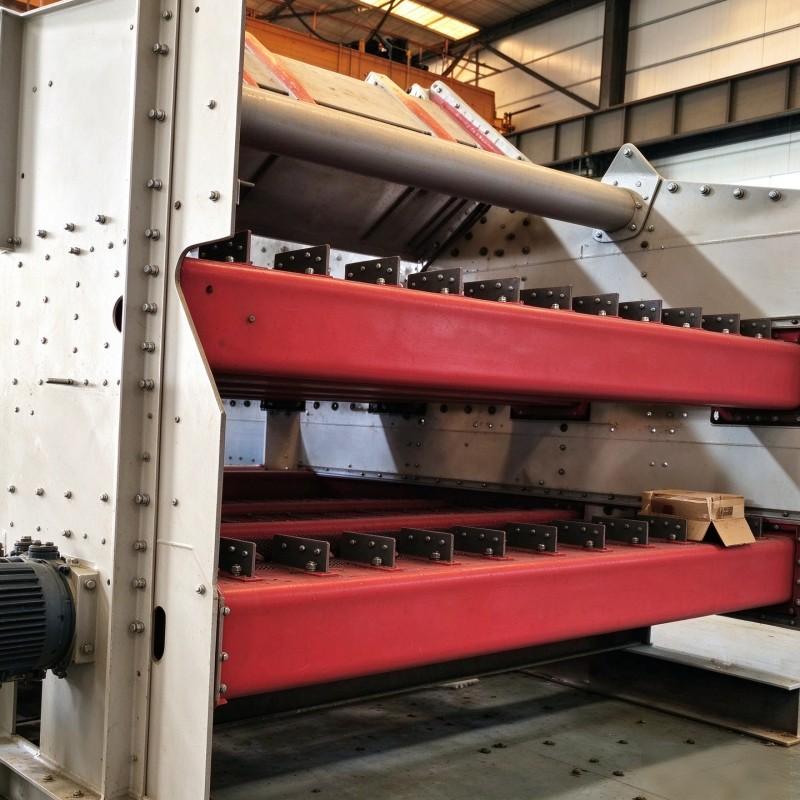
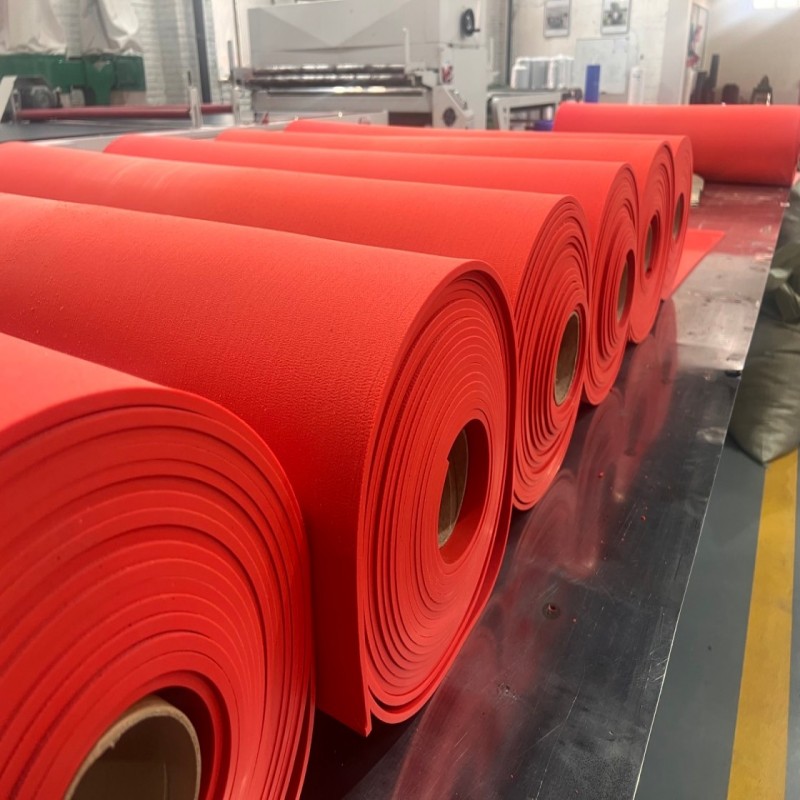
What Specifications Are Required to Customize a Vacuum Belt Filter Rubber Belt?
-
 admin
- 11 Nov, 2026
Quick Answer
Customizing a vacuum belt filter rubber belt takes five specification blocks: dimensions with tolerances you actually mean, the machine interface of grooves, vacuum holes and edge dams, a compound chosen against slurry chemistry and temperature, the process duty data that steers both geometry and rubber, and a verification plan from first article to in-service wear logging. A quotation built on all five returns a belt that fits on the first installation. A quotation built on two returns a shutdown with a story attached.
What Is a Custom Vacuum Belt Filter Rubber Belt Specification?
A specification is the written translation of your machine and your slurry into numbers a manufacturer can build against. The belt itself is the moving seal of a horizontal vacuum filter: rib crests on top carry the filter cloth, grooves between the ribs channel filtrate toward vacuum holes, and the underside slides across wear strips above a vacuum box, where it has to seal well enough that the pump pulls liquid rather than air.
One belt, four simultaneous jobs — fit, seal, drain, survive. The specification exists because no single drawing shows all four. Dimensions cover fit. Groove pitch, hole pattern and edge dams cover seal and drain. Compound properties cover survive. Duty data tells the manufacturer which of the four your machine punishes hardest, and verification closes the loop by proving the finished belt matches the paper. That’s the whole logic of customization in five blocks, and every bad belt story starts with one of the blocks missing.
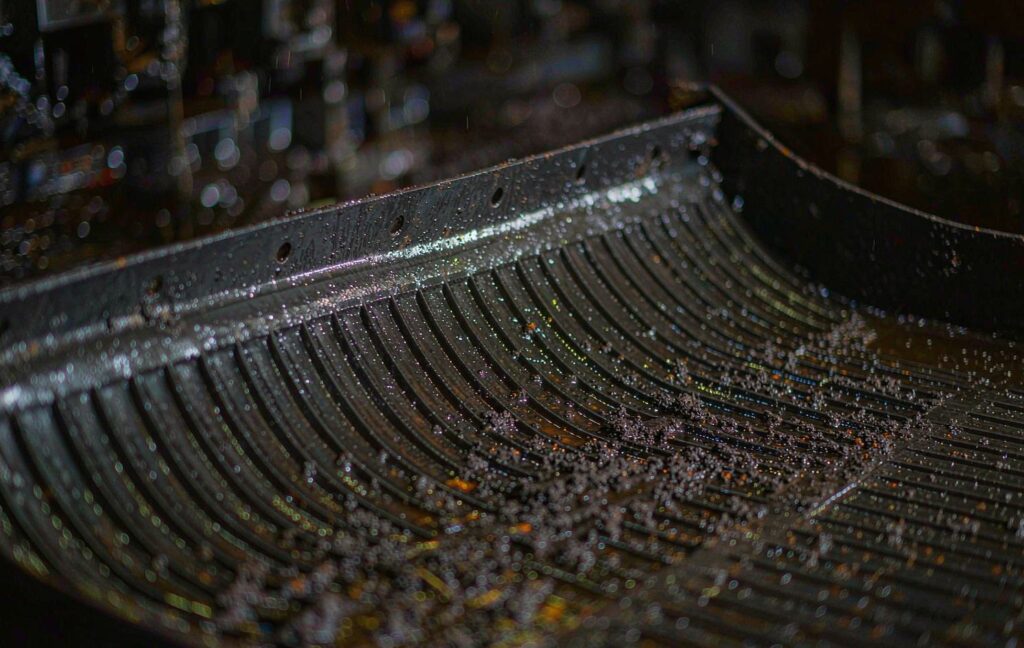
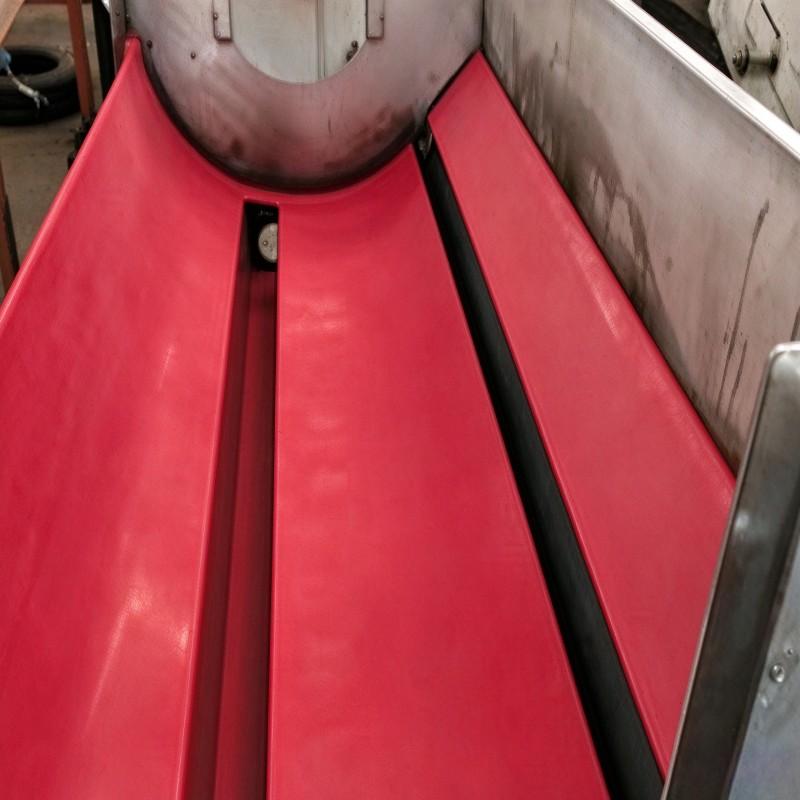
Grooves, holes and ribs are the machine interface — every one of them is a specification line, not a manufacturing detail.
Key Takeaways
✔ Dimensions with tolerances protect fit: pitch length drives tension and tracking, thickness drives running clearance.
✔ The machine interface — groove pitch and depth, hole pattern, hole-to-slot alignment, edge dams — decides whether vacuum reaches the cake.
✔ Compound selection starts at slurry chemistry and temperature; hardness is one property among tensile, elongation and abrasion.
✔ Duty data in the RFQ converts slurry behaviour into belt geometry before anything is cut.
✔ Certificates after cure and a first-article inspection report are the evidence; your dock check is the second gate.
✔ In-service wear logging turns each replacement order into an improvement over the last one.
Summary Table
| Item | Description |
| Function | Moving seal and drainage platform of a horizontal vacuum belt filter, custom-built to specification |
| Material | Natural rubber, NR/SBR blends or special compounds, selected against slurry chemistry and temperature |
| Application | Concentrate dewatering, tailings filtration, coal fines, gypsum, phosphate sands, chemical slurries |
| Service Life | Determined by compound match and duty; monitored through groove depth and rib condition trends |
| Benefits | First-time fit, stable vacuum, predictable tracking, planned replacement, no emergency freight |
Definition
A custom vacuum belt filter rubber belt is a replacement belt manufactured against a written specification rather than selected from a catalogue. The specification has five blocks: belt dimensions and tolerances; the machine interface (grooves, vacuum holes, edge dams); the rubber compound and its measured properties; the process duty the belt will run; and the verification plan that proves conformity. The word “custom” only earns its keep when all five blocks travel with the purchase order — a belt ordered by width and length alone is a guess with an invoice attached.
Working Principle
Vacuum filtration across a horizontal belt looks simple and isn’t. Slurry spreads across the cloth. Vacuum underneath pulls liquid through the cloth and into the grooves. The grooves carry filtrate sideways to holes drilled through the belt, and the vacuum box below collects it through slots that must line up with those holes as the belt moves. Cake forms on top, gets washed, dewatered and discharged; the belt loops around rollers and comes back for another pass.
Every specification item defends one step of that chain. Pitch length tolerance defends tension — on a 30-meter belt, a half-percent length tolerance is 150 millimeters of unplanned stretch, enough to change how the belt seats on the take-up. Thickness defends clearance: a belt even two millimeters over the original can drag on the wear strips, load the drive and run hot. Groove pitch defends drainage path length, which is why fine concentrates want closer pitch than coarse sands. Hole position defends vacuum efficiency, because air drawn through a misaligned hole dries nothing and wastes pump capacity. Edge dams defend deck coverage and absorb the sideways wear that tracking drift creates.
The machine decides most of these numbers, not preference. That’s why the RFQ asks for the filter model, centre distance, roller diameters, take-up travel and the vacuum box slot layout — the belt is the one part that has to agree with all of them simultaneously.
Benefits
A specification-first custom belt returns its effort in ways that don’t photograph well but show up in the maintenance ledger.
Fit is the plainest benefit: a belt that installs first time without shimming, sanding or creative tensioning. Vacuum stability follows, because holes aligned to slots pull liquid across the full deck width instead of leaking air at every third groove. Tracking behaves when length and thickness are right, and tracking is the habit that decides how fast edge dams wear. Wear itself becomes predictable — a compound matched to the liquor abrades at a rate you can log, which converts replacement from an emergency into a calendar entry.
There’s a quieter commercial benefit too. When every belt order carries a specification and a first-article report, disputes end quickly. If a belt arrives wrong, the numbers say so. If it performs badly in service, the wear log says which block was thin. Nobody has to argue from memory.
The market is moving the same direction. In early November 2026, Mexico Business News reported that mining operators across the arid northern basins of the country are sustaining process-water recirculation above 85% through high-density thickening, pressure and vacuum filtration, and dry-stack tailings — duty that loads bespoke filtration requirements onto belts sized for specific slurries. Consolidation is running in parallel: TAKRAF Group completed its acquisition of Madrid-based FSI FILTRACIÓN on 3 November 2026, adding the specialist to its DELKOR liquid/solid separation portfolio. More platforms, more custom duty, thinner margins for specification errors.
Applications
Duties differ, and the specification emphasis moves with them.
Coarse abrasive tailings stress cover thickness and edge dam stock; the failure mode is impact and sliding wear at the edges first. Fine flotation concentrates stress groove pitch and rib stability, because drainage path length and cloth support decide cake moisture. Coal fines bring fatigue duty with gritty carryback attacking the belt underside, so underside wear and tracking belong in the conversation. Gypsum and crystallizing chemical slurries stress groove flushing and compound chemistry — a belt that swells loses its geometry no matter how good its abrasion number is. Hot filtrates need hot-hardness data, not room-temperature certificates.
Where does this filtration stage sit in the plant? Inside the vacuum filter equipment family, within the filtration stage of the concentrator, downstream of dewatering equipment like thickeners and feeding tailings handling downstream. Batch duty that can’t justify a belt filter typically goes to filter presses, and very low moisture targets sometimes pair belt filtration with ceramic filter sectors — useful context before the RFQ goes out. The cloth above the belt is a specification item too; the filter plates and cloths page covers media selection alongside the belt itself.
Material Comparison
| Property | Natural Rubber (NR) | NR/SBR Blend | Special Compounds |
| Abrasion resistance | Good | Very good | Formulation-dependent |
| Flex fatigue life | Very good | Good | Varies with cure system |
| Heat resistance | Moderate | Moderate | Good to excellent |
| Acid / chemical resistance | Poor | Limited | Good, rated per liquor |
| Typical hardness | 60-70 Shore A | 60-70 Shore A | 65-75 Shore A |
| Best duty | General mineral service | Coarse abrasive duty | Hot, oily or acidic filtrate |
No compound wins every row, which is the entire argument for writing chemistry and temperature into the RFQ. Two compounds at the same Shore A can differ enormously in abrasion volume and behave like different materials in the same liquor — the certificate columns above are where that difference becomes visible before money is spent.
Application Comparison
| Duty | Groove Emphasis | Compound Focus | Watch Point |
| Iron ore concentrate | Medium pitch | Abrasion | Rib height trend |
| Fine copper tailings | Close pitch | Abrasion + fatigue | Cloth blinding |
| Coal fines | Medium pitch | Fatigue life | Underside grit |
| Phosphate sands | Wider pitch | Abrasion | Edge dam wear |
| Hot chemical slurry | Per slurry | Chemistry rating | Swelling and geometry |
Read the two tables together and one pattern stands out: specification is duty translation. Any term missing from the RFQ comes back as a default somebody else chose — usually the cheapest one that fits the shipping crate.
Industry Application Matrix
| Industry | Belt Role | Specification Priority |
| Iron ore | Concentrate dewatering | Cover thickness, flatness |
| Copper / lead zinc | Tailings and concentrate | Pitch match, fatigue life |
| Coal washing | Fines dewatering | Underside wear, tracking |
| Phosphate | Sand filtration | Edge durability |
| Chemical / gypsum | Crystallizing feeds | Groove flushing, chemistry |
| Tailings dry stacking | Final dewatering | Moisture stability |
The tailings row is growing fastest, and not by accident. Water-constrained jurisdictions keep pulling dewatering earlier in the flowsheet, and every filtered-tailings project needs belts whose moisture output is stable enough for stacking — a specification outcome, not a lucky one.
Selection Guide
Work through the blocks in order, and let each one constrain the next.
Machine first: filter make and model, belt width, centre distance, roller diameters, take-up travel, vacuum box slot layout, wear strip condition. Then process: feed solids and size distribution, temperature, filtrate chemistry, wash regime, vacuum level, tonnage, target cake moisture. Then rubber: compound family options, hardness band, tensile, elongation, abrasion volume — with the reasoning connecting each choice to the duty written down, not implied.
Three supplier behaviours should end a selection conversation early. A quote returned without asking for the vacuum box layout means the holes will be guessed. A compound offered as a single hardness number means no family discussion happened behind it. No first-article inspection offered means nobody plans to prove conformity before shipment. Any one of the three is enough; the checklist in the buyer guide on choosing the right rubber belt covers the rest.
Two cross-checks save money later. If the feed has been drifting wet or coarse, read the guide on wet hydrocyclone underflow before blaming the belt — a classification problem wears belts, and no specification fixes classification. If upstream cyclone parts look suspect, the guide on hydrocyclone wear explains how the same material-selection logic applies there. And if cake handling downstream keeps slipping, the belt tracker hardware page is worth a look, because a belt that filters perfectly and conveys badly still makes the shift miserable.
Procurement Guide
The RFQ should carry everything the manufacturer needs and nothing that forces guessing.
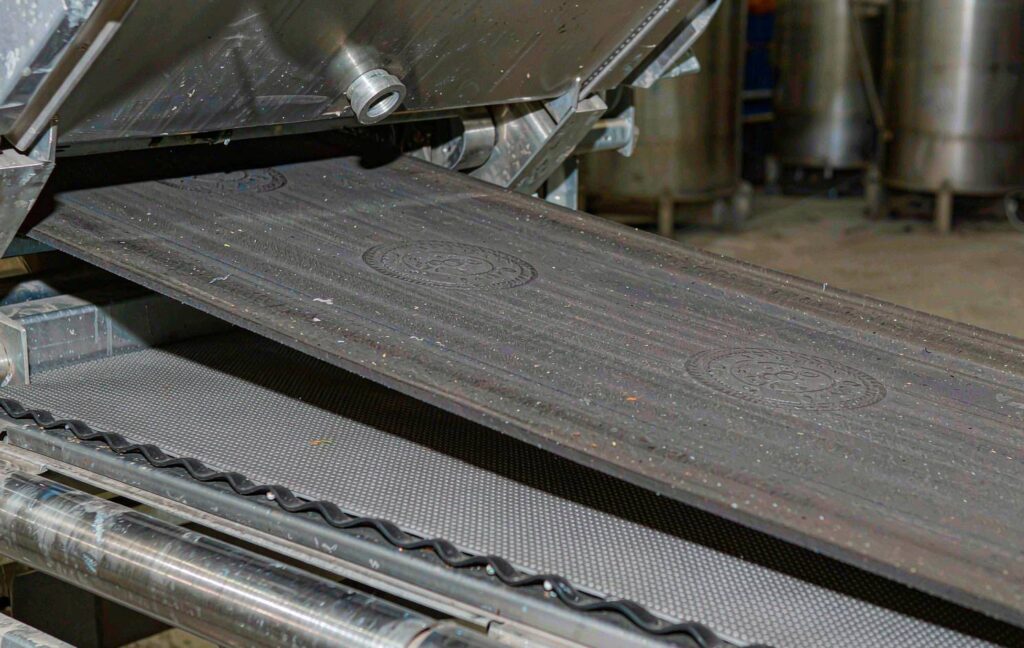
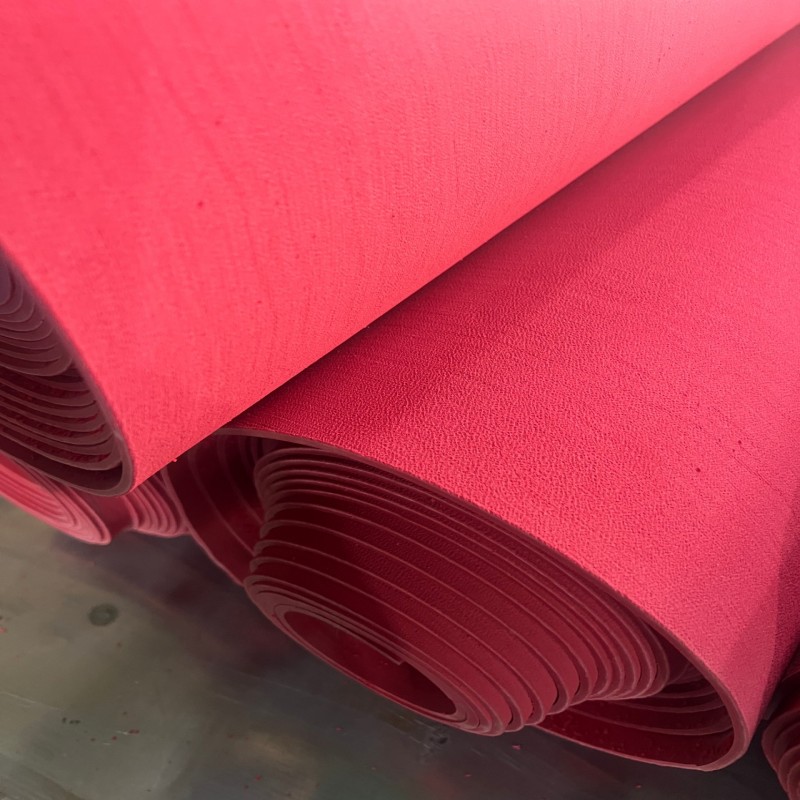
The seal line beneath the belt is where thickness and flatness tolerances earn their keep — clearance errors show up here first.
Required information: filter make and model, belt dimensions with tolerances, groove and hole drawings or an old belt sample, vacuum level, slurry temperature and chemistry, feed data, tonnage, wash regime, packaging constraints, destination port. Questions that separate suppliers from vendors: Can you manufacture from drawings with a first-article inspection report? Can you supply compound certificates with hardness, tensile, elongation and abrasion data taken after cure? Can you reproduce OEM hole patterns against our vacuum box layout? What are your MOQ, lead time, packaging and export experience? Can you give a wear-life expectation tied to a measurement method we run ourselves?
Lead time honesty matters in both directions. A straightforward replacement against an existing drawing moves fastest; a belt needing a groove redesign or a special compound adds curing and inspection time that can’t be negotiated away. Ask for the lead time against the confirmed specification, not against the purchase order date, and include shipping — a rolled belt ships differently than buyers expect, and port handling punishes unplanned cargo.
Failure Analysis
| Problem | Possible Cause | Recommended Solution |
| Belt too long or short on arrival | Loose length tolerance; take-up data missing | Tighten tolerance; confirm centre distance and take-up travel |
| Vacuum loss along deck | Hole pattern misaligned with box slots | Require first-article hole report; verify against slot layout |
| Belt drags on wear strips | Thickness over tolerance; clearance unstated | Restate thickness limits; check wear strip condition |
| Rapid edge dam wear | Tracking drift; dam compound too soft | Fix tracking hardware; specify tougher dam compound |
| Grooves squash shut | Compound too soft for vacuum load | Move hardness band up; add rib stability data |
| Rib root cracking | Compound too stiff for roller radius | Review radii; select higher-flex compound |
| Belt swells in filtrate | Wrong compound family for chemistry | Restart selection at chemistry, not hardness |
| Uneven cake moisture | Mixed causes: pitch, holes, vacuum dips | Measure first; then correct the specification item |
Almost every row traces back to a specification block that was thin rather than a factory that was careless. That’s the useful part: these failure modes are purchasable against, one RFQ at a time.
Maintenance Guide
Daily: watch tracking and edge contact while the filter runs; listen for new friction sounds near the deck. Weekly: trend cake moisture and wash coverage; inspect edge dams for chunking. Monthly: measure groove depth and rib condition at the marked stations and log the numbers; press a durometer into the cover at the same stations and log that too. Quarterly: compare the wear trend against the replacement trigger agreed with the supplier.
Replacement works best as a number, not a feeling. When rib height loss crosses the agreed threshold, the belt comes off at the next planned shutdown instead of waiting for cake moisture to force the issue mid-campaign. Keep one spare on site for every critical filter — a rolled belt costs shelf space, an unplanned stop costs a production run. And when the wear log contradicts the specification’s expectations, feed it back into the next order. The plants that do this buy belts that fit better every time; the plants that don’t keep buying the same surprise.
Case Study
Customer Type: Copper concentrator, concentrate filtration duty
Ore Type: Copper flotation concentrate, fine particle size
Operating Conditions: Horizontal vacuum belt filter, moderate vacuum, warm neutral filtrate
Problem: A replacement belt installed from a two-line purchase order — width and length only — ran with visible vacuum dips and patchy cake. The pump got adjusted, then the deck got blamed. Nobody had a specification to check the belt against.
Solution: Dimension and hole-pattern checks against the deck layout found hole rows offset from the vacuum box slots by more than a hole diameter. A replacement was ordered on a full five-block specification with a first-article hole report required before shipment.
Result: The second belt sealed on the first run. Vacuum held steady across the full width, cake moisture returned to its earlier band, and the plant adopted the five-block sheet as standard for every belt order since.
The case is engineering logic, not a performance guarantee — your feed and machine will decide the numbers.
FAQ
What is the minimum information needed to quote a custom belt?
Filter make and model, belt width and pitch length, thickness, groove pitch and depth, hole pattern, vacuum level, and the slurry basics — solids, size, temperature, chemistry. That set produces a serious quotation with reasoning behind it. Less than that produces a price that gets revised after first article, which is the slow way to buy anything.
Can a belt be made from only the old one as a sample?
Yes. A worn belt still yields width, pitch length, thickness, groove geometry and hole positions, and a competent manufacturer rebuilds the drawing while flagging where wear has distorted the original dimensions. Add the machine model if available, because it cross-checks the reconstruction against known deck layouts for that filter family.
Which tolerances matter most on a replacement belt?
Pitch length and hole-to-slot alignment first. Length error changes tension and tracking; hole misalignment bleeds vacuum at every slot it crosses. Thickness runs close behind because it sets running clearance over the wear strips. Width and edge dam dimensions are more forgiving but still deserve stated limits.
Why do compound certificates matter more than the hardness number?
Because hardness alone is nearly blind. Two stocks at 68 Shore A can sit at opposite ends of the abrasion scale and behave differently in the same liquor. Tensile, elongation and abrasion volume to DIN ISO 4649, measured after cure, are what separate a mineral-duty compound from a generic rubber — and the certificate is where that becomes visible.
How does slurry chemistry change the specification?
It picks the compound family before anything else is decided. A natural rubber blend that handles neutral mineral slurry well will swell badly in a hot solvent-bearing filtrate, and no hardness number rescues the geometry once swelling starts. Chemistry and temperature belong in the RFQ even when the geometry feels like the hard part.
Should edge dam compound differ from the cover compound?
Often, yes — especially on machines with a history of edge wear or tracking drift. The dam takes sideways sliding the cover rarely sees, and specifying a tougher dam compound costs little while extending usable belt life. Write the dam stock into the specification instead of leaving it to the factory default.
Why insist on a first-article inspection report?
Because it converts the specification from a promise into a measurement. Dimension reports, groove depths, hole positions against the deck layout and hardness readings after cure — all taken on the actual finished belt — catch errors while they’re still a shipping exchange rather than a shutdown. Suppliers who resist the report are telling you something.
What should feed the next belt order?
Your wear log. Groove depth and rib condition trends at marked stations show whether the compound band and groove design actually survived the duty, and they turn the next RFQ from a repeat into an improvement. Plants that order from logs replace belts on schedule; plants that don’t keep buying the same surprise.
Conclusion
A custom vacuum belt filter rubber belt is built from five blocks, and the blocks are not optional. Dimensions with honest tolerances protect fit and tracking. Grooves, holes and edge dams protect the vacuum path and the drainage the whole machine depends on. The compound protects geometry against chemistry, temperature and abrasion. Duty data in the RFQ steers every other decision toward your slurry rather than a catalogue average. Verification — first article, dock check, in-service logging — converts each of those promises into measurements before and after the belt meets the machine. Send all five and you get a belt that drops onto the deck and behaves. Send two and you get a quotation, a shipment, and a story about the shutdown in between.
Related Articles
Related Products
- Vacuum Filter
- Filter Plates & Cloths
- Ceramic Filter Plates & Sectors
- Filter Presses
- Thickeners
- Belt Tracker
Related Technical Guides
- Hydrocyclone Underflow Too Wet: 6 Causes & Fixes
- Hydrocyclone Wear: Root Causes & Material Solutions
- Fine Screening Efficiency with Polyurethane Screen Panels
- Flotation Cell Rotor and Stator Wear Parts Guide
- Rotor & Stator in Mechanical Flotation Cells
Related Buyer Guides
- How Do I Choose the Right Rubber Belt for a Vacuum Belt Filter?
- Which Manufacturer Offers High-Quality Polyurethane Tufflex Wire Screens?
Related Comparison Articles
- Polyurethane Screen vs Rubber Screen vs Wire Mesh
- Self-Cleaning Screen vs Traditional Woven Wire Mesh
Contact
Contact: Annie Lu
Email: annie.lu@huataogroup.com
WhatsApp / WeChat: +86 18032422676
Website: www.tufflexscreen.com
 admin
personal profile