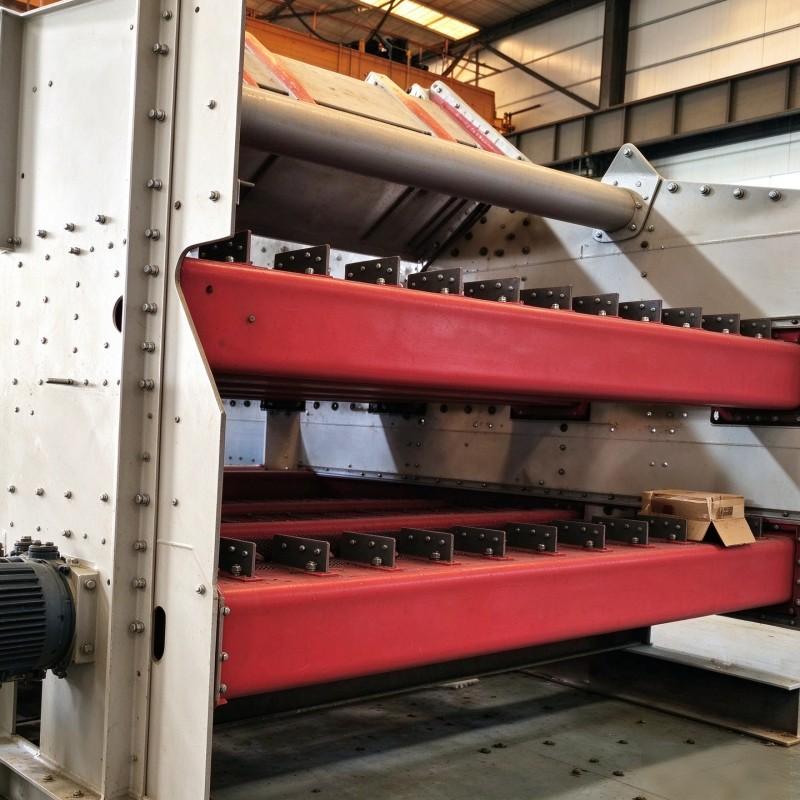
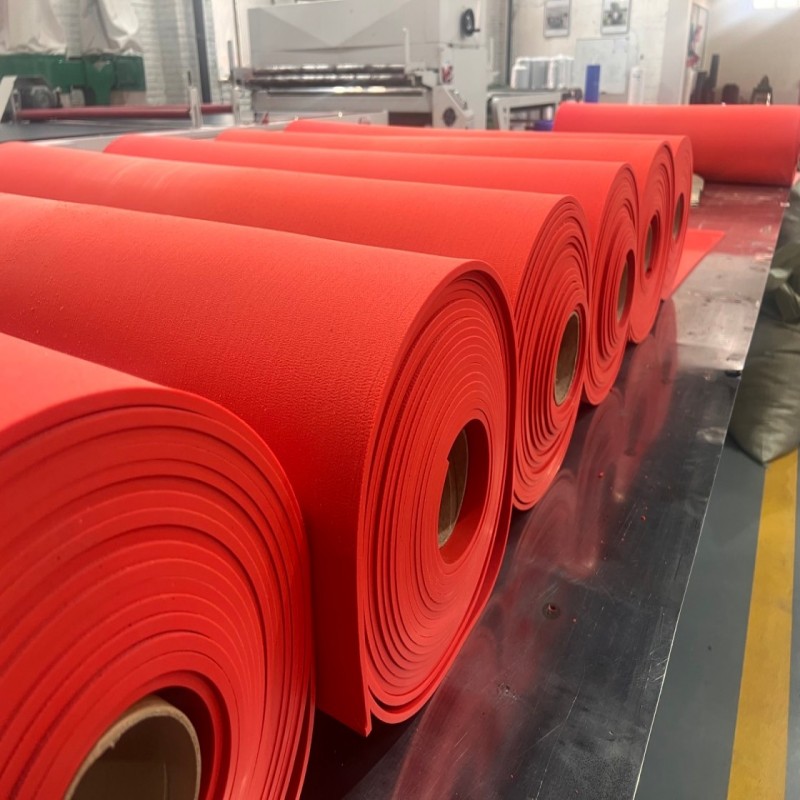
What Rubber Hardness Is Suitable for a Vacuum Belt Filter Belt?
-
 admin
- 10 Nov, 2026
Between 60 and 75 Shore A, and the duty picks the point. Coarse abrasive slurries on machines with generous roller diameters suit 70–75; fine sticky feeds and tight radii suit 60–65; most mixed mining duty lands at 65–70. Hardness trades three ways — groove stability, deck sealing and flex life all move in different directions as the number climbs — so hardness is chosen against the failure mode your machine punishes hardest, then verified with a durometer after cure and measured again in service.
What Is Rubber Hardness on a Vacuum Belt Filter Belt?
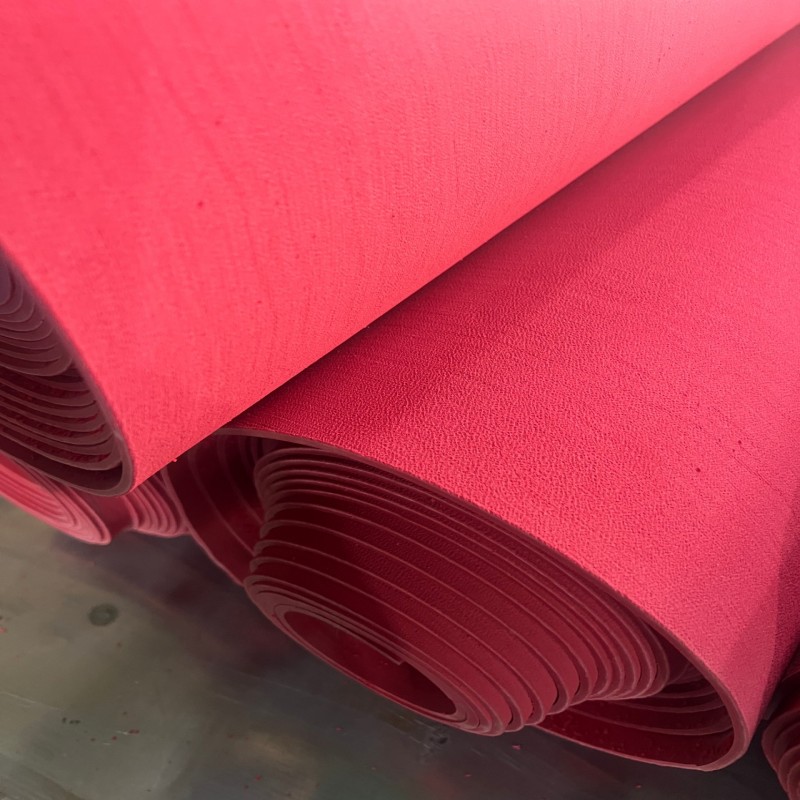
Shore A hardness is the measure of how much a cured rubber surface resists indentation, and on a vacuum belt filter belt it is the number that quietly governs how the whole machine behaves. The cover compound — usually a natural rubber or SBR blend filled with carbon black — sits between the filter cloth above it and the vacuum deck below it, doing three jobs at once: supporting the cloth, sealing the deck line, and carrying filtrate through grooves and holes down to the vacuum slots. Hardness decides how well it does all three.
It’s a balancing number, not a maximum. The belts that last longest aren’t the hardest or the softest; they’re the ones whose hardness band was chosen against a specific machine geometry and a specific slurry, with tensile strength, elongation and abrasion volume specified alongside.
Key Takeaways
✔ Ribs keep their shape when the compound carries enough stiffness for the vacuum load
✔ Seals stay tight when the cover retains enough softness to conform to the deck
✔ Splices survive when bending stress matches the roller diameters the machine actually has
✔ Applied from copper and lead-zinc concentrates to coal fines and filtered tailings duty
✔ Measured in service with a handheld durometer, turning aging into a maintenance schedule
Summary Table
| Item | Description |
| Function | Cloth support, deck sealing and filtrate drainage for horizontal vacuum belt filters |
| Material | NR/SBR or EPDM-based compounds; hardness set by filler loading and cure |
| Application | Concentrate filtration, tailings dewatering, coal fines, chemical sludge duty |
| Service Life | Governed by wear rate, flex cycles and aging drift measured in Shore points |
| Benefits | Stable drainage, tight vacuum seal, schedulable replacement instead of surprises |
Definition
Shore A hardness quantifies resistance to indentation under a standard durometer probe. In vacuum belt filter practice, the cover compound’s hardness rises with carbon black loading during mixing, and it interacts with every surface the belt touches. A belt at 70 Shore A and a belt at 62 Shore A behave like two different machines wearing the same nameplate: one holds groove geometry but bridges the deck, the other seals beautifully but surrenders rib section under vacuum load.
Hardness is also the one belt property a plant can re-measure in service with a ten-dollar instrument. That makes it the anchor for condition monitoring — the drift in Shore points at fixed stations is a direct read on aging, and aging is what eventually undoes splice and seal assumptions. The belt operates within the vacuum filter family of equipment, downstream of the dewatering stage equipment that conditions its feed.
Working Principle
A horizontal vacuum belt filter pulls liquid through a cake as the belt slides over a vacuum box, inside the filtration stage of the concentrator flowsheet. The belt’s cover compound sits at the centre of three simultaneous mechanical conversations, and hardness shapes each one.
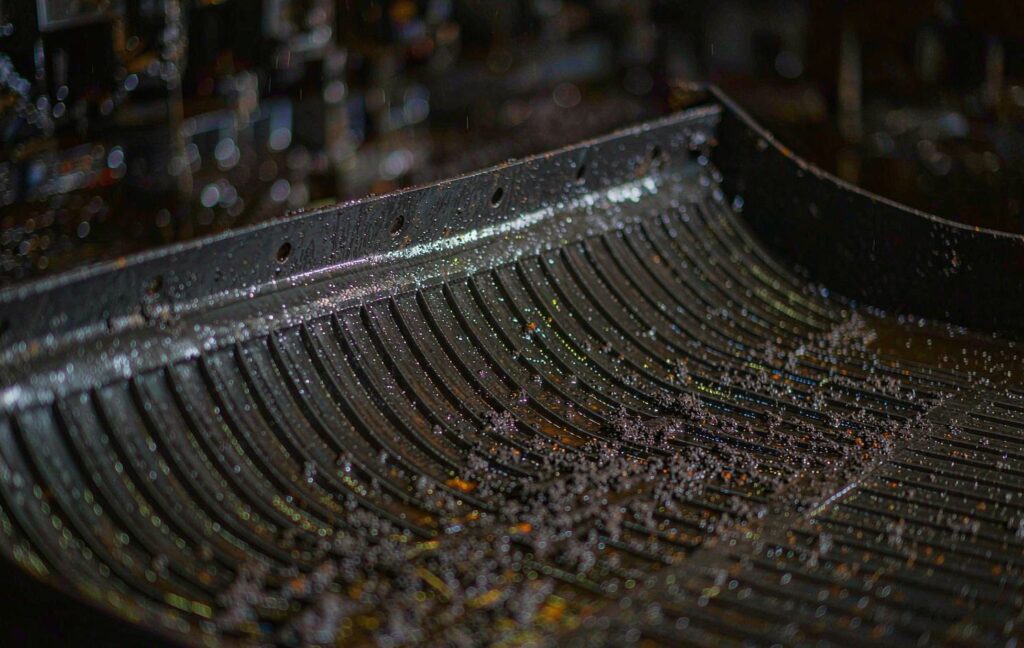
Groove stability. Transverse grooves in the cover carry filtrate sideways to holes drilled down to the vacuum slots, while the rib crests between them carry the filter cloth. Under cloth tension and vacuum loading, a soft compound compresses: crests flatten, channels narrow, and the drainage layer loses volume where traffic is heaviest. Over months, that shows up as slower cake formation and wetter discharge, with the vacuum gauge looking perfectly normal because air passes through open holes regardless.
Deck sealing. The belt underside runs across wear strips over the vacuum box slots. Conformability at that contact line is a hardness property. Too hard, and the belt bridges small deck irregularities like a stiff plank, leaking air into the vacuum system; effective pressure at the cake drops even as the pump works harder. Too soft, and the cover wears quickly under sliding friction, thinning exactly where the seal needs thickness.
Flex life. The belt rounds head and tail rollers thousands of times per day. Stiffer compounds raise bending stress in the carcass and at the splice, and on machines with small roller diameters the over-hard belt usually dies by cracking — rib root first, splice second — long before its abrasion advantage pays off. Flex cracks at the rib root leak vacuum locally and admit slurry to the carcass, and from there the failure accelerates on its own.
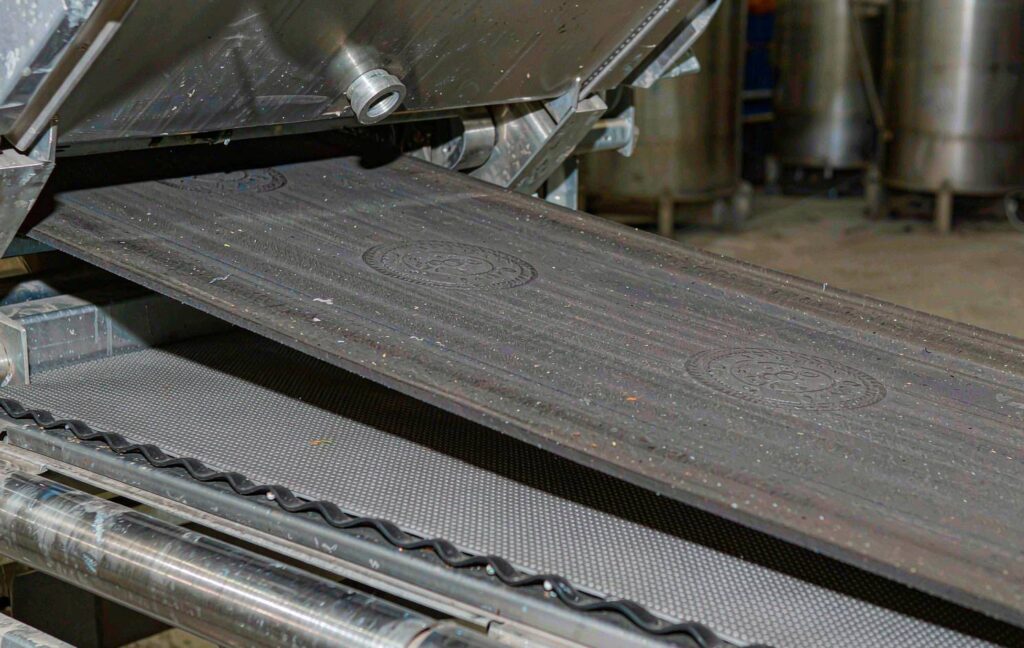
Grooves, holes and hardness form one system — the compound decides whether this profile survives its campaign.
Benefits
Choosing the hardness band deliberately pays back in ways a purchase order line can’t show. Filtration stays consistent because ribs hold their section through the campaign. Vacuum stays productive because the seal line contacts the deck instead of hovering over it. Belt life reaches its planned end because neither wear nor cracking gets to decide the outcome alone. Maintenance becomes schedulable: durometer readings at fixed stations turn compound aging into a trend line, and the replacement lands in a planned stop rather than a production shift.
There’s a diagnostic dividend too. When cake moisture drifts and the gauge holds steady, the belt is the usual suspect — rib deformation, seal bridging or groove blinding. A hardness log beside rib height measurements separates those causes in one inspection. Plants that skip the log end up rebuilding vacuum systems to fix rubber problems.
Applications
Duty decides where in the 60–75 band the belt should sit, and the feed decides the duty.
Copper, lead-zinc and phosphate concentrate filtration runs fine, often sticky feeds that reward conformability — mid-band, leaning soft when roller radii are tight. Iron ore concentrate and filtered tailings duty carry coarse, sharp particles under high tonnage, favouring 70–75 Shore A where machine geometry allows. Coal fines blend abrasion with feed swings, which makes 65–70 the pragmatic default. Chemical sludge and gypsum duties face gentle abrasion but aggressive liquor, so the compound family gets chosen first and hardness becomes a secondary setting. Feed sizing from dewatering hydrocyclones or screens decides how much coarse abrasion actually reaches the deck. Feed conditioning upstream matters as much as any of this: thickeners holding underflow density steady, and flocculant dosing systems landing slurry evenly across the deck, protect the belt in ways no compound can. Where the feed leaves the machine, tailings handling equipment inherits whatever moisture the belt delivered, and dry-stack circuits built around tailings dry discharge systems lean hardest on belt condition.
Material Comparison
| Property | NR / SBR Blend | EPDM-Based Compound | Soft Band 60-65 Shore A | Hard Band 70-75 Shore A |
| Abrasion resistance | Good to excellent | Moderate | Lower | Highest |
| Heat aging | Fair | Excellent | Slower hardening | Crack-prone when over-specified |
| Chemical tolerance | Moderate | Good across acids and alkalis | Swell-prone if family mismatched | Stiffer swell response |
| Flex fatigue | Good at moderate hardness | Good | High flexibility | Highest bending stress |
| Best duty | General mining filtration | Hot or aggressive feeds | Fine sticky feed, tight rollers | Coarse abrasive slurry |
Two cautions belong here. First, two compounds at identical Shore A can differ enormously in DIN abrasion volume — the hardness number alone is half a datasheet. Second, compound family beats hardness number whenever temperature or chemistry is in play: an EPDM stock and an NR blend at the same Shore reading age like different materials in the same liquor. The cloth above the belt deserves the same discipline, covered on the filter plates and cloths page.
Application Comparison
| Scenario | Band | Reasoning | Risk When Ignored |
| Iron ore concentrate, large rollers | 70-75 Shore A | Abrasion dominates, geometry tolerates stiffness | Fast cover wear if too soft |
| Copper flotation concentrate | 65-70 Shore A | Fine feed, standard machine layout | Rib deformation, wet cake |
| Coal fines dewatering | 65-70 Shore A | Mixed abrasion and feed swings | Tracking drift or accelerated wear |
| Fine chemical sludge | 60-65 Shore A | Chemistry first, gentle flexing | Seal bridging if hardened |
| High-vacuum duty | 68-72 Shore A | Ribs must hold shape under stronger pull | Vacuum dips from deck gaps |
| Filtered tailings, dry stacking | 68-75 Shore A | Coarse cake, high load per pass | Groove collapse under load |
Industry Application Matrix
| Industry | Feed | Belt Priority | Guidance |
| Iron ore | Coarse abrasive concentrate | Cover wear resistance | 70-75 Shore A |
| Copper / lead / zinc | Fine concentrates | Seal quality and drainage | 65-70 Shore A |
| Coal preparation | Fines and refuse | Balanced wear and tracking | 65-70 Shore A |
| Phosphate | Slimes, sticky feeds | Conformability, wash efficiency | 60-68 Shore A |
| Chemical processing | Sludges, gypsum | Compound family first | Per compound data |
| Tailings dry stacking | Coarse filtered tailings | Rib stability under load | 68-75 Shore A |
Selection Guide
Start from the machine, because geometry is the one thing you can’t change later. Roller diameters and spacing set the bending budget; vacuum level and deck condition set the stiffness the seal line tolerates; feed particle size and solids set the abrasion load. With those three answers written down, the hardness band narrows to a point or two, and the compound family narrows further once feed temperature and chemistry enter the conversation.
Then check the interactions. Deep grooves on soft compound lose drainage to rib deformation; the same grooves on over-hard stock crack at the root. Small radii punish hard belts; high vacuum punishes soft ribs; hot feed shifts the effective hardness upward in service, so the certificate number and the operating number are not the same number. Where requirements collide, geometry wins.
Verification closes it. Specify the band as a range with reasoning, demand hardness readings taken after cure on the finished belt, and ask for tensile, elongation and DIN abrasion volume on the same datasheet. The full ordering checklist lives in the buyer guide on choosing the right rubber belt for a vacuum belt filter; feed-side swings that change what the belt receives are diagnosed in the wet hydrocyclone underflow guide; and alternative fine-duty technology is worth a look on the ceramic filter plates and sectors page before the specification locks.
The wider market is raising the stakes on exactly these decisions. On 6 November 2026, Eldorado Gold announced that the first pair of tailings filter presses at its Skouries copper-gold project had started operating, with remaining units due to complete commissioning the following month — filtered tailings being the design choice the site’s whole water strategy rests on. In the same week, Codelco suspended processing at its Andina division in Chile after a tailings transport obstruction released material that may have reached a river. Filtration capacity is expanding, failures are making headlines, and the compound decisions inside each machine are no longer private maintenance matters.
Procurement Guide
A hardness specification that survives procurement contains more than a number:
- Shore A band, for example 68 ± 5, with the reasoning recorded against failure modes.
- Tensile strength, elongation at break, and abrasion volume to DIN ISO 4649.
- Compound family with stated temperature and chemistry limits.
- Hardness readings taken after cure, on the finished belt, at defined stations.
- First-article inspection covering groove depth, hole alignment and cover hardness.
- A service measurement plan: durometer stations, rib height stations, intervals, triggers.
Buyer questions that separate suppliers from vendors: Can you manufacture to our filter drawing including the vacuum hole pattern? Will hardness and abrasion certificates come with the cured belt? What hardness drift should we expect in the first year at our feed temperature? Which failure mode would you watch first on our machine, and why? A supplier who has studied the duty answers the last one without hesitation; one selling by hardness number alone stalls.
Failure Analysis
| Problem | Possible Cause | Recommended Solution |
| Rib root cracking | Over-hard compound or over-deep grooves | Move down the band, review groove section |
| Grooves squashing shut | Compound too soft for vacuum load | Raise hardness band, verify rib width |
| Vacuum dips, steady gauge | Seal bridging from over-hard cover | Check deck flatness, soften band slightly |
| Rapid cover wear | Compound too soft for abrasive feed | Harder band plus DIN abrasion evidence |
| Splice separation | Bending stress on small roller radii | Verify geometry, soften compound or resize |
| Tracking drift over months | Heat hardening across the cover | Log hardness drift, schedule replacement |
| Glazed shiny patches | Local hardening against wear strips | Inspect deck, measure hardness at patch |
Maintenance Guide
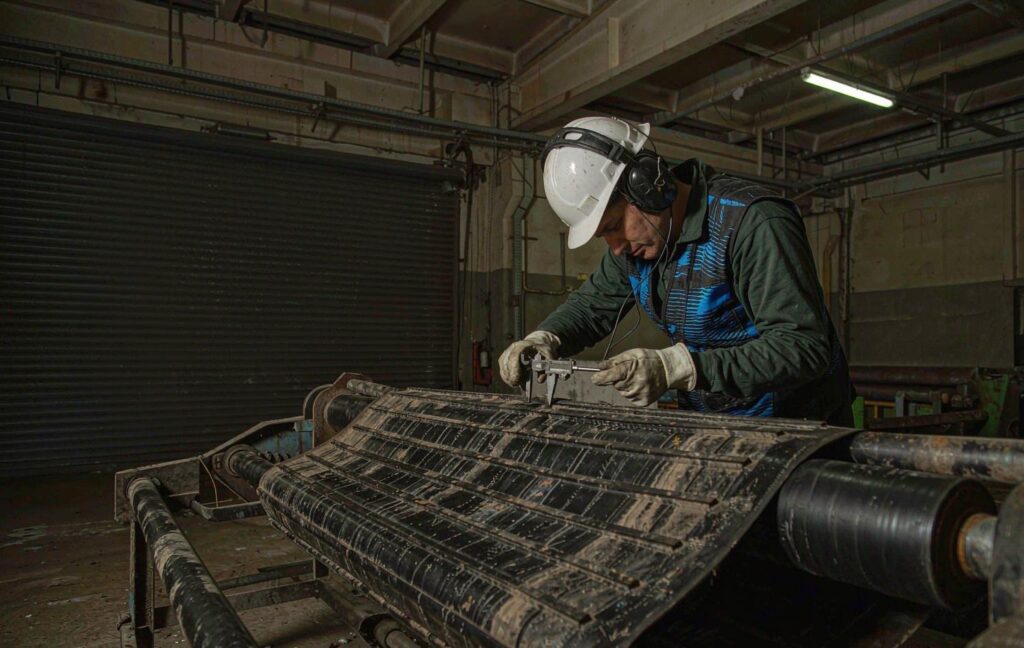
Mark four to six durometer stations along the belt and measure monthly, logging values beside rib height from the same stations. A few points of drift over months is normal aging; a step change means the compound has aged past the assumptions behind the splice and the seal line, and replacement should move up the schedule before cracks force the issue. Watch the cover where it rides the wear strips — glazing is hardening you can see, and it usually arrives with intermittent vacuum dips that get blamed on the pump. Keep wash water warm enough to flush grooves without heat-aging the surface, and don’t let cake dry on the deck between shifts; dried fines grind the surface unevenly and ruin the hardness profile’s meaning. When the belt comes off, compare its hardness map with the original certificate — the difference is the aging budget your machine applies, and the next compound choice should carry it forward. The tracking and edge-protection hardware on cake conveyors does a different job on the same principle, covered under belt tracking equipment.
Rib height and durometer readings from the same stations tell one story about the compound’s condition.
Case Study
Customer Type: Copper concentrator, concentrate filtration circuit
Ore Type: Copper flotation concentrate, fine particle size
Operating Conditions: Horizontal vacuum belt filter, moderate vacuum level, warm feed slurry
Problem: Cake moisture crept upward across months while the vacuum gauge held steady. Operators adjusted the pump repeatedly, suspecting the vacuum system, without lasting effect.
Solution: Inspection at marked stations found rib crests deformed and cover hardness reading below the specified band in service. A replacement belt was manufactured to the original drawing with the hardness band raised two points, DIN abrasion data attached, and a durometer station plan agreed before delivery.
Result: Rib geometry held through the planned campaign, cake moisture returned to its earlier stable band, and the vacuum system stopped being blamed for a compound problem. The plant now logs hardness beside rib height every month.
Presented as engineering logic rather than a performance guarantee — your feed and machine will write their own numbers.
FAQ
Is a harder belt always longer lasting?
No. Hardness improves abrasion resistance but raises bending stress at rollers and weakens deck sealing. On machines with small roller diameters, over-hard belts typically fail by rib or splice cracking long before the wear advantage pays for itself. Life is set by the weakest of the three behaviours — wear, sealing, flex — not by the strongest one.
What happens when the belt is too soft?
Ribs deform under cloth tension and vacuum, narrowing drainage channels and slowing cake formation. The cover wears faster against the deck, and the edge dam can squash enough to let slurry creep toward the belt edge. Wet cake usually arrives before anything breaks, which makes soft-compound failure quieter and more expensive than it looks.
Which hardness suits mixed mining duty?
Between 65 and 70 Shore A for most mixed feeds, with the final point set by roller radii, vacuum level and slurry abrasiveness. Coarse sharp feeds with generous rollers go higher; fine sticky feeds or tight radii go lower. Ask the supplier to show which failure mode drove the band — the reasoning is worth more than the number.
Can plants measure hardness themselves?
Yes, cheaply. A handheld Shore A durometer, four to six marked stations and a monthly log produce a hardness trend for the belt. Read the cover rather than the edge, compare against the delivery certificate, and treat the trend as the useful signal: drift predicts splice stress and seal wear long before cake reports move.
Why does vacuum drop while the pump tests fine?
The pump isn’t the only seal in the circuit. An over-hard belt bridging an uneven deck leaks air at the vacuum box contact line, and effective pressure at the cake drops even though the gauge looks acceptable. Check belt hardness, deck flatness and wear strip condition before rebuilding the vacuum system — the cause is often rubber, not machinery.
How does heat change hardness in service?
Most compounds harden as they age in heat, so a belt specified at room temperature runs harder at warm feed temperatures than its certificate suggests. Choose a heat-tolerant compound family first for hot duties, set the band with the operating shift in mind, and ask the supplier for hot-hardness data instead of accepting assumptions.
What certificates should accompany a new belt?
Hardness readings on the cured finished belt at defined stations, tensile strength, elongation at break, abrasion volume to DIN ISO 4649, and the compound family with temperature and chemistry limits. Certificates taken on uncured stock flatter everyone and verify nothing. Match the certificate stations to the stations you’ll measure in service.
How do hardness and groove design interact?
They share one section of rubber. Soft compounds deform ribs and shrink channels; over-hard compounds keep shape but concentrate flex stress at the groove root where cracks start. When a supplier proposes deeper grooves, ask how the hardness recommendation changed with them — a groove redesign that ignores hardness redesigns nothing that matters.
Conclusion
Rubber hardness on a vacuum belt filter belt is a balance point, not a maximum. Between 60 and 75 Shore A, harder covers protect ribs and resist abrasive slurry, softer covers seal the deck and survive tight radii, and the duty — feed, vacuum level, roller geometry, temperature — picks the point where the belt should sit. Hardness never travels alone: compound family, tensile, elongation and DIN abrasion volume complete the specification, certificates count only when taken after cure, and the number that drives maintenance is the drift measured on the machine itself. Specify the band with reasoning, verify the delivery with a durometer, log the trend at fixed stations, and the belt becomes a scheduled item instead of a recurring wet-cake mystery.
Related Articles
Related Products
- Vacuum Filter
- Filter Plates & Cloths
- Ceramic Filter Plates & Sectors
- Filter Presses
- Thickeners
- Belt Tracker
Related Technical Guides
- Hydrocyclone Underflow Too Wet: 6 Causes & Fixes
- Hydrocyclone Wear: Root Causes & Material Solutions
- Fine Screening Efficiency with Polyurethane Screen Panels
- Flotation Cell Rotor and Stator Wear Parts Guide
- Rotor & Stator in Mechanical Flotation Cells
Related Buyer Guides
- How Do I Choose the Right Rubber Belt for a Vacuum Belt Filter?
- Which Manufacturer Offers High-Quality Polyurethane Tufflex Wire Screens?
Related Comparison Articles
- Polyurethane Screen vs Rubber Screen vs Wire Mesh
- Self-Cleaning Screen vs Traditional Woven Wire Mesh
Contact
Contact: Annie Lu
Email: annie.lu@huataogroup.com
WhatsApp / WeChat: +86 18032422676
Website: www.tufflexscreen.com
 admin
personal profile