Why Is a Stacks Sizer PU Mesh Panel Blinding During Wet Screening?
-
 admin
- 10 Nov, 2026
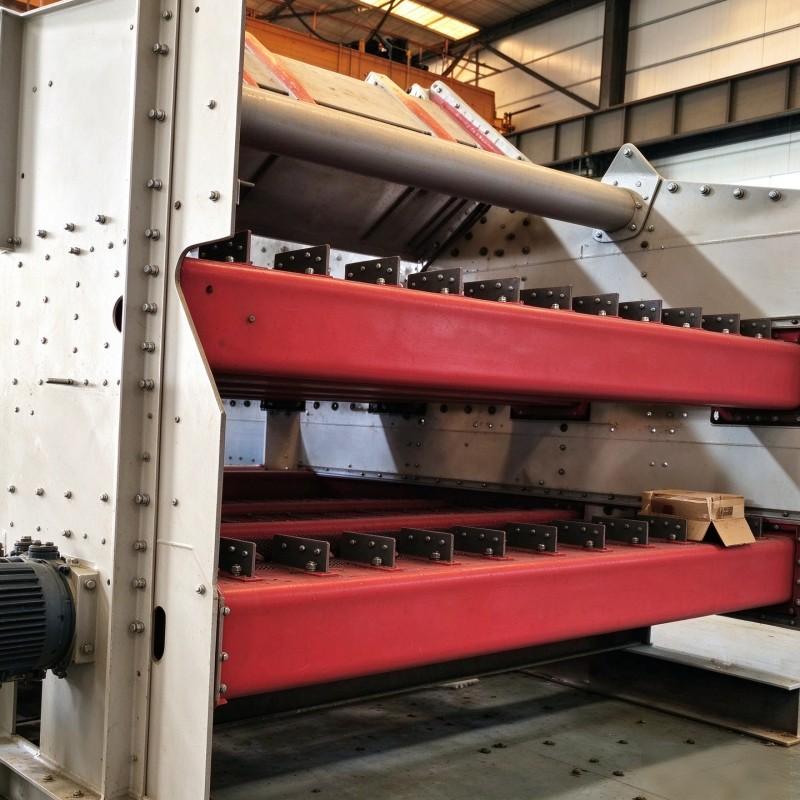
A Stacks Sizer polyurethane mesh panel can blind during wet screening when fine particles, clay and near-size material stick to the panel or become trapped in its apertures. Contributing factors include high feed concentration, poor water distribution, unsuitable aperture geometry, excessive bed depth, incorrect vibration settings and worn panels. Blinding is not necessarily a sign that the PU material is defective — it is usually the interaction between feed characteristics, water conditions, aperture design and screen operation.
Key Takeaways
-
Blinding and pegging are different. Blinding is a film of adhered fines; pegging is discrete particles wedged in apertures.
-
Process causes come first. Clay, spray distribution, feed rate and bed depth account for most Stack Sizer blinding.
-
Blocked nozzles mimic panel failure. A localised blind zone under a blocked spray nozzle looks like a defective panel.
-
Upstream changes matter. A shift in GRINDING performance changes what reaches the deck.
-
Panel design is the second lever. Aperture taper, slot orientation, hardness and thickness matter after process conditions are correct.
-
Extra water is not a fix. Excess water changes slurry behaviour and affects downstream processing.
Summary Table
| Item | Description |
|---|---|
| Function | Fine wet screening on multi-deck Stack Sizer machines |
| Material | Polyurethane mesh panels, typically fine-aperture with tapered or relieved openings |
| Aperture | Square, rectangular or slotted; orientation matched to the duty |
| Application | Fine classification, desliming, wet sizing in mineral processing |
| Service Life | Affected by clay content, water quality, feed distribution and panel hardness |
| Benefits | Fine separation with abrasion resistance, when correctly matched to the duty |
Definition
Blinding is the covering of screen apertures by adhered fines, clay or sticky deposits, reducing effective open area without necessarily filling individual openings.
Pegging is the wedging of individual near-size particles inside apertures, where they remain trapped despite vibration.
A Stack Sizer PU mesh panel is a polyurethane screening panel used in multi-deck high-frequency fine wet screening machines. It is typically compared against WIRED & STEEL SCREEN MESH and specialised POLYURETHANE FINE SCREEN PANEL configurations.
Working Principle
Stack Sizer blinding develops through several distinct mechanisms, and the diagnostic value lies in separating them.
Clay adhesion. Clay-bearing feed mixed with water forms sticky deposits on the polyurethane surface. Fines accumulate around apertures and gradually cover them. The blocking pattern is typically a continuous film rather than discrete plugs.
Near-size pegging. Particles close to the aperture dimension enter an opening but fail to pass through, wedging in place. The pattern is discrete blocked holes with particles protruding, while adjacent apertures remain open.
Wash water deficiency. Water disperses particles and carries fines through apertures. Insufficient pressure, blocked nozzles or uneven coverage creates localised zones where fines accumulate instead of passing.
Feed overload and thick bed. Stack Sizer performance depends on uniform, thin slurry layers. Excessive feed rate or uneven distribution produces a thick bed at the feed end, which prevents particles from contacting the screening surface.
Aperture mismatch. Straight-sided apertures retain near-size particles more readily than tapered or relieved profiles. Slot orientation also affects passage and drainage behaviour.
Panel stiffness mismatch. A panel that is too rigid does not move enough to release trapped particles. A panel that is too soft deflects under load, accelerating wear and reducing screening stability.
Effective open area during operation — not nominal open area on a drawing — determines whether the deck performs.
Benefits
-
Higher effective open area when blinding is controlled rather than masked.
-
Improved fine separation because undersize reports correctly to the undersize stream.
-
Reduced carry-over into downstream CLASSIFICATION and dewatering.
-
Lower cleaning frequency and less unplanned downtime.
-
Better panel life when aperture and hardness match the actual duty.
-
Measurable cost benefit when assessed against downtime and cleaning labour.
Applications
-
Fine classification ahead of classification circuits.
-
Desliming duties where clay and fines are present.
-
Wet sizing in iron ore, copper ore, gold and base metal circuits.
-
Industrial minerals processing where tight fine cuts are required.
-
Tailings duty where fines content is high and moisture unavoidable.
-
Coal preparation where wet screening and drainage occur together.
These duties sit downstream of GRINDING and upstream of classification, DEWATERING and flotation. A blinded fine screen propagates mis-sized feed into every subsequent stage.
Material Comparison
| Property | Fine PU Panel (tapered) | Standard PU Panel | Woven Wire Mesh | Rubber Screen Media |
|---|---|---|---|---|
| Anti-blinding (clay) | Good | Moderate | Poor | Moderate |
| Anti-pegging (near-size) | Good | Moderate | Poor | Moderate |
| Fine aperture capability | Good | Moderate | Good | Limited |
| Wear resistance | Good | Good | Moderate | Good–excellent |
| Open area at fine cuts | Moderate–good | Moderate | High | Limited |
| Best application | Fine wet screening | General abrasive duty | Clean dry fine duty | Coarse impact zones |
Application Comparison
| Scenario | Dominant Problem | Recommended Direction |
|---|---|---|
| Clay-rich feed blinding the surface | Blinding | Review washing, spray coverage, surface design |
| Near-size particles wedged in apertures | Pegging | Tapered or relieved aperture; check slot orientation |
| Localised blind zone under one spray | Water distribution | Inspect SCREENING ACCESSORIES nozzles and pressure |
| Feed end blinding faster than discharge | Overload / bed depth | Review feed box, distribution and rate |
| Blinding worsening after process change | Upstream shift | Compare feed data with baseline before changing panels |
| Panel too rigid for the duty | Stiffness mismatch | Discuss hardness and thickness with supplier |
Industry Application Matrix
| Industry | Typical Material | Blinding Risk | Diagnostic Priority |
|---|---|---|---|
| Iron ore | Hematite, magnetite fines | High clay | Spray coverage and aperture taper |
| Copper | Copper ore fines | Moderate | Near-size fraction and slot orientation |
| Gold | Gold ore fines | Moderate | Feed distribution and panel hardness |
| Coal | Coal fines with clay | High | Water system and desliming |
| Aggregates | Limestone, granite fines | Moderate | Bed depth and feed rate |
| Industrial minerals | Silica sand | High | Fine aperture design and spray pattern |
| Base metals | Lead zinc, nickel fines | Moderate | Upstream grinding shift |
| Phosphate | Phosphate fines | High clay | Washing and water distribution |
| Tailings | Slurry, fine solids | High | Slurry density and panel design |
| Lithium | Lithium ore fines | Moderate | Feed characterisation |
Selection Guide
1. Diagnose the blockage type. Photograph the panel after shutdown. A continuous film indicates blinding; discrete plugs indicate pegging.
2. Check the water system before the panel. Confirm nozzle condition, pressure, coverage and direction. This is the single most common overlooked cause.
3. Review feed and slurry conditions. Particle-size distribution, clay content, slurry density and feed rate should be compared with the baseline when the screen performed correctly.
4. Verify machine operation. Vibration frequency, amplitude, motor condition and screen support should all be within manufacturer limits. Do not increase vibration to compensate for blinding without checking limits.
5. Review panel design last. Aperture shape, taper, slot orientation, hardness and thickness are the relevant variables. A POLYURETHANE FINE SCREEN PANEL with tapered apertures often outperforms straight-sided openings in fine wet duty.
6. Trial and measure. Compare blockage frequency, throughput, separation quality and panel life against the previous configuration on the VIBRATING SCREENS deck.
Procurement Guide
Required information: mineral type, maximum feed size, particle-size distribution including near-size percentage, target cut size, slurry density, water flow and pressure, feed rate, current panel dimensions and hardness, Stack Sizer model and deck configuration, photographs of blinded panels.
Drawings needed: panel outline with tolerances, aperture pattern and pitch, taper or relief specification, slot orientation, fastening detail.
OEM part numbers: obtain original panel references and confirm compatibility with the Stack Sizer deck.
Material selection: request polyurethane formulation, hardness and thickness documentation, plus aperture geometry detail.
MOQ, lead time, packaging and shipping: confirm trial quantities, shutdown alignment, packaging for fine panels, shipping method.
Inspection standards: dimensional check against drawing, aperture measurement, taper verification, hardness testing.
Supplier evaluation checklist — ask directly:
-
Can you manufacture according to our drawings?
-
Can you provide material reports?
-
Can you support OEM replacement?
-
Do you have export experience in our region?
-
Can you provide fine screening and anti-blinding recommendations for our feed?
The WHICH MANUFACTURER OFFERS HIGH-QUALITY POLYURETHANE TUFFLEX WIRE SCREENS FOR MINING? guide expands on these questions.
Failure Analysis
| Problem | Possible Cause | Recommended Solution |
|---|---|---|
| Surface blinding | Clay adhesion on PU surface | Review washing, spray coverage and surface design |
| Pegging | Near-size particles in straight apertures | Test tapered or relieved apertures; review slot orientation |
| Localised blind zone | Blocked or misdirected nozzle | Inspect spray system; verify pressure and coverage |
| Feed-end blinding | Excessive feed rate or uneven distribution | Review feed box, distribution and slurry density |
| Sudden worsening | Upstream grinding or classification change | Compare feed data with baseline before panel change |
| Panel deflection under load | Panel too soft for the duty | Increase hardness; verify feed load against specification |
| Particles not releasing | Panel too rigid | Discuss hardness and cloth movement with supplier |
| Excessive wear at edges | Fitment or support issues | Inspect SCREENING ACCESSORIES and support bars |
| Poor separation after change | Aperture size or shape incorrect for cut | Re-verify aperture against target cut size |
Maintenance Guide
Daily: check spray nozzle condition and water pressure; observe blinding pattern by deck position.
Weekly: inspect panel surface for clay film; check feed distribution across the deck width.
Monthly: measure aperture condition and wear; review cleaning frequency and downtime records.
Blinding monitoring: photograph panels at fixed intervals after shutdown. Continuous comparison is the most useful diagnostic tool.
Replacement timing: plan on measured wear and aperture condition rather than on failure.
Spare parts inventory: hold spare panels and spray nozzles sized to consumption rate.
Downtime reduction: pre-stage panels and nozzles before shutdown; standardise dimensions across decks.
Preventive maintenance: treat water system condition and feed distribution as maintenance items — they cause more blinding than panel defects.
Case Study
Customer Type: Mid-size copper concentrator with a multi-deck Stack Sizer in the fine screening stage.
Ore Type: Copper ore with moderate clay content and variable fines.
Operating Conditions: Fine wet screening ahead of classification; spray bar system with multiple nozzles; feed rate varied with mill throughput.
Problem: Progressive blinding on the middle and lower decks; cleaning required twice per shift during high-clay periods; undersize carry-over into the oversize stream affecting downstream CLASSIFICATION performance.
Solution: Diagnostic review established that two spray nozzles were partially blocked and feed distribution was uneven at the feed box. Nozzles were replaced, spray pressure adjusted, and feed box baffles modified to distribute slurry evenly. Panel aperture taper was also reviewed, and tapered apertures were trialled on the most affected deck.
Result: Blinding frequency reduced from twice per shift to roughly once every two shifts during comparable clay periods; undersize carry-over reduced; panel life unchanged. The dominant fix was the water system and feed distribution, not the panel — an outcome that is common and worth stating clearly.
Figures reflect a realistic single-site diagnostic review and are not a guaranteed performance claim.
FAQ
Q1: Why does my Stack Sizer PU screen panel blind even with sufficient water?
Water quantity alone does not determine screening performance. Clay content, slurry density, spray distribution, aperture geometry and feed rate all contribute. Check whether water reaches the entire screening surface evenly, and whether pressure and nozzle condition are correct. A single blocked nozzle can create a blind zone that looks like a panel defect.
Q2: Does clay cause PU screen panels to blind?
Yes. Clay and sticky fines adhere to the polyurethane surface and accumulate around apertures, reducing effective open area. Severity depends on clay characteristics, moisture and operating conditions. Upstream washing and classification performance strongly influences how much clay reaches the fine screen.
Q3: Can a softer PU panel reduce blinding?
A more flexible panel may help release trapped particles, but excessive softness causes deflection and accelerated wear under heavy loading. The correct hardness and thickness must match the feed and screen duty. Selecting a softer panel without checking feed load is a common cause of premature failure.
Q4: What is the difference between pegging and blinding?
Blinding refers to apertures covered by adhered fines or deposits. Pegging occurs when individual particles become wedged inside openings. Both reduce effective open area, but they require different corrective actions. Photographing the panel after shutdown and inspecting whether openings are covered or filled is the fastest way to distinguish them.
Q5: Should I change the aperture size to solve Stack Sizer blinding?
Not automatically. A different aperture shape or relief may help, but changing aperture size affects product separation and capacity. First identify whether the problem is caused by near-size particles, clay, feed distribution or water conditions. Aperture changes should follow diagnosis, not replace it.
Q6: How much do fine PU mesh panels for Stack Sizers cost?
Price depends on panel dimensions, aperture pattern and taper, hardness, thickness and quantity. Fine panels are usually more expensive per unit than coarse panels because aperture precision matters more. Evaluate against cleaning labour, downtime and undersize carry-over rather than purchase price alone.
Q7: Can I use the same panel across all decks of a Stack Sizer?
Not always. Feed-end decks often experience different loading and clay exposure than lower decks. A deck-specific panel configuration — different aperture taper or hardness by position — can outperform a uniform specification, and is worth discussing with the supplier.
Q8: How do I know whether the problem is upstream or on the screen?
Compare current feed data with baseline data from when the screen performed correctly. Particle-size distribution, clay content and slurry density are the key indicators. If they have shifted, the problem likely starts upstream in GRINDING or classification and should be addressed there before changing panels.
Q9: What information should I send for a panel quotation?
Provide mineral type, feed-size distribution including near-size percentage, target cut size, slurry density, water flow and pressure, feed rate, current panel dimensions and hardness, Stack Sizer model and photographs of blinded panels. This information allows the supplier to propose a configuration matched to the actual duty.
Q10: How should I evaluate whether a change worked?
Record baseline cleaning frequency, throughput, separation quality, undersize carry-over and panel life before the change, then monitor the same indicators over a comparable period. Keep feed conditions documented so the comparison remains valid.
Conclusion
Stacks Sizer PU mesh panel blinding during wet screening is usually related to a combination of material characteristics, water distribution, feed conditions, machine operation and panel design. Clay and sticky fines coat the surface, near-size particles wedge in apertures, and excessive feed loading or uneven slurry distribution make both worse.
The most effective approach is to diagnose the blockage type first, optimise water and feed conditions, verify machine operation, and only then evaluate panel design. A well-matched PU mesh panel provides the required fine screening performance while maintaining adequate open area, wear resistance and service life.
If your Stack Sizer is blinding despite process checks, HUATAO can review your feed data, water system details and panel photographs to discuss a suitable configuration.
Related Articles
Related Products
Related Technical Guides
-
IMPROVE FINE SCREENING EFFICIENCY WITH POLYURETHANE SCREEN PANELS
-
HYDROCYCLONE WEAR: ROOT CAUSES, HIGH-WEAR ZONES & MATERIAL SOLUTIONS
-
FLOTATION CELL ROTOR AND STATOR WEAR PARTS: HOW THEY CONTROL RECOVERY, FLOW AND MAINTENANCE COST
-
ROTOR & STATOR IN MECHANICAL FLOTATION CELLS: THE HEART OF EFFICIENT MINERAL FLOTATION
Related Buyer Guides
-
WHICH MANUFACTURER OFFERS HIGH-QUALITY POLYURETHANE TUFFLEX WIRE SCREENS FOR MINING?
-
HOW DO I CHOOSE THE RIGHT RUBBER BELT FOR A VACUUM BELT FILTER?
Related Comparison Articles
-
POLYURETHANE SCREEN VS RUBBER SCREEN VS WIRE MESH: A COMPLETE COMPARISON GUIDE
-
SELF-CLEANING SCREEN VS TRADITIONAL WOVEN WIRE MESH: WHICH ONE SHOULD YOU CHOOSE?
Contact
Annie Lu
Email: annie.lu@huataogroup.com
Mobile / WhatsApp / WeChat: +86 18032422676
Website: https://www.tufflexscreen.com
#StackSizer #WetScreening #Blinding #Pegging #FineScreening #PolyurethaneScreen #MineralProcessing
Tags:
 admin
personal profile