What Type of Mineral Is Best for Tufflex Screen Panels?
-
 admin
- 06 Nov, 2026
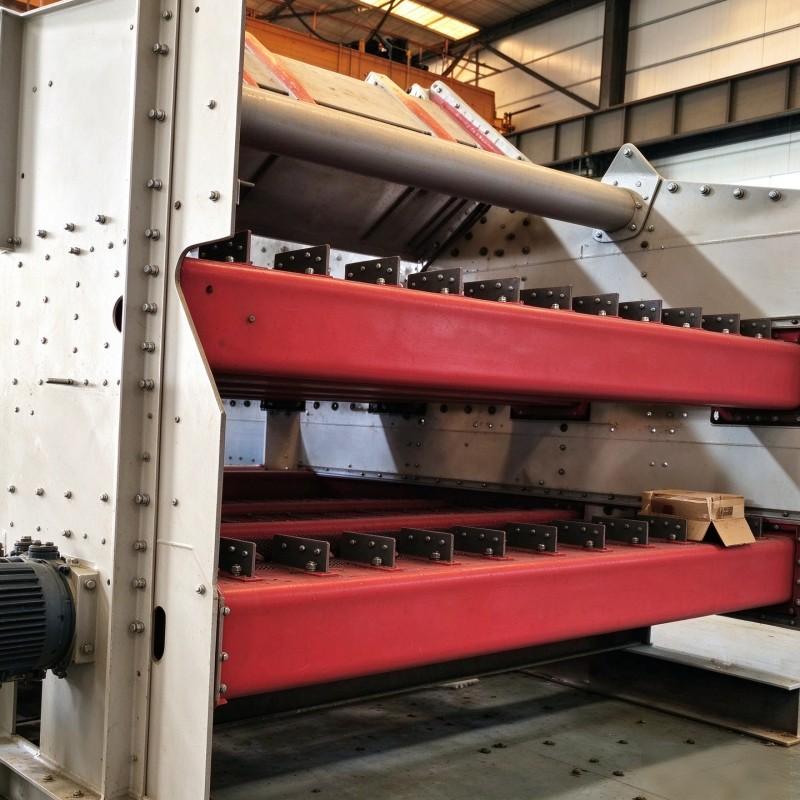
Tufflex screen panels can be suitable for screening abrasive minerals and aggregates, including iron ore, copper ore, gold-bearing ore, coal, sand and gravel. They are especially worth evaluating when conventional wire mesh experiences rapid wear, material pegging or blinding. However, no single mineral is automatically the best match. The right choice depends on abrasiveness, particle-size distribution, moisture content, feed load, required separation size and vibrating-screen configuration.
Key Takeaways
-
The mineral name is a poor predictor. The same ore can present completely different screening problems at different plants or processing stages.
-
Failure mechanism determines suitability. Sliding abrasion, impact, blinding and pegging each point to different media.
-
Iron ore and copper ore are common abrasive candidates. Where wire wears out quickly but open area still matters, Tufflex is worth a trial.
-
Coal and wet aggregates are blinding candidates. Polyurethane surfaces help, but cleaning mechanism and moisture control matter just as much.
-
Gold-bearing ore varies too widely for a mineral name to determine panel choice.
-
Trial data beats catalogue claims. Cost per tonne over a comparable operating period is the decision metric.
Summary Table
| Item | Description |
|---|---|
| Function | Screening media selection matched to mineral and operating conditions |
| Material | Polyurethane-coated wire rope plus polyurethane-coated synthetic cord |
| Aperture | Square or rectangular, selected against target cut size and particle shape |
| Application | Iron ore, copper ore, gold ore, coal, sand, gravel, abrasive aggregates |
| Service Life | Depends on abrasiveness, impact, moisture, installation and operating conditions |
| Benefits | Wear-resistant contact surface, flexible cloth, open screening structure |
Definition
Tufflex screen media is a rope-based screening cloth in which polyurethane-coated wire rope and polyurethane-coated synthetic cord are joined to form square or rectangular apertures. It sits between conventional WIRED & STEEL SCREEN MESH and solid POLYURETHANE & RUBBER SCREEN PANELS.
Mineral suitability here means the fit between a specific screening duty — material, feed size, moisture, cut size, impact level and equipment — and a given media construction. It is an engineering assessment, not a product classification.
Working Principle
Panel suitability follows the failure mechanism, not the ore name.
Sliding abrasion removes material evenly across the deck. It rewards a wear-resistant contact surface and is the primary case for polyurethane-coated rope media.
Impact wear concentrates at the feed end where large particles land. It rewards thickness and energy absorption, which usually means rubber or heavy-duty polyurethane in that zone.
Blinding builds where wet fines and clay adhere to the surface. It rewards low-adhesion surfaces, appropriate aperture geometry, and — importantly — control of moisture and bed depth.
Pegging occurs when near-size particles wedge in apertures. It rewards aperture geometry review and cloth flexibility rather than surface material alone.
The panel must also satisfy separation accuracy and throughput: a smaller aperture improves cut precision but reduces capacity, while a thicker construction improves wear life but reduces open area. The best design balances these competing requirements rather than optimising one.
Benefits
-
Wear-resistant contact surface in abrasive mineral duty where wire wears out quickly.
-
Flexible cloth behaviour that helps release lodged particles and reduces pegging pressure.
-
More open area than solid polyurethane, because the rope structure leaves more deck available for passage.
-
Configurable aperture geometry, allowing square or rectangular openings matched to cut size.
-
Lower maintenance frequency where changeouts were driven by abrasion.
-
Measurable cost advantage when evaluated as cost per tonne rather than price per panel.
Applications
-
Iron ore screening where abrasive particles and continuous movement wear wire rapidly.
-
Copper ore processing where abrasive feed and maintenance interruptions are significant.
-
Gold-bearing ore where particle size and circuit position vary widely between deposits.
-
Coal preparation and wet screening where moisture and clay cause blinding.
-
Sand, gravel and aggregates where wear, blockage or frequent changeouts reduce productivity.
-
Silica sand and industrial minerals where fine sizing and abrasion occur together.
These duties sit between size reduction in CRUSHING and downstream GRINDING or CLASSIFICATION. A panel change alters what reaches the next stage, which is why the assessment should include the circuit, not only the deck.
Material Comparison
| Property | Tufflex | Woven Wire Mesh | Solid Polyurethane Panel | Rubber Screen Media |
|---|---|---|---|---|
| Sliding abrasion resistance | Good | Moderate | Good–excellent | Good |
| Impact resistance | Moderate | Low | Moderate | Excellent |
| Open area | Good | High | Lower | Moderate |
| Anti-blinding | Good (low-adhesion surface) | Poor | Good | Moderate |
| Anti-pegging | Good (flexible cloth) | Poor on near-size | Moderate | Moderate |
| Best application | Abrasive duty with open-area needs | Clean dry high-capacity duty | Wet screening, severe wear | Coarse high-impact feed zones |
Application Comparison
| Scenario | Dominant Problem | Recommended Direction |
|---|---|---|
| Iron ore, wire wears out fast | Sliding abrasion | Tufflex with aperture matched to cut size |
| Copper ore, mixed wear and pegging | Both | Tufflex with rectangular aperture trial |
| Gold ore, variable feed | Unpredictable | Diagnose per deck section; trial representative feed |
| Coal, wet and sticky | Blinding | Polyurethane surface plus moisture and feed control |
| Sand and gravel, moderate abrasion | Wear with capacity needs | Tufflex or wire depending on open-area requirement |
| Fine cut, dry aggregate | Sizing accuracy | POLYURETHANE FINE SCREEN PANEL |
Industry Application Matrix
| Industry | Typical Mineral | Screening Challenge | Evaluation Priority |
|---|---|---|---|
| Iron ore | Hematite, magnetite | Abrasive wear | Wear life and open area |
| Copper | Copper ore | Abrasion plus near-size pegging | Aperture geometry and cloth flexibility |
| Gold | Gold ore, alluvial | Variable feed | Per-section diagnosis |
| Coal | Coal with clay partings | Wet blinding | Surface and cleaning mechanism |
| Aggregates | Limestone, granite | Abrasion and sizing accuracy | Wear life and aperture control |
| Sand and gravel | Natural sand, gravel | Moderate abrasion, moisture | Open area and blockage resistance |
| Industrial minerals | Silica sand | Fine blinding | Fine panel selection |
| Base metals | Lead zinc, nickel ore | Mixed wear and blockage | Combined assessment |
| Phosphate | Phosphate ore | Wet screening | Anti-blinding focus |
| Tailings | Slurry, fine solids | Wet duty with fines | Blinding and wear combined |
Selection Guide
1. Identify the material and screening stage. State the mineral and whether the deck is primary sizing, secondary screening or fine screening. Behaviour changes by stage.
2. Provide feed-size distribution. Maximum feed size, particle-size distribution and target cut size determine aperture selection more than mineral type.
3. Describe moisture and material characteristics. Dry, damp or wet; clay content; sticky fines; contaminants. These determine whether blinding is the dominant risk.
4. State the dominant failure mechanism. Abrasion, impact, pegging, blinding, low capacity or short service life. A clear problem description is more useful than asking for a panel “for iron ore”.
5. Confirm machine and installation compatibility. Deck dimensions, tensioning arrangement, current panel dimensions and SCREENING ACCESSORIES fitment.
6. Trial and measure. Compare service life, downtime, throughput, separation quality, blockage frequency and replacement cost against existing media on the VIBRATING SCREENS deck.
Procurement Guide
Required information: mineral or aggregate, maximum feed size, particle-size distribution, required separation size and aperture shape, moisture and clay content, current media type and service life, main operational problem, screen machine model, deck dimensions, tensioning arrangement, expected throughput, product-quality requirements.
Drawings needed: panel outline with tolerances, hook profile, aperture pattern and pitch, rope or cord layout.
OEM part numbers: obtain original panel references and confirm direct replacement capability.
Material selection: request polyurethane formulation and hardness documentation.
MOQ, lead time, packaging and shipping: confirm trial quantities, shutdown alignment, packaging for long panels, shipping method.
Inspection standards: dimensional check against drawing, aperture measurement, hardness verification, coating integrity and weld quality.
Supplier evaluation checklist — ask directly:
-
Can you manufacture according to our drawings?
-
Can you provide material reports?
-
Can you support OEM replacement?
-
Do you have export experience in our region?
-
Can you provide wear-life recommendations for our mineral?
A supplier answering all five with documentation is a different risk profile from one answering with a catalogue. The WHICH MANUFACTURER OFFERS HIGH-QUALITY POLYURETHANE TUFFLEX WIRE SCREENS FOR MINING? guide expands on each question.
Failure Analysis
| Problem | Possible Cause | Recommended Solution |
|---|---|---|
| Premature wear | Abrasive mineral, unsuitable grade, excessive bed depth | Request material report; review grade; reduce bed depth |
| Cracking | Impact from oversize, incorrect tension, damaged supports | Inspect supports; correct tension; consider hybrid media |
| Blinding | Wet clay, fines buildup, adhesion | Review moisture control, aperture size, feed distribution |
| Pegging | Near-size particles, square aperture | Test rectangular aperture; review cloth flexibility |
| Low efficiency | Uneven feed, wrong aperture, incorrect inclination | Check LINEAR VIBRATING FEEDER spread; verify settings |
| Excessive downtime | Frequent cleaning, poor panel fitment | Log cleaning events; verify hook and tension fit |
| Poor fitment | Incorrect panel dimensions or hook profile | Re-measure against drawing; confirm tolerances |
| Material mismatch | Polyurethane grade unsuited to the mineral | Request formulation review |
| Installation damage | Incorrect tensioning, worn supports | Retrain crew; inspect accessories |
Maintenance Guide
Daily: check wear progression, loose edges and blockage pattern; record locations.
Weekly: inspect tension, clamping, edge wear and coating damage; confirm feed spreads across the full deck.
Monthly: measure remaining thickness at high-wear zones; review changeout log; verify support bars and screen motion.
Wear pattern monitoring: photograph high-wear zones at fixed intervals for valid comparison.
Replacement timing: plan on measured wear rate and confirm supplier lead time against your shutdown cycle.
Spare parts inventory: hold rolling stock sized to consumption rate, not storage capacity.
Downtime reduction: pre-stage panels and accessories before shutdown; standardise dimensions across decks.
Preventive maintenance: treat feed distribution and bed depth as maintenance items — they shorten panel life more than most media defects.
Case Study
Customer Type: Mid-size iron ore processing plant with a two-deck scalping screen.
Ore Type: Hematite with hard, angular particles and moderate moisture.
Operating Conditions: Woven wire media on both decks, feed drop height approximately 1.2 m, variable throughput across shifts.
Problem: Wire mesh worn through within five to seven weeks on the upper deck; frequent changeouts; sizing drift as apertures wore open; intermittent near-size pegging in the lower deck.
Solution: Trial of polyurethane-coated Tufflex panels on the upper deck with rectangular apertures matched to cut size; rubber impact media retained at the feed zone. Feed distribution corrected to reduce centre-deck bed depth. Changeout hours, downtime and product sizing logged before and after.
Result: Panel life extended to roughly three times the wire baseline in the trial section; changeout frequency reduced by about 65 percent; more stable sizing into the GRINDING circuit. Pegging on the lower deck was addressed separately through aperture review rather than media change.
Figures reflect a realistic single-site trial and are not a guaranteed performance claim.
FAQ
Q1: Is Tufflex best for iron ore?
Iron ore is a potential application, especially when abrasive wear is a concern. However, the best panel depends on particle size, feed impact, required separation, moisture and screen configuration. Two iron ore plants can have entirely different screening problems, so the assessment should start with the failure mechanism rather than the mineral name.
Q2: Can Tufflex screen panels be used for copper and gold ores?
They may be suitable for selected copper and gold ore screening duties. The mineral name alone is not enough to establish suitability; feed characteristics and operating conditions must be reviewed. For gold ore especially, behaviour varies widely between deposits and processing stages, so a representative trial matters more than a general recommendation.
Q3: Are Tufflex panels suitable for wet screening?
They may be worth evaluating for wet applications. Moisture, clay content, particle size, aperture design and throughput should all be considered before selection. Persistent blinding may also require adjustments to feed preparation or operating conditions, not only a media change.
Q4: Can Tufflex reduce pegging and blinding?
Its flexible construction and polyurethane surface may help reduce certain blockage problems. Results depend on feed, aperture size, screen settings and the cause of blockage. No design can be assumed to eliminate every case of pegging or blinding, and any supplier claiming otherwise is overstating the case.
Q5: What information should I send to a supplier for a quotation?
Provide material name, feed-size range, target aperture, moisture level, screen machine model, panel dimensions, tensioning arrangement, throughput and current screening problems. Drawings and photographs help clarify requirements and reduce the risk of a mismatched recommendation.
Q6: How much do Tufflex screen panels cost?
Price depends on panel size, aperture pattern, rope and cord construction, welding configuration, polyurethane grade and quantity. Trial quantities are usually quoted separately. Evaluate against cost per tonne processed over a full campaign, including changeout labour and downtime, rather than purchase price per panel.
Q7: Can Tufflex replace woven wire directly?
Not universally. Panel dimensions, hook profile, tensioning direction, support layout and aperture geometry must all be confirmed. Treat any replacement as an engineered fit rather than a drop-in swap. Fitment errors are a common cause of premature failure wrongly attributed to the material.
Q8: Does Tufflex work for coal?
Coal screening includes sizing, preparation and wet processing, and the appropriate media depends on the size fraction, moisture and separation objective. Polyurethane-based media is worth evaluating for wet or moisture-prone coal, but fine coal and dewatering duties often suit a specialised fine panel better than a general Tufflex configuration.
Q9: How do I know if my problem is abrasion, blinding or pegging?
Inspect failed panels. Even surface loss indicates sliding abrasion. Concentrated feed-end damage indicates impact. Film or bridging of fines indicates blinding. Wedged near-size particles indicate pegging. Many plants have more than one mechanism on different decks, and each section should be assessed separately.
Q10: How should I run a trial?
Select one representative deck section, record baseline service life, changeout hours, downtime, throughput and product sizing, then install the trial media and monitor the same indicators over a comparable period. Keep feed conditions consistent and document any changes so the comparison remains valid.
Conclusion
Tufflex screen panels are worth evaluating for iron ore, copper ore, gold-bearing ore, coal, sand and gravel applications where the panel construction may address abrasive wear, wet screening, pegging or blinding. There is no single mineral that is universally best for Tufflex. The right choice depends on the actual feed, target separation, operating conditions and screen configuration.
A careful application review — and, where practical, a trial supported by operating data — is the most reliable way to determine whether a Tufflex panel is appropriate for your plant. If your operation is struggling with wear, blockage or frequent changeouts, HUATAO can review your material and deck details and discuss a suitable configuration for evaluation.
Related Articles
Related Products
Related Technical Guides
-
IMPROVE FINE SCREENING EFFICIENCY WITH POLYURETHANE SCREEN PANELS
-
HYDROCYCLONE WEAR: ROOT CAUSES, HIGH-WEAR ZONES & MATERIAL SOLUTIONS
-
FLOTATION CELL ROTOR AND STATOR WEAR PARTS: HOW THEY CONTROL RECOVERY, FLOW AND MAINTENANCE COST
-
ROTOR & STATOR IN MECHANICAL FLOTATION CELLS: THE HEART OF EFFICIENT MINERAL FLOTATION
Related Buyer Guides
-
WHICH MANUFACTURER OFFERS HIGH-QUALITY POLYURETHANE TUFFLEX WIRE SCREENS FOR MINING?
-
HOW DO I CHOOSE THE RIGHT RUBBER BELT FOR A VACUUM BELT FILTER?
Related Comparison Articles
-
POLYURETHANE SCREEN VS RUBBER SCREEN VS WIRE MESH: A COMPLETE COMPARISON GUIDE
-
SELF-CLEANING SCREEN VS TRADITIONAL WOVEN WIRE MESH: WHICH ONE SHOULD YOU CHOOSE?
Contact
Annie Lu
Email: annie.lu@huataogroup.com
Mobile / WhatsApp / WeChat: +86 18032422676
Website: https://www.tufflexscreen.com
#Tufflex #MineralProcessing #ScreenMedia #IronOre #CopperOre #CoalScreening #Aggregates #Screening
Tags:
admin
personal profile