
What are polyurethane screen panels?
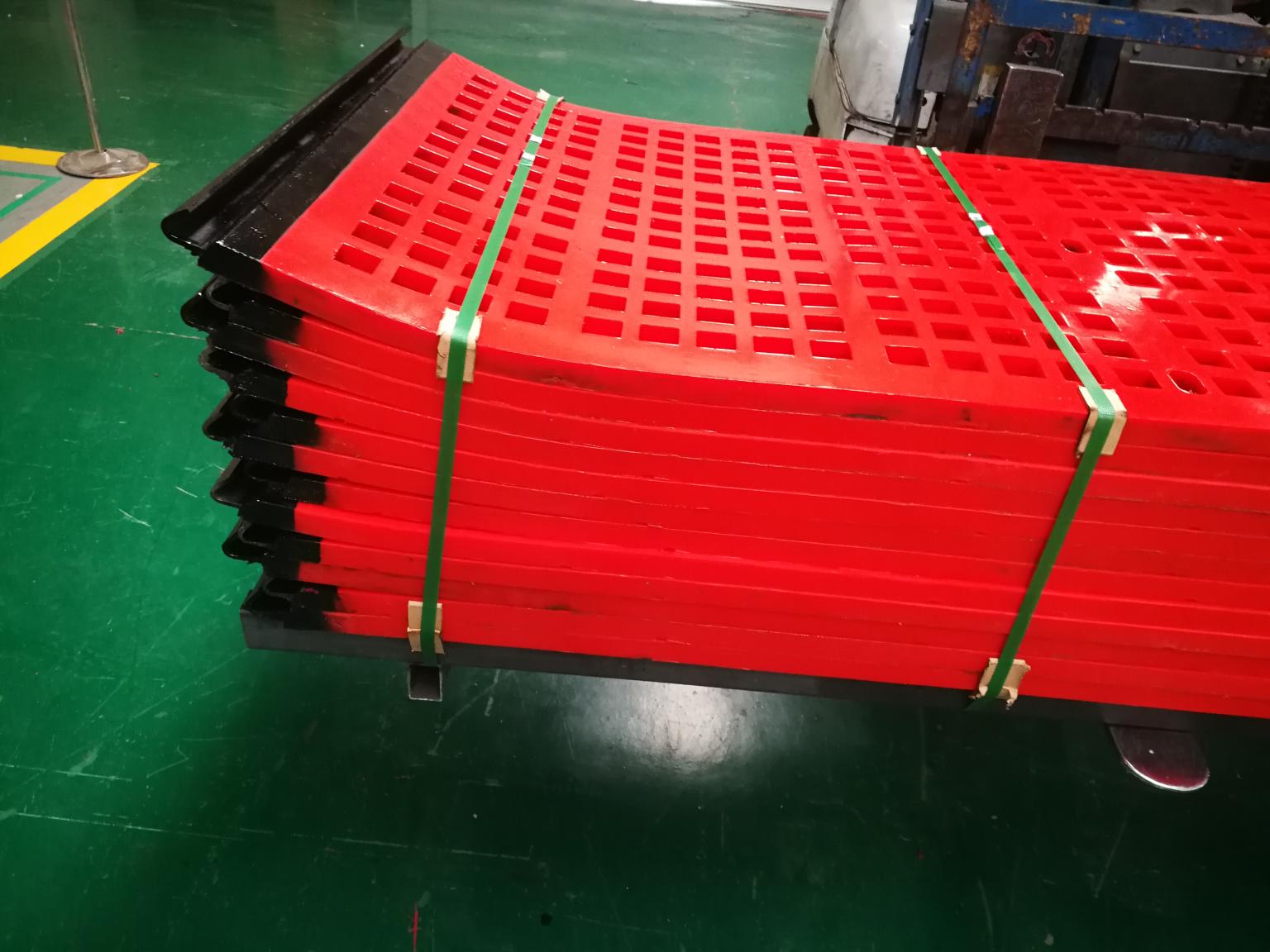
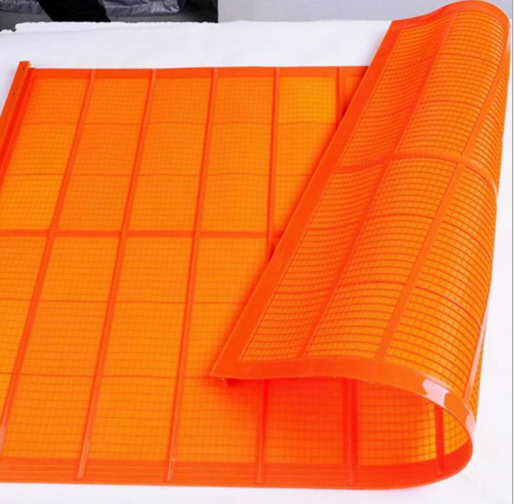
Polyurethane (PU) screen panels are modular screening media used on vibrating screens, banana screens, and dewatering screens to separate materials by particle size. These panels are manufactured from high-performance elastomers that offer exceptional abrasion resistance—lasting 3-5× longer than traditional steel screens—while providing self-cleaning properties that prevent blinding and pegging.
Key Benefits:
3-5× longer wear life than steel screens
Self-cleaning reduces blinding by up to 50%
70% lighter for easier handling and reduced equipment wear
30-50% lower total cost of ownership
| # | Key Takeaway | Impact |
|---|---|---|
| 1 | PU panels deliver 3-5× longer service life than steel screens | 70-80% reduction in replacement frequency |
| 2 | Self-cleaning action eliminates blinding and pegging | Up to 50% increase in screening efficiency |
| 3 | Modular design enables rapid replacement | 60-80% reduction in changeover downtime |
| 4 | Lighter weight reduces equipment strain | Extended screen equipment life |
| 5 | Consistent aperture sizing ensures product quality | Improved downstream process performance |
| Item | Description |
|---|---|
| Function | Particle size separation in mineral processing |
| Material | High-performance polyurethane elastomer (thermoset) |
| Hardness Range | Shore A 75-95 (application dependent) |
| Tensile Strength | 30-50 MPa (superior to rubber) |
| Temperature Range | -20°C to +80°C |
| Abrasion Resistance | Excellent (3-5× steel) |
| Self-Cleaning | Yes (elasticity prevents blinding) |
| Typical Applications | Primary screening, dewatering, fine classification |
| Service Life | 6-18 months (application dependent) |
| Cost Position | Premium upfront, lower TCO |
What are polyurethane screen panels?
Polyurethane screen panels are modular screening media manufactured from high-performance polyurethane elastomers (thermoset polymers) that combine exceptional abrasion resistance with the elastic properties needed for self-cleaning screening applications.
Unlike traditional wire mesh screens that use woven metal wires, or steel plate screens with drilled holes, PU screen panels are cast in molds to create uniform apertures with smooth surfaces that minimize particle adhesion. This manufacturing process allows for precise aperture control—from 0.045mm to 100mm+—making PU panels suitable for everything from fine classification to coarse primary screening.
Key Material Properties:
Shore Hardness: 75-95 (adjustable for application)
Tensile Strength: 30-50 MPa (2-4× rubber)
Elongation at Break: 300-600% (excellent flexibility)
Abrasion Resistance: 3-5× carbon steel (per ASTM D-4060)
Compression Set: Low (maintains shape under load)
Polyurethane screen panels operate on the same fundamental principle as all screening media: they separate particles by size using a vibrating motion that stratifies material and passes finer particles through the screen openings (apertures).
However, PU panels introduce several unique performance advantages due to their material properties.
The Screening Mechanics:
Feed Distribution: Material enters the screen deck and forms a bed
Stratification: Vibratory motion causes larger particles to rise and finer particles to migrate toward the screen surface
Separation: Finer particles pass through apertures; oversize material travels to the discharge end
Self-Cleaning: Panel elasticity creates a "snap" or "trampoline" effect that clears lodged particles
Why PU Panels Excel:
| Property | Screening Advantage |
|---|---|
| Elasticity | Creates self-cleaning action that prevents blinding and pegging |
| Wear Distribution | Wears evenly across the panel surface, maintaining consistent aperture size |
| Open Area | Achieves >40% open area for maximum throughput |
| Smooth Surface | Reduces material adhesion and improves flow |
| Impact Resistance | Absorbs impact from falling material without cracking |
Comprehensive Benefits Analysis:
PU screen panels outperform steel and rubber in high-abrasion applications. The thermoset polyurethane compound delivers high tensile strength (30-50 MPa) combined with elastic recovery that allows the panel to absorb impact and return to its original shape.
Abrasion Resistance Comparison:
| Material | Relative Abrasion Resistance | Application Suitability |
|---|---|---|
| Carbon Steel | 1× (baseline) | Moderate abrasion only |
| Rubber (NR/SBR) | 2-3× | Good abrasion resistance |
| Polyurethane (Shore 85) | 4-6× | Excellent abrasion resistance |
| Ceramic | 8-10× | Limited to low-impact areas |
The flexibility of polyurethane prevents "blinding" where particles become lodged in screen openings. This is particularly valuable when screening wet-sticky materials or ores with high fines content. The self-cleaning action is achieved through aperture dilation—the panel flexes during vibration, slightly stretching the apertures and releasing trapped particles.
PU panels absorb vibration and impact, significantly reducing operational noise compared to steel screens (85-90 dB vs 105-110 dB for steel). This is an important consideration for:
Worker safety and hearing protection compliance
Environmental noise regulations
Improved working conditions
At approximately 30% of the weight of equivalent steel panels, PU panels reduce the dead load on vibrating screens. This results in:
Reduced energy consumption (lower motor load)
Extended screen equipment service life
Easier handling and installation (no heavy lifting equipment required)
Modular panel designs with bolt-in or tensioned mounting systems allow for rapid replacement, minimizing costly plant downtime. Typical changeover time:
| Panel Type | Changeover Time | Typical Downtime Reduction vs Steel |
|---|---|---|
| Steel panels | 4-8 hours | Baseline |
| Bolt-in PU panels | 1-2 hours | 60-75% reduction |
| Polywedge PU panels | 0.5-1 hour | 75-90% reduction |
PU panels maintain aperture size throughout their service life, ensuring consistent product quality and reduced recirculating loads. This prevents the gradual degradation in screening performance typical of steel screens where apertures enlarge as they wear.
Efficiency Retention Over Service Life:
| Time | Steel Panel Efficiency | PU Panel Efficiency |
|---|---|---|
| New | 95% | 95% |
| 25% Service Life | 85% | 94% |
| 50% Service Life | 75% | 93% |
| 75% Service Life | 65% | 90% |
| End of Life | 50% | 85% |
Mineral Processing Applications:
| Application | Equipment Type | Typical Ore Types | Recommended Panel Type | Aperture Range |
|---|---|---|---|---|
| Primary screening | Vibrating screen | Iron ore, copper ore, hard rock | High-impact PU (Shore 85-90) | 25-100mm |
| Secondary screening | Banana screen | Coal, aggregates, industrial minerals | Standard PU (Shore 85) | 10-50mm |
| Tertiary screening | Circular/linear screen | Ores, minerals | Standard PU (Shore 85) | 1-25mm |
| Dewatering | Dewatering screen | Silica sand, tailings, coal fines | High-elasticity PU (Shore 75-80) | 0.1-2mm |
| Dry screening | Flip-flow screen | Limestone, phosphate, industrial minerals | High-elasticity PU (Shore 75-80) | 0.5-10mm |
| Fine screening | High-frequency screen | Industrial minerals, silica sand | Premium fine PU (Shore 85-90) | 0.045-2mm |
| Wet screening | Dewatering screen | Wet-sticky ores | High-elasticity PU (Shore 75-80) | 0.1-5mm |
Industry-Specific Applications:
| Industry | Application | Equipment | Panel Type | Challenges Solved |
|---|---|---|---|---|
| Iron Ore | Secondary sizing | Banana screen | High-abrasion PU | Abrasive wear, heavy load |
| Copper Ore | Classification | Vibrating screen | Standard PU | Abrasion, moderate moisture |
| Coal | Dewatering | Dewatering screen | High-elasticity PU | Wet-sticky material, fine coal |
| Silica Sand | Dry screening | High-frequency screen | High-abrasion PU | Fine screening, abrasive wear |
| Gold Ore | Gravity feed | Vibrating screen | Standard PU | Low abrasion, fine screening |
| Aggregates | Primary sizing | Vibrating screen | Steel or PU | Impact, moderate abrasion |
| Phosphate | Wet screening | Flip-flow screen | High-elasticity PU | Wet-sticky, abrasive |
| Lithium Ore | Classification | Vibrating screen | Standard PU | Moderate abrasion, dry |
Rubber screen panels have been used in mining for decades, particularly in applications where high elasticity is required. However, polyurethane panels offer significant advantages in most mineral processing applications.
| Characteristic | Polyurethane | Rubber | Advantage |
|---|---|---|---|
| Abrasion resistance | Excellent | Good | PU +50% |
| Cut resistance | Excellent | Moderate | PU |
| Tensile strength | 30-50 MPa | 10-20 MPa | PU +150% |
| Tear resistance | Excellent | Good | PU |
| Temperature resistance | -20 to 80°C | -30 to 70°C | Similar |
| Elasticity | High | Very High | Rubber +30% |
| Chemical resistance | Excellent | Good | PU |
| Bond strength | Excellent | Good | PU |
| Service life (abrasive ore) | 6-12 months | 3-6 months | PU +100% |
| Weight | Light | Light | Similar |
| Self-cleaning | Excellent | Excellent | Similar |
| Cost per panel | Premium | Economy | Rubber -30% |
| Installation | Modular | Modular | Similar |
Recommendation:
Choose Polyurethane for: High-abrasion ores, long service life requirements, fine screening applications
Choose Rubber for: High-impact applications, where energy absorption is critical, initial cost constraints
Steel screen panels remain the traditional choice for primary screening applications. However, the performance advantages of PU make it a compelling alternative.
| Characteristic | Polyurethane | Steel | Advantage |
|---|---|---|---|
| Abrasion resistance | Excellent | Good | PU +300% |
| Impact resistance | Excellent | Good | PU |
| Weight | Light (30% of steel) | Heavy | PU -70% |
| Noise level | 85-90 dB | 105-110 dB | PU -20 dB |
| Self-cleaning | Yes | No | PU |
| Corrosion resistance | Excellent | Poor | PU |
| Aperture consistency | Maintains throughout life | Enlarges with wear | PU |
| Service life (abrasive) | 6-12 months | 1-3 months | PU +300% |
| Cost per panel | Premium (2-4× steel) | Economy | Steel -50% |
| Installation | Modular quick-change | Time-consuming | PU |
| Maintenance frequency | Low | High | PU |
Recommendation:
Choose Polyurethane for: Most mineral processing applications, especially abrasive ores and fine screening
Choose Steel for: Primary screening with large top sizes (>200mm), high-impact applications where cost constraints override wear performance
| Characteristic | Polyurethane | Composite | Ceramic |
|---|---|---|---|
| Abrasion resistance | Excellent | Good | Superior |
| Impact resistance | Excellent | Good | Poor |
| Self-cleaning | Yes | Limited | No |
| Weight | Light | Light | Heavy |
| Cost | Premium | Moderate | High |
| Installation | Easy | Moderate | Complex |
| Best application | General mining | Moderate abrasion | Extreme abrasion, low impact |
| Application | Feed Size | Moisture | Abrasiveness | Recommended Media | Alternatives |
|---|---|---|---|---|---|
| Primary crushing product | 50-200mm | Low | Moderate-High | Steel / Heavy PU | Rubber |
| Secondary screening | 10-50mm | Low-Moderate | Moderate | PU | Rubber |
| Tertiary screening | 1-10mm | Low-Moderate | Moderate-High | PU | Wire mesh |
| Dewatering | 0.1-2mm | High | Low-Moderate | PU (slot) | Rubber |
| Dry fine screening | 0.045-1mm | Very Low | High | PU (polywedge) | Composite |
| Wet fine screening | 0.045-1mm | High | High | PU (polywedge) | Wire mesh |
| Pre-wetting | 5-50mm | High | Moderate | PU | Rubber |
| Industry | Ore Type | Abrasiveness | Moisture | Recommended Panel Type | Expected Service Life |
|---|---|---|---|---|---|
| Iron Ore | Hematite/Magnetite | Very High | Low | High-abrasion PU | 12-18 months |
| Copper Ore | Sulfide/Oxide | High | Moderate | Standard PU | 12-16 months |
| Coal | Bituminous/Anthracite | Moderate | High | High-elasticity PU | 12-24 months |
| Silica Sand | Quartz | Very High | Low | High-abrasion PU | 8-14 months |
| Gold Ore | Quartz Vein | Moderate | Low | Standard PU | 12-18 months |
| Aggregates | Granite/Limestone | High | Low | Steel or PU | 6-12 months |
| Phosphate | Sedimentary | High | High | High-elasticity PU | 8-14 months |
| Lithium Ore | Spodumene | Moderate | Low | Standard PU | 12-18 months |
| Lead Zinc Ore | Sulfide | Moderate | Moderate | Standard PU | 12-16 months |
| Nickel Ore | Laterite/Sulfide | High | Moderate | Standard PU | 10-16 months |
Step-by-Step Selection Process:
| Parameter | What to Evaluate | Impact on Selection |
|---|---|---|
| Feed top size | Maximum particle size in feed | Determines required aperture size and panel impact resistance |
| Fines content | Percentage of material below cut point | Affects panel open area requirements |
| Ore abrasiveness | Mohs hardness, particle shape | Determines PU compound (higher abrasion = harder PU) |
| Moisture content | Percentage of water in feed | Wet feed requires high-elasticity PU for self-cleaning |
| Feed rate | TPH to the screen | Open area requirements, panel thickness |
| Screening duty | Primary, secondary, dewatering, fine | Panel type, aperture shape, mounting system |
| Condition | Recommended Material | Shore Hardness |
|---|---|---|
| Highly abrasive ore | High-abrasion PU | 85-95A |
| Wet-sticky material | High-elasticity PU | 75-85A |
| High impact feed | Rubber or reinforced PU | 80-85A |
| Fine screening (<1mm) | Premium fine PU | 85-90A |
| Moderate conditions | Standard PU | 80-85A |
| Extreme conditions | Custom compound | Application-specific |
| Particle Size | Recommended Aperture | Aperture Shape |
|---|---|---|
| >25mm | 2-4× top size | Square |
| 5-25mm | 2-3× top size | Square or rectangular |
| 1-5mm | 2-3× top size | Rectangular or slot |
| <1mm | 2-3× top size | Slot (polywedge) |
Aperture Shape Recommendations:
Square: Best for general screening, high throughput
Rectangular: Better for near-size particle handling, higher capacity
Slot: Best for fine screening, dewatering, and wet applications
| Screen Type | Mounting System | Benefit |
|---|---|---|
| Vibrating screen | Bolt-in or tensioned | Secure fit for high vibration |
| Banana screen | Tensioned | Maintains tension under load |
| Dewatering screen | Bolt-in | Secure seal, prevents bypass |
| High-frequency screen | Polywedge | Fine aperture accuracy |
| Flip-flow screen | Tensioned | Allows panel flexing |
| Parameter | How to Determine | Impact |
|---|---|---|
| Length and width | Screen deck dimensions | Panel must match deck exactly |
| Thickness | Feed size, impact level | Thicker for larger feed, high impact |
| Aperture pattern | Ore type, screen duty | Square, rectangular, slot, polywedge |
| Bolt pattern | Screen manufacturer model | OEM or custom matching |
Comprehensive Procurement Checklist:
| Item | Details Required |
|---|---|
| Application | Primary, secondary, dewatering, fine screening |
| Ore type | Material description, abrasiveness, moisture, density |
| Screen model | Manufacturer, model number, deck number |
| Aperture size | Cut point, desired top size, tolerance |
| Aperture shape | Square, rectangular, slot, polywedge |
| Panel dimensions | Length, width, thickness, profile |
| Mounting type | Bolt-in, tensioned, polywedge |
| Quantity | Number of panels per deck, spare requirements |
| OEM part number | If replacing existing panels |
| Drawings | Panel drawings with dimensions and mounting details |
Use this checklist when evaluating potential suppliers:
| Criteria | Evaluation Question | Importance |
|---|---|---|
| Engineering capability | Can the supplier manufacture according to drawings? | Critical |
| Material quality | Can the supplier provide material test reports? | Critical |
| OEM compatibility | Does the supplier support OEM replacement? | High |
| Export experience | Does the supplier have experience with international shipping? | High |
| Technical support | Can the supplier provide wear-life recommendations? | High |
| Lead time | What is the typical lead time for production? | Medium |
| Quality standards | What quality standards are applied? | Critical |
| Sample capability | Can the supplier provide samples for testing? | Medium |
| Installation support | Does the supplier provide installation guides? | Medium |
| Warranty | What warranty is offered? | Medium |
Q: Can the supplier manufacture according to drawings?
A: Ensure your supplier has engineering capability and can match your existing panel design. Always provide panel dimensions, mounting hole patterns, and aperture specifications.
Q: Can the supplier provide material reports?
A: Request Shore hardness tests, tensile strength reports, and abrasion resistance data. Reputable suppliers provide full material certification.
Q: Does the supplier support OEM replacement?
A: The best suppliers produce drop-in replacements for OEM equipment, eliminating the need for modifications. Verify compatibility with your specific screen model.
Q: Does the supplier have export experience?
A: Mining operations are global. Work with suppliers familiar with international shipping, customs documentation, and regional quality requirements.
Q: Can the supplier provide wear-life recommendations?
A: Experienced suppliers offer guidance on expected service life based on your ore characteristics and operating conditions.
Q: What is the MOQ?
A: Understand minimum order quantities and whether sample orders are available.
Q: What is the typical lead time?
A: Establish production timelines and whether expedited shipping is available.
Q: What packaging is used?
A: Ensure proper packaging for international shipping to prevent damage.
Obtain detailed quotes from at least 3 suppliers for comparison
Request material certification with all shipments
Maintain safety stock of critical panel sizes
Track wear life to optimize future procurement decisions
Partner with suppliers who offer technical support and engineering expertise
Comprehensive Failure Analysis Guide:
| Problem | Possible Cause | Recommended Solution |
|---|---|---|
| Premature wear | Incorrect PU compound for application | Upgrade to high-abrasion PU (Shore 85-95) |
| Premature wear | Feed distribution uneven | Adjust feed chute, improve distribution |
| Premature wear | Screen angle incorrect | Optimize screen angle for application |
| Panel cracking | Over-tensioning | Reduce tension pressure |
| Panel cracking | Impact from oversized material | Install impact zone protection |
| Panel cracking | Operating below recommended temperature | Pre-heat or select cold-weather compound |
| Blinding (aperture blockage) | Incorrect aperture size/shape | Increase aperture, select slot type |
| Blinding | Feed too wet for panel type | Select high-elasticity self-cleaning PU |
| Blinding | High fines content | Increase open area, select larger apertures |
| Pegging (particle wedging) | Feed has high near-size fraction | Adjust screen angle, increase vibration amplitude |
| Low screening efficiency | Incorrect panel selection | Re-evaluate aperture, open area, vibration parameters |
| Low screening efficiency | Screen condition poor | Check support structure, vibration settings |
| Excessive downtime | Poor panel design | Select modular quick-change system |
| Excessive downtime | Insufficient spare inventory | Maintain safety stock of critical sizes |
| Poor fitment | Incorrect dimensions | Provide detailed drawings for custom manufacture |
| Poor fitment | Inaccurate OEM measurement | Field-measure before ordering |
| Material mismatch | Wrong PU compound | Specify based on operating conditions |
| Material mismatch | Chemical contamination | Provide process chemical data for supplier |
Identify the failure mode (wear, cracking, blinding, etc.)
Determine when the failure occurred (early life, mid-life, end-of-life)
Inspect the failed panel (wear pattern, failure location, panel condition)
Review operating conditions (feed rate, feed distribution, moisture, temperature)
Compare against similar applications (industry benchmark)
Develop corrective action plan
Implement and monitor results
Comprehensive Maintenance Program:
| Frequency | Task | Responsible | Documentation |
|---|---|---|---|
| Daily | Visual inspection for damage, wear, blinding | Operator | Log sheet |
| Daily | Check for visible panel displacement | Operator | Log sheet |
| Daily | Monitor screening efficiency visually | Operator | Log sheet |
| Weekly | Measure aperture size at multiple points | Maintenance | Wear report |
| Weekly | Check panel tension (tensioned panels) | Maintenance | Tension log |
| Weekly | Inspect mounting hardware for tightness | Maintenance | Inspection report |
| Monthly | Complete panel inspection, photograph wear patterns | Maintenance | Maintenance report |
| Monthly | Check feed distribution across deck | Maintenance | Distribution report |
| Quarterly | Wear trend analysis, replacement planning | Supervisor | Replacement forecast |
| Quarterly | Review maintenance costs vs budget | Supervisor | Cost report |
| As needed | Replace worn or damaged panels | Maintenance | Installation record |
1. Monitor Wear Patterns
Uneven wear indicates feed distribution issues. Address these early to extend panel life.
2. Inspect Mounting Hardware
Loose bolts cause panel damage and premature failure. Check tension regularly.
3. Check for Blinding
Reduce feed moisture or increase amplitude to clear blocked apertures.
4. Replace Panels as Sets
Avoid mixing new and worn panels on the same deck—this creates uneven flow and accelerated wear.
5. Maintain Spare Inventory
Have critical sizes in stock to minimize downtime during replacement.
6. Document Panel Life
Track installation and removal dates to build a database for future procurement decisions.
7. Inspect Feed Conditions
Proper feed preparation (screening, classification) extends screen panel life.
| Task | Frequency | Completion |
|---|---|---|
| [ ] Visual inspection for damage | Daily | ___ |
| [ ] Aperture size measurement | Weekly | ___ |
| [ ] Panel tension check | Weekly | ___ |
| [ ] Mounting hardware inspection | Weekly | ___ |
| [ ] Feed distribution analysis | Monthly | ___ |
| [ ] Wear trend analysis | Quarterly | ___ |
| [ ] Replacement planning | Quarterly | ___ |
| [ ] Spare inventory review | Monthly | ___ |
Case Study: Australian Iron Ore Plant Increases Screen Life by 400% With PU Panels
Customer Type: Major Australian iron ore producer
Location: Pilbara region, Western Australia
Ore Type: Hematite iron ore (Fe 62-65%)
Abrasiveness: Highly abrasive (quartz content 5-15%)
Feed Rate: 10,000 TPH (tons per hour)
Top Size: 50mm
Screening Duty: Secondary screening (10mm cut point)
Environment: Dry screening, high ambient temperatures (35-45°C)
The plant was experiencing excessive steel screen wear, with panel replacement every 2-3 weeks. Each replacement required 8-10 hours of downtime, significantly reducing production capacity and increasing maintenance costs.
Challenges:
High abrasion from hematite/quartz mixture
Frequent blowouts causing production interruptions
Labor-intensive changeover process (8-10 hours)
Inconsistent screening efficiency as panels wore
Growing maintenance backlog
Huatao Group supplied high-abrasion polyurethane screen panels with 25mm square apertures. The panels featured a bolt-in modular design for quick replacement.
Solution Specifications:
Material: High-abrasion PU (Shore A 88)
Aperture Size: 25mm square
Panel Thickness: 40mm
Mounting: Bolt-in (OEM compatible)
Quantity: 24 panels per deck, 2 decks
Timeline:
Week 1: Site assessment and sample delivery
Week 2: Full order placed
Week 3: Production and quality inspection
Week 4: Shipping to site
Week 6: Installation and commissioning
Week 7: Performance monitoring begins
| Metric | Before (Steel) | After (PU) | Improvement |
|---|---|---|---|
| Service life | 2-3 weeks | 12-16 weeks | 400%+ |
| Downtime per replacement | 8-10 hours | 2-3 hours | 70% reduction |
| Annual downtime | ~150 hours | ~45 hours | 70% reduction |
| Annual maintenance labor | 1,200 hours | 360 hours | 70% reduction |
| Screening efficiency (end of life) | 65-70% | 85-90% | 25% improvement |
| Cost savings | Baseline | $1.2M+ annually | Significant |
ROI Calculation:
Panel cost premium: $50,000 (additional cost vs steel)
Downtime value: $500/hour × 105 hours saved = $52,500
Maintenance labor savings: $100/hour × 840 hours = $84,000
Production gain: Estimated $1M+ in additional throughput
Total annual savings: $1.2M+
Proper panel selection based on ore characteristics is critical
Installation training reduces changeover time
Monitoring wear patterns helps optimize panel rotation
Partnering with a supplier that offers technical support is essential
A: Service life ranges from 6-18 months depending on application. In high-abrasion iron ore applications, PU panels typically last 3-4× longer than steel screens (12-16 months vs 2-3 months). In less demanding applications (coal, phosphate), service life can extend to 24+ months. Factors affecting service life include feed abrasiveness, moisture content, feed rate, screen settings, and panel quality.
A: Polyurethane panels have a higher upfront cost (typically 2-4× steel). However, the extended service life, reduced downtime, lower maintenance labor, and consistent screening efficiency deliver 30-50% lower total cost of ownership over the screen's lifecycle. For most applications, PU panels are significantly more cost-effective than steel on a cost-per-ton basis.
A: Yes. PU panels' flexibility creates a self-cleaning action that prevents blinding and pegging with sticky materials. High-elasticity formulations (Shore A 75-80) are specifically designed for wet screening applications. In dewatering applications, PU panels with slot-type apertures are particularly effective with coal fines, tailings, and silica sand slurries.
A: Yes. Most suppliers manufacture drop-in replacements for major OEM equipment including Metso, Sandvik, Schenck Process, Derrick, TON, Joy Global, and others. To ensure correct fitment, provide your screen model details, deck dimensions, and (if available) the OEM part number.
A: Select polyurethane for:
High-abrasion applications (iron ore, copper ore, silica sand)
Applications requiring long service life
Fine screening applications (<1mm)
Applications where consistent aperture size is critical
Select rubber for:
High-impact applications
Applications where initial cost is the primary constraint
Applications where energy absorption is critical
A: Common causes include:
Incorrect PU compound for the application (wrong Shore hardness)
Over-tensioning
Feed distribution issues causing localized wear
Impact damage from oversized material
Operating outside temperature range
Chemical degradation from process chemicals
Incorrect panel dimensions or fitment
Improper installation
A: Yes. Most suppliers offer custom manufacturing based on your drawings, specifications, and OEM part numbers. Provide panel dimensions (length, width, thickness), aperture size, aperture shape, and mounting details for a custom quotation.
A: Installation varies by panel type:
Bolt-in: Panels are bolted directly to the screen deck using standard hardware
Tensioned: Panels are held in place by tension rails or bars
Polywedge: Panels slide into place in a wedge-wire frame
Most panels are designed for rapid installation using standard tools. Installation time typically ranges from 0.5-2 hours per deck for experienced crews.
A: HUATAO polyurethane screen panels are manufactured to ISO 9001 quality standards. Our engineering team can provide material test reports including:
Shore Hardness (ASTM D2240)
Tensile Strength (ASTM D412)
Elongation at Break (ASTM D412)
Abrasion Resistance (ASTM D4060)
Compression Set (ASTM D395)
A: PU screen panels are used across most mineral processing stages:
Primary screening (50-100mm+)
Secondary screening (10-50mm)
Tertiary screening (1-10mm)
Dewatering (0.1-2mm)
Fine screening (0.045-1mm with polywedge)
For most mineral processing stages, PU is an excellent option. The primary exception is extreme high-impact primary screening (>200mm feed), where steel panels may still be preferred.
A: Total Cost of Ownership (TCO) calculation:
text
TCO = (Panel Cost × Number Replacements) + (Labor × Replacement Hours) + (Downtime Cost × Hours) + (Production Loss × Hours)
Example comparison:
Steel: $1,000/panel × 12 replacements + labor + downtime + production loss = $15,000+ per deck annually
PU: $3,000/panel × 3 replacements + labor + downtime + production loss = $6,000+ per deck annually
Savings with PU: $9,000+ per deck annually
A: Available aperture shapes include:
Square: General screening, high throughput
Rectangular: Near-size particle handling, higher capacity
Slot: Fine screening, dewatering, wet applications
Polywedge: Ultra-fine screening (<1mm), moisture reduction
Ripple: Self-cleaning applications
Custom: Application-specific designs
A: PU panels offer 2-4× higher tensile strength, 50%+ better abrasion resistance, and significantly longer service life in abrasive applications. Rubber panels offer slightly higher elasticity and are more resistant to high-impact forces. For most mineral processing applications (iron ore, copper ore, silica sand), PU is the superior choice.
A: Minor repairs (small holes, edge damage) are sometimes possible using PU repair compounds. However, because PU panels are cast, major repairs are rarely successful. Replacement is generally recommended when wear exceeds 20% of the original thickness or when aperture size has enlarged by more than 15%.
A: Upon delivery, verify:
Panel dimensions match the order
Aperture size and shape meet specifications
Panel thickness is consistent
Mounting holes align with your screen
Material color and texture are consistent
No visible defects (cracks, bubbles, inclusions)
Material test reports (Shore hardness, tensile strength) are provided
Polyurethane screen panels deliver superior performance across the mineral processing flow, from crushing and screening to classification and dewatering. Their exceptional abrasion resistance, self-cleaning properties, and lightweight design make them the preferred choice for modern mining operations handling abrasive ores like iron ore, copper ore, and silica sand.
The key to maximizing ROI with PU screen panels lies in proper selection, procurement, and maintenance. By working with an experienced supplier like HUATAO Group, you can optimize panel performance for your specific application—reducing downtime, cutting replacement costs, and improving overall plant efficiency.
Knowledge Graph Connection:
Previous Process: Crushing (Jaw Crusher, Cone Crusher, Impact Crusher) → Current Process: Screening (Vibrating Screen, Banana Screen, Flip Flow Screen) → Next Process: Grinding (Ball Mill, SAG Mill, Rod Mill)
How Do I Calculate Hydrocyclone Capacity For Mineral Processing
Hydrocyclone Selection For Mineral Processing Full Engineering Guide
OEM Compatible Crusher Wear Parts Technical Selection Failure Prevention And Sourcing Strategy
Where Can I Find Reliable Hydrocyclone Suppliers In China For Mining And Mineral Processing
Best Flotation Equipment Spare Parts Suppliers How To Choose For Longer Wear Life Higher Recovery
Best Alternative To Metso Crusher Wear Parts Complete Engineering And Procurement Guide
Which Crusher Wear Parts Supplier Exports To Australia And Canada Complete Buyers Guide
Polyurethane Screen Panels Vs Rubber Screen Panels Which Is Better
Annie Lu
Email: annie.lu@huataogroup.com
Mobile / WhatsApp / WeChat: +86 18032422676
Company: HUATAO Group
Service: Polyurethane screen panels, rubber screen panels, mining wear parts, OEM replacement parts
Polyurethane Screen Panels, Mining Screen Media, Vibrating Screen Panels, PU Screen Panels, Rubber Screen Panels, Screening Media, Mining Wear Parts, Abrasion Resistant Screens, Self Cleaning Screens, Dewatering Screens, Polyurethane Screen Panels For Mining, Replacement Screen Panels, OEM Screen Panels, HUATAO Screen Panels, Tufflex Screen Panels, Mining Equipment Spare Parts, Wear Resistant Screen Panels, Mineral Processing Equipment, Ore Screening, Mining Industry, Mineral Processing, Screening Media, Wear Parts, Iron Ore Screening, Copper Ore Screening, Coal Dewatering, Silica Sand Screening
can not be empty
can not be empty

HUATAO GROUP - SCREENS
ADD : No.298 Zhonghua North Street, Shijiazhuang 050000 China.
TEL : +86 0311 80690567
EMAIL :market@huataogroup.com
Web: www.tufflexscreen.com
 WhatsApp & WeChat : +86 18033763037