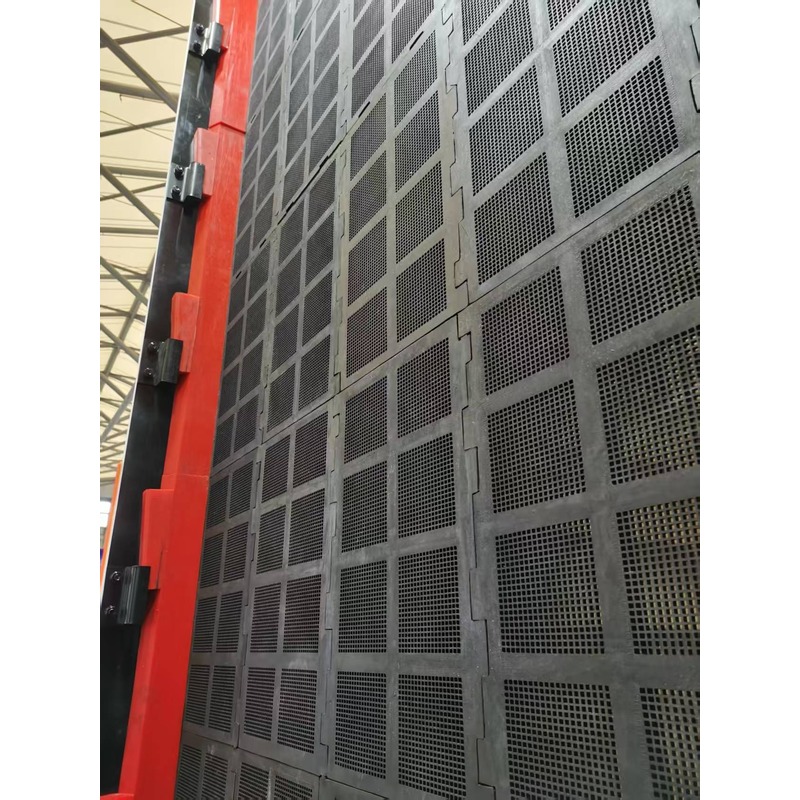
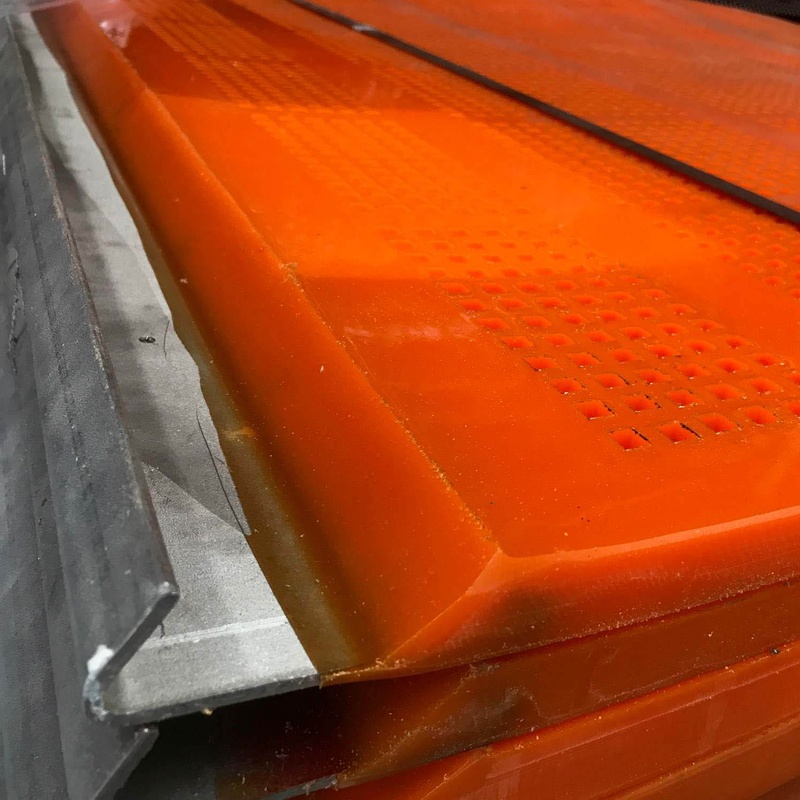
PU Screen Panel Type
Traditional dewatering equipment often struggles with low water removal rates, frequent screen clogging, and short service lifespans when handling high-moisture materials.
READ MORE
What Causes Hydrocyclone Instability
What Causes Hydrocyclone Instability? Troubleshooting Guide
READ MORE
mining news 2026 (13)
Fluorite represents a critical industrial mineral where product value directly correlates with purity and precise particle size distribution.
READ MORE
Best Polyurethane Screen Panel Supplier for Wear Resistance
How to Choose the Right Supplier
READ MORE
Vibrating Dewatering Screen (13)
Selecting the appropriate screening equipment is crucial in quartz sand processing, where particle uniformity and purity directly impact product quality.
READ MORE
Mn22Cr2 cone crusher mantle replacement
Practical Guide to Extending Liner Life
READ MORE
flip flow screen machine (6)
Wet screening operations in mineral processing and aggregate production face persistent efficiency challenges that directly impact profitability and sustainability.
READ MORE
Hydrocyclone (4)
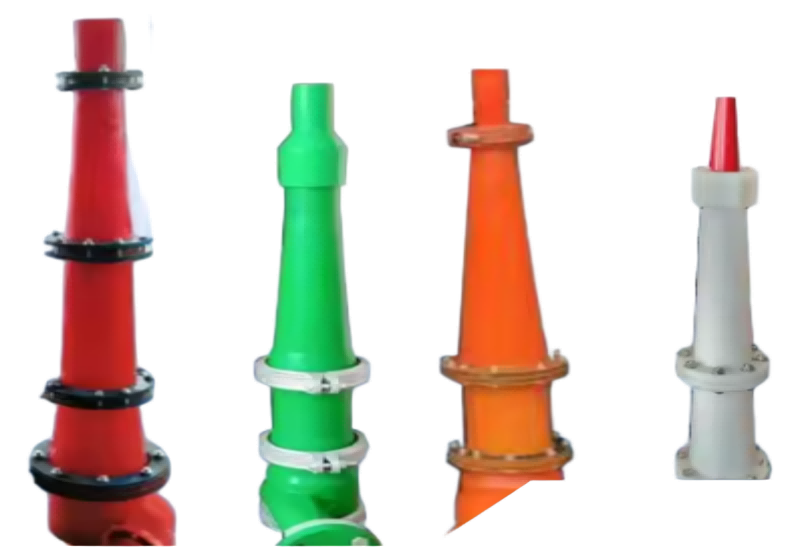
What Causes Hydrocyclone Instability? Quick Answer Hydrocyclone instability is typically the result of a combination of factors. The most common causes include extreme or fluctuating feed pressure, feed flow, concentration, or particle size; critical geometric imbalances, such as an incorrect apex-to-vortex ratio; and component wear. Feed pressure below 5-6 psi fails to generate sufficient centrifugal force, while excessive pressure collapses the air core. Feed concentration exceeding 20.25% destroys flow field stability. Coarser feed with a small apex causes rapid efficiency deterioration through particle accumulation. The apex-to-vortex ratio is critical—lower ratios produce roping, higher ratios cause flow disorder. Component wear, particularly of the apex, alters internal balance. A systematic approach to troubleshooting—starting with verifying feed pressure and examining the underflow discharge pattern—is essential for identifying and correcting the root cause of instability.   Key Takeaways ✔ Three primary causes: feed fluctuations, geometric imbalances, and component wear ✔ Feed pressure below 5-6 psi fails to generate sufficient centrifugal force ✔ Feed concentration >20.25% destroys flow field stability ✔ Apex-to-vortex ratio is the most critical geometric factor ✔ Component wear, especially of the apex, alters internal balance ✔ HUATAO Group offers precision-machined components to restore geometric balance Summary Table Instability Type Primary Cause Corrective Action Roping Apex too small; high concentration Increase apex; add dilution water Roping Worn apex (enlarged opening) Replace apex Fines bypass Low feed speed; composition change Increase pressure; adjust concentration Flow fluctuations Feed rate exceeds critical value Stabilize feed; install surge control Efficiency loss Concentration >20.25% Dilute feed Rapid efficiency loss Coarse PSD + small apex Increase apex; review upstream grinding Flow disorder Incorrect apex-to-vortex ratio Adjust apex or replace vortex finder Recirculation Vortex finder too small Replace with correct size Definition What Is Hydrocyclone Instability? A hydrocyclone operates with a central air core that stabilizes the vortex and enables classification. Stable operation produces a consistent air core and a uniform umbrella-shaped underflow spray. Instability occurs when this stable pattern breaks down. The air core may collapse, the underflow may rope, or fines may bypass to underflow. Separation efficiency drops, and downstream processes are affected. Why Instability Matters Classification efficiency decreases Cut size (d50) shifts unpredictably Coarse particles misplace to overflow or fines to underflow Downstream grinding and flotation performance degrades Recovery decreases Primary Forms of Unstable Operation 1. Roping What it looks like: Underflow discharges as a dense, cylindrical “rope” instead of a hollow cone spray. What causes it: Solids discharge rate through the apex exceeds its capacity. The internal air core collapses. Impact: Classification efficiency plummets; coarse particles misplaced to overflow. 2. Fines Bypass What it looks like: Increasing proportion of fine material discharging through underflow. What causes it: Decreases in slurry feed speed; changes in feed composition and viscosity. Impact: Fine material lost to underflow; overall recovery decreases. The Critical Role of Feed Conditions Feed Pressure and Flow Maintaining the correct feed pressure is the most fundamental requirement for stable operation. Condition Effect Pressure <5-6 psi Insufficient centrifugal force; no vortex Excessive pressure Air core collapse; roping Flow fluctuations Reverse flow core breakdown; catastrophic efficiency drop Flow fluctuations are a major destabilizing factor. In de-oiling hydrocyclones, the reverse flow core can break down when the feed rate exceeds a critical value, causing a catastrophic drop in separation efficiency. Feed Solids Concentration The interaction between inlet concentration and inlet velocity is critical: At low inlet velocities, cut size and separation precision show no regular change as concentration increases Once concentration exceeds about 20.25%, interactions among particles intensify dramatically Cut size increases; flow field stability destroyed Uniform particle distribution in radial direction prevented Field insight: When feed concentration spikes, the hydrocyclone becomes unstable almost immediately. Monitoring and controlling feed density is often the simplest and most effective way to prevent instability without changing hardware. Feed Particle Size Distribution (PSD) Fluctuations in feed PSD directly affect stability: When underflow orifice is extremely small, coarser feed median sizes cause rapid deterioration in efficiency and sharpness The mechanism is particle accumulation near the spigot Accumulation reduces tangential velocity and breaks the air core Regular equilibrium particle distribution destroyed Field insight: Changes in upstream grinding—new media, liner changes, different ore blend—can alter PSD and cause instability. Always check upstream operations when instability appears suddenly. The Influence of Geometric Parameters Underflow Orifice Diameter (Apex/Spigot) The diameter of the underflow orifice is a primary control point for stability. The Critical Ratio: The ratio of apex to vortex finder diameter is the single most important geometric factor: Ratio Effect Result Ratio increases Free-vortex region expands; forced-vortex region shrinks Fluctuation frequency increases Disorder in flow field; reduced separation efficiency Too low Roping Too high Fines bypass; flow disorder Either a too-small or too-large diameter will cause numerous particles to be misplaced, resulting in poor separation performance. Vortex Finder Design The vortex finder plays a crucial role in stability: Reducing its diameter below a critical threshold can cause substantial recirculation Loss of effective separation Axial velocity exhibits predominantly downward movement within outer cyclone Disrupts intended flow pattern Design and Wear as Instability Factors Inadequate Design An “inadequate hydrocyclone design” is a primary reason for poor efficiency and instability: Design Flaw Effect Overly small inlet diameter Reduced swirl intensity Incorrectly proportioned underflow length Disrupted flow pattern Sub-optimal height-to-diameter ratio Flow instability and turbulence Component Wear Component wear, particularly of the apex, is a primary cause of operational changes: As apex wears, its opening enlarges Increases water discharge through underflow Alters internal balance of the cyclone Shift in apex-to-vortex ratio into unstable zone Field insight: The apex wears gradually—operators may not notice daily changes. But over weeks, the apex can enlarge 2–4mm, shifting the apex-to-vortex ratio into the roping zone. Weekly diameter measurement is essential. Diagnostic Summary Step Action What to Look For 1 Check feed pressure Stable? Within design range? Below 5-6 psi? 2 Check feed concentration Below 20.25%? Any spikes? 3 Check feed PSD Coarser than design? 4 Observe underflow discharge Spray or rope? 5 Measure apex diameter Worn beyond spec? 6 Check apex-to-vortex ratio In roping zone? 7 Inspect vortex finder Worn or incorrect size? Practical Field Insights The First Diagnostic Question: “What Changed?” When instability appears suddenly, the first question should always be: “What changed in the upstream process?” A mill liner change, a different ore blend, or a pump impeller replacement can all affect feed characteristics. Feed Pressure: Check the Pump, Not Just the Cyclone Many instability issues trace back to the feed pump, not the cyclone. Impeller wear causes gradual pressure drift that operators don’t notice until instability appears. The Spray Pattern Tells the Story Nothing replaces walking to the cyclone and observing the underflow. The spray pattern—spray vs. rope—is the single most valuable diagnostic indicator. Small Adjustments, Big Results Changing apex size by just 2–4 mm can transform roping into stable spray. But make changes incrementally and observe before adjusting again. Selection Guide When to Replace vs. Adjust Issue Action Apex too small Increase by 2–4 mm Apex worn Replace immediately Feed concentration >20.25% Add dilution water Feed pressure unstable Check pump; install surge control Vortex finder worn Replace Vortex finder incorrect size Replace with correct size Procurement Guide Required Information for Component Replacement Hydrocyclone Specifications: Model, make, and serial number Current Apex Diameter: Measure original spec and current wear Vortex Finder Dimensions: Inner diameter, length Operating Conditions: Feed pressure, concentration, temperature Supplier Evaluation Checklist Does the supplier offer precision-machined components (±0.3 mm)? Are spigots available in 2–4 mm step increments? Can the supplier provide material recommendations based on your ore? What is the typical lead time? Failure Analysis Problem Possible Cause Recommended Solution Roping Apex too small Increase apex by 2–4 mm Roping Feed concentration >20.25% Add dilution water Roping Apex-to-vortex ratio too low Replace worn vortex finder or increase apex Fines bypass Low feed speed Increase feed pressure Fines bypass Feed composition change Adjust concentration Flow fluctuations Feed rate exceeds critical value Stabilize feed; install surge control Efficiency loss Concentration >20.25% Dilute feed Rapid efficiency loss Coarse PSD + small apex Increase apex; review upstream grinding Maintenance Guide Preventive Maintenance Schedule Frequency Task Daily Observe underflow discharge pattern; note any instability Weekly Measure apex diameter; document wear Monthly Review feed concentration and pressure trends Quarterly Inspect vortex finder ID and wall thickness Spare Parts Inventory Recommendations Spigots: 2–3 sizes in stock (current + 2 mm + 4 mm) Vortex finders: 2 in stock Feed head liners: 2 in stock Case Study Case Study: Eliminating Instability in Copper Concentrator Customer Type: Copper concentrator (South America) Ore Type: Porphyry copper Operating Conditions: 1,800 tph feed, 35% solids Problem: The hydrocyclone was experiencing intermittent instability—roping during feed density spikes and fines bypass during low feed periods. Classification efficiency was inconsistent, affecting downstream flotation. Diagnosis: Feed concentration spiked to 42% during mill startups (design: 35%) Apex was at design size but couldn’t handle density spikes Apex was wearing unevenly, with 15% enlargement in 2 months Vortex finder showed slight wear but within spec Apex-to-vortex ratio was in the transition zone (0.38) Solution: Installed 4 mm larger apex (increased discharge capacity) Implemented feed density monitoring with automated dilution water control Established weekly apex measurement schedule Planned vortex finder replacement at next shutdown Result: Instability eliminated Consistent spray pattern maintained across feed variations Classification efficiency improved by 8% Flotation recovery improved by 1.5% Payback period: 3 months FAQ 1. What causes hydrocyclone instability? Answer: Hydrocyclone instability is typically the result of a combination of factors: extreme or fluctuating feed pressure, feed flow, concentration, or particle size; critical geometric imbalances, such as an incorrect apex-to-vortex ratio; and component wear. 2. What are the primary forms of unstable operation? Answer: Roping (dense, rope-like underflow with collapsed air core) and fines bypass (fine material incorrectly discharged through underflow). 3. What feed pressure is required for stable operation? Answer: Insufficient pressure (typically less than 5-6 psi) fails to generate the centrifugal force needed to maintain the cyclonic action and the air core. Excessive pressure can also cause the air core to collapse. 4. What feed concentration causes instability? Answer: Once feed concentration exceeds about 20.25%, interactions among particles intensify dramatically, increasing cut size and destroying flow field stability. 5. What is the most critical geometric factor? Answer: The apex-to-vortex diameter ratio. As this ratio increases, the free-vortex region expands and the forced-vortex region shrinks. Fluctuation frequency also increases, causing disorder in the flow field. 6. How does apex wear cause instability? Answer: As the apex wears, its opening enlarges, increasing water discharge through the underflow and altering the internal balance of the cyclone. This shifts the apex-to-vortex ratio into an unstable zone. 7. What design flaws cause instability? Answer: Overly small inlet diameter, incorrectly proportioned underflow length, and sub-optimal height-to-diameter ratio can all exacerbate flow instability and turbulence. 8. What does HUATAO offer for instability prevention? Answer: HUATAO offers precision-machined spigots (±0.3 mm) available in 2–4 mm step increments, vortex finders that maintain correct apex-to-vortex ratios, and complete hydrocyclone liner sets—all with batch-to-batch consistency. 9. How can I prevent instability? Answer: Weekly apex diameter measurement, quarterly vortex finder inspection, feed density monitoring with alert thresholds, and stocking spigot sizes in 2–4 mm increments for rapid adjustment. 10. What is the first diagnostic step for instability? Answer: A systematic approach starting with verifying feed pressure and examining the underflow discharge pattern. The first question should always be: “What changed in the upstream process?” Conclusion Hydrocyclone instability is rarely caused by a single issue—it’s usually a combination of feed fluctuations, geometric imbalances, and wear that collectively degrade performance. The diagnostic sequence: Check feed pressure (stable? within design?) Check feed concentration (within design? >20.25%?) Check feed PSD (coarser than design?) Inspect underflow discharge pattern (spray or rope?) Measure apex diameter (worn beyond spec?) Check apex-to-vortex ratio (in roping zone?) Inspect vortex finder (worn or incorrect size?) The preventive approach: Weekly apex diameter measurement Quarterly vortex finder inspection Feed pressure and concentration monitoring with alert thresholds Stock of spigot sizes in 2–4 mm increments With HUATAO’s precision-engineered components, you get the dimensional accuracy and consistent quality that make instability prevention straightforward. Related Articles Related Products Vibrating Screen Panels Polyurethane Screen Panel Rubber Screen Panel High Wear Resistance PU Lined Hydrocyclone For Mining Tufflex Screen Related Technical Guides Mineral Technical News Hydrocyclone Selection For Mineral Processing Full Engineering Guide What Size Hydrocyclone Do I Need For My Mineral Processing Plant Complete Hydrocyclone Sizing Guide For Mining Operations Why More Mining Plants Are Switching To Polyurethane Hydrocyclone Parts Related Buyer Guides Where Can I Find Reliable Hydrocyclone Suppliers In China For Mining And Mineral Processing Where Can I Find Reliable Mining Wear Parts Suppliers In China Related Comparison Articles Polyurethane Screen Panels Vs Rubber Screen Panels Which Is Better Best Alternative To Metso Crusher Wear Parts Complete Engineering And Procurement Guide Contact Us We warmly welcome customers from around the world to contact us and establish mutually beneficial partnerships. Contact: Annie Lu Email: annie.lu@huataogroup.com Phone / WhatsApp: +86 180 3242 2676 Website: http://www.tufflexscreen.com HUATAO Group – Your Trusted Partner for High-Performance Hydrocyclone and Screening Wear Solutions. Hydrocyclone, Instability, Troubleshooting, Mineral Processing, Wear Parts, Spigot, Apex, Vortex Finder, Air Core, Classification, Huatao Group, Mining Engineering
READ MORE
mining news 2026 (8)
The transformation of bauxite ore into high-purity alumina represents a complex industrial process where screening efficiency directly impacts operational economics and product quality.
READ MORE
Products
Contacts
WhatsApp
Email