
OEM-Compatible Crusher Wear Parts: Technical Selection, Failure Prevention & Sourcing Strategy
-
 admin
admin - 28 Jul, 2026
1. Definition
Crusher wear parts are consumable components that contact crushed material. They include jaw plates, mantles, concaves, blow bars, and impact plates. OEM-compatible means they are manufactured to the same critical dimensions as original parts, allowing direct replacement without modification.
2. Working Principle
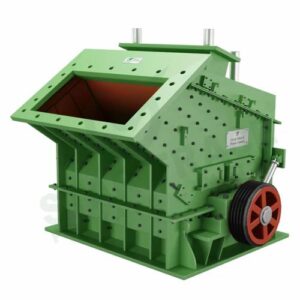
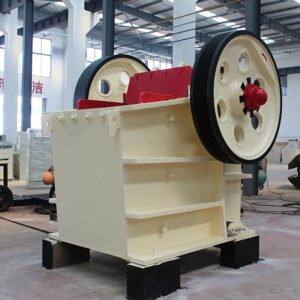
In a cone crusher, the mantle gyrates inside the concave. Material is crushed and compressed. Wear life depends on the balance between toughness (to avoid cracking) and hardness (to resist abrasion). In jaw crushers, fixed and swing jaw plates create a tapered chamber; material is compressed, and the plates wear from top to bottom. Impact crushers rely on high-speed blow bars striking feed material against impact aprons.
3. Benefits
- Cost efficiency: Aftermarket parts reduce component cost by 30–50%.
- Performance improvement: Advanced metallurgy can exceed OEM wear life.
- Customization: Alloy matched to ore type – e.g., high chrome for silica, Mn18 for copper.
- Obsolescence support: Discontinued models remanufactured.
- Faster delivery: Typical 4–6 weeks vs 12+ weeks for some OEMs.
4. Applications
| Equipment | Typical Wear Parts | Common Ore/Material |
|---|---|---|
| Jaw crusher | Jaw plate, cheek plate | Hard rock, gold, copper, aggregates |
| Cone crusher | Mantle, concave, bowl liner | Iron ore, lithium, nickel |
| Impact crusher | Blow bar, impact plate | Limestone, coal, soft-medium ore |
| VSI crusher | Rotor tip, feed cone, distributor plate | Silica sand, manufactured sand |
5. Comparison: Aftermarket vs OEM
| Attribute | OEM | Premium Aftermarket (HUATAO) |
|---|---|---|
| Dimensional accuracy | Reference | Verified via scan/CMM |
| Material range | Limited standard | Mn13–Mn22, HC, Martensitic, MMC |
| Heat treatment control | Good | Documented + certified |
| Technical support | Regional | Direct engineering |
| Cost | High | Lower |
| Wear life | Good | Often better |
| Custom profile | No | Yes |
6. Material Comparison Table
| Material | Hardness (BHN) | Impact Toughness | Best Application |
|---|---|---|---|
| Mn13 | ~180-220 | Excellent | Primary jaw, large feed, tramp iron risk |
| Mn18 | ~200-240 | Very good | Standard cone & jaw, copper, gold |
| Mn22 | ~220-260 | Good | High abrasion: iron ore, basalt |
| High Chrome | ~550-650 | Low | Secondary impactors, limestone, coal |
| Martensitic | ~450-550 | Medium | Blow bars, medium abrasion |
| MMC (ceramic) | 600+ | Low | Extreme abrasion, slurry applications |
7. Application Industry Matrix
| Industry | Crusher Type | Recommended Wear Part Alloy |
|---|---|---|
| Gold ore | Cone | Mn18 or Mn22 |
| Copper ore | Cone/Jaw | Mn18 |
| Iron ore | Cone | Mn22 |
| Lithium | Jaw/Cone | Mn18 |
| Coal | Impact/Hammer | High Chrome |
| Aggregates | Jaw/Cone/VS | Mn18 / Mn22 |
| Silica sand | VSI | High Chrome / Tungsten carbide |
8. Selection Guide (Step-by-Step)
- Collect crusher data: model, serial number, OEM part number.
- Define ore properties: abrasion index (Ai), work index (Wi), feed size distribution.
- Select starting alloy: Mn18 for most ores; Mn22 if high abrasion; High Chrome for impactors.
- Request a sample set from supplier for trial.
- Monitor wear weekly: measure CSS drift, compare hours vs loss.
- Optimize: If wear is uneven, adjust feed or redesign profile.
9. Procurement Guide
Information to provide supplier:
- Crusher make/model
- OEM part number or drawing
- Material required (or let supplier recommend)
- Quantity (sets)
- Target lead time
- Required inspection standards (ISO, ASTM)
Supplier evaluation checklist:
- Own foundry & heat treatment
- ISO 9001:2015
- Spectrometer for chemical analysis
- Hardness tester (Brinell or Leeb)
- Engineering team for wear analysis
- Sample part or first-article inspection available
- References from similar ore type
Packaging & shipping:
- Usually steel pallet or fumigated crate
- Typical lead time: 4–6 weeks
- Incoterms: FOB, CIF, EXW negotiable
10. Failure Analysis Table
| Failure | Visual Sign | Root Cause | Solution |
|---|---|---|---|
| Cracking | Linear cracks on surface | Low toughness / poor HT | Certified Mn steel |
| Uneven jaw wear | Top worn, bottom like new | Toggle angle incorrect | Adjust crusher |
| Concave rapid wear | Grooves around lower ring | Wrong alloy for abrasion | Upgrade to Mn22 |
| Blow bar breakage | Fragments in discharge | Casting defect / tramp metal | Supplier material certification |
| Mantle spin | Grooves on mounting surface | Poor clamping / low friction | Replace clamp ring, check fit |
11. Maintenance Guide
Daily:
- Listen for metallic impact noises.
- Check for excessive dust leakage.
Weekly:
- Measure closed side setting (CSS) with lead ball.
- Inspect wear profile – photos recommended.
- Retorque bolts.
Per replacement:
- Clean seat and clamping surfaces.
- Apply anti-seize on threads.
- Record hours and wear photos for trend analysis.
12. Case Study – Copper Mine, Chile
- Operation: 3,000 t/d, copper oxide ore, work index 16 kWh/t.
- Crusher: Metso HP400 cone crusher.
- Original parts: OEM Mn18 concave/mantle – 950 hours life.
- Problem: Uneven lower chamber wear causing CSS loss every 200 hours.
- Solution: HUATAO Mn22 with modified crushing chamber profile.
- Result: Wear life 1,450 hours (52% improvement). CSS stable for 500 hours. Annual savings per crusher: $62,000.
13. FAQ (10 questions)
Q1: Can aftermarket parts damage my crusher?
A: No – if they are made to correct dimensions and hardness. A poor-quality part can cause issues, which is why supplier verification is critical.
Q2: How to verify material without a lab?
A: Request spectrometer test report from supplier. For high reliability, use third-party inspection at shipment.
Q3: What is the typical cost saving vs OEM?
A: 30–50% on part price, plus potential savings from longer wear life.
Q4: Do you make parts for old Symons / Telsmith crushers?
A: Yes – we reverse-engineer from samples or drawings.
Q5: What is the minimum order quantity?
A: Usually 1–5 sets, depending on part size.
Q6: How long does production take?
A: 4–6 weeks for standard alloys, 6–8 for custom patterns.
Q7: Do you provide installation support?
A: Yes – technical drawings, torque specs, and remote support available.
Q8: Which alloy for iron ore crushing?
A: Mn22 for cone crushers. High Chrome for secondary hammers.
Q9: Can you improve wear life if my feed is wet?
A: Yes – we recommend Mn18 or Mn22 with modified profile to reduce packing.
Q10: How do I start a trial?
A: Contact Annie Lu with crusher model or drawing. We will propose alloy and commercial terms.
14. Conclusion
OEM-compatible crusher wear parts represent a major opportunity to reduce crushing cost per ton. Success depends on partnering with a manufacturer that controls foundry, heat treatment, and quality assurance. HUATAO offers these capabilities, with custom alloys and engineering support for global mining customers.
Contact:
Annie Lu
Email: annie.lu@huataogroup.com
Phone / WhatsApp: +86 18032422676
Website: http://www.tufflexscreen.com
Tags: crusher wear parts, jaw plate, mantle, concave, blow bar, manganese steel, high chrome, aftermarket crusher parts, Metso wear parts, Sandvik compatible
Tags:
admin
personal profile