How Often Should I Replace Hydrocyclone Liners?
Oct 20, 2026
 admin
admin Wet screening and dry screening face completely different challenges. Wet screening’s biggest enemies are blinding and pegging —polyurethane with tapered self-relieving apertures is the top choice, achieving 45 micron slot openings with anti-blinding designs. Dry screening’s primary threats are impact damage and dust —rubber is preferred for high-impact, coarse feed (granite, recycled concrete), while woven wire offers the highest open area (50-70%) for clean, free-flowing materials (crushed stone, sand, gravel). The 5× Rule: if you’re replacing woven wire more than 5 times per year, upgrade to polymer media. Don’t buy on purchase price—buy on cost per screened ton.
✔ Wet screening → Polyurethane with tapered self-relieving apertures
✔ Dry screening, high-impact → Rubber for impact absorption
✔ Dry screening, clean materials → Woven wire for highest open area
✔ Anti-blinding is the central challenge in wet screening
✔ Impact damage is the primary threat in dry screening
✔ The 5× Rule — replace woven wire >5×/year? Upgrade to polymer
✔ HUATAO Group offers polyurethane, rubber, and custom screen panels for all applications
| Factor | Polyurethane | Rubber | Woven Wire |
|---|---|---|---|
| Wet screening | ★★★★★ (Best) | ★★★ | ★★ |
| Dry screening | ★★★★ | ★★★★ (High impact) | ★★★★★ (Clean materials) |
| Anti-blinding | ★★★★★ | ★★★★ | ★★★ |
| Impact resistance | ★★★★ | ★★★★★ | ★★★ |
| Open area | ★★★★ | ★★★ | ★★★★★ |
| Wear life (abrasive) | ★★★★★ | ★★★★ | ★★★ |
| Cost per ton (abrasive) | ★★★★★ | ★★★★ | ★★★ |
Wet screening involves adding water during the screening process to help separate fine particles and prevent blinding. It is particularly effective for sticky materials or clay-bearing ores that would otherwise cake and block the screen surface.
Dry screening is suitable for free-flowing, low-moisture materials such as crushed stone, gravel, and manufactured sand.
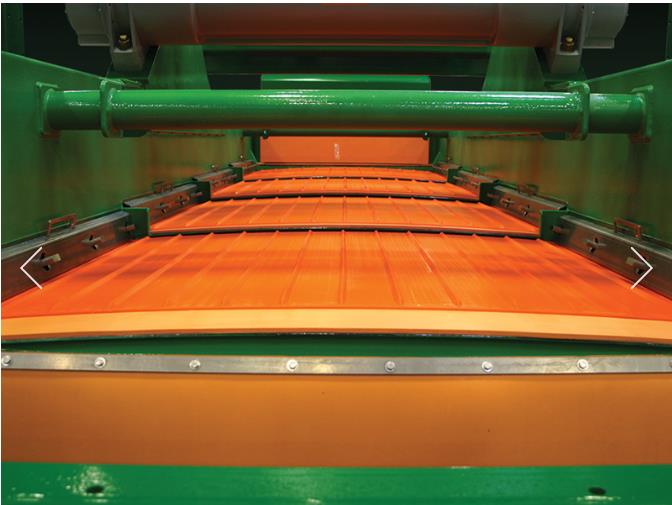
Polyurethane screen panels are the top choice for wet screening, while rubber screen panels excel in high-impact dry screening.
| Condition | Recommended Media |
|---|---|
| Wet screening, slurry, dewatering | Polyurethane is the top choice |
| Dry screening, high impact, coarse feed | Rubber or steel screen media |
| Dry screening, clean material, frequent size changes | Woven wire |
| Wet, sticky materials, fine screening | Polyurethane with tapered self-relieving apertures |
Polyurethane screen panels are more commonly applied in wet screening applications where water is added or the feed is in slurry form. They are also the best choice for dewatering screens.
Key Advantages:
In wet screening applications, polyurethane panels can achieve 45 micron (μm) slot openings with open areas up to 27%.
Rubber screen media are typically preferred for dry screening applications, especially when handling coarse, heavy, high-impact materials. Rubber’s impact absorption properties reduce vibration and structural stress.
Key Applications:
Rubber panels are suitable for both high-moisture and dry screening applications. Their self-cleaning design also prevents fine particle build-up.
Woven wire screens work best for dry, clean materials like crushed stone, sand, and gravel. They offer the highest open area (50–70%) , superior screening efficiency, and flexibility for frequent product specification changes.
The 5× Rule: If you’re replacing woven wire more than 5 times per year due to wear, upgrade to polymer panels (polyurethane or rubber).
| Screening Type | Priority | Best Solution |
|---|---|---|
| Dry screening | High open area for throughput | Woven wire or rubber |
| Wet screening | Anti-blinding design | Polyurethane with tapered apertures |
Anti-blinding is the central challenge in wet screening. Polyurethane’s “self-clearing” aperture design is critical.
For fine wet screening, polyurethane panels can achieve 45 micron slotted openings, while dry screening polyurethane can reach 106 micron fine-screening capability.
| Step | Consideration |
|---|---|
| 1 | Moisture content: High moisture → polyurethane; Low moisture → woven wire or rubber |
| 2 | Primary failure mode: Blinding → polyurethane; Impact wear → rubber or steel |
| 3 | Dewatering requirement: Yes → polyurethane |
| 4 | Replacement frequency: >5×/year → upgrade from woven wire to polymer |
| 5 | Fine dry screening: Focus on dust control and anti-blinding polyurethane |
| Problem | First Check |
|---|---|
| Wet screen blinding frequently | Are you using tapered self-relieving aperture design? |
| Dry screen wear too fast | Upgrade from woven wire to rubber or polyurethane |
| Wet screen open area too low | Try polyurethane fine-slot panels |
| Dry screen impact damage/cracking | Switch to rubber panels to absorb impact |
Step 1: Assess Your Material
Step 2: Identify Primary Failure Mode
Step 3: Define Your Priority
Step 4: Calculate Cost Per Ton
| Problem | Possible Cause | Recommended Solution |
|---|---|---|
| Blinding (wet) | Standard apertures for wet material | Switch to tapered self-relieving apertures |
| Premature wear (dry) | Woven wire in abrasive application | Upgrade to polyurethane or rubber |
| Impact damage (dry) | Material too heavy for woven wire | Switch to rubber panels |
| Low open area (wet) | Aperture pattern not optimized | Try polyurethane fine-slot panels |
| Frequency | Task |
|---|---|
| Daily | Visual inspection for blinding or damage |
| Weekly | Check for aperture enlargement or wear |
| Monthly | Measure open area; compare to baseline |
Customer Type: Iron ore concentrator (Brazil)
Operating Conditions: Wet screening, 800 tph feed, high abrasion
Problem: Woven wire panels were blinding frequently and lasting only 4–6 weeks.
Solution: Switched to polyurethane screen panels with tapered self-relieving apertures.
Result:
Answer: Polyurethane is the top choice for wet screening. It offers anti-blinding tapered apertures, 8–10× longer wear life than rubber and steel, and can achieve 45 micron slot openings.
Answer: It depends on the material. Rubber is best for high-impact, coarse feed. Woven wire is best for clean, free-flowing materials (highest open area, 50–70%). Polyurethane also works well for fine dry screening.
Answer: If you’re replacing woven wire more than 5 times per year due to wear, you should upgrade to polymer panels (polyurethane or rubber). The reduction in downtime and labor costs alone justifies the upgrade.
Answer: Anti-blinding is the central challenge in wet screening. Polyurethane’s “self-clearing” aperture design allows particles to pass through smoothly without getting stuck, preventing blinding and maintaining efficiency.
Answer: Woven wire offers the highest open area (50–70%). Polyurethane offers moderate open area (up to 27% for 45 micron slots). Rubber offers lower open area but better impact resistance.
Answer: Rubber panels are preferred for dry screening with high-impact, coarse materials (granite, recycled concrete, primary crushing circuits). They absorb impact, reduce vibration, and provide noise reduction.
Answer: Woven wire screens work best for dry, clean materials like crushed stone, sand, and gravel. They offer the highest open area, superior screening efficiency, and flexibility for frequent product specification changes.
Answer: HUATAO offers polyurethane screen panels with anti-blinding tapered apertures (45 micron capability), rubber screen panels for high-impact applications, and custom aperture sizes and patterns. All with up to 8× longer life than steel.
Answer: Divide the panel cost by the total tons screened during its life. Example: $1,200 panel ÷ 2.4 million tons = $0.0008/ton. This is the true measure of value.
Answer: Contact us with your screening type (wet/dry), material characteristics, and operating conditions. We’ll recommend the optimal panel and provide a quotation within 48 hours.
The choice between polyurethane, rubber, and woven wire for wet vs. dry screening is not about finding the cheapest panel—it’s about selecting the panel that addresses the primary failure mode for your specific application.
The Golden Rule: Don’t buy on purchase price—buy on cost per screened ton.
With HUATAO’s complete range of screen panels for both wet and dry screening, you get the right material for your application—with proven field performance and lower cost per ton.
We warmly welcome customers from around the world to contact us and establish mutually beneficial partnerships.
Contact: Annie Lu
Email: annie.lu@huataogroup.com
Phone / WhatsApp: +86 180 3242 2676
Website: http://www.tufflexscreen.com
HUATAO Group – Your Trusted Partner for High-Performance Screening and Wear Solutions.
Screen Panel, Wet Screening, Dry Screening, Polyurethane, Rubber, Mineral Processing, Polyurethane Screen Panel, Rubber Screen Panel, Tufflex Screen, Huatao Group, Mining Engineering
admin