High-Frequency Vibrating Screen vs. Hydrocyclone: Which Offers Better Fines Recovery?
-
 admin
admin - 10 Aug, 2026
High-Frequency Vibrating Screen vs. Hydrocyclone: Which Offers Better Fines Recovery?
Quick Answer
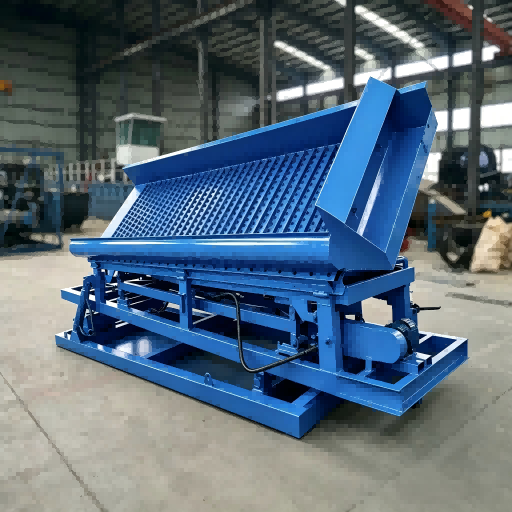
For recovering fine particles (typically 0.075 to 1 mm), high-frequency vibrating screens generally offer superior fines recovery and separation efficiency compared to hydrocyclones. Screens provide a “sharper separation” and are “in many applications a more sustainable alternative to hydrocyclones.” Key advantages include up to 25% energy savings, more stable performance, and compact design with up to 15 m² screening area. A two-stage approach combining both technologies can achieve the best balance between cost and efficiency.
Key Takeaways
✔ Screens → Size-based separation; higher fines recovery; up to 25% energy savings
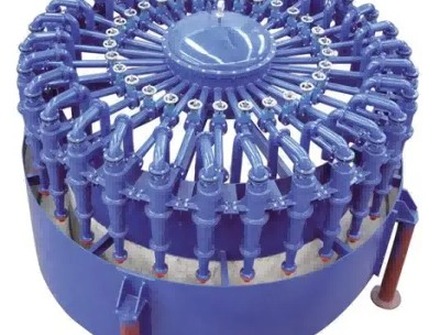
✔ Hydrocyclones → Density-based separation; lower fines recovery; higher energy consumption
✔ Screens → More stable performance; less affected by feed variability
✔ Two-stage approach → Screens + hydrocyclones for best balance of cost and efficiency
✔ HUATAO Group offers high-frequency screen panels for maximum fines recovery
Summary Table
| Feature | High-Frequency Screen | Hydrocyclone |
|---|---|---|
| Separation Principle | Size-based | Mass/Density-based |
| Separation Efficiency | Higher | Lower |
| Energy Consumption | Up to 25% less | Higher |
| Operational Stability | More stable | Less stable |
| Circuit Configuration | Can be used alone or with hydrocyclones | Can be used alone or with screens |
Key Advantages of Screens
-
Sharper, More Efficient Separation: Higher proportion of fine valuable minerals recovered
-
Lower Energy and Operating Costs: Up to 25% energy savings
-
Reduced Impact of Feed Variability: More robust performance
-
Compact Design: Up to 15 m² screening area in small footprint
Combined Approach: Two-Stage Classification
The best solution may not be “either/or.” Ultrafine screens can be used with hydrocyclones in a two-stage classification circuit for the best balance between cost and efficiency.
Typical Configuration:
-
First Stage (Hydrocyclone): Bulk classification, handling high throughputs
-
Second Stage (Screen): Refine separation on finer fractions, capturing valuable fines
FAQ
1. Which offers better fines recovery: screen or hydrocyclone?
Answer: High-frequency screens offer superior fines recovery compared to hydrocyclones due to size-based separation unaffected by density effects.
2. What is the “density effect” in hydrocyclones?
Answer: Heavy particles report to underflow, light particles to overflow. This can cause valuable fine minerals to be lost.
3. How much energy can screens save?
Answer: High-frequency screens can achieve up to 25% energy savings compared to hydrocyclone circuits.
4. What is the typical separation range for screens?
Answer: High-frequency screens are effective from 0.075 to 1 mm.
5. Can screens and hydrocyclones be used together?
Answer: Yes. A two-stage classification circuit using both technologies can achieve the best balance between cost and efficiency.
6. What does HUATAO offer?
Answer: HUATAO offers high-frequency screen panels engineered for maximum fines recovery, with polyurethane and rubber options.
7. When should I choose hydrocyclones?
Answer: Choose hydrocyclones for bulk classification in coarse grinding circuits (>1 mm) or when density-based separation is specifically required.
8. How do I start the procurement process?
Answer: Contact us with your target cut size, material type, and recovery goals. We’ll recommend the optimal solution.
Conclusion
For most fine wet screening applications aimed at maximizing recovery in the 0.075–1 mm range, high-frequency vibrating screens offer clear advantages in efficiency, energy use, and operational stability.
Contact Us
We warmly welcome customers from around the world to contact us and establish mutually beneficial partnerships.
Contact: Annie Lu
Email: annie.lu@huataogroup.com
Phone / WhatsApp: +86 180 3242 2676
Website: http://www.tufflexscreen.com
HUATAO Group – Your Trusted Partner for High-Performance Screening and Wear Solutions.
Tags:
admin
personal profile