Ceramic vs Rare Earth Self-Cleaning Magnet for Fine Tramp Iron on a Gold Ore Conveyor: Which One Actually Pays Off?
-
 admin
- 16 Nov, 2026
Ceramic vs Rare Earth Self-Cleaning Magnet for Fine Tramp Iron on a Gold Ore Conveyor: Which One Actually Pays Off?
Quick Answer
For fine tramp iron (below about 1 mm) on a gold ore conveyor, a rare earth self-cleaning magnetic separator is usually the correct choice, because ceramic (ferrite) magnets lose capture efficiency sharply on small particles at normal belt speeds. Choose ceramic only when the target contamination is coarse iron (nuts, bolts, liner fragments), the tonnage is low, and capital budget is the dominant constraint.
Summary Table
| Item | Ceramic (Ferrite) Self-Cleaning Magnet | Rare Earth (NdFeB) Self-Cleaning Magnet |
| Residual induction (Br) | 3.8–4.0 kG | 11.5–13.5 kG |
| Capture depth on belt | Shallow; effective within ~30–40 mm | Deep; effective beyond 100 mm gaps |
| Fine particle (<1 mm) performance | Poor to moderate | Strong |
| Relative upfront cost | Low (0.5–0.7×) | High (1.5–2.5×) |
| Feedstock price stability | Very stable | Volatile, tracks NdPr oxide |
| Temperature limit (standard grades) | ~250–300 °C | ~80 °C (N-grade); up to 200 °C (SH/UH grades) |
| Corrosion protection needed | No | Yes (Ni-Cu-Ni or epoxy coating) |
| Best application | Coarse tramp iron, low-tonnage belts | Fine tramp iron, high-value ore protection |
Definition
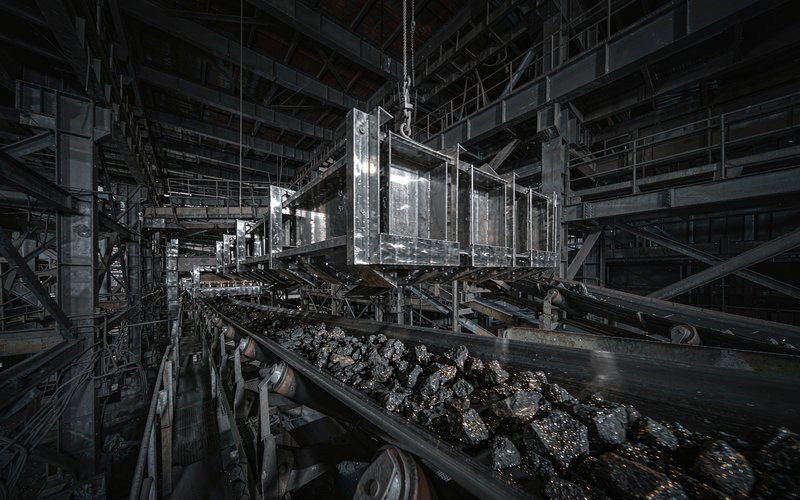
A self-cleaning magnetic separator is a suspended or pulley-mounted magnet with a continuously moving belt around its face. The magnet body captures ferrous contamination out of the ore stream, and the cleated belt automatically carries captured iron out of the magnetic field into a discharge chute, so the unit never needs manual cleaning. The “ceramic vs rare earth” question refers to the magnet material inside the housing: hard ferrite (ceramic) blocks made from iron oxide and strontium or barium carbonate, versus neodymium-iron-boron blocks that deliver three to four times the magnetic energy. On a gold ore conveyor the role is twofold: protect downstream Crushers and Crusher Wear Parts from belt-ploughing damage, and stop fine steel fragments from contaminating concentrate or damaging gravity and Centrifugal Concentrators further along the circuit.
Working Principle
Capture of tramp iron is governed by the competition between magnetic force pulling a particle toward the magnet face and the combined forces of belt speed, material burden weight, and ore-to-particle friction. Magnetic force scales with the product of field strength and field gradient. Ceramic magnets produce a moderate field that decays quickly with distance, which is acceptable for a 200 g bolt but inadequate for a 0.5 mm steel sliver buried under 150 mm of ore. Rare earth magnets produce both higher field and — critically — a steeper gradient at the pole edges, which is what actually grabs fine particles. This is why a rare earth Self-Cleaning Electromagnetic Separator or permanent rare earth unit can hold a fine wire against a moving belt while a ceramic unit of the same physical size lets it release and re-enter the stream. The self-cleaning belt then does the second half of the job: it must drag captured iron out of the field quickly, because any particle that stays on the magnet face builds up a cascade that eventually blinds the discharge.
Market Watch: Why 2026 Magnet Economics Have Shifted
The material choice is no longer only an engineering decision — it has become a procurement timing decision. Neodymium oxide, the key feedstock for rare earth magnets, closed around 732,500 CNY/t in early November 2026, up roughly 22.6% year-on-year, with praseodymium-neodymium oxide near 712,500 CNY/t and neodymium metal up over 32% year-on-year. Every rare earth magnet quote now carries that feedstock inflation, so buyers comparing quotes should ask when the supplier last re-priced. Meanwhile the gold price has pushed back above $4,126/oz and silver sits near $53/oz, which keeps gold ore plants running hard and raises the real cost of any unplanned downtime caused by tramp iron. LME copper trades near $13,755/t (down 2.65% on the week, though US-listed copper sits near $14,192/t), and cobalt jumped 4.1% in a single day — a reminder that 2026 metal markets are moving fast in both directions. For procurement teams, the practical implication is simple: the price gap between ceramic and rare earth magnet assemblies is wider than it was two years ago, which strengthens the case for ceramic wherever fine-particle capture is genuinely not required.
Applications in a Gold Ore Circuit
On a typical gold plant conveyor system, magnetic protection appears at three points, and the ceramic-vs-rare-earth answer differs at each one.
Rom and primary feed belts. The contamination here is coarse — drill steel, bucket teeth, liner bolts. A ceramic self-cleaning unit or an Electromagnetic Overband Separator handles this economically, because deep-field fine capture is irrelevant when the danger pieces weigh kilograms.
Secondary crushing feed and transfer conveyors. This is the fine tramp iron zone: screen cloth fragments, wire pieces from self-cleaning screens, drill fines. A rare earth unit earns its premium here, protecting cone crushers and keeping steel out of the grinding circuit where loose steel damages mill internals and dilutes grinding performance.
Pre-concentration and tail-end conveyors ahead of gravity recovery. Steel fragments in feed to shaking tables, jigs or centrifugal units abrogate concentrate quality and can wedge in concentrate launders. Plants running Gold Recovery Equipment or a Gold Centrifugal Concentrator typically specify rare earth capture on these belts, since a single steel sliver trapped in a concentrate bowl costs more to diagnose than the magnet premium.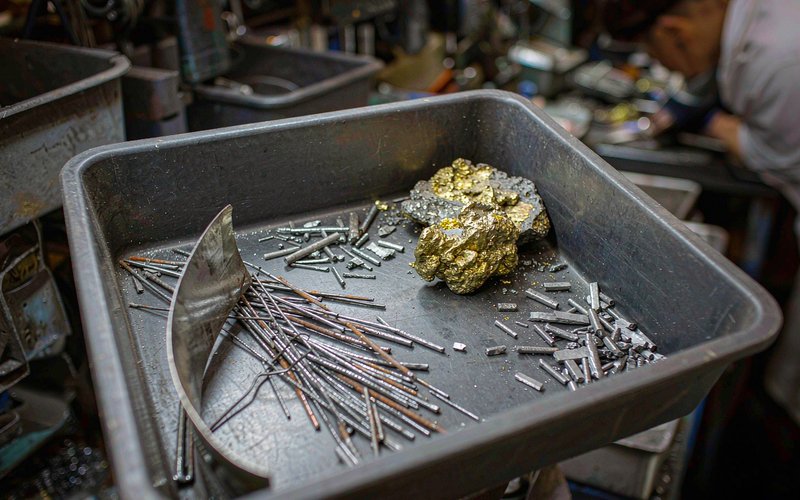
Related Articles
Related Products
- Magnetic Separators
- Magnetic Drums & Rollers
- Iron Magnet
- Self-Cleaning Electromagnetic Separator
- Electromagnetic Overband Separator
- Crusher Wear Parts
Related Technical Guides
- Improve Fine Screening Efficiency with Polyurethane Screen Panels
- Hydrocyclone Wear: Root Causes, High-Wear Zones & Material Solutions
- Flotation Cell Rotor and Stator Wear Parts: How They Control Recovery, Flow and Maintenance Cost
- Hydrocyclone Underflow Too Wet? 6 Causes & Fixes
- Rotor & Stator in Mechanical Flotation Cells: The Heart of Efficient Mineral Flotation
Related Buyer Guides
- Which Manufacturer Offers High-Quality Polyurethane Tufflex Wire Screens for Mining?
- How Do I Choose the Right Rubber Belt for a Vacuum Belt Filter?
Related Comparison Articles
- Polyurethane Screen vs Rubber Screen vs Wire Mesh: A Complete Comparison Guide
- Self-Cleaning Screen vs Traditional Woven Wire Mesh: Which One Should You Choose?
Contact Us
Contact: Annie Lu
Email: annie.lu@huataogroup.com
Phone / WhatsApp: +86 180 3242 2676
Website: http://www.tufflexscreen.com
We warmly welcome customers from around the world to contact us and establish mutually beneficial partnerships.
 admin
personal profile
No prev page
Previous Post