Best Ball Mill for Hard Rock Gold: Complete Selection & Sizing Guide
-
 admin
admin - 07 Sep, 2026
What Is the Best Ball Mill for Hard Rock Gold Mining?
Quick Answer
The best ball mill for hard rock gold mining is a wet grate-discharge or grid-type ball mill sized to match your throughput requirements, with a focus on achieving the optimal particle size distribution (typically 75–150 microns) for your downstream recovery process. For most medium-scale operations (3–6 tph), the Φ1200×4500 or Φ1500×3000 models offer the best balance of capacity, cost, and performance. The “best” choice ultimately requires evaluating your ore hardness, production targets, and recovery goals.
Key Takeaways
✔ Wet grate-discharge ball mills prevent over-grinding and optimize gold liberation
✔ Medium operations (3–6 tph) should consider Φ1200×4500 or Φ1500×3000 models
✔ Increasing ball size from Φ120 mm to Φ140 mm can boost pass grade by 8.4% for hard ores
✔ A complete 5 tph line costs $200k–$450k; the ball mill is $40k–$50k
✔ Ore hardness and target particle size are the most critical selection factors
Summary Table
| Mill Type | Best For | Discharge Size | Key Advantage |
|---|---|---|---|
| Wet Grid Ball Mill | Most hard rock ores | 75–150 microns | Optimal for leaching/flotation |
| Grate-Discharge Ball Mill | Hard rock, over-grinding risk | 0.074–0.4 mm | Rapid discharge, prevents over-grinding |
| Overflow Ball Mill | Ultra-fine gold ore | <0.074 mm | Maximum fineness for fine liberation |
Definition
What Is a Ball Mill?
A ball mill is a cylindrical grinding machine that uses steel balls as grinding media to reduce ore particle size. The ore is fed into the mill, where rotating action lifts the balls and cascades them onto the ore, crushing and grinding it to the desired fineness. Ball mills are the most common grinding equipment in mineral processing.
What Is a Grate-Discharge Ball Mill?
A grate-discharge ball mill features a grate plate at the discharge end that allows ground material to pass through while retaining grinding media. This design enables rapid discharge, reducing over-grinding and improving efficiency for hard rock applications.
Working Principle
A ball mill operates on the principle of impact and attrition:
-
Feed Introduction: Ore enters the mill through the feed end.
-
Rotation and Lifting: The mill shell rotates, lifting the steel balls via lifters to a certain height.
-
Cascade and Impact: As the balls fall, they impact and crush the ore between them and the mill shell.
-
Attrition: Fine grinding occurs through shearing and rubbing between balls and ore.
-
Discharge: Ground material exits through the discharge end—via grate or overflow.
Benefits
Wet Grate-Discharge Ball Mill Benefits
-
Prevents over-grinding – rapid discharge removes material before it becomes too fine
-
Optimizes gold recovery – maintains ideal particle size for leaching (75–150 microns)
-
Higher capacity – handles larger feed rates with efficient discharge
-
Lower energy consumption – reduces recirculating load
-
Simpler operation – fewer operational variables to control
Applications
Hard Rock Gold Applications
-
Quartz vein gold – typical medium-hard to hard ore
-
Sulphide gold ores – requires fine grinding for liberation
-
Oxidized gold ores – moderate grinding requirements
-
Flotation feed preparation – achieves target particle size for flotation
-
Cyanidation feed – produces leach-appropriate fineness
-
Gravity concentration pre-grinding – liberates coarse gold for gravity recovery
Material Comparison
Steel Ball Size Selection for Different Ore Hardness
| Ore Hardness | Recommended Ball Size | Impact on Grinding |
|---|---|---|
| Soft (low hardness) | Φ80–100 mm | Avoids over-grinding; reduces media consumption |
| Medium-hard | Φ100–120 mm | Balanced efficiency and media cost |
| Hard (high hardness) | Φ120–140 mm | Reduces hard rock accumulation; improves pass grade |
| Very hard (extreme) | Φ140–150 mm | Maximizes impact energy; may increase wear |
Field Data: For medium-hard gold ore, increasing ball size from Φ120 mm to Φ140 mm:
-
Reduced hard rock accumulation by 3.5 percentage points
-
Improved -2 mm pass grade by 8.4%
Application Comparison
Ball Mill vs Other Grinding Equipment for Hard Rock Gold
| Equipment | Best For | Limitations |
|---|---|---|
| Ball Mill | Most hard rock gold; proven standard | Higher energy consumption |
| Horizontal Stirred Mill | Ultra-fine grinding; finer particle distribution | Higher capital cost; more complex |
| SAG Mill | Very hard, large feed (primary grinding) | Not suitable for fine grinding |
| Vertical Roller Mill | Soft to medium-hard ores | Not widely used in gold applications |
Recommendation: For most hard rock gold operations, a well-configured ball mill remains the proven, cost-effective standard.
Industry Application Matrix
| Operation Size | Throughput | Recommended Mill | Motor Power | Typical Application |
|---|---|---|---|---|
| Small-scale | 0.65–2 tph | Φ900×1800 | ~22 kW | Artisanal/startup mines |
| Medium-scale | 3–6 tph | Φ1200×4500 / Φ1500×3000 | 75–90 kW | Most common hard rock gold |
| Large-scale | 15–28 tph | Φ2200×7000 | 380 kW | Established mines |
| High-capacity | 26–90 tph | Φ2700×4500 | 400+ kW | Major mining operations |
| Mega-capacity | 100+ tph | Custom designs | 1000+ kW | Large-scale commercial mines |
Selection Guide
Step-by-Step Mill Selection Process
Step 1: Define Throughput Requirements
-
Determine daily/monthly production targets
-
Calculate required tph (tons per hour)
Step 2: Characterize the Ore
-
Conduct ore hardness tests (Platte hardness, Bond Work Index)
-
Determine optimal target particle size (usually 75–150 microns for leaching)
-
Assess abrasiveness and moisture content
Step 3: Select Mill Type
-
Grate-discharge for most hard rock gold (prevents over-grinding)
-
Overflow for very fine grinding requirements
-
Grid-type for balanced performance
Step 4: Size the Mill
-
Use manufacturer sizing charts or comminution calculations
-
Match model to throughput requirements
-
Consider 20–30% capacity margin for future expansion
Step 5: Define Grinding Media
-
Select ball size based on ore hardness
-
Determine ball charge (typically 30–40% of mill volume)
-
Plan for media consumption and replacement
Step 6: Evaluate Investment
-
Calculate capital cost (mill + installation)
-
Assess operating costs (energy, media, maintenance)
-
Compare with projected gold recovery improvements
Procurement Guide
Key Considerations When Procuring a Ball Mill
Required Information:
-
Throughput target (tph)
-
Feed particle size (d80)
-
Target discharge particle size (d80)
-
Ore type and hardness data
-
Available power supply (voltage, phase)
-
Site constraints (space, elevation, climate)
Supplier Evaluation Checklist:
-
□ Does the supplier have experience with hard rock gold applications?
-
□ Can they provide material certifications?
-
□ Do they offer wear parts and after-sales support?
-
□ What is the typical lead time?
-
□ Is installation and commissioning support provided?
-
□ What is the warranty period?
-
□ Are spare parts readily available?
Buyer Questions to Ask:
-
“Can you provide mill sizing recommendations based on my ore data?”
-
“What is the recommended ball charge and media consumption rate?”
-
“Do you offer liner and wear part replacement recommendations?”
-
“What is the total cost of ownership (TCO) for this model?”
-
“Can you provide references from similar hard rock gold operations?”
Failure Analysis
| Problem | Possible Cause | Recommended Solution |
|---|---|---|
| Over-grinding | Discharge restricted; slow discharge | Switch to grate-discharge design; increase discharge opening |
| Coarse discharge | Insufficient grinding time; low ball charge | Increase ball charge; reduce feed rate |
| High energy consumption | Incorrect ball size; high recirculating load | Optimize ball size; adjust classification system |
| Liner premature wear | Ore too abrasive; incorrect liner material | Use harder alloy liners; increase liner thickness |
| Ball breakage | Impact too high; poor ball quality | Reduce ball size; use higher-quality forging |
| Low recovery | Particle size too coarse or too fine | Optimize grinding to target liberation size |
| Excessive noise/vibration | Unbalanced charge; misalignment | Re-balance charge; check alignment |
Maintenance Guide
Recommended Maintenance Schedule
| Frequency | Task |
|---|---|
| Daily | Inspect feed/discharge chutes; check lubrication; monitor motor temperature |
| Weekly | Check liner bolts; measure ball charge level; inspect trunnion bearings |
| Monthly | Inspect liners for wear; measure power draw trends; sample discharge particle size |
| Quarterly | Complete liner inspection; gearbox oil analysis; alignment check |
| Annually | Full overhaul; replace worn components; recalibrate instruments |
Preventive Maintenance Tips
-
Maintain proper ball charge (top-up daily or weekly)
-
Monitor mill power draw—sudden drops indicate liner wear or low ball charge
-
Keep lubrication systems clean and oil levels correct
-
Replace liners before they wear through to protect the mill shell
-
Document wear patterns to predict replacement timing
Case Study
Case Study: Medium-Scale Hard Rock Gold Mine in Africa
Customer Type: Mid-tier gold mining company
Ore Type: Quartz vein gold, high hardness (Bond Work Index 18–20 kWh/t)
Operating Conditions: 5 tph throughput, 24/7 operation, dry season temperature 40°C+
Problem:
The mine was using an overflow ball mill (Φ1200×3000) that produced excessive fines (-200 mesh >85%), leading to over-grinding and gold losses in cyanidation. Gold recovery averaged only 82%, well below the 90% target.
Solution:
The mine switched to a Φ1500×3000 wet grate-discharge ball mill with optimized ball charge (Φ120 mm balls, 35% filling). Grate opening size was adjusted to achieve 75–150 micron target range. The mill was integrated with a hydrocyclone classification circuit.
Result:
-
Gold recovery increased from 82% to 91% (+9 percentage points)
-
Over-grinding reduced by 40% (-200 mesh reduced from 85% to 68%)
-
Annual gold revenue increased by an estimated $2.4 million
-
Media consumption reduced from 1.8 kg/t to 1.2 kg/t (33% reduction)
-
Maintenance cycles extended from 3 months to 6 months (2× longer)
-
Investment payback period: less than 6 months
FAQ
Question 1: What is the best ball mill type for hard rock gold?
Answer: The wet grate-discharge or grid-type ball mill is the best choice for most hard rock gold applications. It provides optimal particle size control (75–150 microns) while preventing over-grinding that can lock gold particles in gangue. For ultra-fine grinding requirements, an overflow mill may be suitable. For most medium-scale operations, the grate-discharge design delivers the best recovery results.
Question 2: What model is recommended for a 5 tph hard rock gold operation?
Answer: For a typical 5 tph operation, the Φ1200×4500 or Φ1500×3000 ball mill is recommended. These models offer 3–6 tph capacity, accept feed sizes below 25 mm, and can control discharge particle size between 0.074 mm and 0.4 mm. The Φ1500×3000 with a 90 kW motor is particularly popular for its balance of capacity and efficiency.
Question 3: How does ball size affect grinding performance?
Answer: Ball size significantly impacts grinding efficiency. For hard ores (e.g., quartz vein gold), larger balls (Φ140 mm) provide more impact energy to break hard particles. Research shows increasing ball size from Φ120 mm to Φ140 mm reduced hard rock accumulation by 3.5 percentage points and improved -2 mm pass grade by 8.4%. Matching ball size to ore hardness is critical for optimizing performance.
Question 4: What is the typical investment cost for a 5 tph hard rock gold ball mill?
Answer: For a complete 5 tph hard rock gold processing line, total investment ranges from $200,000 to $450,000. The ball mill itself (Φ1200×4500 or Φ1500×3000) costs approximately $40,000–$50,000 including the motor. Smaller mills (Φ900×1800) cost significantly less, while larger units (Φ1500×5700) with 130 kW motors are more expensive.
Question 5: What particle size is optimal for gold leaching?
Answer: The optimal particle size for cyanidation is typically 75–150 microns (75–80% passing 200 mesh). This range balances gold liberation (sufficiently fine to expose gold grains) with acceptable leaching kinetics (not so fine that it causes excessive reagent consumption or filtration issues). Your mill should be configured to achieve this target grind.
Question 6: How can I prevent over-grinding in hard rock gold milling?
Answer: Over-grinding can be prevented by using a grate-discharge ball mill instead of an overflow type. The grate allows ground material to exit rapidly, preventing extended residence time. Additionally, adjusting the ball charge (smaller balls for less impact) and optimizing the classification system (hydrocyclone cut point) helps control particle size. Regular sampling and particle size analysis are essential for monitoring.
Question 7: What maintenance does a ball mill require?
Answer: Routine ball mill maintenance includes daily inspection of feed/discharge chutes and lubrication, weekly checks of liner bolts and ball charge levels, monthly liner inspections and particle size sampling, and quarterly full liner inspections. Annual overhauls involve complete inspection and component replacement. Regular wear monitoring and preventive maintenance can extend mill life and reduce downtime.
Question 8: Can a horizontal stirred mill improve gold recovery?
Answer: Studies show that horizontal stirred mills can produce finer, more uniform particle size distributions than conventional ball mills. One study found a 20% greater gold leaching rate with stirred mills under optimized conditions. However, they have higher capital and operating costs and more complex operation. For most hard rock operations, a well-configured ball mill remains the proven, cost-effective standard.
Conclusion
The best ball mill for hard rock gold mining is a wet grate-discharge or grid-type ball mill sized to match your throughput requirements, with a focus on achieving the optimal particle size distribution for your downstream recovery process. For most medium-scale operations, the Φ1200×4500 or Φ1500×3000 models offer an excellent balance of capacity, cost, and performance.
Key success factors include:
-
Matching mill type to your ore hardness
-
Optimizing ball size for your feed material
-
Achieving the right particle size (typically 75–150 microns)
-
Implementing proper maintenance and wear monitoring
-
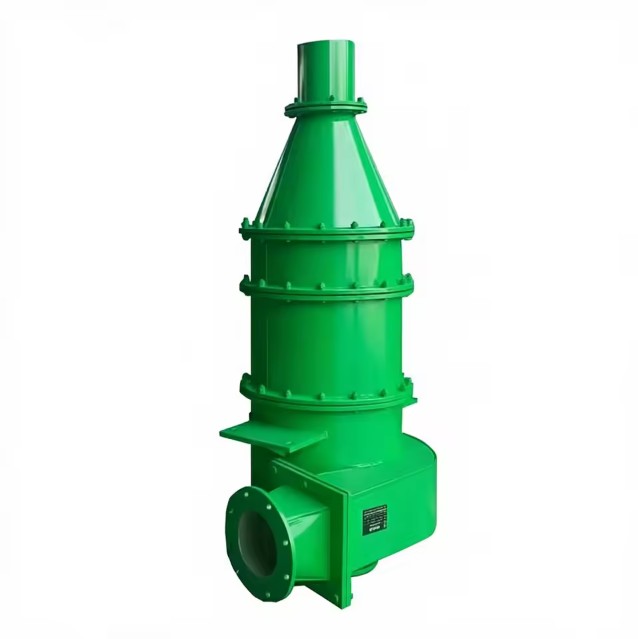
Considering a hydrocyclone classification circuit for size control
Ultimately, the “best” choice requires evaluating your ore hardness, production targets, and recovery goals. With the right selection and configuration, your ball mill can maximize gold recovery while minimizing operating costs.
Related Articles
Related Products:
Related Technical Guides:
Related Buyer Guides:
Contact Us
We warmly welcome customers from around the world to contact us and establish mutually beneficial partnerships.
Contact: Annie Lu
Email: annie.lu@huataogroup.com
Phone / WhatsApp: +86 180 3242 2676
Website: http://www.tufflexscreen.com
Tags: Ball Mill, Hard Rock Gold, Gold Mining, Grinding Equipment, Grate-Discharge Mill, Mineral Processing, Gold Recovery, Mining Equipment, Ore Grinding, Process Optimization
Tags:
admin
personal profile