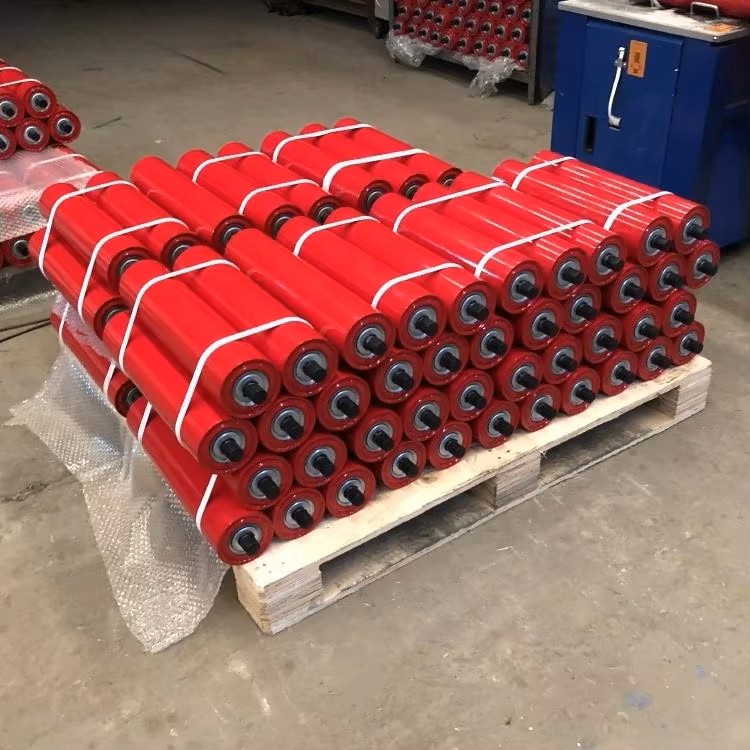
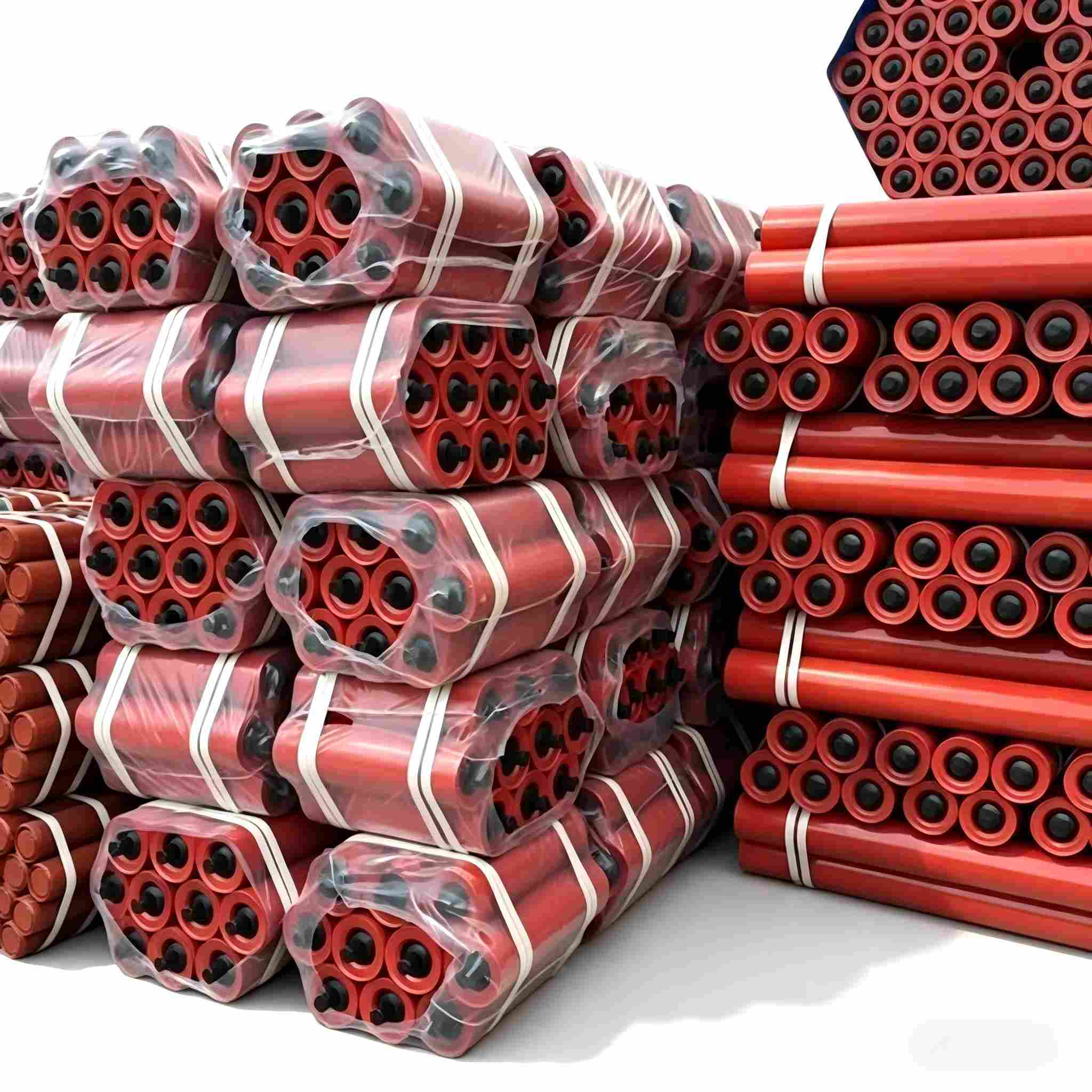
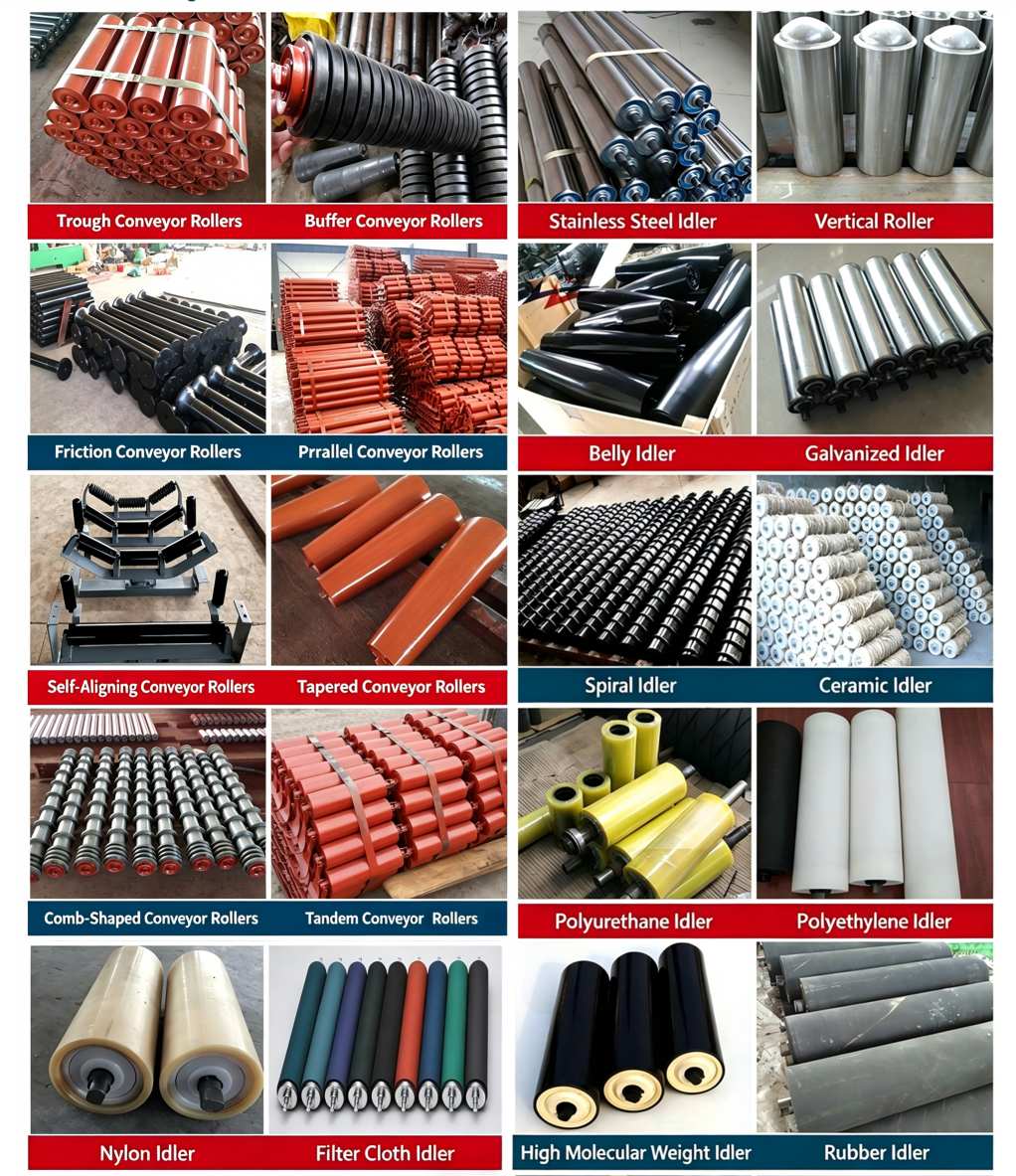
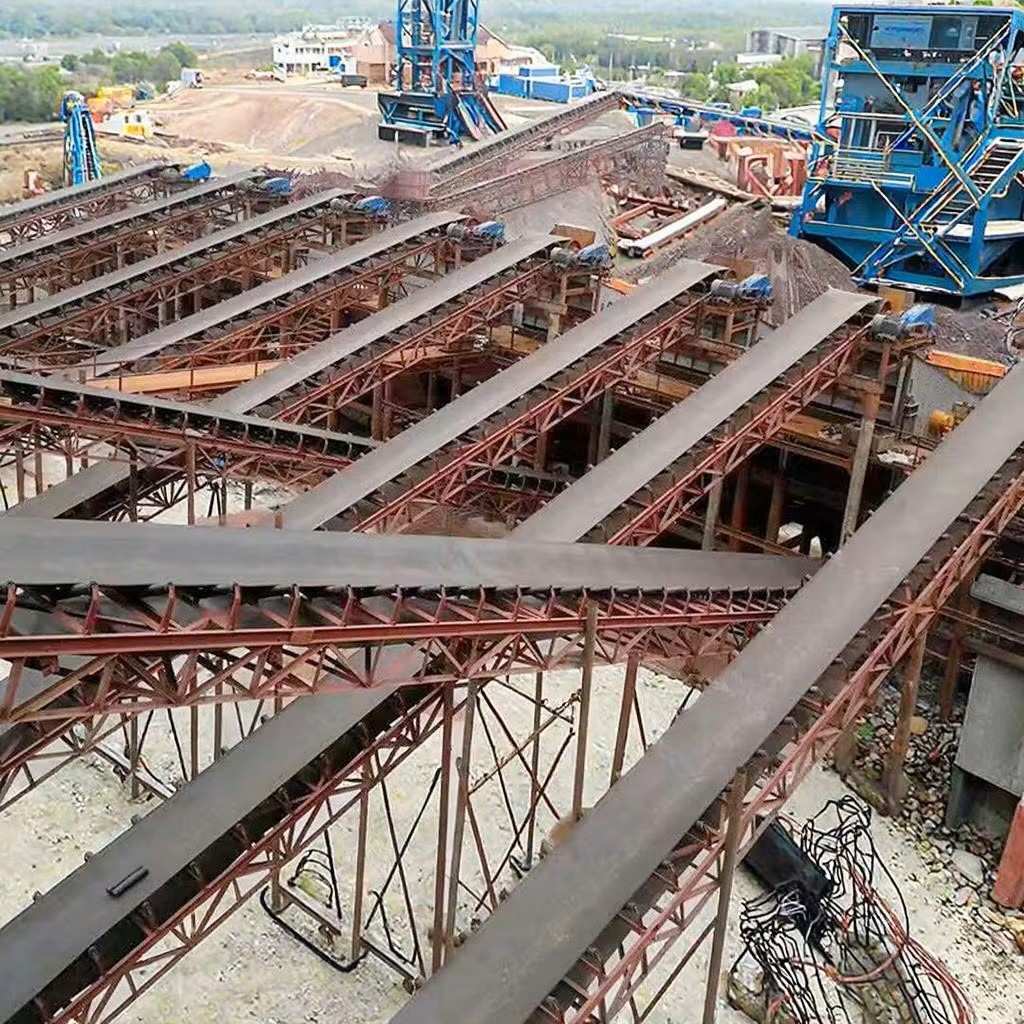
Long-Life Conveyor Rollers & Idlers
- 01 1.Sealed Bearing Design — Helps protect bearings from dust and moisture.
- 02 2.Harsh-Duty Construction — Designed for abrasive mining environments.
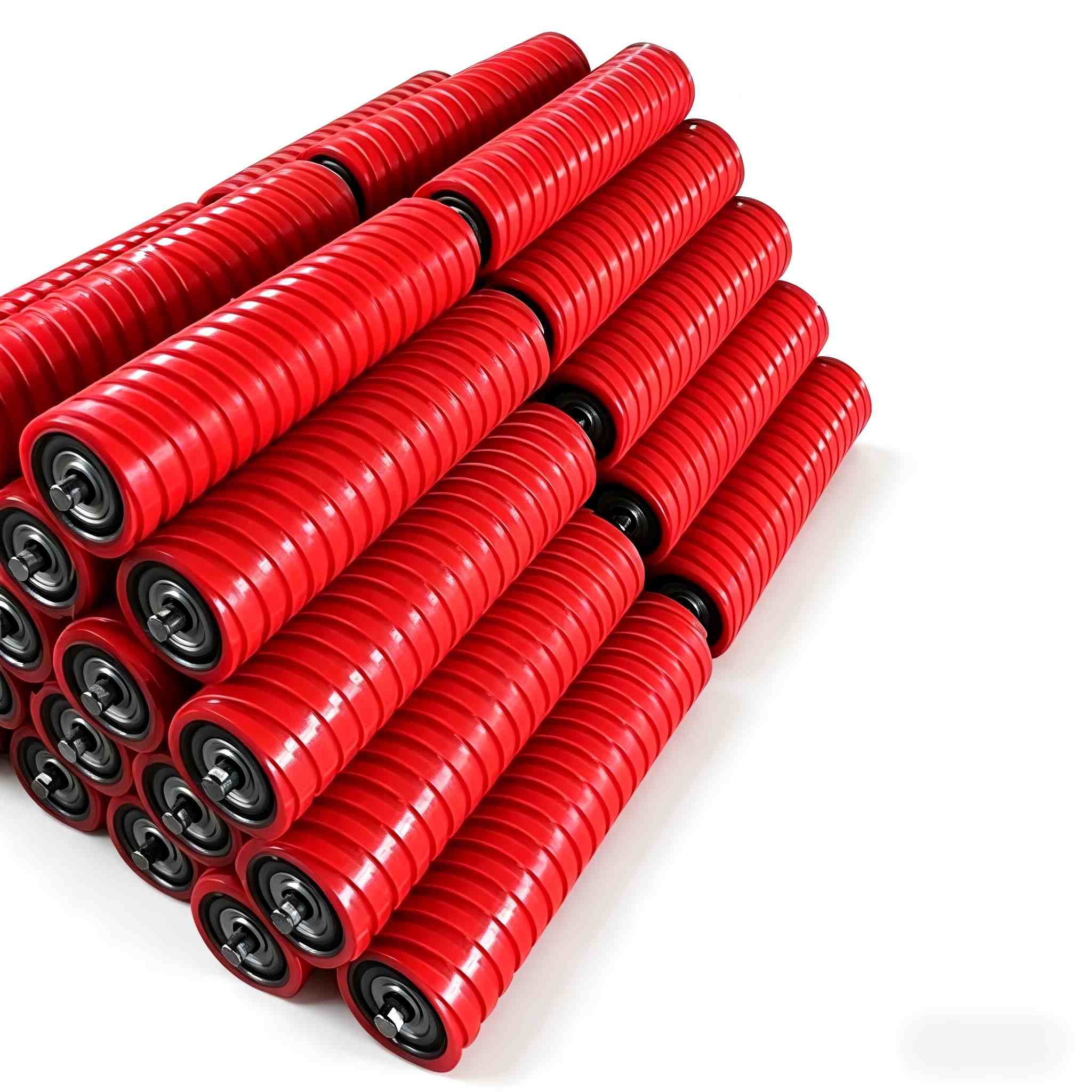
- 03 3.Anti-Buildup Options — Disc and spiral rollers for sticky return belts.
- 04 4.Impact Protection — Rubber-ring idlers for loading and transfer zones.
- 05 5.Application Matched — Roller designs selected for actual operating conditions.
-
Long-Life Conveyor Rollers & Idlers for Harsh Mining Conditions Description
Long-Life Conveyor Rollers & Idlers for Harsh Mining Conditions
Mining conveyor systems operate in some of the toughest bulk material handling environments. Dust, water, abrasive particles, mud, impact and continuous operating cycles can quickly damage poorly protected conveyor rollers.
Our Heavy Duty Conveyor Rollers & Idlers are developed for demanding mining, quarry, coal, aggregate and mineral processing applications where roller reliability and maintenance intervals directly influence conveyor availability.
By combining robust roller shells, heavy-duty shafts, precision bearings and effective sealing options, our Mining Conveyor Idlers provide a practical solution for continuous material transportation under dusty, wet and abrasive conditions.
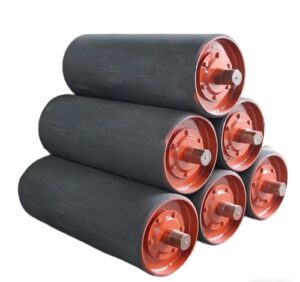
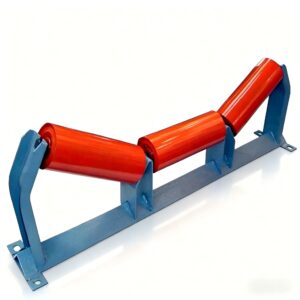

Sealed Conveyor Rollers
Bearing contamination is a common cause of roller failure in mining applications.
Fine dust, water and slurry can enter inadequately protected bearing areas, increasing rotational resistance and accelerating wear.
Our Sealed Conveyor Rollers can be configured with labyrinth or multi-stage sealing arrangements according to the working environment. The sealing system helps isolate the bearing area from external contaminants and supports reliable roller rotation.
These configurations are particularly suitable for:
- Crushing and screening plants
- Wet mineral processing areas
- Coal handling systems
- Quarry conveyors
- Outdoor conveyor lines
- Dusty transfer stations
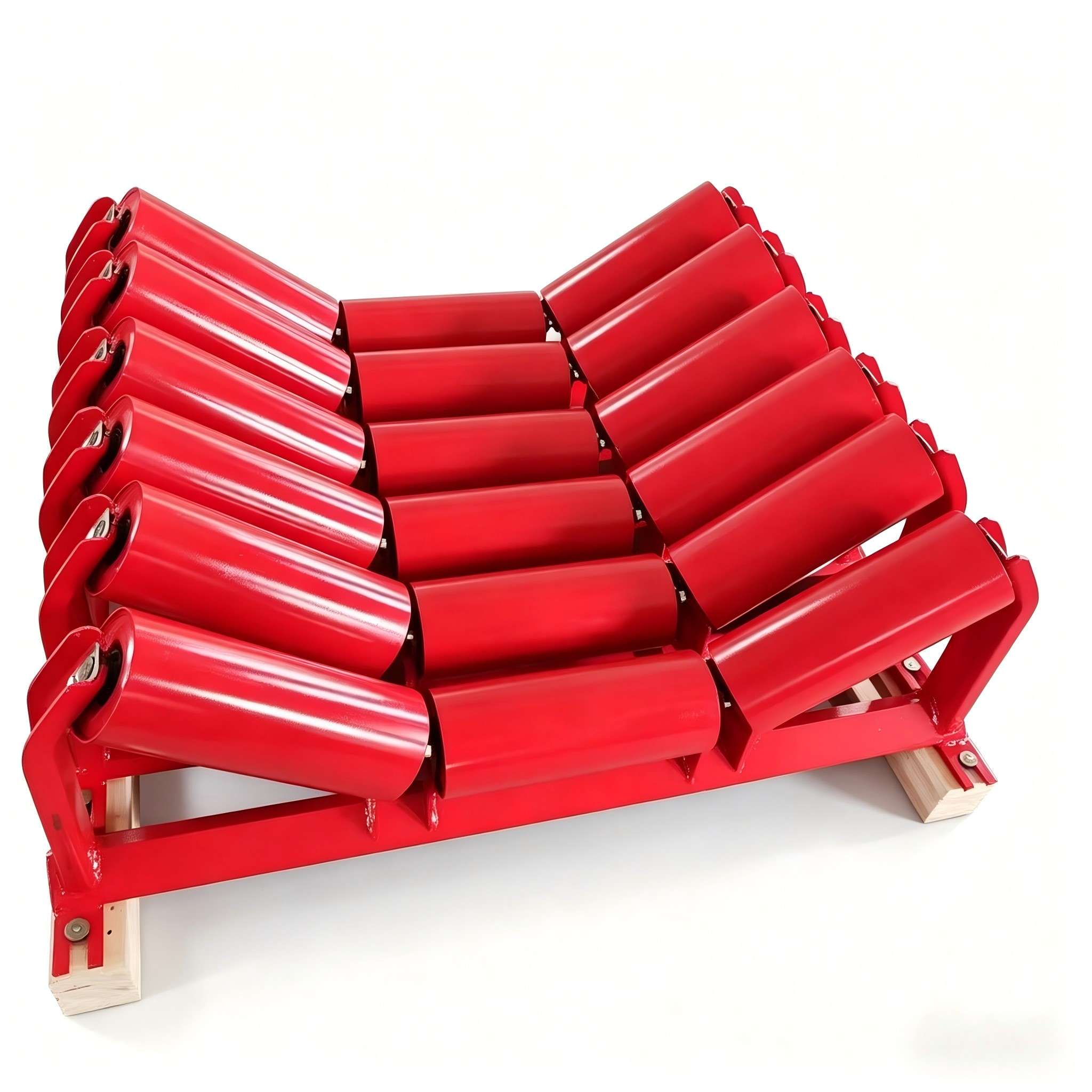
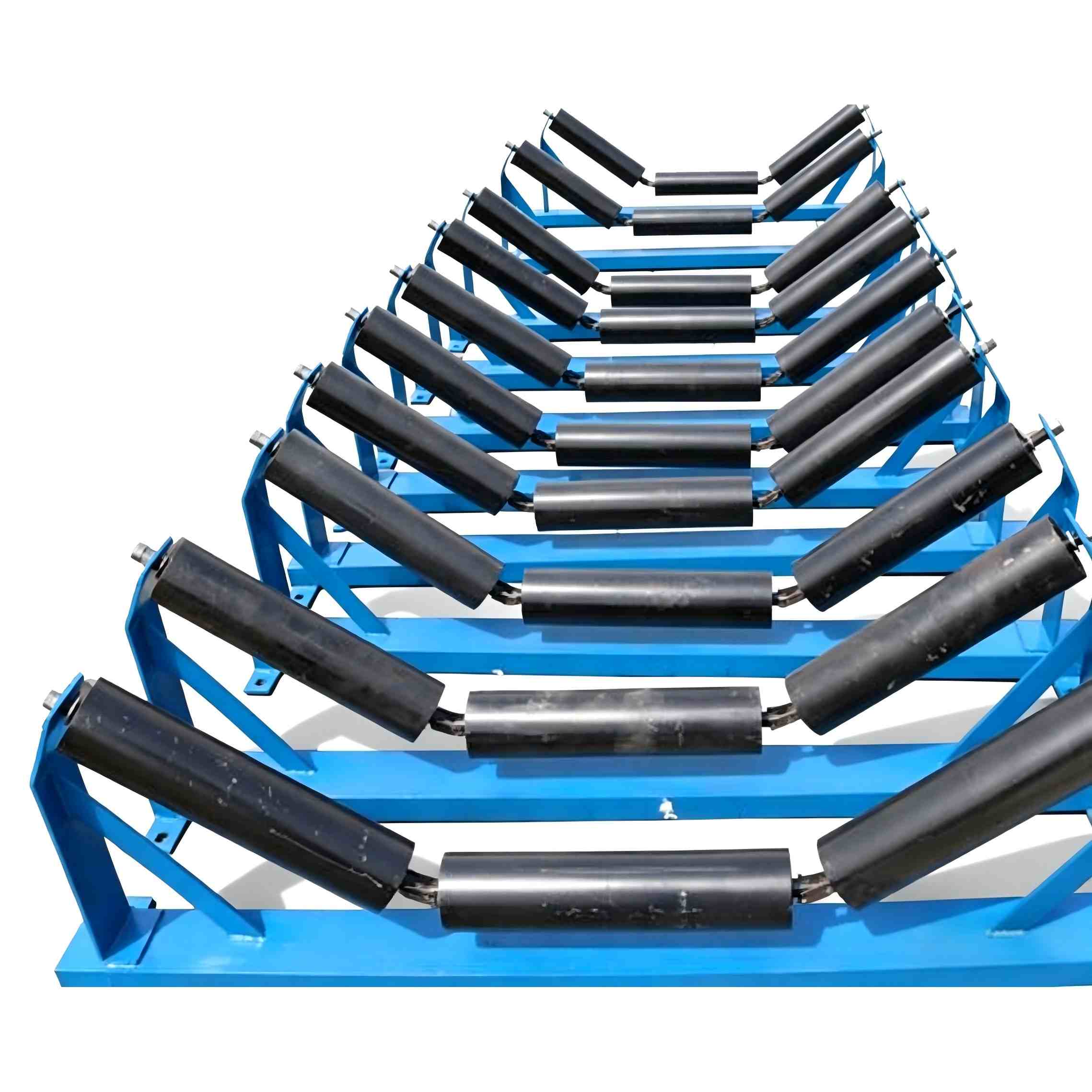
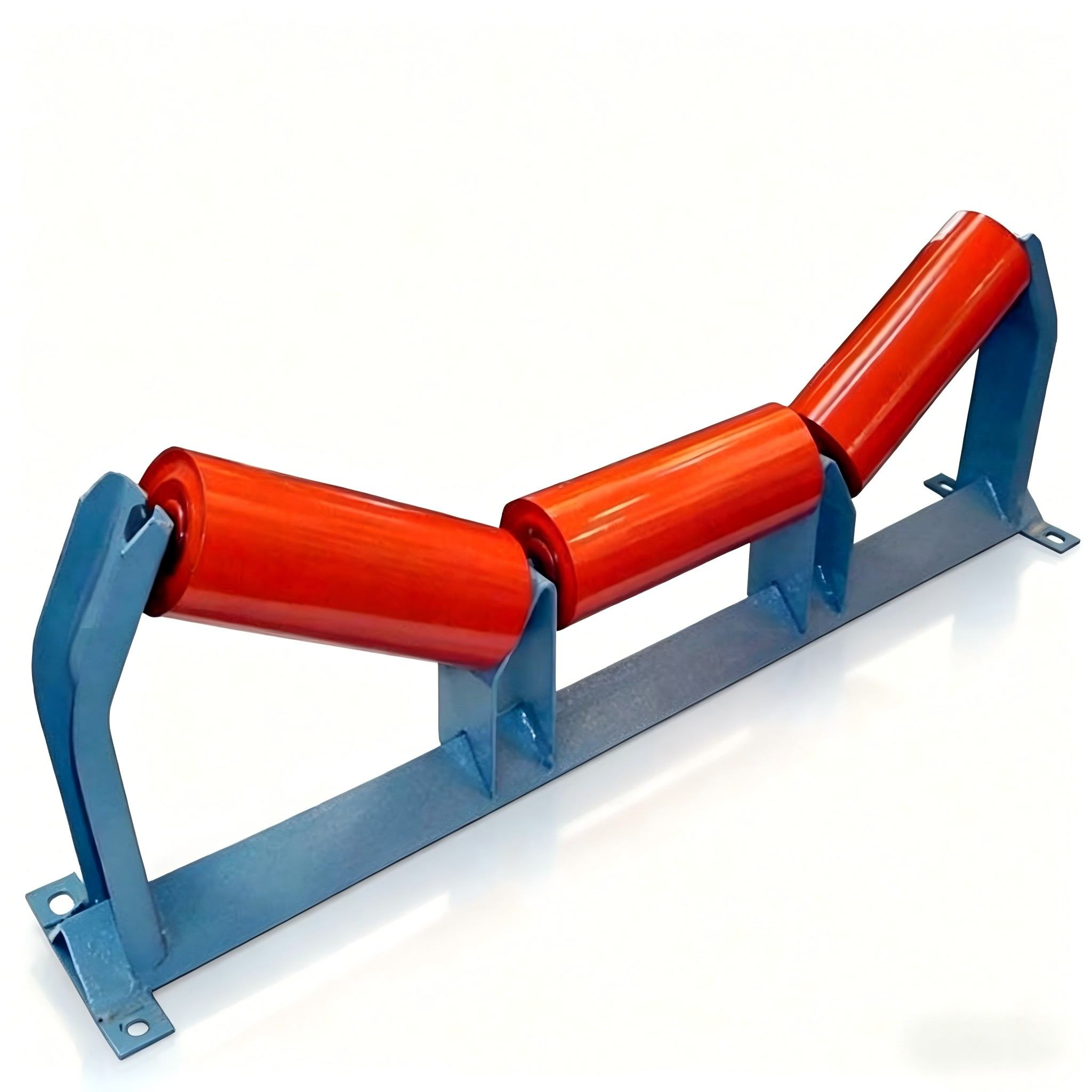
Heavy Duty Troughing Idlers
Troughing Idlers carry the loaded belt and are among the most continuously loaded components in a conveyor system.
Heavy-duty roller shells and shafts can be selected according to conveyor capacity, belt speed and material load.
Typical trough angles include 20°, 30°, 35° and 45°, with complete three-roll assemblies available for ore, coal, aggregates and other bulk materials.
Impact Rollers for High-Impact Zones
At conveyor feed and transfer points, falling material generates impact loads that can damage both the conveyor belt and conventional rollers.
Impact Rollers / Impact Idlers use resilient rubber rings to absorb part of this impact energy.
They are commonly used below crushers, loading hoppers, feeders and transfer chutes handling rock, ore, coal and aggregates.
Anti-Buildup Return Roller Solutions
Material carryback can adhere to the return belt and accumulate on conventional rollers.
For these conditions, Rubber Disc Return Rollers and Spiral Cleaning Rollers can help reduce material buildup.
They are particularly useful when handling:
Wet coal, sticky ore, clay-containing aggregates, damp sand and other materials with a tendency to adhere to the belt.
Belt Tracking Solutions
Incorrect belt tracking can increase belt edge wear and cause material spillage.
Self-Aligning / Training Idlers can be installed at selected locations to help maintain belt alignment.
Different carrying-side and return-side configurations are available according to conveyor layout.
Roller Materials for Different Environments
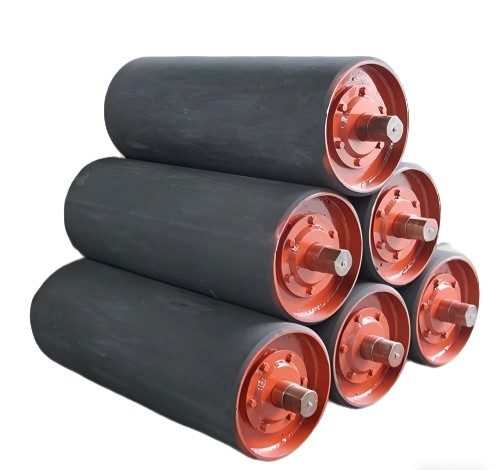
Steel Conveyor Rollers provide robust mechanical strength for conventional heavy-duty mining applications.
HDPE / Composite Conveyor Rollers provide lightweight and corrosion-resistant alternatives for selected applications.
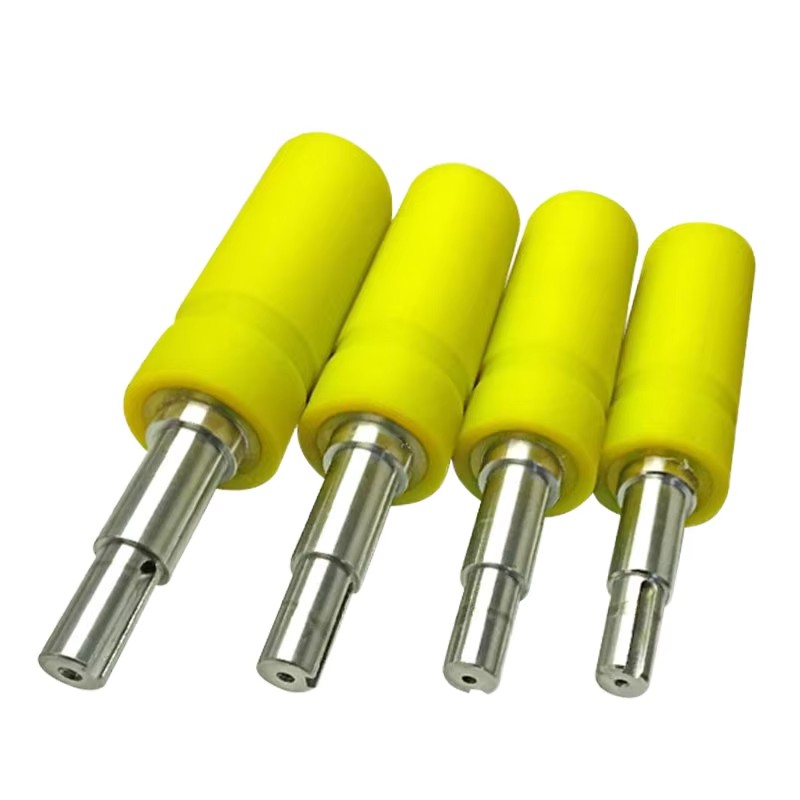
Polyurethane Coated Rollers can be used where additional surface wear resistance or protection is required.
Rubber Disc Rollers are suited to impact and anti-buildup applications.
Material selection should be based on conveyor load, conveyed material, environmental exposure and maintenance requirements.
Technical Specifications
| Specification | Available Options |
|---|---|
| Roller Diameter | Ø76–219 mm / Customized |
| Roller Length | According to conveyor |
| Roller Shell | Steel / HDPE / Composite |
| Coating | PU / Rubber |
| Roller Type | Troughing / Impact / Return / Training |
| Cleaning Type | Rubber Disc / Spiral |
| Shaft | Heavy-Duty Steel |
| Bearing | Precision Heavy-Duty Bearing |
| Sealing | Labyrinth / Multi-Stage |
| Trough Angle | 20° / 30° / 35° / 45° |
| Belt Width | Customized |
| Standard | CEMA / DIN / ISO |
| Environment | Dusty / Wet / Abrasive / Outdoor |
Applications
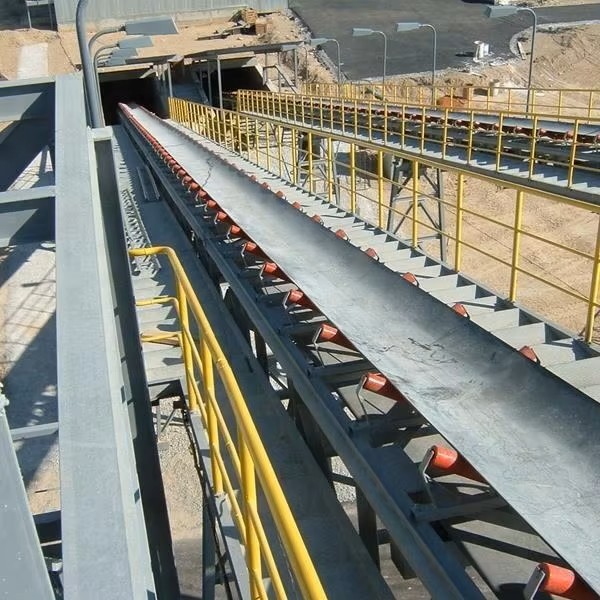
Our rollers and idlers can be applied throughout bulk material conveyor systems, including mine production conveyors, crusher discharge conveyors, screening plant conveyors, stockpile conveyors, overland conveyors and loading or transfer systems.
Typical industries include mining, quarrying, aggregate processing, coal, cement, limestone, mineral processing, power generation and port bulk handling.
Reduce Conveyor Maintenance Through Correct Selection
A long-life roller should be selected according to its actual operating position.
A loading-zone roller requires different characteristics from a normal carrying roller. A wet return belt may require a different surface design from a dry ore conveyor. Likewise, highly dusty environments place greater demands on bearing sealing.
Selecting the correct roller type, sealing arrangement and material can therefore help reduce premature roller replacement and unplanned conveyor maintenance.
RFQ – Help Us Select the Correct Roller
Please provide:
- Conveyor belt width
- Belt speed and capacity
- Conveyed material
- Material lump size
- Roller type and position
- Roller diameter and length
- Shaft dimensions
- Working environment
- Existing roller service life or failure problem
- Drawings, photos and required quantity
If you are experiencing frequent bearing failure, material buildup, impact damage or belt mistracking, please also describe the current problem so that a more suitable roller configuration can be recommended.
Products
PP Filter Press Cloth
Rubber Filter Belt for Horizontal Vacuum Belt Filters

Ceramic Lagged Drive Pulley
Vibrating Sluice Box
Compact Alluvial Gold Equipment
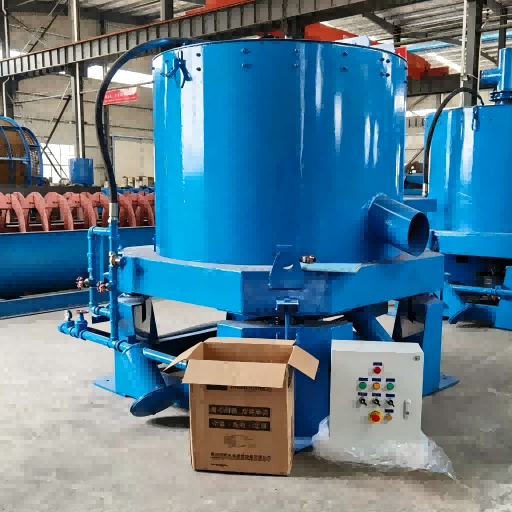
Centrifugal Gold Concentrator
Recent news
See Latest Service