
Hydrocyclone vs Spiral Classifier: Which Classification Equipment Should I Choose for Your Mineral Processing Plant?
Quick Answer
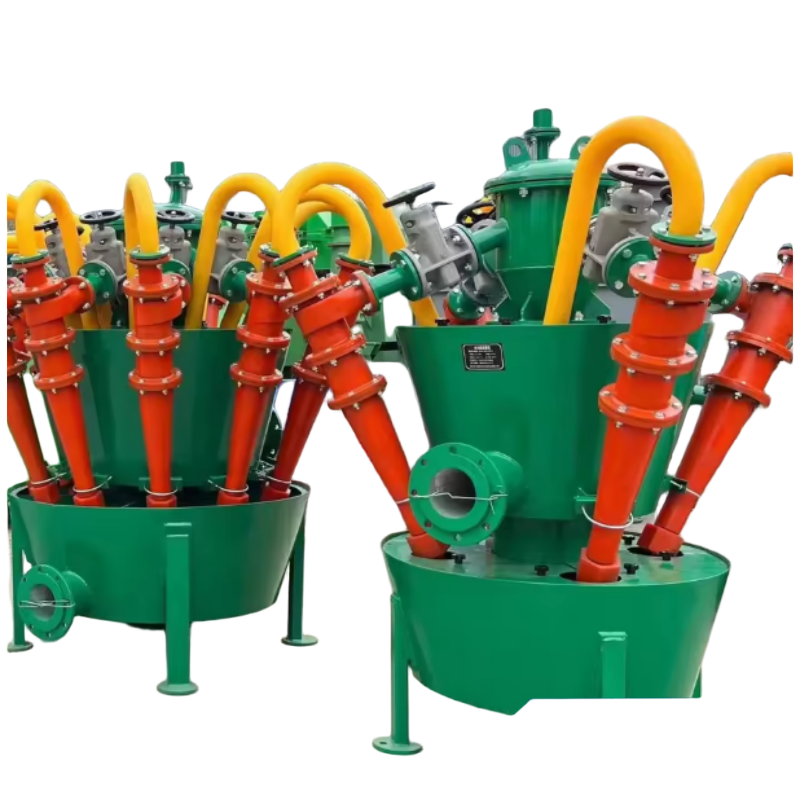
Choosing between a hydrocyclone and spiral classifier depends on your target cut size, throughput requirements, and space constraints. Hydrocyclones excel at fine classification (20-250μm) with high efficiency (60-85%) and compact footprint (1/30 the space). Spiral classifiers handle coarser materials (100-1000μm) with lower operating costs and greater stability. For most modern grinding circuits, hydrocyclones are the preferred choice for fine classification below 100μm, while spiral classifiers remain valuable for coarse classification above 200μm and washing applications. The right selection balances capital cost, operating cost, and wear part durability.

Key Takeaways
✔ Hydrocyclones use centrifugal force for classification, ideal for fine particles below 100μm
✔ Spiral classifiers use gravity settling, better for coarse materials above 200μm
✔ Hydrocyclones have a compact footprint – only 1/30 the space of spiral classifiers
✔ Spiral classifiers have lower operating costs but higher civil construction costs
✔ Wear part quality significantly impacts total cost of ownership for both systems
✔ Polyurethane liners deliver 2-3× longer service life than rubber in abrasive applications
✔ Material selection should be based on your ore's Abrasion Index (Ai)
Summary Table
| Feature | Hydrocyclone | Spiral Classifier |
|---|---|---|
| Operating Principle | Centrifugal force | Gravity settling |
| Cut Size Range | 20-250 μm | 100-1000 μm |
| Feed Size Limit | < 10 mm | < 50 mm |
| Classification Efficiency | 60-85% | 40-65% |
| Footprint | Very Small (1/30) | Large |
| Energy Cost | High (pumping) | Low |
| Wear Parts | Frequent replacement | Moderate replacement |
| Feed Variation Sensitivity | High | Low |
| Underflow Density | 45-65% | 40-55% |
| Overflow Density | 15-25% | 20-35% |
Definition
A hydrocyclone is a static device that uses centrifugal force generated by pressurized slurry flow to separate particles based on size and density. The slurry enters tangentially under pressure (2-4 kg/cm²), creating a high-speed vortex that forces coarse particles outward and downward to the underflow, while fine particles exit through the overflow.
A spiral classifier is a gravity-based classification device that uses an inclined trough with a rotating spiral mechanism. Particles settle under gravity, with coarse particles accumulating at the bottom and being lifted upward by the spiral for discharge, while fine particles overflow from the trough end.
Key components for each system include:
Hydrocyclone: Vortex finder, apex/spigot, feed chamber, cyclone liner
Spiral Classifier: Spiral blades, tank liners, classifier shoes, drive mechanism
Working Principle
Hydrocyclone Operation
The hydrocyclone operates on the principle of centrifugal sedimentation. Slurry is fed under pressure through the tangential inlet, creating a high-velocity spiral flow. The centrifugal force generated by this motion accelerates particle settling based on size and density.
Coarser, denser particles are thrown to the wall and spiral downward to exit through the apex. Finer particles remain in the center and exit through the vortex finder at the top.
Classification performance depends on proper sizing and configuration of all components. Worn apexes or vortex finders can significantly reduce separation efficiency, making quality spare parts essential.
Spiral Classifier Operation
A spiral classifier uses gravity settling for particle separation. Slurry enters an inclined trough where particles settle based on size and density. Coarser particles sink to the bottom and are lifted by the rotating spiral for discharge at the upper end. Fine particles remain suspended and overflow from the lower end.
The classification efficiency depends on factors such as trough inclination, spiral speed, slurry density, and particle size distribution. High-weir spiral classifiers are suitable for first-stage grinding with cut sizes above 0.15mm, while submerged spiral classifiers handle finer classification below 0.15mm.
Benefits
Hydrocyclone Benefits:
| Benefit | Description |
|---|---|
| Fine Classification | Effective down to 20 microns |
| High Throughput | Single units handle large volumes |
| Compact Footprint | 1/30 the space of spiral classifiers |
| No Moving Parts | Simple design, minimal mechanical issues |
| Easy Integration | Can be added to existing circuits |
| High Underflow Density | 45-65% solids concentration |
| Lower Civil Cost | Minimal foundation requirements |
Spiral Classifier Benefits:
| Benefit | Description |
|---|---|
| Stable Operation | Less sensitive to feed variations |
| Lower Operating Cost | No pumping energy required |
| Wide Feed Size Range | Handles up to 50mm feed |
| Good Washing Action | Effective for desliming |
| Gravity Feed Capability | Can be fed directly from mills |
| Higher Overflow Density | 20-35% solids concentration |
| Lower Wear Parts Cost | Moderate replacement frequency |
Applications
Hydrocyclone Applications:
Fine grinding circuit classification (P80 < 100μm)
Gold ore processing – classification and dewatering
Copper ore beneficiation – grinding circuit classification
Iron ore processing – particle sizing
Tailings thickening pre-classification
Desliming and dewatering applications
Closed-circuit grinding operations
Spiral Classifier Applications:
Coarse grinding circuit classification (P80 > 200μm)
Coal preparation – washing and desliming
Washing and desliming operations
Pre-classification for gravity separation
Sands classification
Primary ball mill circuits with coarse feeds
Tungsten and tin ore processing
Material Comparison
When selecting hydrocyclone wear parts, material choice significantly impacts performance:
| Material | Hardness | Advantages | Best Application |
|---|---|---|---|
| Polyurethane | 85-95 Shore A | Excellent wear resistance, long service life, cost-effective | Abrasive ores, general mineral processing |
| Rubber | 60-70 Shore A | Good impact resistance, lower noise | Less abrasive applications, impact-prone feeds |
| Ceramic | 8-9 Mohs | Superior wear resistance | Extremely abrasive conditions, high-wear areas |
| High-Chrome | 58-65 HRC | Good hardness, good impact | Specific wear applications, lower cost |
Polyurethane hydrocyclone liners consistently outperform rubber in abrasive applications, delivering 2-3× longer service life. In one case, polyurethane liners lasted 142 days compared to 45 days for rubber – a 3.1× improvement.
Application Comparison
| Application | Hydrocyclone | Spiral Classifier | Best Choice |
|---|---|---|---|
| Fine Grinding (P80 < 100μm) | ★★★★★ | ★★ | Hydrocyclone |
| Coarse Grinding (P80 > 200μm) | ★★★ | ★★★★★ | Spiral Classifier |
| Washing & Desliming | ★★ | ★★★★★ | Spiral Classifier |
| Space-Constrained Retrofits | ★★★★★ | ★★ | Hydrocyclone |
| Greenfield Projects | ★★★★ | ★★★★ | Both |
| High Abrasive Ores | ★★★★ | ★★★ | Hydrocyclone |
| Variable Feed Conditions | ★★ | ★★★★★ | Spiral Classifier |
| High Throughput | ★★★★★ | ★★★ | Hydrocyclone |
Industry Application Matrix
| Ore Type | Recommended Classification | Reasoning |
|---|---|---|
| Gold Ore | Hydrocyclone | Fine classification for flotation/CIP, high recovery priority |
| Copper Ore | Hydrocyclone | High throughput, fine grinding required for liberation |
| Iron Ore | Hydrocyclone | Precise sizing for concentrate quality |
| Coal | Spiral Classifier | Coarse classification, washing required |
| Tungsten Ore | Spiral Classifier | Coarse grinding, gravity recovery preferred |
| Nickel Ore | Hydrocyclone | Fine grinding for flotation circuits |
| Lithium Ore | Hydrocyclone | Fine classification required for spodumene recovery |
| Lead-Zinc Ore | Hydrocyclone | Fine grinding for differential flotation |
| Phosphate Ore | Spiral Classifier | Coarse classification, washing required |
Selection Guide
When choosing between hydrocyclones and spiral classifiers, follow this structured approach:
Step 1: Define Your Target Cut Size
< 100μm: Hydrocyclone is the only viable option
100-250μm: Both can work, evaluate other factors
250μm: Spiral classifier is preferred
Step 2: Assess Throughput Requirements
High throughput (> 100 t/h): Hydrocyclones handle large volumes
Moderate throughput: Spiral classifiers may be more cost-effective
Step 3: Evaluate Space Availability
Limited space: Hydrocyclones require 1/30 the footprint
Ample space: Spiral classifiers may be acceptable
Step 4: Analyze Ore Characteristics
Abrasive ores: Polyurethane liners for hydrocyclones
Coarse, sticky ores: Spiral classifiers handle better
Variable feed: Spiral classifiers are more stable
Step 5: Consider Capital vs Operating Cost
Lower CAPEX: Hydrocyclones (but consider auxiliary equipment costs)
Lower OPEX: Spiral classifiers (no pumping energy)
Total cost of ownership: Evaluate 5-year costs
Step 6: Review Wear Parts Availability
Hydrocyclones require regular liner, apex, and vortex finder replacement
Spiral classifiers require spiral blade and shoe replacement
Procurement Guide
Required Information for Supplier Quotation:
Feed material characteristics (density, particle size distribution)
Slurry properties (density, viscosity, pH, temperature)
Target classification cut size (d50)
Throughput requirements (t/h, m³/h)
Installation and space constraints
Operating conditions and pressure requirements
Ore abrasion index (Ai) for material selection
Drawings Needed:
Plant layout and installation drawings
Piping and instrumentation diagrams
Existing equipment specifications (if retrofitting)
Cyclone cluster arrangement (if applicable)
Trough dimensions (for spiral classifiers)
Supplier Evaluation Checklist:
✓ Experience in mineral processing applications
✓ Quality certifications (ISO 9001, etc.)
✓ Material testing and engineering support
✓ After-sales service and spare parts availability
✓ Export experience for international orders
✓ Custom manufacturing capability
✓ Competitive pricing and delivery terms
Buyer Questions to Ask:
Can the supplier manufacture according to our drawings?
Can the supplier provide material test reports?
Does the supplier support OEM replacement parts?
What is the supplier's export experience?
Can the supplier provide wear-life recommendations?
What is the warranty on products?
What are the MOQ and lead time requirements?
How are products packaged for international shipping?
Failure Analysis
| Problem | Possible Cause | Recommended Solution |
|---|---|---|
| Premature Hydrocyclone Liner Wear | Abrasive material, incorrect selection | Upgrade to polyurethane liners, adjust feed conditions |
| Hydrocyclone Apex Blockage | Coarse material, incorrect apex size | Optimize apex diameter, improve feed screening |
| Low Classification Efficiency | Worn apex or vortex finder | Replace components, inspect wear parts regularly |
| Spiral Classifier Blade Wear | Abrasive material, inadequate material | Use high-quality rubber blades, inspect regularly |
| Spiral Classifier Settling Issues | Low feed density, incorrect speed | Adjust feed conditions, optimize spiral speed |
| High Circulating Load | Poor classification efficiency | Optimize cyclone or classifier settings |
| Inconsistent Performance | Feed pressure or density variations | Stabilize feed conditions, install control systems |
| Wrong Material Selection | Inadequate material for application | Conduct material testing, select based on Abrasion Index |
Maintenance Guide
Daily Inspection:
Check feed pressure and density (hydrocyclone)
Monitor underflow and overflow performance
Inspect apex and vortex finder condition
Record operating parameters
Listen for unusual sounds (spiral classifier)
Weekly Inspection:
Measure wear on critical components
Inspect cyclone liner condition
Check spiral classifier blade condition
Review operating data trends
Inspect drive mechanism (spiral classifier)
Monthly Inspection:
Comprehensive wear assessment
Measure critical dimensions on wear parts
Replace components approaching wear limits
Document wear patterns and service life
Review maintenance logs for trends
Wear Pattern Monitoring:
Track component replacement intervals
Document wear patterns for predictive maintenance
Analyze causes of premature wear
Adjust replacement schedule based on wear data
Use data to optimize material selection
Replacement Timing:
Establish predetermined wear limits
Replace components before efficiency degradation
Maintain critical spare parts inventory
Coordinate with scheduled plant shutdowns
Plan for seasonal maintenance windows
Preventive Maintenance:
Follow recommended maintenance schedules
Use high-quality replacement parts
Document all maintenance activities
Implement root cause analysis for failures
Train personnel on proper maintenance procedures
Downtime Reduction:
Perform maintenance during scheduled shutdowns
Cross-train maintenance personnel
Use modular wear parts for faster replacement
Maintain proper documentation and procedures
Pre-stage replacement parts before shutdowns
Case Study
Customer Type: Major copper concentrator in South America
Ore Type: Copper porphyry ore, high abrasiveness (Ai > 0.8)
Operating Conditions: 50,000 t/d throughput, target 80% passing 200 mesh
Problem:
The concentrator was experiencing frequent downtime due to premature wear of hydrocyclone liners and apexes. The original rubber liners lasted only 45 days, causing excessive maintenance costs and lost production. The classification efficiency was declining as components wore, increasing circulating loads and reducing grinding circuit performance. The existing supplier's long lead times for replacement parts (12+ weeks) were exacerbating the problem.
Solution:
The plant evaluated alternative suppliers and selected HUATAO based on technical capabilities and proven track record. The technical team recommended 92 Shore A polyurethane hydrocyclone liners based on the ore's high abrasion index. HUATAO supplied the complete solution including liners, apexes, and vortex finders manufactured to the customer's specifications. The team also provided ongoing technical support to optimize classification performance.
Result:
Hydrocyclone liner wear life increased from 45 to 142 days (3.1× improvement)
Replacement frequency reduced from quarterly to semi-annually
Maintenance costs decreased by 35%
Spare parts lead time reduced from 12 weeks to 4 weeks
Classification efficiency improved by 8%
Total cost of ownership significantly reduced
Plant uptime improved by 15%
The mining operation continues to source high-quality hydrocyclone components from HUATAO, achieving significant improvements in reliability and cost performance.
FAQ
Question 1: What is the main difference between a hydrocyclone and a spiral classifier?
Answer: The main difference is in their operating principles. A hydrocyclone uses centrifugal force created by pressurized slurry flow for classification, while a spiral classifier uses gravity settling and mechanical lifting. Hydrocyclones are better for fine classification (20-250μm), while spiral classifiers handle coarser materials (100-1000μm).
Question 2: Which equipment has better classification efficiency?
Answer: Hydrocyclones generally have higher classification efficiency (60-85%) compared to spiral classifiers (40-65%), particularly for fine particles. However, spiral classifiers offer more stable operation and are less sensitive to feed variations.
Question 3: When should I choose a hydrocyclone over a spiral classifier?
Answer: Choose a hydrocyclone when you need fine classification (P80 < 100μm), have limited space, require high throughput, or are processing abrasive ores. Hydrocyclones are the preferred choice for most modern grinding circuits.
Question 4: When is a spiral classifier a better choice?
Answer: Spiral classifiers are better for coarse classification (P80 > 200μm), washing and desliming applications, when space is available, or when you want lower operating costs. They are also preferred for gravity-fed circuits where pumping is not desired.
Question 5: How do maintenance costs compare between the two?
Answer: Hydrocyclones require more frequent wear part replacement (liners, apexes, vortex finders) but have no moving parts. Spiral classifiers have lower wear parts costs but higher mechanical maintenance requirements. The total cost of ownership depends on the specific application and ore characteristics.
Question 6: What wear parts are most critical for hydrocyclones?
Answer: The most critical hydrocyclone wear parts are the apex/spigot, vortex finder, and cyclone liner. Worn components significantly affect classification performance and should be inspected regularly.
Question 7: What is the typical cut size range for each?
Answer: Hydrocyclones typically operate in the 20-250μm range, with some applications down to 10μm. Spiral classifiers typically operate in the 100-1000μm range, with high-weir types for coarse classification and submerged types for finer classification.
Question 8: How does feed size affect equipment selection?
Answer: Hydrocyclones can handle feed sizes up to 10mm. Spiral classifiers can handle feed sizes up to 50mm, making them better for coarse circuits. For very coarse classification, spiral classifiers are often preferred.
Question 9: What is the impact of wear part quality on classification performance?
Answer: Wear part quality directly affects classification efficiency and operating costs. High-quality polyurethane liners provide longer service life, reducing downtime and maintenance costs. The right material selection for your specific ore type is essential.
Question 10: Why should I choose HUATAO for classification wear parts?
Answer: HUATAO provides high-performance polyurethane and rubber wear parts for hydrocyclones and spiral classifiers. Our material expertise, precision manufacturing, and global export experience ensure reliable performance and long service life for your mining operation.
Question 11: Can hydrocyclones replace spiral classifiers completely?
Answer: While hydrocyclones are preferred for most modern grinding circuits, spiral classifiers still have applications where coarse classification, washing, or low operating costs are priorities. Many plants use both: hydrocyclones for fine classification and spiral classifiers for desliming or dewatering.
Question 12: What material is best for hydrocyclone liners in abrasive applications?
Answer: Polyurethane liners with 85-95 Shore A hardness deliver the best wear resistance for most abrasive applications. In one case, polyurethane liners outlasted rubber by 3.1× (142 days vs 45 days). For extremely abrasive conditions, ceramic liners may be considered.
Conclusion
There is no universal answer to whether a hydrocyclone or spiral classifier provides better classification. Hydrocyclones excel in fine classification, high throughput, and compact footprint, while spiral classifiers offer stability, lower operating costs, and better handling of coarse materials.
The ideal solution depends on your target cut size, throughput requirements, space constraints, and operational goals. Rather than focusing solely on equipment price, consider total cost of ownership, wear part availability, and long-term performance.
A strong supplier relationship can improve plant efficiency, reduce operational risks, and deliver greater value throughout the equipment lifecycle. HUATAO provides comprehensive classification wear part solutions designed for demanding mineral processing applications.
Related Articles
Related Products
Related Technical Guides
Hydrocyclone Selection For Mineral Processing Full Engineering Guide
How Do I Calculate Hydrocyclone Capacity For Mineral Processing
What Size Hydrocyclone Do I Need For My Mineral Processing Plant
Why More Mining Plants Are Switching To Polyurethane Hydrocyclone Parts
A Complete Comparison Of Spiral Classifier Types In Mineral Processing
Related Buyer Guides
Where Can I Find Reliable Hydrocyclone Suppliers In China For Mining And Mineral Processing
Where Can I Find Reliable Mining Wear Parts Suppliers In China
How To Solve Common Problems For Screening Process And Why Choose HUATAO Polyurethane Screen Panels
Related Comparison Articles
Hydrocyclone Vs Vibrating Screen Which Classification Solution Is Better For Mineral Processing
Polyurethane Screen Panels Vs Rubber Screen Panels Which Is Better
Contact Us
Annie Lu | HUATAO Group
Email: annie.lu@huataogroup.com
Phone / WhatsApp: +86 180 3242 2676
Website: www.tufflexscreen.com
We warmly welcome customers from around the world to contact us and establish mutually beneficial partnerships.
can not be empty
can not be empty

HUATAO GROUP - SCREENS
ADD : No.298 Zhonghua North Street, Shijiazhuang 050000 China.
TEL : +86 0311 80690567
EMAIL :market@huataogroup.com
Web: www.tufflexscreen.com
 WhatsApp & WeChat : +86 18033763037