
How Much Tramp Iron Per Hour Makes a Manual-Clean Suspended Magnet Uneconomical?
-
 admin
- 07 Nov, 2026
How Much Tramp Iron Per Hour Makes a Manual-Clean Suspended Magnet Uneconomical?
Key Takeaways
- Manual cleaning is viable below roughly one meaningful pickup event per shift (typically under 5 kg/h of tramp iron)
- Between 5–10 kg/h, labor plus downtime usually erases the price premium of a self-cleaning separator within 12–24 months
- The real cost driver is not the iron itself — it is crusher downtime, unplanned stoppages, and safety exposure during cleaning
- Wet, sticky, or high-tonnage applications shift the break-even point lower
- A structured cost model beats “gut feel” when choosing between manual-clean and self-clean designs

The Real Question Is Not “How Much Iron” — It Is “How Often You Must Stop”
A suspended magnet does not care whether it holds 2 kg or 20 kg; its field does not weaken meaningfully with load. What changes is everything around the cleaning event:
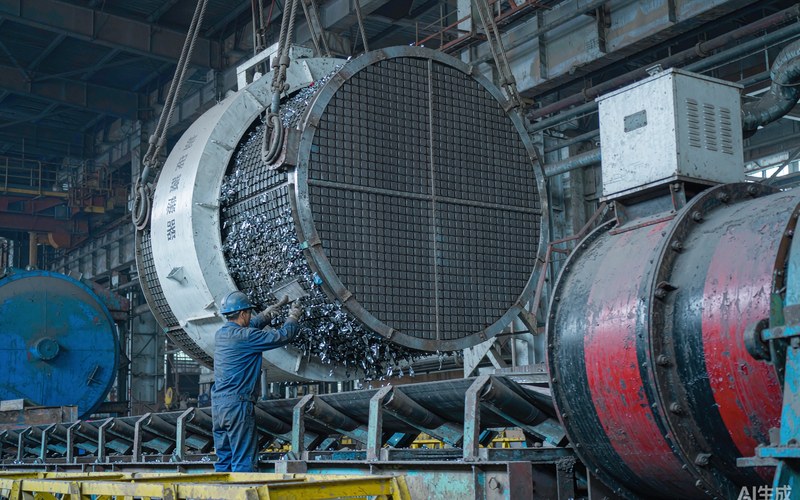
- A manual clean on a typical suspended magnet means isolating the magnet, lowering or swinging it out, scraping the face by hand, and restoring it. Budget 20–45 minutes including lockout procedures. At two cleanings per shift across three shifts, you are spending 2–4.5 labor-hours per day just on iron removal.
- Production interference.Cleaning is usually done at a cross-belt stop or a planned outage. If contamination forces unplanned stops, each event on a 800 t/h line costs far more than the labor itself.
- Safety exposure.Lifting heavy steel from a powerful magnet at height is a classic injury scenario — pinched fingers, dropped bars, and back strain are routine near-misses.
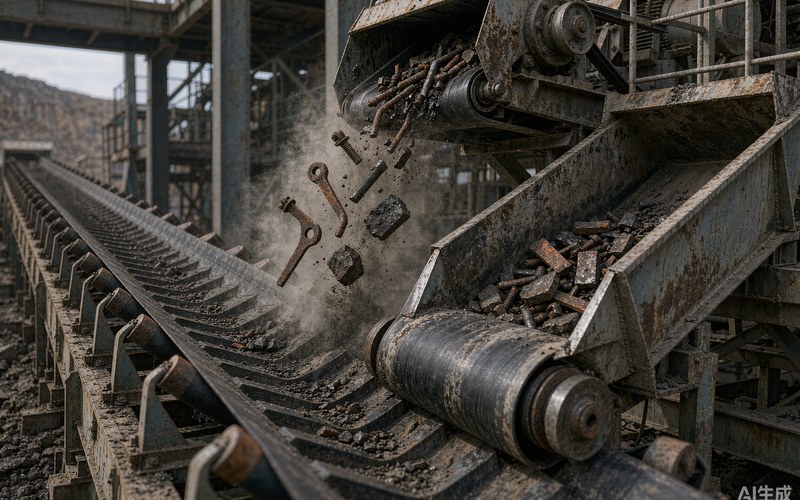
- Residual risk.A magnet that is not cleaned promptly saturates its working face: the outer layer of iron shields the field, capture efficiency drops, and larger tramp pieces start slipping through to the Jaw Crusher.
Once you frame it this way, the threshold is a labor-and-risk threshold, not a weight threshold — but weight is a convenient proxy.
Why Contamination Rate Varies So Much Between Plants
Two plants on similar ore can sit on opposite sides of the threshold:
- Feed source.Demolition feed, recycled concrete with rebar, or ore from ground with old workings can carry tens of kilograms of steel per hour. Virgin drill-and-blast ore may deliver only occasional drill bits and bucket teeth.
- Upstream protection.A grizzly and a well-maintained scalping screen remove much of the junk before the belt. Plants that skip scalping push the burden onto the magnet.
- Belt width and speed.Wider, faster belts present more tonnage per hour to the magnet — capture scales with burden, and so does cleaning frequency.
- Magnet position.A magnet over the head pulley sees concentrated discharge; one mid-span sees a shallower burden and captures more consistently.
If your cleaning logbook shows more than one significant pickup event per shift, you are already past the practical comfort zone of manual cleaning — even if the total weight looks modest.
Contact Us
Contact: Annie Lu
Email: annie.lu@huataogroup.com
Phone / WhatsApp: +86 180 3242 2676
Website: http://www.tufflexscreen.com
We warmly welcome customers from around the world to contact us and establish mutually beneficial partnerships.
 admin
personal profile
No prev page
Previous Post