
How Close Should a Self-Cleaning Overband Magnet Be to the Conveyor Belt for Maximum Tramp Iron Capture?
-
 admin
- 20 Nov, 2026
Quick Answer
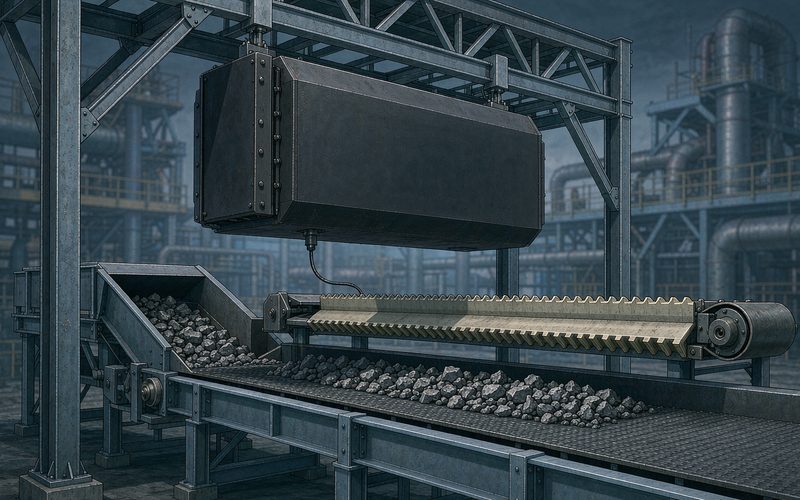
For most mining conveyors, mount a self-cleaning overband magnet 200–300 mm above the belt — roughly 0.2–0.3 × belt width — then correct upward for burden depth: set the working gap at the maximum material layer thickness plus 50–100 mm of safety clearance, measured from the magnet’s working face to the deepest position a steel piece can occupy. Lower improves capture but risks collision; higher quietly leaks fine tramp iron to your crusher.
Key Takeaways
- Suspension height is the single most tunable capture variable: magnetic pull decays sharply with distance, so millimetres matter.
- Start at 0.2–0.3 × belt width (200–300 mm for a 1,000 mm belt), then add burden-depth correction.
- Measure from the magnet working face to the target object’s deepest position — not to the bare belt.
- Capture is a time budget: belt speed above 2.5–3.0 m/s makes an electromagnetic circuit mandatory.
- The magnet face should be 200–400 mm wider than the belt to catch edge-positioned steel.
- Dust and ore build-up on the magnet face silently widen the gap — clean and test on a fixed schedule.

Case Study
Customer Type: Iron ore surface mine, concentrator crushing line
Ore Type: Iron ore (magnetite-bearing, dense, 150–400 mm lumps)
Operating Conditions: 1,400 mm belt, 2.2 m/s, 900 t/h, burden depth 180–260 mm depending on feed
Problem: A permanent overband was mounted 450 mm above the belt “for safety” after one lump-strike incident. Fine steel began reaching the primary crusher; over one quarter, three jaw plate change-outs were pulled forward and one belt puncture occurred. Capture testing with marked witness pieces showed recovery of small steel below 40%.
Solution: The installation was re-engineered rather than simply re-hung: an electromagnetic unit sized to penetrate the full 260 mm burden was installed with a documented working gap of 330 mm (burden + 70 mm clearance, measured to the deepest target position), a face 300 mm wider than the belt, a metal-detector interlock to suppress magnetite pickup, and a re-angled discharge chute. The monthly gap-measurement log was added to the existing conveyor inspection route alongside the Mining Secondary Belt Cleaner checks.
Result: Witness-piece capture of small steel rose from under 40% to above 95%; jaw plate life returned to plan (no premature change-outs for two consecutive quarters); belt damage events dropped to zero; and the gap log caught one 40 mm build-up drift within a single month — corrected in a 20-minute stop. The mining team’s own number: protection restored for the cost of one avoided jaw plate set.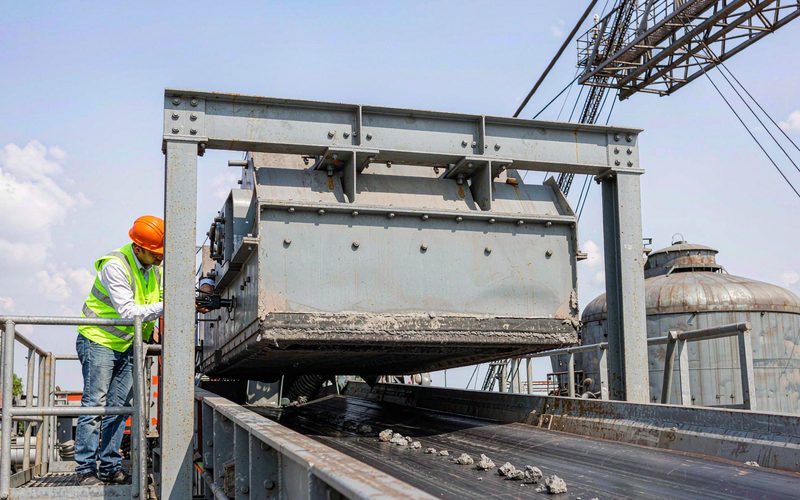
Related Articles
Related Products
- Iron Magnet
- Self-Cleaning Electromagnetic Separator
- Magnetic Drum
- Heavy-Duty Conveyor Impact Bed
- Conveyor Belt Tracker
Related Technical Guides
- Magnetic Separation Process Equipment
- Conveyor Process Equipment
- Crushing Process Equipment
- Improve Fine Screening Efficiency with Polyurethane Screen Panels
- Hydrocyclone Wear: Root Causes, High-Wear Zones & Material Solutions
Related Buyer Guides
- Which Manufacturer Offers High-Quality Polyurethane Tufflex Wire Screens for Mining?
- How Do I Choose the Right Rubber Belt for a Vacuum Belt Filter?
Related Comparison Articles
- Polyurethane Screen vs Rubber Screen vs Wire Mesh: A Complete Comparison Guide
- Self-Cleaning Screen vs Traditional Woven Wire Mesh: Which One Should You Choose?
Contact Us
Contact: Annie Lu
Email: annie.lu@huataogroup.com
Phone / WhatsApp: +86 180 3242 2676
Website: http://www.tufflexscreen.com
We warmly welcome customers from around the world to contact us and establish mutually beneficial partnerships.
 admin
personal profile
No prev page
Previous Post