How Can I Reduce Screen Panel Changeover Downtime?
-
 admin
- 11 Nov, 2026
How Can I Reduce Screen Panel Changeover Downtime?
Quick Answer
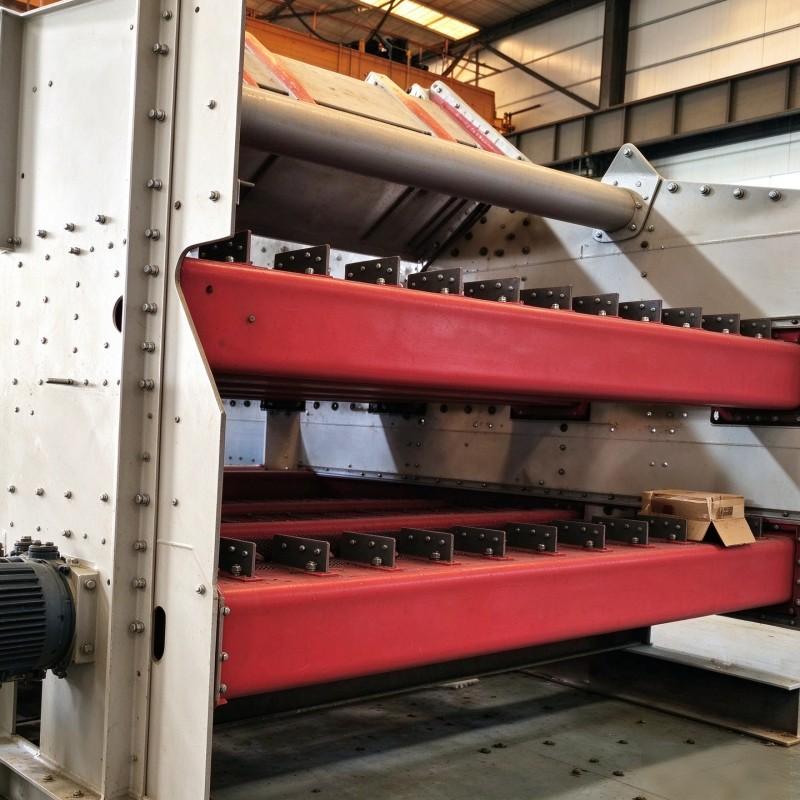
To reduce screen panel changeover downtime, the most effective strategy is to move away from traditional hammered-in tensioned mats toward modular systems with tool-free fastening. Modular panels allow point replacement of only worn sections, reducing hours of downtime to minutes. Tool-free systems eliminate hammering, prying, and specialized tools. Systems like Multotec’s MBV convert a screen to modular configuration without changing the sub-frame. Hammer-less attachment options include clips, snap-on mechanisms, magnets, and wedges.
Key Takeaways
✔ Modular panels — point replacement of only worn sections
✔ Tool-free fastening — eliminates hammering, prying, specialized tools
✔ Multotec MBV — converts without changing sub-frame; sections replaced in seconds
✔ Multotec ACE — zero hammer blows; hand pressure to lock
✔ STEINHAUS MLock — magnets guide and seat panels
✔ Rubber wedge system — lift one side to replace
✔ Stage panels and tools in work order — minimizes in-access sorting time
✔ Clean frame surfaces and cavities — ensures correct seating; avoids rework
Summary Table
| Action | Why It Matters |
|---|---|
| Switch to modular panels | Point replacement instead of full-section swaps |
| Specify hammer-less attachment | Eliminates slow, risky hammering |
| Stage panels and tools in work order | Minimizes in-access sorting time |
| Clean frame surfaces and cavities | Ensures correct seating; avoids rework |
| Consider retrofitting existing decks | Modular conversion without full replacement |
Definition
What Is a Modular Screen Panel?
A modular screen panel is a smaller, interchangeable panel (typically 1’×1′ or 2’×1′) that allows point replacement of only worn sections. Unlike full-width tensioned mats, modular panels interlock and pin into a permanent chassis.
What Is Tool-Free Fastening?
Tool-free fastening refers to attachment systems that require no hammering, prying, or specialized tools. Examples include clips, snap-on mechanisms, magnets, and wedges.
Working Principle
How Modular Systems Reduce Downtime
-
Wear Occurs: Only a small section of the deck is worn.
-
Tensioned Mat: Requires replacing the entire section—hours of downtime.
-
Modular Panel: Replace only the worn panel—minutes of downtime.
-
Tool-Free Fastening: Panel locks with hand pressure or magnet; no hammering.
-
Result: Changeover time reduced from hours to minutes.
Benefits
Benefits of Modular Tool-Free Systems
-
Reduced downtime — point replacement instead of full-section swaps
-
Faster changeover — seconds to minutes instead of hours
-
Lower maintenance costs — fewer panels replaced
-
Improved safety — no hammering or prying
-
Extended deck life — replace only worn sections
-
Lower cost per ton — the most meaningful metric
Applications
Screening Applications Where Changeover Downtime Matters
-
Iron ore screening — high wear, frequent changeouts
-
Coal screening — moderate wear
-
Aggregates screening — sharp, heavy material
-
Gold ore screening — abrasive quartz
-
Copper ore screening — high tonnage
-
Fertilizer screening — chemical resistance
Material Comparison
Attachment System Options
| System | Mechanism | Downtime Impact |
|---|---|---|
| Tensioned Mat | Hammered-in pins | Hours |
| Modular with Clips | Snap-on | Minutes |
| Modular with Magnets | Magnetic guide and seat | Minutes |
| Modular with Wedges | Lift one side | Minutes |
Application Comparison
Tensioned Mat vs Modular Panel
| Criterion | Tensioned Mat | Modular Panel |
|---|---|---|
| Replacement Scope | Full section | Only worn panel |
| Changeover Time | Hours | Minutes |
| Tools Required | Hammer, pry bar | None (tool-free) |
| Safety Risk | Higher | Lower |
| Best Application | Uniform wear | Uneven wear |
Industry Application Matrix
| Industry | Typical Changeover Challenge | Primary Solution |
|---|---|---|
| Iron Ore | High wear; frequent changeouts | Modular panels; tool-free |
| Coal | Moderate wear | Modular panels |
| Aggregates | Sharp material; uneven wear | Point replacement |
| Gold Ore | Abrasive quartz | Modular with magnets |
| Copper Ore | High tonnage | Modular with clips |
| Fertilizer | Chemical resistance | Modular with wedges |
Selection Guide
Step-by-Step Changeover Downtime Reduction
Step 1: Assess Current Wear Pattern
-
Is wear uneven? → Modular panels
-
Is wear uniform? → Tensioned mats may be acceptable
Step 2: Select Modular System
-
Multotec MBV — converts without sub-frame change
-
Multotec ACE — zero hammer blows
-
STEINHAUS MLock — magnets guide and seat
-
Rubber wedge — lift one side to replace
Step 3: Prepare Before Shutdown
-
Stage panels, fastenings, and tools in exact work order
-
Follow approved deck layout
-
Clean frame surfaces and fastening cavities
Step 4: Execute Changeover
-
Remove worn panel with tool-free method
-
Install new panel; locks with hand pressure or magnet
-
Verify correct seating
Step 5: Consider Retrofitting Existing Decks
-
Modular conversion without full screen replacement
Procurement Guide
Key Considerations When Procuring Modular Screen Panels
Required Information:
-
Screen model and size
-
Panel dimensions and aperture size
-
Material type (polyurethane, rubber)
-
Wear pattern (uneven vs uniform)
-
Current changeover time and cost
Supplier Evaluation Checklist:
-
□ Does the supplier offer modular panels?
-
□ Do they offer tool-free fastening?
-
□ Can they provide retrofit options?
-
□ What is the typical lead time?
-
□ Can they provide references?
Buyer Questions to Ask:
-
“What modular system do you recommend for my screen?”
-
“Do you offer tool-free fastening?”
-
“Can you provide a retrofit solution?”
-
“What is the expected changeover time?”
Failure Analysis
| Problem | Possible Cause | Recommended Solution |
|---|---|---|
| Long changeover time | Tensioned mats | Switch to modular panels |
| Long changeover time | Hammered pins | Switch to tool-free fastening |
| Poor seating | Packed material in cavities | Clean frame surfaces |
| Rework | Missing parts | Stage panels and tools in work order |
| Uneven wear | Full-section replacement | Point replacement with modular |
| Safety risk | Hammering and prying | Tool-free attachment |
| High maintenance cost | Frequent full-section swaps | Modular panels |
Maintenance Guide
Recommended Maintenance Schedule
| Frequency | Task |
|---|---|
| Daily | Visual inspection; check for loose panels |
| Weekly | Check panel seating; look for wear |
| Monthly | Inspect frame surfaces and fastening cavities |
| Quarterly | Full panel inspection; document wear |
| Annually | Replace worn panels; inspect all support structures |
Preventive Maintenance Tips
-
Clean frame surfaces — packed material prevents correct seating
-
Stage panels and tools — before shutdown begins
-
Use tool-free fastening — eliminates hammering risks
-
Consider modular panels — for uneven wear patterns
-
Keep spare panels — avoid downtime
Case Study
Case Study: Reducing Changeover Downtime at an Iron Ore Plant
Customer Type: Iron ore mine
Ore Type: Magnetite, high abrasion
Operating Conditions: 200 tph feed, 6 mm aperture
Problem:
The plant was experiencing frequent screen panel changeovers. Tensioned mats required full-section replacement even when only a small area was worn. Each changeover took 4–6 hours, and unplanned downtime was costing $40,000 per day.
Solution:
The plant switched to modular polyurethane panels with a tool-free fastening system (Multotec ACE). A staging area was established to prepare panels and tools in work order before shutdown. Frame surfaces were cleaned during each changeover.
Result:
-
Changeover time reduced from 4–6 hours to 45 minutes (6× faster)
-
Unplanned downtime reduced by 80%
-
Panel replacement scope reduced from full-section to point replacement
-
Annual savings from reduced downtime: $1.2 million
-
Investment payback period: less than 3 months
FAQ
Question 1: What is the most effective way to reduce screen panel changeover downtime?
Answer: Switch to modular panels with tool-free fastening. Modular panels allow point replacement of only worn sections, reducing hours of downtime to minutes. Tool-free systems eliminate hammering, prying, and specialized tools.
Question 2: What are the fastest attachment systems?
Answer: Hammer-less systems using clips, snap-on mechanisms, magnets, or wedges. Multotec’s ACE system requires zero hammer blows. STEINHAUS’s MLock uses magnets to guide and seat panels. Rubber wedge systems allow replacement by lifting one side.
Question 3: How does preparation affect changeover downtime?
Answer: Poor preparation often extends downtime more than the physical swap. Stage panels, fastenings, and tools in exact work order before shutdown. Clean frame surfaces and fastening cavities to ensure correct seating.
Question 4: Can I retrofit my existing screens with modular systems?
Answer: Yes. Systems like Multotec’s MBV convert a screen to modular configuration without changing the sub-frame. This allows point replacement without a full screen replacement.
Question 5: What is the quick downtime-reduction checklist?
Answer: (1) Switch to modular panels. (2) Specify hammer-less attachment. (3) Stage panels and tools in work order. (4) Clean frame surfaces and cavities. (5) Consider retrofitting existing decks.
Question 6: How much downtime can I save with modular panels?
Answer: Documented case: changeover time reduced from 4–6 hours to 45 minutes (6× faster). Unplanned downtime reduced by 80%. The key is point replacement of only worn sections instead of full-section swaps.
Question 7: What are the safety benefits of tool-free fastening?
Answer: Tool-free fastening eliminates hammering, prying, and crowbar use, reducing safety risks. Panels lock with hand pressure or magnets, and are removed with battery-powered tools—no dangerous hammer blows.
Question 8: What is the practical checklist for reducing changeover downtime?
Answer: (1) Switch to modular panels. (2) Specify hammer-less attachment. (3) Stage panels and tools in work order. (4) Clean frame surfaces and cavities. (5) Consider retrofitting existing decks.
Conclusion
To reduce screen panel changeover downtime, the most effective strategy is to move away from traditional hammered-in tensioned mats toward modular systems with tool-free fastening.
Key Takeaways:
-
Modular panels — point replacement of only worn sections
-
Tool-free fastening — eliminates hammering, prying, specialized tools
-
Multotec MBV — converts without changing sub-frame; sections replaced in seconds
-
Multotec ACE — zero hammer blows; hand pressure to lock
-
STEINHAUS MLock — magnets guide and seat panels
-
Rubber wedge system — lift one side to replace
-
Stage panels and tools in work order — minimizes in-access sorting time
-
Clean frame surfaces and cavities — ensures correct seating; avoids rework
The fastest changeover is one where you only touch the worn panel and it clicks into place without a hammer. If your current screens still rely on tensioned mats and hammered pins, the highest-return upgrade for reducing downtime is a modular system with a tool-free fastening mechanism.
Related Articles
Related Products:
Related Technical Guides:
Related Comparison Guides:
Related Process Hubs:
Contact Us
We warmly welcome customers from around the world to contact us and establish mutually beneficial partnerships.
Contact: Annie Lu
Email: annie.lu@huataogroup.com
Phone / WhatsApp: +86 180 3242 2676
Website: https://www.tufflexscreen.com/
Tags: Screen Panels, Changeover Downtime, Modular Screens, Maintenance, Tool-Free, Mineral Processing, Screening Equipment, Tufflex Screen, Point Replacement, Hammer-Less Fastening
Tags:
 admin
personal profile