How Can I Reduce Hydrocyclone Downtime?
-
 admin
- 03 Nov, 2026
How Can I Reduce Hydrocyclone Downtime?
Quick Answer
Reducing hydrocyclone downtime is best achieved by shifting from a reactive repair mindset to a strategy built on standby capacity, predictive monitoring, and rapid-swap component design. The most effective single intervention is installing a standby cyclone, which allows maintenance to be performed without shutting down the entire grinding circuit. A Montana Resources case study found this eliminated mill shutdowns entirely; a separate field case reported 75% reduction in unplanned downtime with payback in under 3 months.
Key Takeaways
✔ Standby cyclone — most effective single intervention; eliminates mill shutdowns
✔ Montana Resources — part life extended to 8 months (spigots) and 24 months (liners)
✔ 75% less unplanned downtime — separate field case with <3 month payback
✔ Vibration monitoring — detects bearing failure; prevented 6–10 hours downtime
✔ Roping index monitoring — tracks separation efficiency in real-time
✔ Single-component conical sections — only two sets of bolts, one hand tool
✔ Fast-swap pump strategies — bare shaft assembly halves downtime (8 vs. 16 hours)
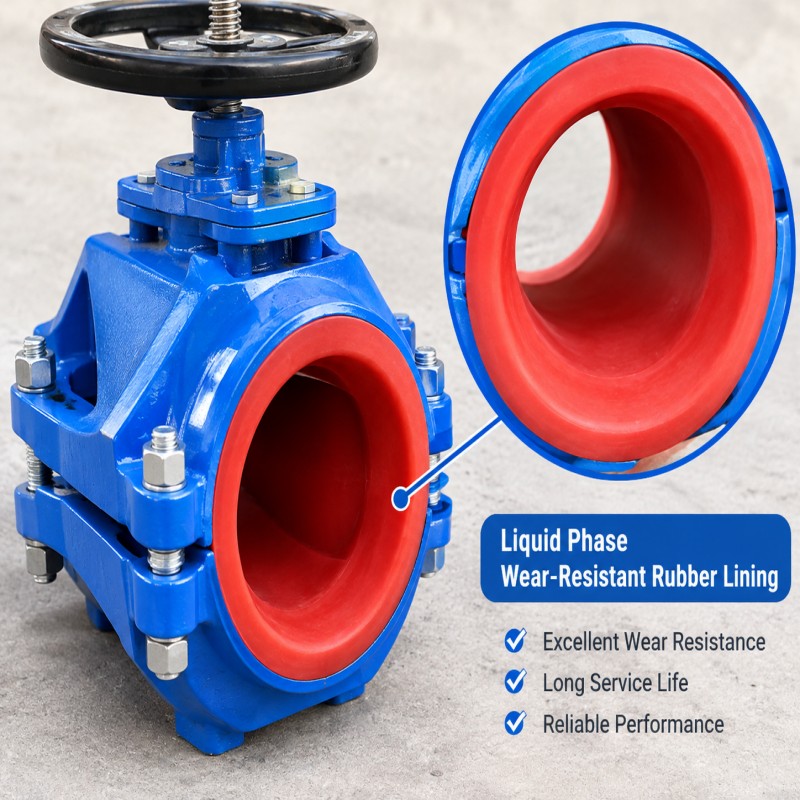
✔ Isolation valves — targeted maintenance without full process shutdown
Summary Table
| Strategy | Mechanism | Expected Impact |
|---|---|---|
| Standby Cyclone | Spare unit ready to take over | Eliminates mill shutdowns |
| Vibration Monitoring | Detects bearing issues early | Prevents 6–10 hours downtime |
| Roping Index Monitoring | Real-time separation efficiency | Identifies issues before losses |
| Single-Component Conical Sections | Fewer bolts, one hand tool | Reduces installation time |
| Fast-Swap Pump Strategies | Bare shaft assembly replacement | Halves downtime (8 vs. 16 hours) |
| Isolation Valves | Targeted maintenance | Avoids full process shutdown |
| Strategic Spare Inventory | Apexes, vortex finders, liners | Avoids waiting for deliveries |
Definition
What Is a Standby Cyclone?
A standby cyclone is a spare unit installed in parallel with the operating cyclone. When maintenance is required on the duty unit, flow is diverted to the standby unit, allowing repairs to proceed without shutting down the grinding circuit.
What Is Predictive Monitoring?
Predictive monitoring uses sensors and data analytics to detect early signs of equipment degradation—such as elevated vibration, temperature, or changes in separation efficiency—before they cause a breakdown.
Working Principle
How Standby Capacity Eliminates Downtime
-
Duty Unit Operating: Slurry flows through the operating cyclone.
-
Maintenance Required: Wear parts need replacement.
-
Flow Diverted: Switch to standby unit.
-
Maintenance Performed: Duty unit repaired while standby maintains production.
-
Return to Service: Duty unit returned to service; standby becomes spare.
Benefits
Benefits of Downtime Reduction
-
Increased production — no mill shutdowns for cyclone maintenance
-
Lower maintenance costs — planned rather than reactive repairs
-
Extended part life — condition-based replacement
-
Stable operation — consistent classification
-
Predictable performance — data-driven decisions
-
Lower cost per ton — the most meaningful metric
Applications
Hydrocyclone Applications Where Downtime Matters
-
Gold recovery — abrasive quartz
-
Copper ore processing — high tonnage
-
Iron ore processing — very abrasive
-
Coal preparation — moderate abrasion
-
Tailings management — high wear
-
FGD gypsum — chemical and abrasive
Material Comparison
Wear Part Material Options
| Material | Wear Resistance | Cost | Best Application |
|---|---|---|---|
| Silicon Carbide | Excellent | High | Extreme abrasion |
| Alumina Ceramic | Very Good | Moderate-High | High-abrasion zones |
| Polyurethane | Good | Moderate | Moderate abrasion |
| Rubber | Moderate | Low | Impact areas |
Application Comparison
Reactive vs. Proactive Maintenance
| Criterion | Reactive Maintenance | Proactive Maintenance |
|---|---|---|
| Downtime | High; unplanned | Low; planned |
| Part Life | Short; fails unexpectedly | Extended; replaced on condition |
| Cost | Higher; emergency repairs | Lower; planned replacements |
| Production | Lost during failures | Maintained with standby capacity |
| Data | None | Vibration, roping index, wear measurements |
Industry Application Matrix
| Industry | Typical Downtime Challenge | Primary Solution |
|---|---|---|
| Gold Ore | Abrasive quartz; frequent apex wear | Standby cyclone + weekly measurement |
| Copper Ore | High tonnage; vortex finder wear | Vibration monitoring + spare inventory |
| Iron Ore | Very abrasive; cone liner wear | Single-component conical sections |
| Coal | Moderate abrasion | Roping index monitoring |
| Tailings | High wear; corrosion | Isolation valves + spare parts |
| FGD Gypsum | Chemical and abrasive | Ceramic components + fast-swap design |
Selection Guide
Step-by-Step Downtime Reduction
Step 1: Assess Current Downtime
-
Log every stoppage related to cyclone maintenance
-
Calculate cost per hour of downtime
-
Identify most frequent failure points
Step 2: Evaluate Standby Capacity
-
Calculate cost of standby cyclone vs. cost of downtime
-
Most operations achieve payback in under 3 months
Step 3: Implement Predictive Monitoring
-
Install vibration sensors on pumps
-
Consider roping index monitoring for separation efficiency
-
Set alerts for abnormal conditions
Step 4: Adopt Rapid-Swap Design
-
Single-component conical sections
-
Fast-swap pump strategies (bare shaft assemblies)
-
Isolation valves for targeted maintenance
Step 5: Build Strategic Spare Inventory
-
Apexes in multiple sizes
-
Vortex finders
-
Cone liners
Step 6: Implement Condition-Based Maintenance
-
Measure apex weekly
-
Inspect vortex finder quarterly
-
Replace based on condition, not calendar
Procurement Guide
Key Considerations When Procuring for Downtime Reduction
Required Information:
-
Hydrocyclone model and size
-
Current downtime frequency and cost
-
OEM part numbers (apex, vortex finder, cone liner)
-
Feed conditions (pressure, density, PSD)
-
Ore type and abrasiveness
Supplier Evaluation Checklist:
-
□ Does the supplier offer standby cyclone options?
-
□ Can they provide rapid-swap designs?
-
□ Do they offer multiple material options?
-
□ What is the typical lead time?
-
□ Can they provide references from similar applications?
Buyer Questions to Ask:
-
“What is the economic justification for a standby cyclone?”
-
“Can you provide a wear-life comparison for ceramic vs rubber?”
-
“Do you offer single-component conical sections?”
-
“What spare parts should I keep in inventory?”
Failure Analysis
| Problem | Possible Cause | Recommended Solution |
|---|---|---|
| Unplanned downtime | No standby capacity | Install standby cyclone |
| Pump bearing failure | No vibration monitoring | Install vibration sensors |
| Separation efficiency loss | No roping index monitoring | Implement real-time monitoring |
| Long maintenance time | Segmented conical sections | Switch to single-component design |
| Pump repair time | In-situ repair | Use bare shaft assembly |
| Full process shutdown | No isolation valves | Install isolation valves |
| Waiting for parts | No spare inventory | Build strategic inventory |
Maintenance Guide
Recommended Maintenance Schedule
| Frequency | Task |
|---|---|
| Daily | Observe underflow discharge pattern |
| Weekly | Measure apex diameter |
| Monthly | Check vibration data; inspect feed chamber |
| Quarterly | Inspect vortex finder; review monitoring data |
| Annually | Complete cyclone overhaul; assess standby readiness |
Preventive Maintenance Tips
-
Install standby cyclone — eliminates mill shutdowns
-
Monitor vibration — catches bearing issues early
-
Use roping index monitoring — maintains separation efficiency
-
Keep spare parts — avoids waiting for deliveries
-
Adopt fast-swap strategies — halves repair time
Case Study
Case Study: Eliminating Downtime at a Copper Mine
Customer Type: Large copper mine
Ore Type: Copper porphyry, moderate abrasion
Operating Conditions: 6-cyclone cluster, 200 tph feed
Problem:
The mine was experiencing frequent unplanned downtime due to cyclone maintenance. Each failure caused at least 2 hours of downtime, and the mill was losing 10,000 tons of ore per month.
Solution:
The mine installed one operating and one standby CAVEX hydrocyclone. Vibration monitoring was implemented on pumps. A strategic spare parts inventory was established. Single-component conical sections were specified for new components.
Result:
-
Mill shutdowns for cyclone maintenance eliminated
-
Unplanned downtime reduced by 75%
-
Part life extended to 8 months for spigots, 24 months for liners
-
Annual savings from increased production: $2.4 million
-
Investment payback period: under 3 months
FAQ
Question 1: What is the most effective way to reduce hydrocyclone downtime?
Answer: Installing a standby cyclone. It allows maintenance to be performed without shutting down the grinding circuit. A Montana Resources case study found it eliminated mill shutdowns entirely, and a separate field case reported 75% reduction in unplanned downtime, paying for itself in under 3 months.
Question 2: How does predictive monitoring help reduce downtime?
Answer: Vibration monitoring on pumps detects elevated vibration or temperature, signaling potential bearing failure before it occurs. One customer prevented 6–10 hours of unplanned downtime. Roping index monitoring tracks separation efficiency in real-time, identifying issues before they cause performance losses.
Question 3: What design features reduce maintenance time?
Answer: Single-component conical sections have only two sets of bolts and require one hand tool, reducing installation time. Fast-swap pump strategies (bare shaft assembly replacement) halve downtime compared to in-situ repair (8 hours vs. 16 hours).
Question 4: What spare parts should I keep in inventory?
Answer: A strategic inventory of apexes in multiple sizes, vortex finders, and liners avoids waiting for deliveries. This is critical for reducing unplanned downtime.
Question 5: What are isolation valves and how do they help?
Answer: Isolation valves on the underflow line allow maintenance to be performed on specific parts of the system without shutting down the entire process. This enables targeted repairs while the rest of the circuit continues operating.
Question 6: How does standby capacity extend part life?
Answer: With a standby unit, maintenance can be performed before parts fail completely. This allows condition-based replacement rather than reactive repair, extending average part life. Montana Resources extended spigot life to 8 months and liner life to 24 months.
Question 7: What is roping index monitoring?
Answer: Roping index monitoring tracks separation efficiency in real-time by monitoring the underflow discharge pattern. It identifies performance issues—such as roping—before they cause significant losses, allowing operators to make adjustments proactively.
Question 8: What is the economic justification for a standby cyclone?
Answer: A standby cyclone pays for itself by eliminating mill shutdowns. For operations where downtime costs thousands of dollars per hour, the standby unit typically achieves payback in under 3 months. The cost of the standby unit is far less than the cost of lost production during unplanned maintenance.
Conclusion
Reducing hydrocyclone downtime is best achieved by shifting from a reactive repair mindset to a strategy built on standby capacity, predictive monitoring, and rapid-swap component design.
Key Takeaways:
-
Standby cyclone — most effective single intervention; eliminates mill shutdowns
-
Montana Resources — part life extended to 8 months (spigots) and 24 months (liners)
-
75% less unplanned downtime — separate field case with <3 month payback
-
Vibration monitoring — detects bearing failure; prevented 6–10 hours downtime
-
Roping index monitoring — tracks separation efficiency in real-time
-
Single-component conical sections — only two sets of bolts, one hand tool
-
Fast-swap pump strategies — bare shaft assembly halves downtime
-
Isolation valves — targeted maintenance without full process shutdown
The most effective single intervention is a standby cyclone. Combine this with predictive monitoring to catch problems early and rapid-swap design to minimize repair time. A strategic spare parts inventory ensures replacements are available when needed, and isolation valves allow targeted maintenance without full process shutdown.
Related Articles
Related Products:
Related Technical Guides:
Related Process Hubs:
Related Category Hubs:
Contact Us
We warmly welcome customers from around the world to contact us and establish mutually beneficial partnerships.
Contact: Annie Lu
Email: annie.lu@huataogroup.com
Phone / WhatsApp: +86 180 3242 2676
Website: https://www.tufflexscreen.com/
Tags: Hydrocyclone, Downtime, Maintenance, Standby Cyclone, Predictive Monitoring, Mineral Processing, Classification, Hydrocyclone Optimization, Spare Parts, Condition-Based Maintenance
Tags:
 admin
personal profile