How Often Should I Replace Hydrocyclone Liners?
Oct 20, 2026
 admin
admin When a high-frequency vibrating screen fails to meet separation targets, the problem typically stems from a combination of operating parameters, material characteristics, screen panel condition, and mechanical integrity. Common issues include moisture >8% causing blinding, wrong aperture size, incorrect vibration settings (frequency, amplitude, inclination), and mechanical failures like bearing overheating or weld cracks. Systematic troubleshooting: check panel condition, feed characteristics, vibration parameters, mechanical components, feed distribution, and test with wash water.
✔ Moisture >8% → leading cause of blinding; wash water improves efficiency up to 5%
✔ Aperture size → select slightly larger than target cut for better precision
✔ Frequency → 3000 rpm for fine/sticky materials
✔ Inclination → 5°–25° depending on application
✔ g-force → ideally 3–7g for efficient stratification
✔ Fine particles → longer stroke + slower speed with circular motion may work better
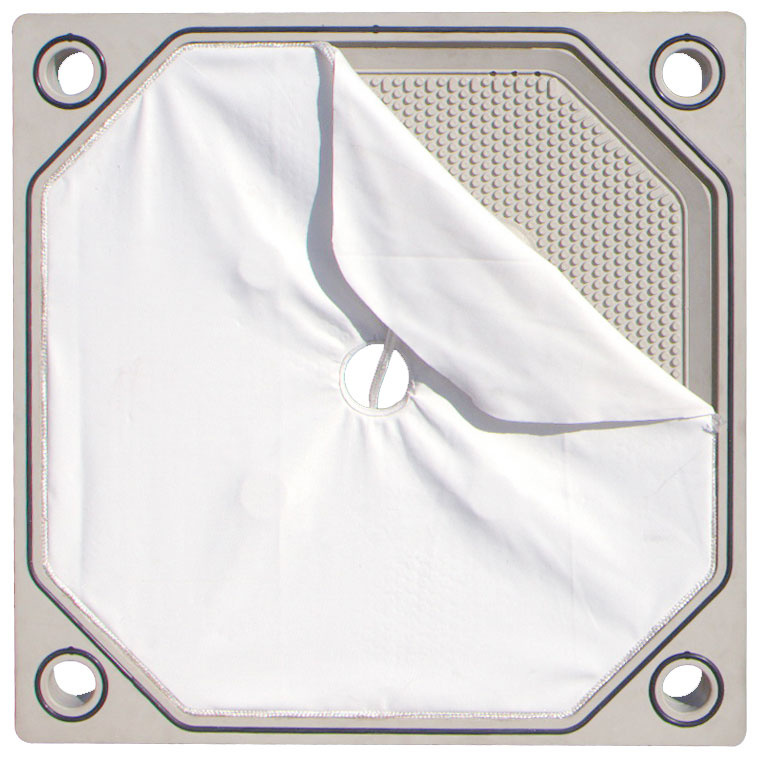
✔ HUATAO Group offers anti-blinding high-frequency screen panels
| Category | Common Issue | Fix |
|---|---|---|
| Feed Conditions | Moisture >8%; high solids; flooding | Wash water; adjust solids (~40%); reduce feed rate |
| Screen Panel | Wrong aperture; blinding; uneven wear | Select slightly larger apertures; anti-blinding; re-tension |
| Vibration Settings | Frequency/amplitude mismatch; wrong inclination | 3000 rpm; 5–15mm; 5°–25°; 3–7g |
| Mechanical Issues | Bearing overheating; weld cracks; exciter failure | Check lubrication; reinforce welds; inspect exciter |
| Symptom | Likely Cause | Recommended Fix |
|---|---|---|
| Fine, wet, or sticky materials blinding | Moisture >8% | High-frequency (3000 rpm); wash water |
| Poor separation with high solids | Increasing solids concentration | Adjust solids; optimal ~40% w/w |
| Flooding or buildup | Excessive feed rate | Reduce feed; ensure even distribution |
| Symptom | Likely Cause | Recommended Fix |
|---|---|---|
| Separation cut off target | Aperture doesn’t match cut point | Select slightly larger apertures |
| Near-size clogging | Apertures too small for PSD | Adjust aperture; use anti-blinding |
| Uneven wear or localized blinding | Uneven tensioning or frame damage | Re-tension; repair frame |
| Parameter | Best Practice |
|---|---|
| Frequency | Up to 3000 rpm for fine/sticky |
| Amplitude | 5–15mm for fine screening |
| Inclination | 5°–25° depending on application |
| g-force | Ideally 3–7g |
Key finding: For coarse particles, short-stroke, high-frequency works best. For fine particles, longer stroke and slower speed with circular motion may yield better results.
| Issue | Sign | Action |
|---|---|---|
| Bearing overheating | Temperature >70°C | Check lubrication; replace |
| Screen box cracking | Visible cracks at welds | Reinforce welds |
| Unusual noise or oil leaks | Exciter failure | Inspect and repair |
| Resonance/polarization | Excessive amplitude | Adjust exciter balance |
Verify screen panel condition — Check for blinding, pegging, worn apertures; clean or replace; ensure proper tensioning
Check feed characteristics — Measure moisture and solids concentration; moisture >8% → wash water or anti-blinding designs
Confirm vibration parameters — Frequency, amplitude, inclination angle
Inspect mechanical components — Bearings, exciter, support frame
Review feed distribution — Ensure even across full screen width
Test with wash water — Can improve efficiency by up to 5%
Answer: Typically due to feed conditions (moisture >8%, high solids), wrong aperture size, incorrect vibration settings, or mechanical issues.
Answer: Moisture exceeding roughly 8% causes particles to cling to the mesh surface.
Answer: Iron ore tests show optimal performance at approximately 40% w/w solids.
Answer: High-frequency screens typically operate at up to 3000 rpm for fine, sticky materials.
Answer: Ideally 3–7g for efficient stratification.
Answer: Adjust aperture size or screen panel type; use anti-blinding panel designs for fine, sticky materials.
Answer: 5°–25° depending on application. Too steep → material moves too fast; Too shallow → retention too long.
Answer: Applying wash water can improve fine screening efficiency by up to 5%.
Answer: HUATAO offers high-frequency screen panels with anti-blinding designs, custom apertures, and polyurethane/rubber options.
Answer: Contact us with your application requirements. We’ll recommend the optimal solution.
High-frequency screen performance issues usually stem from controllable factors: feed conditions, panel selection, vibration settings, or mechanical integrity. By systematically checking each category, you can pinpoint the cause and restore target separation efficiency.
We warmly welcome customers from around the world to contact us and establish mutually beneficial partnerships.
Contact: Annie Lu
Email: annie.lu@huataogroup.com
Phone / WhatsApp: +86 180 3242 2676
Website: http://www.tufflexscreen.com
HUATAO Group – Your Trusted Partner for High-Performance Screening and Wear Solutions.
admin