High-Frequency Vibrating Screen vs. Traditional Screening Machine: Which is Better for Fine Particle Screening?
-
 admin
admin - 04 Aug, 2026
High-Frequency Vibrating Screen vs. Conventional Screen: Which Is Better for Fine Screening?
Quick Answer
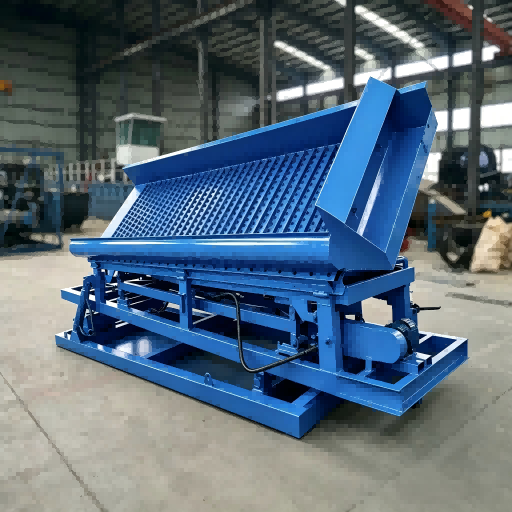
For fine screening applications, high-frequency vibrating screens clearly outperform conventional screens. The core reason is fundamental: fine particles require high frequency, low amplitude, and direct excitation of the screen surface to achieve efficient separation. High-frequency screens operate at 3,600–4,200 RPM with fine particle efficiency of 89–98% and cut size down to 45 microns. Conventional screens operate at 800–1,500 RPM and become inefficient below 4mm. High-frequency screens also handle wet/sticky materials effectively, with only ~10% fines misplacement vs. ~30% for conventional screens. Choose high-frequency for fine screening below 4mm; choose conventional for coarse materials (>10mm) and high-volume throughput.
Key Takeaways
✔ High-Frequency Screens → 3,600–4,200 RPM; 89–98% efficiency; down to 45 microns
✔ Conventional Screens → 800–1,500 RPM; inefficient below 4mm; higher fines misplacement
✔ High-Frequency → Better for wet/sticky materials; minimal blinding
✔ High-Frequency → Steeper angle (38–43°) prevents bed buildup
✔ HUATAO Group offers high-frequency screen panels for fine screening down to 45 microns
Summary Table
| Metric | High-Frequency Screen | Conventional Screen |
|---|---|---|
| Operating speed | 3,600–4,200 RPM | 800–1,500 RPM |
| Fine particle efficiency | 89–98% | Limited |
| Fine particle cut | Down to 45 microns | ~4mm limit |
| Screen angle | 38–43° | 15–25° |
| Stroke | Smaller (0.5–2.4mm) | Larger |
| Wet/sticky handling | Excellent | Frequent clogging |
| Fines misplacement | ~10% | ~30% |
Core Design Differences
| Feature | Conventional Screens | High-Frequency Screens |
|---|---|---|
| Vibration method | Whole-body vibration | Direct mesh excitation |
| Adjustability | Fixed | Variable per deck |
| Energy consumption | Higher | Lower |
| Maintenance | Complex changeouts | Quick screen media changes |
Why High Frequency Works for Fines
The physics principle: For coarse materials, large amplitude and low frequency achieve best results. For fine materials, small amplitude and high frequency allow particles to stay close to the screen surface and pass through openings more readily.
Stratification effect: High-speed vibration (3,600+ RPM) creates rapid stratification—larger particles rise, smaller particles sift through voids to the bottom.
Wet material handling: High-frequency vibration disrupts surface tension, preventing material buildup and maintaining open screening area.
Critical insight: High-frequency screens operate at steeper angles (38–43°) to maintain optimal bed depth while achieving separation.
Operating Parameter Differences
| Parameter | Conventional Screen | High-Frequency Screen |
|---|---|---|
| Operating angle | 15–25° | 38–43° |
| Frequency range | 800–1,500 RPM | 3,600–4,200 RPM |
| Stroke | Larger | Smaller (0.5–2.4mm) |
| Adjustability | Fixed | Variable per deck |
Wet Screening Performance Data
In coal preparation applications:
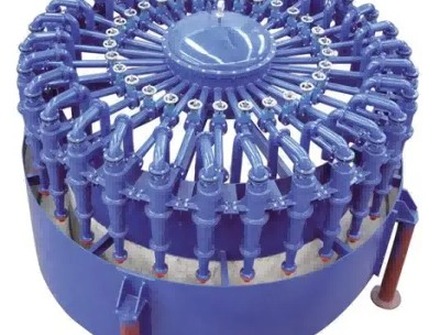
| Parameter | Classifying Cyclone | High-Frequency Screen |
|---|---|---|
| Overall efficiency | Lower | 89–98% |
| Fines (<250μm) in product | ~30% | ~10% |
Selection Guide
Choose High-Frequency Screen When:
-
Target separation is below 4mm down to fine particle sizes
-
Processing wet, sticky, or high-moisture materials
-
Production efficiency is critical
-
Quick screen media changes are desired
-
Processing manufactured sand, coal fines, or mineral fines
Choose Conventional Screen When:
-
Screening coarse materials (>10mm)
-
Processing dry, free-flowing materials
-
High-volume throughput is primary objective
-
Lower initial capital investment is required
Procurement Guide
Required Information for Screen Selection
-
Target Cut Size: Required separation size
-
Feed Material: Ore type, moisture content
-
Throughput: TPH required
-
Operating Hours: Hours per year
Supplier Evaluation Checklist
- □
Does the supplier offer high-frequency screen panels?
- □
What is the minimum cut size achievable?
- □
Does the supplier offer anti-blinding designs?
- □
What is the typical lead time?
Case Study: Coal Preparation Plant
A coal preparation plant compared high-frequency screen vs. classifying cyclone for fine coal recovery:
| Classifying Cyclone | High-Frequency Screen | |
|---|---|---|
| Overall efficiency | Lower | 89–98% |
| Fines in product | ~30% | ~10% |
| Maintenance | Frequent | Minimal |
High-frequency screen delivered significantly lower fines misplacement and higher overall efficiency.
FAQ
1. Which is better for fine screening: high-frequency or conventional?
Answer: High-frequency vibrating screens are superior for fine screening, delivering 89–98% efficiency and cut size down to 45 microns. Conventional screens become inefficient below 4mm.
2. Why does high frequency work better for fine particles?
Answer: Fine particles require small amplitude and high frequency to stay close to the screen surface and pass through openings. High-frequency screens operate at 3,600–4,200 RPM.
3. What is the stratification effect?
Answer: High-speed vibration creates rapid stratification—larger particles rise to the top, smaller particles sift through voids to the bottom where they contact the screen surface.
4. How do high-frequency screens handle wet materials?
Answer: High-frequency vibration disrupts surface tension, preventing material buildup and maintaining open screening area. Conventional screens frequently clog with wet materials.
5. What screen angle do high-frequency screens use?
Answer: High-frequency screens operate at steeper angles (38–43°) to maintain optimal bed depth while achieving separation.
6. What is the fine particle cut size for high-frequency screens?
Answer: High-frequency screens are effective down to 45 microns.
7. When should I choose a conventional screen?
Answer: Choose conventional screens for coarse materials (>10mm), dry free-flowing materials, high-volume throughput, or when lower capital investment is required.
8. What does HUATAO offer for fine screening?
Answer: HUATAO offers high-frequency screen panels engineered for fine screening efficiency down to 45 microns, with polyurethane and rubber options and anti-blinding designs.
9. How do I start the procurement process?
Answer: Contact us with your target cut size, material type, and throughput requirements. We’ll recommend the optimal solution and provide a quotation within 48 hours.
Conclusion
High-frequency vibrating screens are the superior choice for fine screening, delivering higher classification efficiency (89–98%), lower fines misplacement, and greater productivity on fine and difficult materials compared to conventional screens.
The bottom line:
-
High-Frequency: Fine screening below 4mm; wet/sticky materials; 45 micron capability
-
Conventional: Coarse materials (>10mm); dry, free-flowing materials; high-volume throughput
Contact Us
We warmly welcome customers from around the world to contact us and establish mutually beneficial partnerships.
Contact: Annie Lu
Email: annie.lu@huataogroup.com
Phone / WhatsApp: +86 180 3242 2676
Website: http://www.tufflexscreen.com
HUATAO Group – Your Trusted Partner for High-Performance Screening and Wear Solutions.
Tags:
admin
personal profile