
OEM Flotation Wear Parts Guide: Rotors, Stators & Supplier Selection (2026) 内容修改 NEWS Mineral Technical News
-
 admin
admin - 28 Jul, 2026
1. Definition
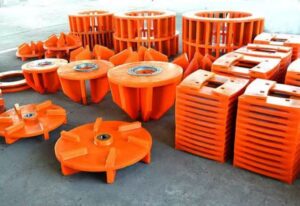
OEM flotation wear parts are consumable components installed in mechanical flotation cells. They include:
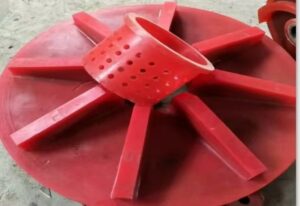
- Flotation Rotor (Impeller): The rotating component that draws air down the standpipe and disperses it as bubbles.
- Flotation Stator (Diffuser): The stationary component that directs slurry flow and shears air bubbles.
- Tank Protection Liners: Elastomer sheets that protect the flotation cell’s steel shell from abrasion.
- Wear Plates: High-wear zone protection, often at the cell bottom or around the rotor.
These parts are “OEM-grade” meaning they meet or exceed original equipment manufacturer specifications – but are often customized to specific operating conditions.
2. Working Principle
In a mechanical flotation cell:
- The Flotation Rotor rotates at 1500-2000 RPM inside the stator.
- Air is drawn down the standpipe (or forced by blower) into the rotor.
- The rotor shears air into fine bubbles (0.5-2mm diameter).
- The Flotation Stator directs slurry flow outward and upward.
- Hydrophobic mineral particles (copper sulfides, gold, etc.) attach to bubbles and rise to form froth.
Why wear parts matter: If the rotor or stator wears, air dispersion becomes uneven. Bubble size increases. Recovery drops. If a rotor fails completely, the entire cell stops – causing production losses.
3. Benefits of OEM-Grade Customized Flotation Wear Parts
| Benefit | Explanation |
|---|---|
| Longer service life | Material matched to ore abrasiveness (polyurethane for high abrasion) |
| Improved recovery | Optimized rotor/stator geometry improves air dispersion |
| Reduced downtime | Fewer change-outs, planned maintenance |
| Lower cost per ton | Higher upfront cost but longer life (2-3x) |
| Obsolete cell support | Reverse engineering for legacy equipment |
4. Applications by Ore Type
| Ore Type | Abrasion Level | Chemical Environment | Recommended Material |
|---|---|---|---|
| Copper Ore (porphyry) | High | pH 10-11 (lime) | MDI Polyurethane |
| Copper Ore (sedimentary) | Medium | pH 9-10 | Polyurethane |
| Gold Ore (sulfide) | High | pH 9-11, xanthates | Polyurethane |
| Lead Zinc Ore | Medium | pH 10-12, collectors | Rubber or Composite |
| Nickel Ore | Medium | pH 9-10 | Polyurethane |
| Iron Ore (reverse) | High | pH 10-11, amines | Polyurethane |
| Phosphate | Medium | pH 9-10, fatty acids | Rubber |
| Lithium Ore | Low-Medium | pH 8-9 | Rubber |
5. Comparison: Polyurethane vs. Rubber for Flotation Parts
| Property | Polyurethane | Natural Rubber |
|---|---|---|
| Abrasion resistance | Excellent (30-50 DIN) | Good (100-150 DIN) |
| Chemical resistance (pH) | 4-12 | 2-13 |
| Impact resistance | Good | Excellent |
| Tensile strength | 35-55 MPa | 20-30 MPa |
| Temperature limit | 80°C | 70°C |
| Oil/solvent resistance | Poor | Poor |
| Cost | Medium | Medium |
| Best for | Abrasive ores (copper, gold) | Wide pH, high impact |
Conclusion: For most copper and gold flotation circuits, polyurethane is preferred due to superior abrasion resistance.
6. Selection Guide
Step 1: Identify your flotation cell
- Make and model (e.g., Outotec TankCell, FLSmidth Wemco)
- Cell volume (m³)
- Year of manufacture (for legacy cells)
Step 2: Provide operating conditions
- Ore type and work index
- Slurry pH and temperature
- % solids and P80
- Reagents used
Step 3: Choose material
- High abrasion → MDI Polyurethane (90-95 Shore A)
- High impact or wide pH → Natural Rubber
- Oily ore or solvents → Neoprene
Step 4: Provide drawings or samples
- OEM part number
- 2D drawing (if available)
- Worn sample (for reverse engineering)
7. Failure Analysis & Troubleshooting
| Problem | Possible Cause | Solution |
|---|---|---|
| Rotor wear <3 months | Ore too abrasive for standard PU | Upgrade to MDI high-abrasion PU (95 Shore A) |
| Rotor cracking | Fatigue from imbalance | Balance rotor; check shaft |
| Stator vane breakage | Large particles or tramp metal | Install scalping screen |
| Swelling/softening | Chemical attack (solvent) | Switch to neoprene or EPDM |
| Poor air dispersion | Worn stator vanes | Replace stator |
| Low recovery | Incorrect rotor-stator gap | Adjust to 5-10mm |
| Vibration | Rotor imbalance | Replace or rebalance rotor |
8. Maintenance Guide
Daily:
- Listen for unusual noise (rotor-stator contact)
- Observe froth appearance
- Check motor current
Weekly:
- Visual inspection through ports
- Document wear (photos)
Monthly:
- Plan 2-4 hour inspection
- Measure rotor-stator clearance
- Check tank liners
Annually:
- Full teardown
- Replace all elastomer components
- Document wear patterns for next procurement
9. Procurement Guide
Required information for quote:
| Information | Why Needed |
|---|---|
| Cell make/model | Ensures fit |
| OEM part number | Cross-reference |
| Drawings or sample | Reverse engineering |
| Ore type | Material selection |
| Slurry pH & temp | Chemical compatibility |
| Current part life | Baseline for improvement |
MOQ: 2-10 sets per cell type
Lead time:
- Standard sizes: 10-15 days
- Custom tooling: 20-30 days
- Reverse engineering: 25-35 days
Supplier evaluation checklist:
- ISO 9001:2015
- DIN abrasion test reports
- Reverse engineering capability
- 3+ mining references
- 6-month minimum warranty
- Free sample policy
10. Case Study: Copper Mine, Chile
Customer Type: Large porphyry copper mine, 60,000 TPD
Problem: OEM rotors and stators lasted
Tags:
admin
personal profile