
Hydrocyclone vs Vibrating Screen: Which Classification Solution Is Better for Mineral Processing?
-
 admin
admin - 28 Jul, 2026
Introduction
Classification is one of the most critical operations in mineral processing. Whether processing Gold Ore, Copper Ore, Iron Ore, Lithium Ore, Coal, Silica Sand, Lead Zinc Ore, Nickel Ore, or Phosphate Ore, classification efficiency directly impacts grinding performance, flotation recovery, dewatering efficiency, and operating costs.
Among all classification equipment, Hydrocyclones and Vibrating Screens are the two most commonly used technologies. While both perform particle separation, their operating principles and performance characteristics differ significantly.
What Is a Hydrocyclone?
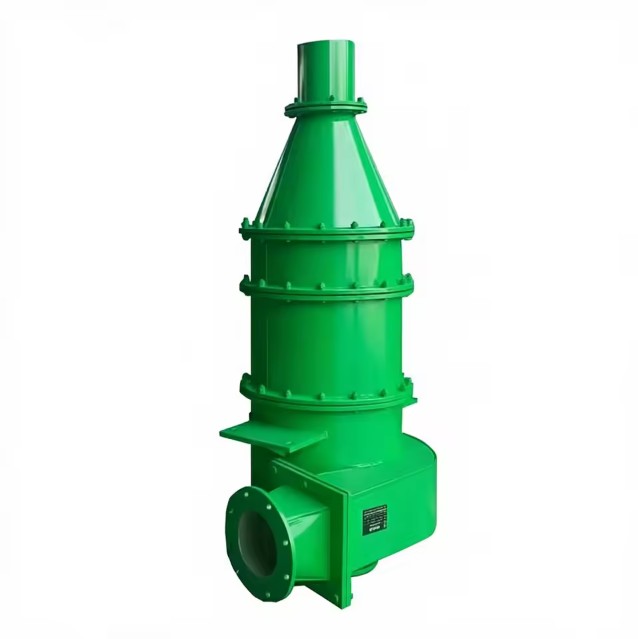
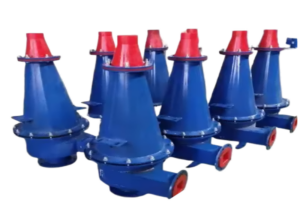
A Hydrocyclone is a classification device that uses centrifugal force to separate particles suspended in slurry.
Common Hydrocyclone Components:
- Hydrocyclone Body
- Vortex Finder
- Apex (Spigot)
- Polyurethane Liner
- Ceramic Liner
- Rubber Liner
Related Product:
[Hydrocyclone Internal Link]
Hydrocyclones are widely used in:
- Ball Mill Circuits
- SAG Mill Circuits
- Rod Mill Circuits
- Tailings Management
- Desliming Operations
- Flotation Feed Preparation
What Is a Vibrating Screen?
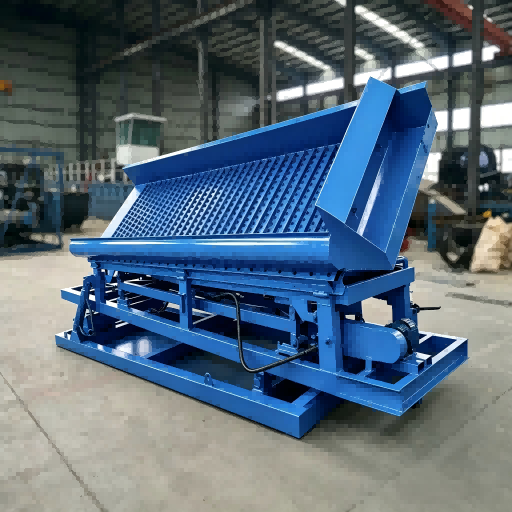
A Vibrating Screen separates particles mechanically through screen apertures.
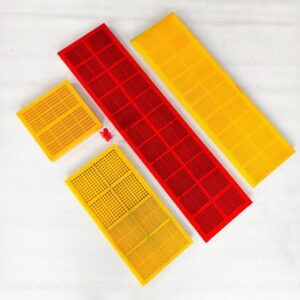
Common Screen Media:
- Polyurethane Screen Panel
- Rubber Screen Panel
- Woven Wire Screen
- Self-cleaning Screen Mesh
- Dewatering Screen Panel
Related Product:
[Polyurethane Screen Panel Internal Link]
Applications include:
- Crushing Circuits
- Aggregate Screening
- Fine Classification
- Coal Preparation
- Dewatering
Working Principle Comparison
Hydrocyclone Working Principle
Feed slurry enters tangentially into the cyclone body, creating a centrifugal field.
Fine particles move upward through the vortex finder.
Coarse particles move downward and discharge through the apex.
Vibrating Screen Working Principle
Material is fed onto the vibrating screen deck.
Mechanical vibration causes particles to stratify.
Particles smaller than the aperture pass through the screen surface.
Oversized particles remain on top and discharge separately.
Benefits of Hydrocyclones
High Throughput
Capable of processing large slurry volumes.
Compact Design
Minimal installation footprint.
Lower Initial Investment
Lower equipment cost compared with large screening systems.
Easy Automation
Well suited for modern concentrators.
Benefits of Vibrating Screens
Higher Classification Accuracy
Produces sharper particle separation.
Lower Overgrinding
Reduces fine particle recirculation.
Better Product Quality
More consistent particle size distribution.
Improved Recovery
Supports better downstream flotation performance.
Material Comparison Table
| Material | Wear Resistance | Impact Resistance | Cost | Application |
|---|---|---|---|---|
| Polyurethane | Excellent | Excellent | Medium | Hydrocyclone, Screens |
| Rubber | Good | Excellent | Low | Screen Panels |
| Ceramic | Excellent | Low | High | Cyclone Liners |
| Steel | Moderate | Good | Low | Structural Components |
Application Comparison Table
| Application | Hydrocyclone | Vibrating Screen |
|---|---|---|
| Gold Ore | Excellent | Good |
| Copper Ore | Excellent | Good |
| Iron Ore | Excellent | Excellent |
| Coal | Good | Excellent |
| Lithium Ore | Excellent | Excellent |
| Silica Sand | Good | Excellent |
| Tailings | Excellent | Moderate |
Industry Application Matrix
| Industry | Hydrocyclone | Vibrating Screen |
|---|---|---|
| Gold Mining | ✓ | ✓ |
| Copper Mining | ✓ | ✓ |
| Iron Ore | ✓ | ✓ |
| Coal | ✓ | ✓ |
| Lithium | ✓ | ✓ |
| Silica Sand | ✓ | ✓ |
| Lead Zinc | ✓ | ✓ |
| Nickel | ✓ | ✓ |
Case Study
Customer Type
Gold Processing Plant
Problem
The plant experienced:
- High circulating load
- Excessive overgrinding
- Increased energy consumption
Solution
Installed:
- High-Frequency Vibrating Screens
- Polyurethane Screen Panels
- Optimized Hydrocyclone Apexes
Results
- Classification efficiency increased by 25%
- Grinding energy consumption reduced by 18%
- Recovery increased by 6%
- Screen panel life doubled
Why Choose Tufflex Screen
Tufflex Screen specializes in:
- Polyurethane Screen Panels
- Rubber Screen Panels
- Hydrocyclone Wear Parts
- Dewatering Screen Panels
- Self-cleaning Screen Mesh
Benefits include:
- OEM Compatibility
- Longer Wear Life
- Lower Maintenance Costs
- Global Export Experience
- Custom Manufacturing Support
FAQ
Question:
Which provides better classification accuracy?
Answer:
Vibrating screens generally provide higher classification accuracy than hydrocyclones.
Question:
Which is better for grinding circuits?
Answer:
Hydrocyclones remain the most common choice for grinding circuits.
Question:
Can hydrocyclones replace screens?
Answer:
Not always. Many plants use both technologies together.
Question:
What is the typical service life of polyurethane screen panels?
Answer:
Typically 3-8 times longer than traditional wire mesh depending on application.
Question:
What causes hydrocyclone inefficiency?
Answer:
Worn apexes, damaged vortex finders, unstable feed pressure, and incorrect sizing.
Question:
Which industries use hydrocyclones?
Answer:
Gold, copper, iron ore, coal, lithium, nickel, and silica sand industries.
Question:
How do I select the right screen panel?
Answer:
Based on aperture size, material properties, throughput, and wear conditions.
Question:
How can wear parts reduce operating costs?
Answer:
High-quality wear parts reduce downtime and maintenance frequency.
Conclusion
The Hydrocyclone vs Vibrating Screen debate ultimately depends on process objectives. Hydrocyclones excel in capacity and compactness, while vibrating screens offer superior classification accuracy and particle size control. For many modern mineral processing plants, combining both technologies delivers the best balance of throughput, recovery, and operating cost efficiency.
Contact
Annie Lu
Email: annie.lu@huataogroup.com
Mobile: +86 18032422676 (WhatsApp / WeChat)
Website: www.tufflexscreen.com
Hydrocyclone, Vibrating Screen, Polyurethane Screen Panel, Classification Equipment, Mineral Processing, Gold Mining, Copper Mining, Iron Ore, Coal Processing, Mining Wear Parts
Tags:
 admin
admin
personal profile