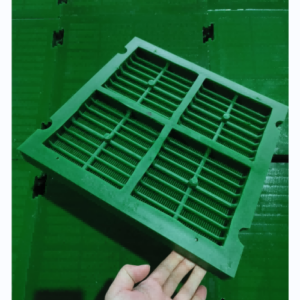

Polyurethane Screen Panels vs Rubber Screen Panels: Which Is Better?
-
 admin
admin - 28 Jul, 2026
Definition
What Is a Polyurethane Screen Panel?
A Polyurethane Screen Panel is a wear-resistant modular screening surface manufactured from high-performance polyurethane elastomers. It is commonly installed on Vibrating Screens, Dewatering Screens, High Frequency Screens, Banana Screens, and Flip Flow Screens.
Polyurethane screen media is widely used in:
- Iron Ore Processing
- Gold Ore Beneficiation
- Copper Ore Processing
- Lithium Ore Classification
- Silica Sand Screening
- Fine Coal Screening
What Is a Rubber Screen Panel?
A Rubber Screen Panel is a modular screening surface manufactured from specially formulated wear-resistant rubber compounds.
Rubber screen panels are commonly used in:
- Aggregate Plants
- Quarry Operations
- Coal Preparation Plants
- Primary Screening Circuits
- Scalping Applications
Their main advantage is impact resistance.
Working Principle
Both polyurethane and rubber screen panels operate using the same screening principle.
Material is fed onto a Vibrating Screen.
As vibration occurs:
- Smaller particles pass through screen apertures.
- Larger particles remain on the surface.
- Material is separated according to particle size.
The difference lies in how the material responds to wear, impact, vibration, and deformation.
Example
A copper concentrator processing abrasive ore may use polyurethane panels to maintain aperture accuracy and improve classification efficiency.
A quarry handling large rocks may use rubber panels to absorb impact and reduce panel breakage.
Benefits of Polyurethane Screen Panels
Superior Wear Resistance
Polyurethane is highly resistant to abrasion.
This makes it suitable for:
- Iron Ore
- Copper Ore
- Gold Ore
- Silica Sand
Example
Many iron ore plants achieve 2–5 times longer service life compared with traditional wire screens.
Better Aperture Stability
Polyurethane maintains aperture shape over time.
Benefits include:
- Higher screening accuracy
- More consistent product size
- Better process control
Corrosion Resistance
Polyurethane performs exceptionally well in:
- Wet screening
- Acidic environments
- Corrosive slurries
Lower Total Cost of Ownership
Although polyurethane usually costs more initially, it often reduces:
- Downtime
- Maintenance labor
- Inventory requirements
Benefits of Rubber Screen Panels
Excellent Impact Resistance
Rubber absorbs shock and vibration more effectively.
Ideal for:
- Large rock handling
- Scalping screens
- Primary crushing circuits
Noise Reduction
Rubber significantly reduces:
- Equipment noise
- Structural vibration
This improves working conditions.
Lower Initial Investment
Rubber panels generally have:
- Lower purchase price
- Lower upfront investment
This can be attractive for budget-sensitive operations.
Applications
Polyurethane Screen Panel Applications
| Industry | Application |
|---|---|
| Iron Ore | Fine screening |
| Gold Ore | Classification |
| Copper Ore | Vibrating screens |
| Lithium Ore | Fine separation |
| Silica Sand | High frequency screens |
| Tailings | Dewatering screens |
Rubber Screen Panel Applications
| Industry | Application |
|---|---|
| Coal | Scalping screens |
| Aggregates | Primary screening |
| Quarry | Heavy impact screening |
| Construction Materials | Coarse classification |
Polyurethane vs Rubber Screen Panels
Material Comparison Table
| Feature | Polyurethane | Rubber |
|---|---|---|
| Wear Resistance | Excellent | Good |
| Impact Resistance | Good | Excellent |
| Corrosion Resistance | Excellent | Good |
| Screening Accuracy | Excellent | Moderate |
| Noise Reduction | Good | Excellent |
| Weight | Light | Heavy |
| Fine Screening | Excellent | Fair |
| Coarse Screening | Good | Excellent |
| Service Life | Long | Moderate |
| Initial Cost | Higher | Lower |
Which Screen Panel Provides the Longest Service Life?
For abrasive materials:
- Iron Ore
- Copper Ore
- Gold Ore
- Silica Sand
Polyurethane generally lasts longer.
For impact-intensive applications:
- Quarry Rock
- Coarse Coal
- Large Aggregates
Rubber may perform better.
Conclusion
Wear mechanism determines the best material.
Abrasion = Polyurethane
Impact = Rubber
Which Delivers Better Screening Efficiency?
Screening efficiency depends on:
- Aperture stability
- Open area
- Material flexibility
- Wear characteristics
Polyurethane usually offers:
✔ Better fine separation
✔ More stable apertures
✔ Improved throughput
Rubber usually offers:
✔ Better impact tolerance
✔ Reduced vibration
✔ Stable coarse screening
Selection Guide
Choose Polyurethane If:
- Ore is highly abrasive
- Fine screening is required
- Moisture content is high
- Downtime is expensive
Choose Rubber If:
- Impact loads are severe
- Feed size is large
- Noise reduction is important
- Budget is limited
Failure Analysis
| Problem | Cause | Solution |
|---|---|---|
| Premature wear | Wrong material | Change panel type |
| Blinding | Wet sticky ore | Use Tufflex Screen |
| Pegging | Aperture mismatch | Modify opening design |
| Cracking | Excessive impact | Switch to rubber |
| Low efficiency | Worn apertures | Replace panels |
Maintenance Guide
Daily
- Visual inspection
- Check fasteners
- Monitor wear
Weekly
- Inspect support rails
- Verify vibration parameters
- Check panel alignment
Monthly
- Evaluate screening efficiency
- Analyze wear patterns
- Schedule replacements
Preventive maintenance significantly extends service life.
Procurement Guide
Required Information
Before requesting a quotation, prepare:
- Screen model
- Panel dimensions
- Aperture size
- Ore type
- Moisture content
- Throughput
Drawings Needed
- OEM Drawings
- CAD Files
- Installation Photos
- Existing Part Numbers
MOQ
Depends on:
- Standard panel
- Customized panel
- Mold requirements
Lead Time
Typical production:
- Standard Panels: 7–15 Days
- Customized Panels: 15–30 Days
Packaging
- Wooden Crates
- Steel Frames
- Export Pallets
Shipping Methods
- Sea Freight
- Air Freight
- Express Courier
Supplier Evaluation Checklist
✔ Own production workshop
✔ Mold development capability
✔ Export experience
✔ Quality certifications
✔ Mining references
✔ Technical support
✔ Sample availability
✔ Warranty policy
Industry Application Matrix
| Industry | Recommended Screen Media |
|---|---|
| Iron Ore | Polyurethane |
| Copper Ore | Polyurethane |
| Gold Ore | Polyurethane |
| Lithium Ore | Polyurethane |
| Silica Sand | Polyurethane |
| Coal | Rubber / Tufflex |
| Aggregate | Rubber |
| Quarry | Rubber |
| Tailings | Polyurethane |
| Dewatering | Polyurethane |
Case Study
Customer Type
Copper Concentrator
Operating Conditions
- Fine screening
- Abrasive ore
- 24-hour operation
Problem
Rubber screen panels required replacement every 3 months.
Frequent shutdowns reduced production efficiency.
Solution
HUATAO supplied customized Polyurethane Screen Panels with optimized aperture design.
Results
✔ Service life increased by 3×
✔ Maintenance downtime reduced by 50%
✔ Screening efficiency improved by 20%
✔ Lower annual maintenance costs
Why Mining Companies Choose HUATAO
HUATAO provides complete mining wear-part solutions covering:
Screening
- Polyurethane Screen Panels
- Rubber Screen Panels
- Tufflex Screens
- Self-Cleaning Screens
- Fine Screen Mats
- Dewatering Screen Panels
Crushing
- Jaw Plates
- Mantles
- Concaves
- Blow Bars
[Crusher Wear Parts Internal Link]
Grinding
- Ball Mill Liners
- SAG Mill Liners
- Lifter Bars
[Ball Mill Liner Internal Link]
Classification
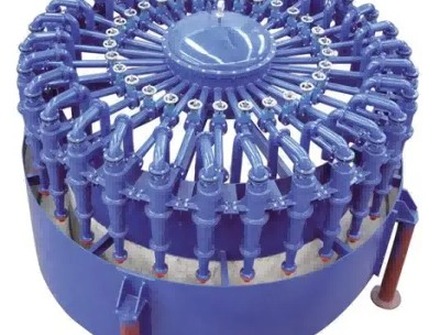
- Hydrocyclones
- Vortex Finders
- Apexes
[Hydrocyclone Internal Link]
Flotation
- Flotation Rotors
- Flotation Stators
- Tank Liners
[Flotation Rotor Internal Link]
Conveying
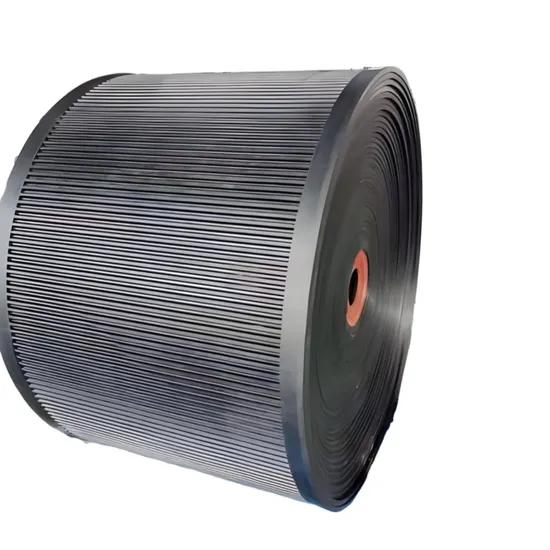
- Conveyor Belts
- Conveyor Idlers
- Belt Cleaners
- Polyurethane Skirting
[Conveyor Belt Internal Link]
FAQ
Q1. Which lasts longer, polyurethane or rubber screen panels?
Polyurethane usually lasts longer in abrasive applications.
Q2. Which is better for iron ore?
Polyurethane is generally preferred.
Q3. Which is better for coal screening?
Rubber or Tufflex Screens are commonly used.
Q4. Are polyurethane panels more expensive?
Yes, but total ownership cost is often lower.
Q5. Can I replace rubber panels with polyurethane?
In many applications, yes.
Q6. What causes screen panel failure?
Improper material selection, excessive impact, and poor maintenance.
Q7. Can polyurethane panels be customized?
Yes. Custom apertures and dimensions are available.
Q8. How do I select the right supplier?
Evaluate manufacturing capability, mining experience, certifications, and technical support.
Conclusion
Polyurethane Screen Panels and Rubber Screen Panels each offer unique advantages. Polyurethane dominates abrasive and fine-screening applications, while rubber excels in impact-intensive environments. The best solution depends on ore characteristics, screening objectives, maintenance strategy, and total ownership cost. For many mining operations, a combination of both materials provides the optimal balance between wear life, screening efficiency, and operating cost.
Contact
Annie Lu
Email:
annie.lu@huataogroup.com
Mobile:
+86 18032422676
WhatsApp / WeChat
#PolyurethaneScreenPanel
#RubberScreenPanel
#MiningScreenMedia
#TufflexScreen
#VibratingScreen
#ScreeningEfficiency
#MiningWearParts
#IronOreProcessing
#GoldMining
#MineralProcessing
#HUATAOGROUP
Tags:
admin
personal profile