How Often Should I Replace Hydrocyclone Liners?
Oct 20, 2026
 admin
admin Choosing the right polyurethane screen panel starts with understanding your material. Hard/abrasive ores (Mohs >5) with high throughput (>3,000 hours/year) → polyurethane almost always wins on cost per ton. Wet/sticky materials → polyurethane’s anti-blinding properties are essential. Soft materials (limestone) → woven wire may be more cost-effective. The single biggest mistake is buying on panel price instead of cost per ton screened. A polyurethane panel may cost 4× more than wire mesh but deliver ~7× lower cost per ton due to 18-month vs. 6-week wear life. Match aperture size (square for precision, slotted for high-volume), choose modular (quick maintenance) or tensioned (high-capacity), and select thickness (25–35 mm standard) and hardness (Shore A 85–95). Replace when apertures elongate >20% or wear depth exceeds 30% of original thickness.
✔ Hard/abrasive ores (Mohs >5) → polyurethane wins on cost per ton
✔ Wet/sticky materials → polyurethane’s anti-blinding properties are essential
✔ Soft materials → woven wire may be more cost-effective
✔ Cost per ton is the right metric, not panel price—polyurethane is often ~7× cheaper
✔ Modular panels = quick maintenance; tensioned panels = high-capacity
✔ HUATAO Group offers precision-molded polyurethane panels with up to 8× longer life than steel
| Factor | Recommendation |
|---|---|
| Hard/abrasive ores (Mohs >5) | Polyurethane (12–24 months wear life) |
| Wet/sticky materials | Polyurethane (anti-blinding) |
| Soft, dry materials | Woven wire (higher open area, lower cost) |
| High-throughput (>3,000 hrs/year) | Polyurethane (lower cost per ton) |
| Quick maintenance | Modular panels |
| Fine cuts (<3 mm) | High-tension wire on bottom deck |
| Standard thickness | 25–35 mm for inclined screens |
| Hardness range | Shore A 85–95 for most mining applications |
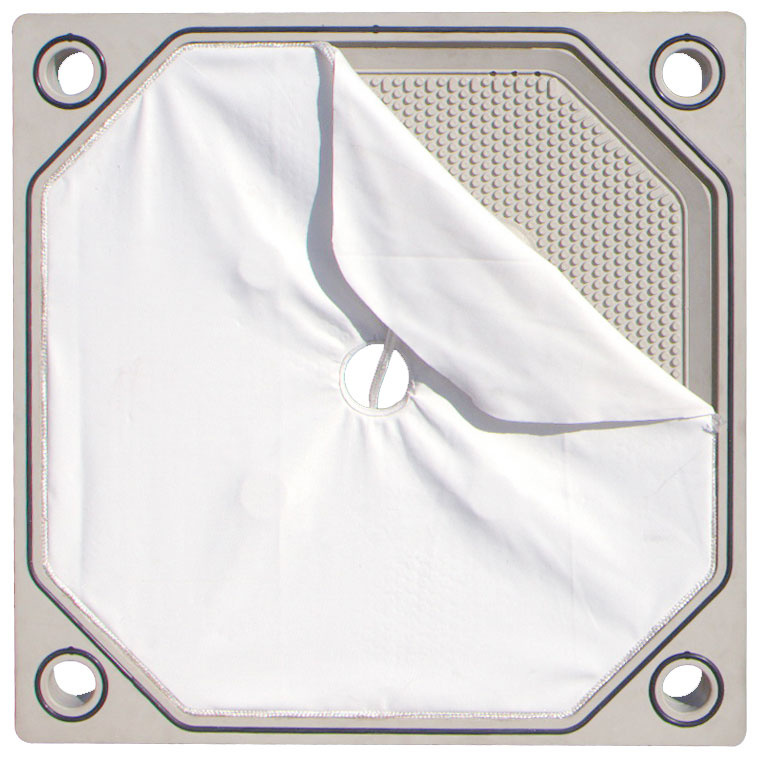
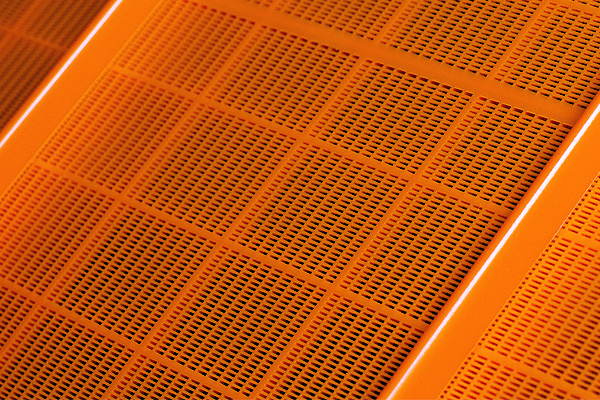
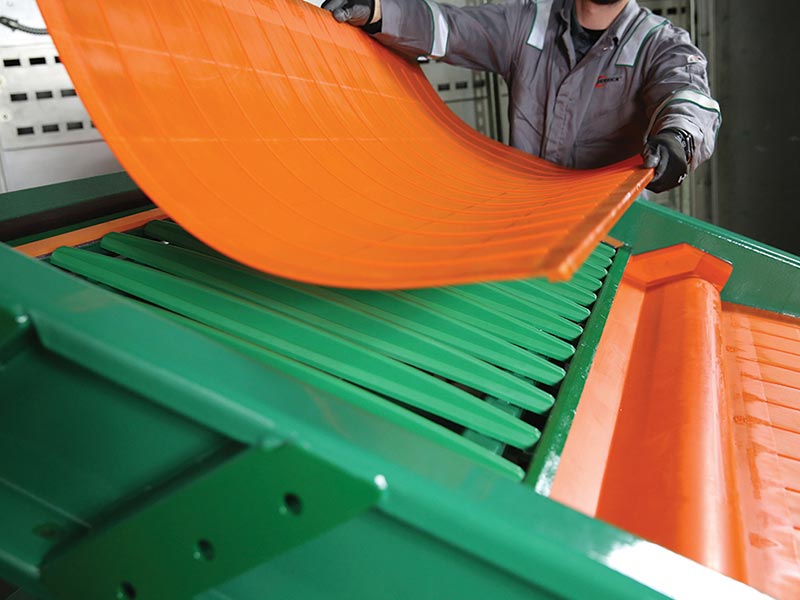
A polyurethane screen panel is a wear-resistant screening media used on vibrating screens in mineral processing. It is cast from high-performance polyurethane elastomer, offering superior abrasion resistance, anti-blinding properties, and longer service life compared to woven wire or rubber screens.
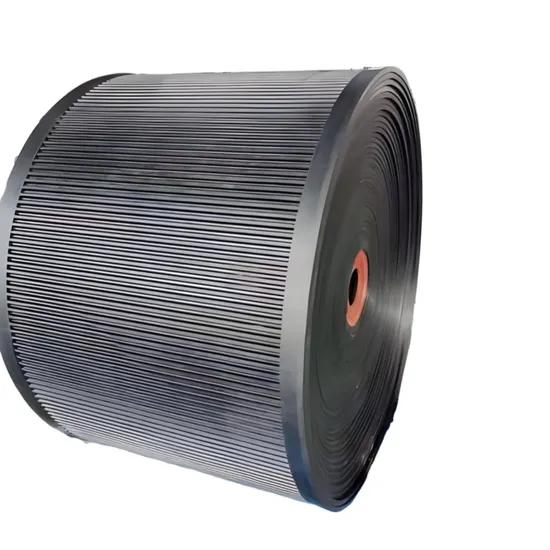
Rubber screen panels are an alternative for high-impact applications, while vibrating screen panels come in various materials and configurations.
The right screen panel:
Your feed material dictates the most important selection criteria:
| Material Characteristic | What It Means for Selection |
|---|---|
| Hardness (Mohs scale) | Hard/abrasive ores (granite, iron ore, basalt) → polyurethane wins on wear life; soft materials (limestone) → woven wire may be more cost-effective |
| Moisture content | Wet/sticky materials → polyurethane’s anti-blinding properties are essential |
| Particle size | Fine cuts (<3 mm) may favor high-tension woven wire for sharpness; larger cuts favor polyurethane |
| Feed rate (TPH) | High tonnage → media life dominates cost per ton; polyurethane usually wins |
Key decision rule: If your feed is hard or abrasive (Mohs >5) and you’re running more than 3,000 hours per year, polyurethane almost always wins on cost per ton.
The aperture determines what passes through and what stays on top.
| Aperture Type | Best For | Trade-Off |
|---|---|---|
| Square | Precise separation, standard sizing | Lower open area |
| Slotted / Rectangular | High-volume throughput, wet screening | Less precise than square |
| Round | Specific particle shapes | Limited availability |
Thumb rule: Fine particles → choose smaller apertures; wet/sticky materials → consider slotted or larger apertures to prevent blinding.
| Panel Type | Advantages | Best For |
|---|---|---|
| Modular | Easy installation and replacement; local replacement of worn sections without changing entire deck | Plants where maintenance downtime is costly; quick-change requirements |
| Tensioned | Larger screening area; stable performance | High-capacity, continuous operations with minimal changeovers |
Note: Modular panels have a higher initial investment, but local replacement capability significantly reduces long-term spare parts costs and downtime.
| Parameter | Impact | Recommendation |
|---|---|---|
| Thickness | Thicker = longer wear life, but lower open area | Standard inclined screens: 25–35 mm; thicker for high impact, thinner for fine separation |
| Hardness (Shore A) | Softer = more flexibility, less blinding; harder = more abrasion resistance | Shore A 85–95 for most mining applications |
The single biggest mistake in screen media selection is buying on panel price instead of cost per ton screened.
Worked example — 200 t/h granite, top deck:
| Wire Mesh | Polyurethane | |
|---|---|---|
| Panel cost | $300 | $1,200 |
| Replacement interval | Every 6 weeks | Every 18 months |
| Tons per panel | 200,000 tons | 2.4 million tons |
| Cost per ton | ~$0.0055 | ~$0.0008 |
The result: The polyurethane panel is ~7× cheaper per screened ton despite being 4× more expensive at purchase.
| Material | Recommended Media |
|---|---|
| Limestone (soft) | Woven wire on all decks |
| Granite, basalt (hard) | Polyurethane on top/middle decks; wire on bottom for fine cuts |
| Iron ore (abrasive) | Polyurethane throughout |
| Coal (wet, clay) | Rubber on impact deck; polyurethane on sizing decks |
| Sand & gravel wash | Polyurethane (high-durometer) throughout |
| Recycled concrete | Rubber on top deck; polyurethane on lower decks |
Don’t run media to failure. Replace when:
| Indicator | Threshold |
|---|---|
| Apertures elongated | More than 20% |
| PU wear depth | >30% of original thickness |
| Undersize yield dropping | >10% at constant feed rate |
| Visible broken wires | Any broken wires or slack panels |
Before ordering, confirm:
Step 1: Analyze Your Material
Step 2: Define Your Separation Target
Step 3: Choose Panel Configuration
Step 4: Calculate Cost Per Ton
Step 5: Verify Supplier Capability
| Problem | Possible Cause | Recommended Solution |
|---|---|---|
| Premature wear | Incorrect compound for ore type | Switch to harder compound or different material |
| Blinding | Wet/sticky material | Use slotted apertures or anti-blinding design |
| Panel cracking | Impact damage or improper installation | Check feed height; verify installation method |
| Uneven wear | Improper feed distribution | Adjust feed box; ensure even material spread |
| Aperture elongation | Normal wear progression | Plan replacement at 20% elongation |
| Panel lifting | Incorrect fixing system | Verify fixing type; replace hardware |
| Frequency | Task |
|---|---|
| Daily | Visual inspection for broken panels or visible wear |
| Weekly | Measure aperture size; document wear progression |
| Monthly | Compare to baseline; plan replacement schedule |
| Quarterly | Comprehensive inspection; review performance data |
Customer Type: Iron ore concentrator (Brazil)
Ore Type: Abrasive hematite
Operating Conditions: 800 tph feed, top deck, 45 mm cut
Problem: Woven wire mesh panels were lasting only 4–6 weeks in the top deck of the primary screen. Frequent replacements were causing significant downtime and high maintenance costs.
Solution: Switched to polyurethane screen panels with custom compound formulated for high-abrasion iron ore.
Result:
Answer: Start with your material characteristics—hardness, moisture, particle size, and feed rate. Then match aperture size, choose modular vs. tensioned, select thickness and hardness, and calculate cost per ton. Always prioritize cost per screened ton over panel price.
Answer: Polyurethane is superior for hard/abrasive ores (Mohs >5), wet/sticky materials, and high-throughput applications. Wire mesh may be more cost-effective for soft, dry materials and fine cuts (<3 mm).
Answer: Divide the panel cost by the total tons screened during its life. For example: $1,200 panel ÷ 2.4 million tons = $0.0008/ton. This is the true measure of value.
Answer: In hard/abrasive ore applications, polyurethane panels typically last 12–24 months, compared to 4–8 weeks for wire mesh. Wear life depends on ore hardness, feed rate, and panel compound.
Answer: Square apertures for precise separation; slotted/rectangular for high-volume throughput and wet screening; round for specific particle shapes. Consider anti-blinding designs for wet/sticky materials.
Answer: Modular panels allow local replacement of worn sections without changing the entire deck—ideal for quick maintenance. Tensioned panels offer larger screening area and stable performance—ideal for high-capacity continuous operations.
Answer: Standard inclined screens: 25–35 mm thickness. Shore A hardness: 85–95 for most mining applications. Thicker = longer wear life but lower open area.
Answer: Replace when apertures are elongated >20%, PU wear depth exceeds 30% of original thickness, undersize yield drops >10%, or visible broken wires/slack panels appear. Don’t run media to failure.
Answer: HUATAO offers precision-molded polyurethane screen panels with ±0.3 mm tolerances, custom compounds for specific ore types, modular and tensioned panel options, anti-blinding designs, and up to 8× longer life than steel.
Answer: Contact us with your screen specifications (model, deck dimensions, aperture size), material type, and operating conditions. We’ll provide material recommendations, wear-life forecasts, and a quotation within 48 hours.
Choosing the right polyurethane screen panel is not about finding the cheapest panel—it’s about selecting the panel that delivers the lowest cost per screened ton for your specific application.
The selection framework:
The key metrics:
With HUATAO’s precision-molded polyurethane screen panels, you get the dimensional accuracy, consistent quality, and proven field performance that delivers lower cost per ton and longer maintenance intervals.
We warmly welcome customers from around the world to contact us and establish mutually beneficial partnerships.
Contact: Annie Lu
Email: annie.lu@huataogroup.com
Phone / WhatsApp: +86 180 3242 2676
Website: http://www.tufflexscreen.com
HUATAO Group – Your Trusted Partner for High-Performance Screening and Wear Solutions.
Screen Panel, Polyurethane, Vibrating Screen, Mineral Processing, Wear Parts, Cost Per Ton, Polyurethane Screen Panel, Rubber Screen Panel, Tufflex Screen, Huatao Group, Mining Engineering
admin