How Often Should I Replace Hydrocyclone Liners?
Oct 20, 2026
 admin
admin The “best” opening size for your screen panel is not a single magic number—it’s a calculated variable. The aperture size on your screen is not the same as the target product size. Due to efficiency requirements, the aperture is often larger than the desired separation point. For example, a 25 mm separation target may require a 33 mm square opening with rubber screening media. The key factors are: target separation size, particle shape (flaky particles need square openings), material moisture (wet/sticky needs larger or slotted apertures), and efficiency target (90% efficiency requires factor 1.25; 75% requires factor 2.00). The golden rule: conduct a screen analysis of your feed first to determine PSD, then calculate the optimal opening size.
✔ Aperture ≠ target product size — aperture is often larger due to efficiency requirements
✔ Particle shape matters — flaky particles need square openings; rounded particles are easier to screen
✔ Wet/sticky materials need larger or slotted apertures to prevent blinding
✔ 90% efficiency requires factor 1.25; 75% efficiency requires factor 2.00
✔ Bed depth limit — for heavy particles, ≤4× aperture size at discharge
✔ Screen analysis is the first step — know your feed PSD
✔ HUATAO Group offers precision-molded panels with custom aperture sizes
| Factor | Recommendation |
|---|---|
| Target separation size | Starting point for all calculations |
| Particle shape (flaky) | Use square openings |
| Particle shape (rounded) | Easier to screen; standard apertures work |
| Wet/sticky materials | Larger or slotted openings |
| High efficiency (90%) | Use efficiency factor 1.25 |
| Lower efficiency (75%) | Use efficiency factor 2.00 |
| Bed depth limit | ≤4× aperture size for heavy particles (>100 lbs/ft³) |
The opening size (or aperture) of a screen panel is the dimension of the hole through which particles pass during screening. It is typically measured in millimeters (mm) or microns (μm).
Key Concept: The aperture size on your screen is not the same as the target product size. Due to efficiency requirements, the aperture is often larger than the desired separation point.
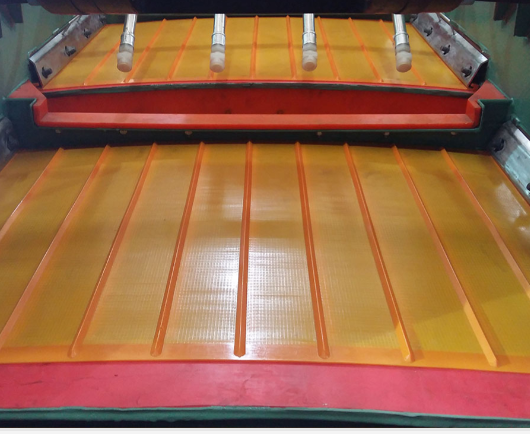
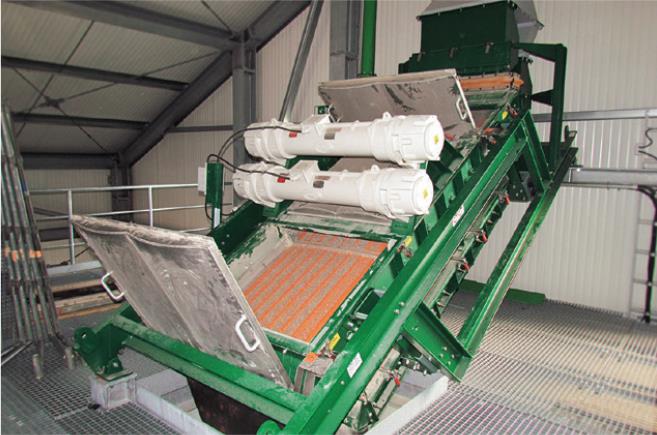
A polyurethane screen panel can be manufactured with precise aperture sizes to match your specific separation target.
The opening size determines:
Choosing the right opening size is the central decision that determines if your screen meets its goals. The perfect size is a function of your feed material and your target product.
| Factor | What It Means for Selection |
|---|---|
| Target Separation Size | Your starting point. What particle size do you need to remove or recover? |
| Particle Shape | Flaky particles are harder to screen—square openings recommended for improved efficiency; rounded particles are easier to screen |
| Material Moisture | Wet/sticky materials may need larger openings or specialized slotted designs to prevent blinding |
| Aperture Shape | Square openings = standard for precise size separation; slotted/rectangular = higher throughput, less precise |
The percentage of the screen panel that is actually open space is critical for capacity and efficiency.
This is a fundamental physical limitation—as you try to separate finer particles, you lose capacity.
When sizing a screen, efficiency is not a binary “on/off” switch. It’s a factor that accounts for how much of the available fine material actually passes through.
| Efficiency Target | Efficiency Factor (E) | What It Means |
|---|---|---|
| 90% | 1.25 | You need a screen 25% larger to achieve this high efficiency |
| 75% | 2.00 | You can use a screen twice as small for lower efficiency |
Example: If you want to achieve 90% screening efficiency, you need to apply an efficiency factor of 1.25 in your calculations. This means you trade a smaller, more expensive screen for a larger one to get higher efficiency.
To achieve good stratification and separation, the bed of material on the screen should not be too deep.
Rule: For particles weighing 100 lbs/ft³ or more, limit the bed depth at the discharge end to no more than 4 times the aperture size.
Example: If your aperture is 10 mm, bed depth at discharge should not exceed 40 mm.
| Aperture Shape | Best For | Trade-Off |
|---|---|---|
| Square | Precise separation, standard sizing, flaky materials | Lower open area |
| Slotted / Rectangular | High-volume throughput, wet screening | Less precise than square |
| Round | Specific particle shapes | Limited availability |
Recommendation: For flaky particles, a square opening is often recommended to improve efficiency. For rounded particles, screening is typically easier and standard apertures work well.
Ultimately, the best opening size is determined by a thorough analysis of your feed material. The key is understanding that “best” is a calculated variable, not a fixed standard.
To make the right choice, the first step is to conduct a screen analysis of your feed to determine the particle size distribution (PSD). You need to know exactly what percentage of your feed is already smaller than your target size.
What to Measure:
This data is essential for calculating the total feed rate to each deck and selecting a screen that can handle the load.
Key Calculations:
| Factor | Recommendation |
|---|---|
| Target separation size | Starting point for all calculations |
| Particle shape (flaky) | Use square openings |
| Particle shape (rounded) | Easier to screen; standard apertures work |
| Wet/sticky materials | Larger or slotted openings |
| High efficiency (90%) | Use efficiency factor 1.25 |
| Lower efficiency (75%) | Use efficiency factor 2.00 |
| Bed depth limit | ≤4× aperture size for heavy particles |
| Problem | Possible Cause | Recommended Solution |
|---|---|---|
| Low efficiency | Aperture too small or too large | Recalculate based on PSD and efficiency factor |
| Blinding | Aperture too small for wet/sticky material | Use larger or slotted apertures |
| Poor product quality | Aperture not matched to target separation | Review PSD analysis; adjust aperture size |
| Low capacity | Open area too low | Consider slotted apertures for higher throughput |
| Premature wear | Incorrect material for aperture design | Consult supplier for material recommendations |
| Frequency | Task |
|---|---|
| Daily | Visual inspection for blinding or damage |
| Weekly | Check for aperture enlargement or wear |
| Monthly | Measure open area; compare to baseline |
| Quarterly | Review performance data; adjust if needed |
Customer Type: Iron ore concentrator (Brazil)
Ore Type: Abrasive hematite
Operating Conditions: 800 tph feed, top deck
Problem: The plant was using a 25 mm aperture but only achieving 70% efficiency. Product specification required 90% efficiency.
Solution:
Result:
Answer: No. Due to efficiency requirements, the aperture is often larger than the desired separation point. For example, a 25 mm separation target may require a 33 mm opening.
Answer: Flaky particles are harder to screen because they can pass through an opening edge-first. Square openings improve efficiency for flaky materials.
Answer: The efficiency factor accounts for how much of the available fine material actually passes through. 90% efficiency requires factor 1.25; 75% efficiency requires factor 2.00.
Answer: For particles weighing 100 lbs/ft³ or more, limit bed depth at the discharge end to no more than 4 times the aperture size.
Answer: Conduct a screen analysis of your feed to determine the particle size distribution (PSD). Know what percentage is already smaller than your target size.
Answer: Square openings for precise separation and flaky materials; slotted/rectangular for higher throughput and wet screening; round for specific particle shapes.
Answer: Wet or sticky materials may need larger openings or specialized slotted designs to prevent blinding and keep material moving across the screen.
Answer: HUATAO offers precision-molded polyurethane screen panels with custom aperture sizes, square/slotted/round apertures, anti-blinding designs, and up to 8× longer life than steel.
Answer: Start with your target separation size, apply the efficiency factor based on your target efficiency, and consider particle shape and moisture. Consult HUATAO for engineering support.
Answer: Contact us with your target separation size, feed PSD data, and operating conditions. We’ll help you calculate the optimal opening size and provide a quotation within 48 hours.
Finding the “best” opening size for your screen panel is not about a single magic number—it’s a critical calculation that balances your desired final product size, the physical properties of your material, and the efficiency of your operation.
The key principles:
With HUATAO’s precision-molded polyurethane screen panels, you get the dimensional accuracy and custom aperture sizes that make optimal screening possible.
We warmly welcome customers from around the world to contact us and establish mutually beneficial partnerships.
Contact: Annie Lu
Email: annie.lu@huataogroup.com
Phone / WhatsApp: +86 180 3242 2676
Website: http://www.tufflexscreen.com
HUATAO Group – Your Trusted Partner for High-Performance Screening and Wear Solutions.
Screen Panel, Opening Size, Vibrating Screen, Mineral Processing, Screening Efficiency, Polyurethane Screen Panel, Rubber Screen Panel, Tufflex Screen, Huatao Group, Mining Engineering
admin